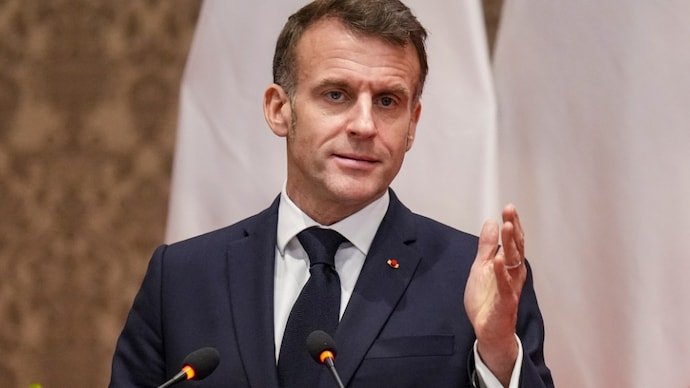
French President Emmanuel Macron and Canadian Prime Minister Mark Carney are set to meet on Sunday in Saint-Pierre-et-Miquelon, a small French archipelago in the North Atlantic, for talks aimed at strengthening economic and security ties between Canada and Europe.
The meeting comes at a significant moment for Canada’s foreign and economic policy. Ottawa has been seeking to diversify its international relationships as tensions with the United States increase, while France is looking to strengthen strategic partnerships in areas including energy, critical minerals, defence and advanced technology.
The talks are expected to focus on the Canada-France relationship, but their wider significance extends to Canada’s efforts to deepen its links with the European Union. Carney has recently supported the idea of Canada becoming the EU’s first associate member, arguing that stronger European ties could help protect Canadian economic independence and sovereignty.
The meeting also takes place against a backdrop of Global energy uncertainty, growing competition over strategic resources and continuing discussions about European security.
Why Macron and Carney Are Meeting in Saint-Pierre-et-Miquelon
Saint-Pierre-et-Miquelon is a remote French territory located off the coast of Newfoundland in Canada. Although geographically close to North America, the archipelago is part of France and provides a distinctive setting for a meeting between the leaders of France and Canada.
The territory has a population of about 5,800 people. Macron arrived there on Saturday ahead of the talks and described the meeting as an important moment for the two countries.
Macron said the discussions would provide an opportunity to strengthen bilateral economic ties and the defence relationship between France and Canada. The location also underlines the geographical and historical connections between the two countries, while giving the meeting a wider North Atlantic dimension.
For Canada, closer cooperation with France can provide an important channel into the broader European market and European institutions. For France, Canada offers access to significant natural resources, advanced technology capabilities and a major North American partner with close ties to the European Union.
Canada Looks Toward Europe as US Tensions Deepen
The meeting comes as Canada reassesses the extent of its economic dependence on the United States. The two countries have historically maintained exceptionally close economic and political relationships, but tensions have increased following actions and statements by US President Donald Trump.
Trump’s tariffs, demands for economic concessions and repeated remarks about Canada becoming the 51st US state have contributed to a more difficult relationship between Ottawa and Washington.
For Canadian policymakers, the situation has increased the importance of developing alternative economic and strategic partnerships. Europe is one of the most significant options because of the scale of the European market and the longstanding political and security relationships between Canada and European countries.
Carney has argued that stronger connections with Europe could help ensure that Canada’s economy remains diversified and that no single country can exercise excessive influence over Canadian markets.
His support for the possibility of Canada becoming an associate member of the European Union represents one expression of that broader approach. Such a relationship would be distinct from full EU membership, but the proposal reflects Canada’s interest in building closer institutional and economic connections with Europe.
Macron and Carney to Discuss Trade and Strategic Industries
Trade is expected to be a central part of Sunday’s discussions. Canada and France already have economic links through broader Canada-EU arrangements, but both governments see opportunities to expand cooperation in strategic sectors.
Carney’s office said the two leaders would discuss strengthening the Canada-France partnership in areas including aerospace, energy, critical minerals and advanced technologies.
These sectors have become increasingly important to governments seeking to reduce dependence on concentrated supply chains. Critical minerals are essential to many modern industries, including electric vehicles, electronics, renewable energy systems, defence technologies and advanced manufacturing.
Canada possesses significant natural resources, making it an important potential supplier for European economies seeking reliable access to strategic materials. France, meanwhile, can provide access to European industrial networks and markets.
Aerospace is another area where Canada and France have established industrial capabilities. Expanding cooperation could involve commercial aviation, research, manufacturing and related technologies, although specific agreements expected from the meeting were not detailed in the announcement.
Energy Becomes a Major Focus
Energy security is expected to be another important element of the discussions. Macron said the talks were part of France’s broader effort to secure energy supplies as the war involving Iran disrupts global Energy Markets and raises concerns about higher prices.
Canada is a major producer of oil and natural gas, giving it potential importance as Europe seeks to diversify its sources of energy.
Macron specifically highlighted Canada’s resources in critical minerals, rare earths, oil and natural gas. He said France wants to conclude agreements that would allow more liquefied natural gas to be shipped to Europe’s Atlantic coast.
Liquefied natural gas can be transported by ship from producing countries to receiving terminals, allowing importers to access supplies from markets outside their traditional pipeline networks. For European countries, diversified LNG supplies can provide another option when geopolitical events disrupt established energy routes.
The possibility of increased Canadian LNG exports to Europe could therefore connect two separate strategic objectives: Canada’s effort to expand its international markets and Europe’s effort to strengthen energy security.
Critical Minerals and Rare Earths Gain Importance
The discussion of critical minerals is particularly significant because governments on both sides of the Atlantic are increasingly focused on supply-chain resilience.
Critical minerals are used in technologies ranging from batteries and electronics to aerospace and defence systems. Rare earth elements are also important in a variety of high-technology applications.
Dependence on a limited number of suppliers has become a strategic concern for governments seeking greater control over essential industrial inputs. Canada has sought to develop its position as a reliable source of critical minerals, while European countries are looking to establish more secure supply relationships.
Closer Canada-France cooperation could contribute to that effort by linking Canadian resource production with European industrial demand.
The challenge will be translating political commitments into long-term investment, infrastructure and commercial agreements. Mining and processing projects can take years to develop, while reliable supply chains require transportation networks, processing capacity and stable demand.
Technology Cooperation Will Also Feature
Advanced technology is another area expected to feature in the discussions. Carney’s office identified quantum computing, satellites and supercomputing among the strategic technologies relevant to the Canada-France partnership.
These areas have both commercial and national-security significance. Quantum computing is being researched for applications ranging from scientific modelling to cryptography, while satellites are central to communications, navigation, Earth observation and defence.
Supercomputing supports scientific research, weather modelling, engineering and Artificial Intelligence. Cooperation in these fields could strengthen technological capabilities while reducing reliance on external suppliers for strategically important infrastructure.
The focus on advanced technologies also reflects a broader shift in international economic policy. Governments are increasingly treating technology development as part of national resilience, rather than leaving strategic technologies entirely to market forces.
Defence Cooperation Takes on Greater Importance
Defence will be another major subject at the Macron-Carney meeting. France and Canada are both NATO members, and their security relationship is part of a broader transatlantic framework.
Macron said the meeting would help strengthen the defence relationship between the two countries. Closer cooperation could have significance beyond bilateral ties because both countries are involved in European and North Atlantic security discussions.
The changing security environment has increased attention on defence capabilities, military readiness and cooperation among NATO members. Canada has also been examining its international relationships as geopolitical tensions place greater emphasis on the ability of allies to work together.
For France, stronger cooperation with Canada offers another avenue for building relationships with a major North American NATO member. For Canada, closer ties with European allies can support its broader effort to maintain strong international partnerships beyond its relationship with the United States.
Greenland Deal Adds Another Layer to the Talks
The Macron-Carney meeting also follows an announcement by Trump concerning Greenland. The proposed arrangement would expand the US military presence on the island while keeping Greenland under Danish control.
The agreement followed months of pressure from Trump over Greenland, including remarks about potentially taking control of the semi-autonomous territory, which is part of the Kingdom of Denmark and therefore linked to a fellow NATO member.
Macron welcomed the agreement after arriving in Saint-Pierre-et-Miquelon. He said Danish sovereignty was being respected and international law was being respected, adding that anything that helped reduce tensions was positive.
The issue is relevant to the broader discussion about North Atlantic security. Greenland occupies a strategically important position between North America and Europe, and its location makes it significant for defence, shipping and Arctic geopolitics.
For Canada, which shares extensive Arctic geography with Greenland and the United States, developments involving the territory have implications for the wider security environment in the region.
France Sees Canada as a Strategic Partner
France’s interest in deeper cooperation with Canada extends beyond traditional diplomatic relations. Both countries have developed extensive connections through trade, defence, technology, culture and shared participation in international institutions.
Canada’s resource base gives the relationship additional economic importance at a time when European countries are attempting to secure supplies of energy and strategic materials.
France can also serve as an important gateway for Canadian businesses seeking greater access to European markets. Cooperation in aerospace, technology and advanced manufacturing could create opportunities for companies and research institutions in both countries.
At the political level, the relationship offers an additional channel for cooperation on international issues at a time when traditional alliances are being tested by changing geopolitical priorities.
Canada’s European Strategy Is Expanding
Carney’s support for stronger ties with the European Union indicates that Canada’s approach is not limited to closer cooperation with France. Ottawa appears to be considering a broader European strategy in which trade, defence, energy and technology relationships reinforce one another.
The idea of associate EU membership would be a significant development if pursued, although the practical details and political feasibility of such an arrangement would need to be worked out with European institutions and member states.
Canada already has deep economic and political connections with European countries, but expanding those relationships could reduce its exposure to disruptions in its largest traditional market.
The strategy also reflects a wider trend in international economics. Countries are increasingly seeking multiple trading partners and diversified supply chains because geopolitical disputes can affect tariffs, energy supplies, technology access and investment flows.
What Sunday’s Meeting Could Produce
The immediate focus of Sunday’s meeting is expected to be practical cooperation in trade, defence, energy and technology. Energy agreements, particularly those involving Canadian LNG exports to Europe, could be among the most significant areas to watch.
Critical minerals could also provide a foundation for longer-term cooperation. Canada has resources that Europe needs, while European industries provide potential markets and processing and manufacturing partnerships.
Technology cooperation could develop around areas such as quantum computing, satellites and supercomputing, while aerospace remains another established field for bilateral collaboration.
The precise agreements emerging from the meeting will determine how far the relationship moves beyond political statements toward concrete projects and investment.
A Meeting Shaped by Changing Global Alliances
The Macron-Carney meeting in Saint-Pierre-et-Miquelon carries significance beyond the two leaders’ bilateral relationship. It takes place as Canada seeks to strengthen its connections with Europe, France looks for greater energy and strategic cooperation, and the United States’ relationships with both European and North American allies face new pressures.
Canada’s vast natural-resource base, including oil, natural gas, critical minerals and rare earths, gives it a potentially important role in Europe’s efforts to diversify supplies. France, meanwhile, offers Canada a major European partner with significant capabilities in defence, aerospace, technology and energy infrastructure.
The meeting’s remote North Atlantic setting is also a reminder of the geographic connections between Canada and Europe. From security in the North Atlantic and Arctic to energy supplies and critical technology, developments in one part of the region increasingly affect the others.
Macron and Carney are therefore entering Sunday’s talks with a broad agenda. Their discussions are expected to test how quickly Canada and France can translate their shared strategic interests into stronger trade, energy, defence and technology cooperation while Canada continues to navigate an increasingly complex relationship with the United States.
For breaking news and live news updates, like us on Facebook or follow us on Twitter and Instagram. Read more on Latest World on thefoxdaily.com.






COMMENTS 0