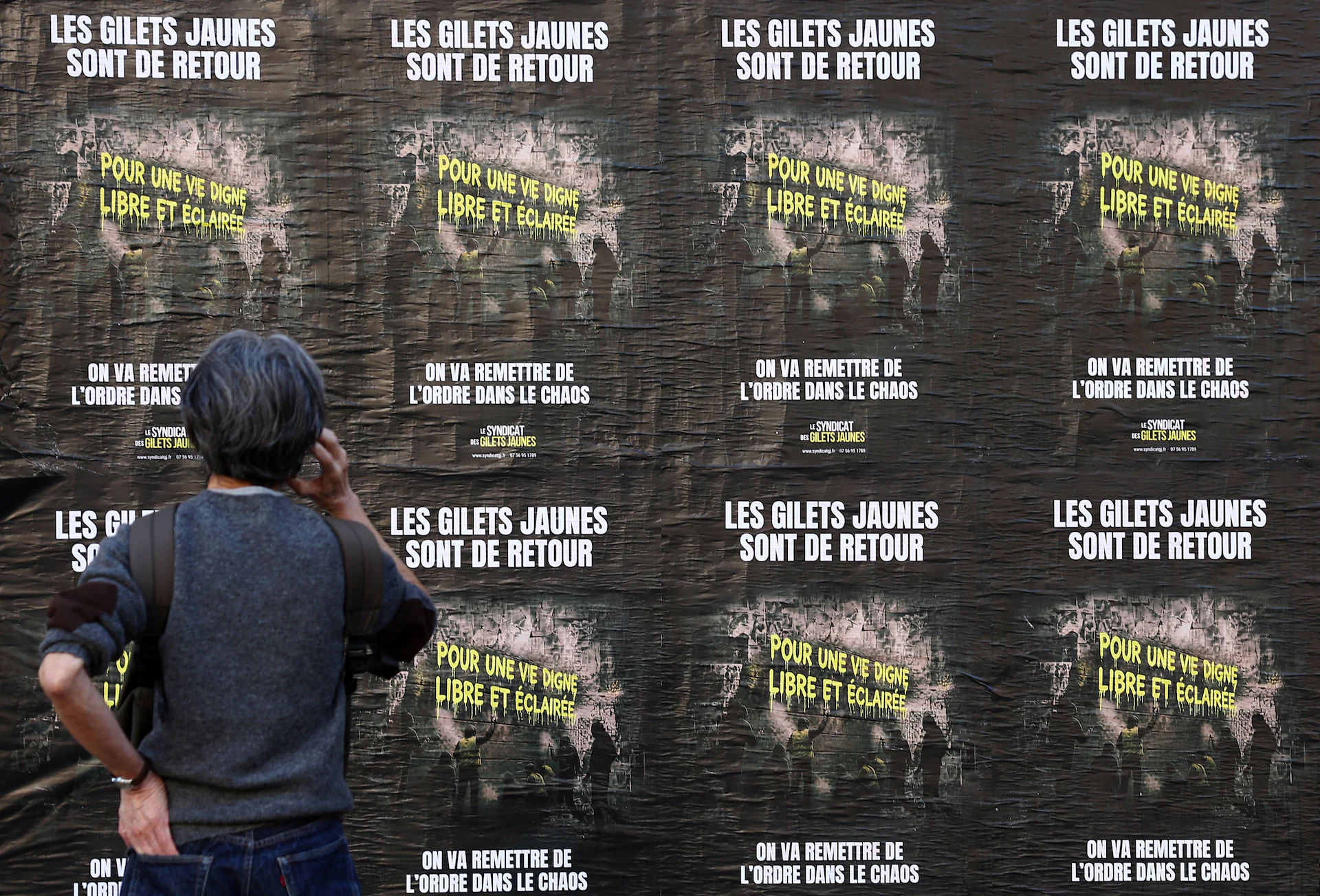
France is bracing for another major wave of demonstrations as students, trade union members and supporters of the Yellow Vest movement prepare to take to the streets over rising prices, deteriorating public services and growing frustration with the country’s social and economic conditions.
The protests scheduled for Saturday, October 17, are expected to draw tens of thousands of participants across the country. What began last month with student demonstrations at high schools in the poorer northern suburbs of Paris has expanded into a broader movement encompassing complaints about education, public spending, purchasing power and economic inequality.
The growing mobilisation presents a challenge for French authorities at a politically sensitive moment. President Emmanuel Macron is approaching the final stretch of his presidency, while the country’s domestic political landscape remains fragmented and concerns about public finances have intensified.
Prime Minister Sébastien Lecornu has warned that authorities are concerned about the possibility of unrest. Opposition figures have also predicted a difficult day, while the government’s handling of earlier demonstrations has drawn criticism over injuries sustained by protesters and allegations of excessive police force.
The participation of Yellow Vest supporters adds another dimension to the protests. The movement, which emerged in 2018 over fuel taxes and subsequently became a broader expression of anger about living costs and inequality, has remained a symbol of France’s unresolved tensions over purchasing power and the relationship between ordinary citizens and political institutions.
Saturday’s demonstrations will therefore test not only the government’s ability to maintain public order but also its capacity to respond to grievances that extend across education, healthcare, employment and household finances.
Why are students, trade unions and Yellow Vests protesting in France?
The latest protests have developed from several overlapping sources of public frustration rather than a single demand.
The initial demonstrations began last month at high schools in economically disadvantaged areas of northern Paris. Students reportedly raised concerns about teacher absences and inadequate school facilities. Those complaints subsequently broadened into a nationwide movement focused on inequality, declining public services and what demonstrators regard as insufficient public spending.
The expansion of the protests suggests that dissatisfaction within the education system has become a rallying point for people concerned about wider economic and social conditions.
For students, the immediate issues include the quality of education and the availability of teachers. For trade unionists, the broader concerns include purchasing power and the ability of public institutions to provide essential services. Yellow Vest supporters bring longstanding grievances about taxation, fuel prices and the cost of everyday life.
These groups do not necessarily share identical political objectives. Their participation in the same demonstrations, however, creates an opportunity for separate complaints to reinforce one another.
This broad coalition also makes the movement difficult to assess through a single policy demand. A protest centred on a specific tax can sometimes be addressed through a targeted government decision. Demonstrations involving schools, healthcare, household budgets and public spending are more complicated because their demands touch different departments, budgets and long-term policy choices.
Rising living costs fuel public anger across France
The Cost of Living remains a central theme in the mobilisation, particularly among people who believe that everyday expenses are becoming increasingly difficult to manage.
One Yellow Vest protester, Myrtil Devillers, described his frustration by comparing petrol prices during the movement’s early days with the prices he said he faces now.
Devillers recalled joining the Yellow Vest movement when petrol cost €1.40 per litre. He said the price had since reached €2.20 per litre, illustrating how fuel costs remain an emotionally significant issue for some protesters.
The comparison reflects his personal experience rather than a comprehensive measure of France’s fuel-price trends. Nevertheless, it highlights why petrol remains politically sensitive in a country where many people depend on cars for commuting, shopping and travelling between communities.
Fuel-price increases can have effects beyond the cost of filling a vehicle. For people who rely on cars to reach work or transport family members, higher petrol expenses can reduce the money available for food, housing and other household needs.
Businesses can also face higher transport and operating costs, potentially adding pressure to prices across parts of the economy.
Devillers said dissatisfaction extended beyond fuel, pointing to complaints from the justice system, education sector, healthcare workers and business owners among people he knows.
His comments capture the breadth of the grievances being expressed, although they should not be interpreted as a formal survey of public opinion. The central issue is that protesters are connecting individual financial pressures to broader concerns about the performance of public institutions and the distribution of economic resources.
Yellow Vest movement returns to the centre of France’s protests
The involvement of Yellow Vest supporters is significant because the movement has a history of turning economic grievances into large-scale political demonstrations.
The Yellow Vest movement emerged in 2018, initially in opposition to taxes on diesel fuel. It quickly developed into a wider protest against the cost of living, economic inequality and perceptions that government policies placed an unfair burden on ordinary households.
The movement’s name came from the high-visibility yellow safety vests worn by participants. Its demonstrations attracted people with varied political views and economic circumstances, making it difficult to characterise the movement as representing a single party or ideology.
At its height, the movement became a major challenge for Macron’s government. The protests demonstrated how a policy affecting household transport costs could become a broader confrontation over taxation, purchasing power and political representation.
The government responded at the time with measures that included billions of euros in tax cuts, after which the movement became considerably quieter.
However, the return of Yellow Vest supporters to the streets suggests that some of the underlying concerns have persisted.
Yannick Maillou, a teacher from La Crèche in western France who joined the movement in 2018, said several nearby meeting points had been established for Saturday’s demonstrations. He also indicated that trade unions were encouraging their members to participate.
His account suggests that the latest mobilisation is drawing on existing local networks rather than relying entirely on the student demonstrations that initially triggered the current wave of unrest.
That organisational experience could help protesters coordinate gatherings across different locations. At the same time, the presence of groups with different demands could make it more difficult for the movement to agree on a common political objective.
Macron faces protests amid political divisions and fiscal pressure
The demonstrations come at a challenging time for Macron as his presidency approaches its final stretch.
France has been dealing with a fragmented political landscape, while concerns about government borrowing and the sustainability of public finances have placed additional pressure on policymakers.
The supplied report describes investors moving away from French debt, pushing borrowing costs to their highest levels in more than two decades. Higher government borrowing costs can complicate the management of public finances by increasing the expense of refinancing debt and funding deficits.
This creates a difficult policy environment for any government seeking to respond to public dissatisfaction.
Expanding public spending or introducing additional financial support can help address some immediate pressures on households and public services. However, such measures also have budgetary consequences, particularly when a government is already under pressure to improve its fiscal position.
Conversely, attempts to restrain spending or increase revenue can intensify public anger if people believe those measures will further weaken essential services or reduce disposable income.
France’s current challenge is therefore not simply about preventing demonstrations. It also involves reconciling competing demands for stronger public services, affordable living costs and more sustainable government finances.
The protests could increase pressure on political leaders to explain how they intend to address these concerns. However, the demonstrations alone do not establish which policies the government will adopt or whether any immediate concessions will follow.
French government warns of possible unrest during demonstrations
Prime Minister Sébastien Lecornu has warned that authorities fear unrest during Saturday’s protests.
He described the wider atmosphere as one of continuing crisis, referring to international conflicts, inflation and concerns about purchasing power.
The government has blamed the hard-left France Unbowed party, known by its French initials LFI, for inflaming the protests. LFI has rejected that accusation.
The disagreement reflects the political sensitivity surrounding the demonstrations. When protests draw participants from different backgrounds, political parties may seek to shape the public interpretation of their demands, while the government must respond to concerns about both public order and the legitimacy of peaceful assembly.
Opposition leader Jordan Bardella, whose far-right National Rally is leading in polls ahead of France’s 2027 presidential election, has also expressed concern about the possibility of violence.
Speaking during a visit to the Paris car show, Bardella predicted a chaotic day for the country.
His comments underline the potential political consequences of the protests, although predictions of violence do not establish that widespread disorder will occur.
The scale of the demonstrations, the behaviour of individual participants and the response of police will all influence how events unfold. Authorities will need to distinguish between peaceful gatherings and any incidents that require intervention.
Police violence allegations add to tensions
Policing has emerged as another contentious issue surrounding the demonstrations.
Lecornu has described the protests as among the most violent in decades and said more than 900 police officers had been injured since the beginning of the protests.
At the same time, police have faced criticism over injuries suffered by demonstrators. The reported cases include an adolescent whose hand was blown off after picking up a stun grenade.
The internal police watchdog is investigating at least two dozen allegations of police violence, according to the supplied report.
These investigations are important because the use of force during demonstrations can become a source of further public anger, particularly when protesters believe the response has been disproportionate.
Authorities must manage risks to police officers, demonstrators and bystanders while respecting legal safeguards governing the use of force. Establishing whether particular actions were justified requires examination of the circumstances of each incident rather than relying on general claims about either protesters or police.
France has suspended the use of stun grenades for student demonstrations. However, Interior Minister Laurent Nuñez said such weapons could be used during Saturday’s protest if clashes occurred.
Speaking on the television programme Télématin on Friday, Nuñez said that different types of intermediate weapons could be used if confrontations developed.
The possibility of their use has heightened attention on how police will handle the demonstrations. The deployment of crowd-control weapons can have serious consequences, making training, proportionality and accountability important considerations during public-order operations.
Yellow Vest organisers prepare for possible police violence
Some participants are preparing for the possibility of confrontations during the demonstrations.
Maillou said groups providing medical assistance were forming in anticipation of possible police violence. His comments indicate that at least some protesters are making preparations for injuries or other emergencies.
Such preparations also reflect the significance of earlier confrontations in shaping how participants approach new demonstrations. Previous injuries and disputes over police tactics can influence protesters’ expectations, even before a new gathering begins.
However, the formation of medical assistance groups does not mean that violence is inevitable. Their presence may reflect precautionary planning rather than a prediction of what will actually happen.
Calls on social media encouraging participants from earlier protest movements to join Saturday’s gatherings appear to have gained traction, according to the report.
This could broaden participation beyond the students and trade unionists involved in the initial demonstrations. It could also make the scale and character of the protests more difficult to predict, particularly if different groups converge at the same locations.
For authorities, the challenge will be to facilitate lawful demonstrations while responding appropriately to any incidents of violence. For organisers, maintaining communication and encouraging safe conduct could affect whether gatherings remain peaceful.
What could happen next in France’s protest movement?
The immediate focus will be on the scale of Saturday’s demonstrations and whether the gatherings remain peaceful.
The involvement of students, trade unions and Yellow Vest supporters gives the movement a wider social base than a protest limited to a single school or workplace issue. Their shared concerns about purchasing power and public services could sustain pressure on the government beyond the initial demonstrations.
Nevertheless, the coalition faces a challenge: its participants may agree that economic and social conditions need to improve without sharing the same priorities or preferred solutions.
Students concerned about school facilities, workers focused on wages and employment conditions, and Yellow Vest supporters angered by fuel costs may require different policy responses. A lasting movement would need either a clear set of common demands or an effective way to coordinate its different objectives.
The government’s response will also matter. Measures addressing specific complaints could ease some tensions, while unresolved concerns about living costs, public services and economic inequality could provide grounds for further mobilisation.
France’s fiscal pressures will limit the choices available to policymakers, but they will not remove the need to address public concerns. The central political question is how the government can respond to demands for economic relief and stronger services while managing the country’s borrowing requirements.
The protests also carry significance ahead of the 2027 presidential election. Public dissatisfaction over purchasing power, inequality and government performance may feature prominently in political debate, although the demonstrations alone cannot determine the eventual electoral outcome.
For now, Saturday’s mobilisation represents a convergence of longstanding grievances rather than a clearly defined political programme. Its longer-term impact will depend on the scale of participation, the government’s response, the conduct of demonstrators and whether the different groups can maintain a common purpose.
France’s wider challenge: restoring confidence in public services and household finances
The latest protests highlight the difficulty of separating household economic pressures from concerns about the quality of public institutions.
When students complain about teacher absences and inadequate facilities, their concerns extend beyond education budgets to the practical experience of attending school. When healthcare workers or people involved in the justice system express dissatisfaction, the debate also concerns the ability of public institutions to perform their essential functions.
Likewise, rising fuel prices can become a symbol of a broader sense that everyday expenses are consuming an increasing share of household resources.
These issues are connected, but they cannot all be resolved through a single policy announcement. Improving public services requires decisions about funding, staffing and administration, while reducing pressure on household budgets can involve taxation, wages, energy costs and other economic factors.
The return of Yellow Vest supporters is particularly relevant because the movement previously demonstrated how quickly a specific economic grievance could develop into a nationwide debate about fairness and political accountability.
Whether the current protests achieve comparable momentum remains uncertain. What is clear is that France’s leaders face pressure from several directions at once: public dissatisfaction, political fragmentation, concerns about government borrowing and the need to maintain confidence in public institutions.
As students, trade unionists and Yellow Vest supporters prepare to demonstrate, the central test for the government will be whether it can manage public-order risks while addressing the economic and social concerns driving people onto the streets.
For breaking news and live news updates, like us on Facebook or follow us on Twitter and Instagram. Read more on Latest World on thefoxdaily.com.






COMMENTS 0