Tesla CEO Elon Musk has unveiled a new version of the company’s Roadster sports car that he says can fly, showcasing a dramatic combination of Automotive Technology and rocket-inspired propulsion during an event at a SpaceX test facility in Texas.
The two-seat sports car performed a series of unusual manoeuvres, including climbing a steep ramp, travelling upside down, flipping through the air and landing with the help of air jets. Musk also claimed that the Roadster could accelerate from zero to 60 miles per hour in less than a second.
Despite the spectacular demonstration, questions remain over whether the vehicle can achieve sustained flight, meet road-safety requirements and deliver on its ambitious performance promises. Tesla is targeting production in 2028, although the company has repeatedly delayed major projects in the past.
Tesla Roadster Demonstrates Rocket-Inspired Technology
During Thursday’s unveiling, Musk presented the Roadster as the result of collaboration between Tesla and SpaceX, his electric vehicle and aerospace companies. The demonstration highlighted technology intended to help the car perform short airborne manoeuvres while maintaining its ability to travel on roads.
According to Musk, the vehicle uses 10 nozzles and what he described as ultra-high-pressure air tanks to generate propulsion. The system is designed to help the Roadster leave the ground, perform aerial movements and accelerate rapidly.
During the event, the car used suction beneath its body to climb a steep ramp and remain upside down. It then moved away from the ramp, flipped through the air and used its jets to land. In another demonstration, the vehicle leapt over a row of Tesla cars parked side by side.
The demonstration also showcased the Roadster’s claimed acceleration capability. Musk said the car could reach 60 mph in less than a second, although the performance claims will need to be assessed against independently verified results from a production vehicle.
The vehicle did not have a human driver during the aerial demonstration. Musk said the decision was made for safety reasons, acknowledging that the experimental manoeuvres carried risks.
He also cautioned the audience that success was not guaranteed, suggesting the company was aware of the uncertainty surrounding the demonstration.
Production Target Set for 2028 Despite Past Delays
Musk said Tesla intends to begin production of the new Roadster in 2028. However, the proposed timeline remains uncertain because Tesla has previously announced ambitious deadlines for products and technologies that were subsequently postponed.
The Roadster has been one of Tesla’s most anticipated projects, but its development has stretched across several years. The latest reveal provided a glimpse of the company’s plans for a high-performance electric sports car with capabilities that extend beyond conventional road driving.
Musk encouraged the audience to witness the demonstration firsthand, arguing that seeing the vehicle in action would help establish that the performance was not generated by artificial intelligence or a simulation.
Nevertheless, a staged demonstration does not establish that the Roadster can fly over long distances or operate reliably in everyday conditions. Tesla has not demonstrated sustained flight during the event, leaving significant questions about the vehicle’s practical capabilities.
Can a Flying Car Work on Public Roads?
Developing a vehicle capable of functioning as both a road car and an aircraft presents substantial engineering challenges. Cars and aircraft have different structural requirements, particularly in areas such as weight, stability, passenger protection and propulsion.
Aircraft must generally be lightweight enough to generate lift efficiently. Road vehicles, by comparison, require safety features such as bumpers, reinforced structures and crumple zones to help protect occupants in collisions. Combining these requirements can make a vehicle more complicated and expensive while creating compromises in both driving and flying performance.
Roger Conner, curator for vertical flight at the Smithsonian’s National Air and Space Museum, expressed doubts before Tesla’s event about whether a street-legal vehicle could also function as a practical aircraft.
Conner warned that a hybrid design could perform poorly in both roles while carrying a high price tag. He also questioned whether brief airborne movements should be considered genuine flight, distinguishing short jumps from sustained travel through the air.
These concerns underline the difference between a vehicle that can briefly leave the ground and one capable of taking off, travelling a meaningful distance and landing safely under real-world conditions.
How Tesla’s Roadster Compares With eVTOL Aircraft
Electric vertical take-off and landing aircraft, known as eVTOLs, have attracted interest from companies exploring new forms of personal transportation. Although some prototypes have demonstrated the ability to become airborne, developers still face engineering, safety and regulatory challenges.
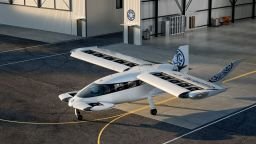
One example is Alef, a California-based startup developing a flying car that uses eight propellers, with four positioned at the front and four at the rear. The vehicle described in the source weighs approximately 254 pounds and can carry one person, whose weight must be lower than the vehicle’s own weight.
Alef CEO Jim Dukhovny said before Tesla’s demonstration that he would not be surprised if the Roadster managed to get off the ground. However, he stressed that lifting off is only one part of the technical challenge.
Dukhovny identified the transition from vertical take-off to forward movement as one of the most difficult stages for eVTOL vehicles. Maintaining lift and stability during this transition is essential to prevent a loss of control.
Tesla’s approach differs from conventional aircraft designs by combining a sports car with air-pressure propulsion technology. Whether that system can provide stable, repeatable and useful flight while retaining the safety features required of a road vehicle remains to be established.
Safety and Practicality Remain Major Questions
The Roadster’s unveiling has renewed interest in the possibility of flying cars, but several issues must be resolved before such vehicles could become practical transportation options.
A car designed for both road use and flight would face different safety and regulatory requirements. Its propulsion system would need to operate reliably, while the vehicle would have to demonstrate stability, passenger protection and safe procedures for take-off, landing and emergencies.
There is also a question of everyday usefulness. A vehicle capable of jumping briefly into the air may create an impressive spectacle, but that does not necessarily provide the advantages associated with a genuine flying car. Longer-range flight would require further demonstrations of control, endurance and safe landing capabilities.
Tesla’s latest Roadster reveal represents an ambitious technology showcase, combining electric sports-car engineering with ideas drawn from aerospace development. However, the demonstration does not yet prove that the vehicle can deliver sustained flight or become a practical road-and-air vehicle.
With production targeted for 2028, Tesla has time to develop the concept further. Whether Musk’s flying-car promise becomes a commercially available reality will depend on the vehicle’s engineering progress, safety performance and ability to overcome the challenges of combining road travel with flight.
For breaking news and live news updates, like us on Facebook or follow us on Twitter and Instagram. Read more on Latest Business on thefoxdaily.com.





COMMENTS 0