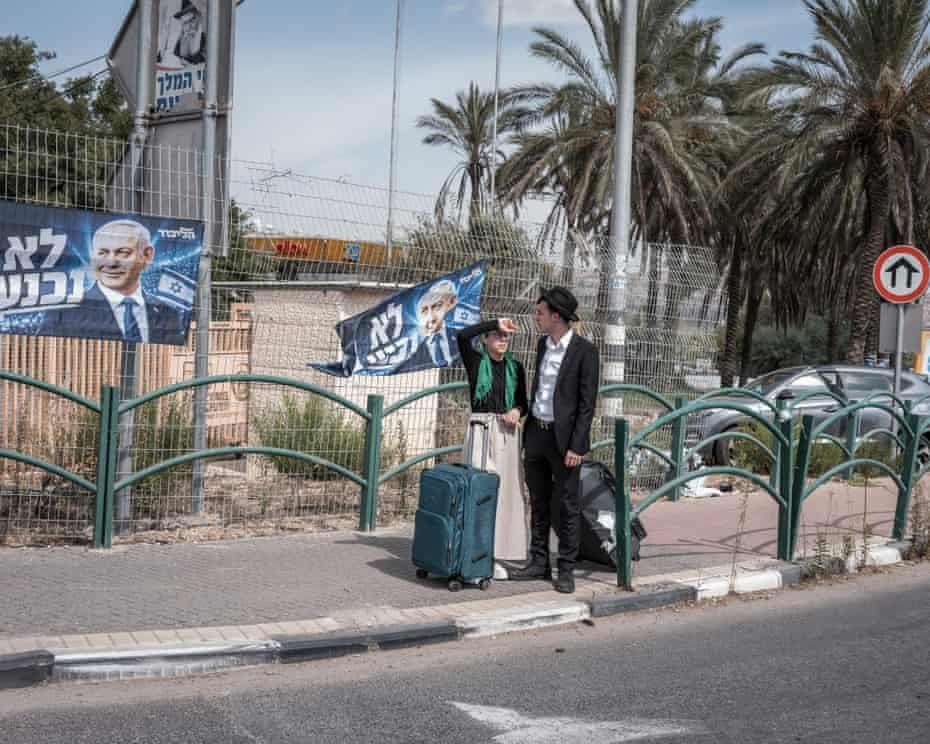
A majority of Israelis believe their government’s settlement policy in the occupied West Bank should change to prevent further international sanctions and diplomatic isolation, according to a new survey by Israeli social research group aChord. The findings highlight differences between supporters of the opposition Change bloc and those backing Prime Minister Benjamin Netanyahu’s political bloc over the consequences of continued settlement expansion.
The survey also found that the UK government’s decision to restrict trade in goods from illegal Israeli settlements did not have a decisive impact on how Israelis voted in the general election. Although the measure attracted considerable criticism within Israel, its effect on voters appears to have been limited.
While many Israelis oppose the UK’s trade restrictions, the poll suggests that concerns about the economic and personal consequences of further sanctions could influence public attitudes towards the government’s settlement policy.
Majority of Israelis Support Changing Settlement Policy
According to the survey, 50% of respondents believe Israel should adjust its settlement and construction policy in the West Bank to avoid an escalation of international sanctions and growing isolation.
Support for changing the policy was particularly strong among voters backing the opposition Change bloc associated with Gadi Eisenkot. Around 71% of these voters said the Israeli government should adapt its settlement policy to prevent further sanctions.
By comparison, only 14% of supporters of Netanyahu’s bloc agreed with changing the policy. Most voters in this group preferred the government to continue its existing approach regardless of the potential consequences.
Support for a policy change was strongest among supporters of Arab political parties, according to the survey.
UK Settlement Trade Ban Had Little Impact on Israeli Voting Decisions
The survey examined whether tougher measures adopted by the UK and other foreign governments had influenced Israeli voters during the election.
Britain’s decision to impose a trade ban on goods from illegal settlements, alongside wider sanctions, had attracted strong criticism. Some opponents argued that the measures could strengthen support for Netanyahu by encouraging voters to rally behind his government.
However, the aChord survey found no detectable overall voting impact from the UK’s policy. Around three-quarters of Netanyahu bloc supporters said the sanctions and trade restrictions had not influenced their vote at all.
Among the small number of respondents whose voting decisions were affected, the impact went in both directions. As a result, the survey found no clear net shift in support for either political bloc.
The findings suggest that international pressure was not a decisive factor in determining how Israelis voted, even though the measures remained a significant subject of political debate.
Most Israelis Were Aware of the UK’s Announcement
The survey found that 76% of respondents had heard about the UK government’s announcement concerning settlements. However, 18% said they had only heard the general headline rather than the details of the policy.
Among those who were aware of the announcement, four-fifths understood that the restrictions applied to the West Bank rather than the whole of Israel.
This distinction was important because some Israelis feared that restrictions initially targeting settlement-related goods could eventually be extended to products from other parts of the country.
The poll also highlighted differences in how voters viewed Israel’s relationships with Western countries. Around 60% of Change bloc supporters said relations with the West were important or very important when deciding how to vote. However, this consideration ranked fifth among six voting motivations presented in the survey.
Only 30% of Netanyahu bloc supporters considered relations with Western countries equally important to their voting decisions.
Support for Sanctions Depends on Their Economic Impact
The survey found that public attitudes towards international sanctions were closely connected to the potential personal costs faced by Israeli citizens.
Only 36% of all respondents agreed that settlement policy should continue even if sanctions on banks financing construction in illegal settlements resulted in higher interest rates, difficulties transferring money abroad or problems using credit cards overseas.
The findings suggest that opposition to settlement policy becomes stronger when people believe international restrictions could directly affect their finances and everyday lives.
In other words, the economic consequences of sanctions may play an important role in shaping public opinion, particularly when restrictions extend beyond individual settlers or settlement-related businesses and affect wider financial activity.
52% of Israelis Support Sanctions on Violent Settlers
The survey also found a difference between public attitudes towards sanctions targeting individual violent settlers and broader restrictions on settlement-related trade.
Around 52% of respondents supported sanctions against individual settlers involved in violence, provided the measures were limited to those responsible for violent actions.
However, opposition to such sanctions was particularly strong among Netanyahu bloc supporters. Around 70% of respondents in this group opposed foreign sanctions under all circumstances.
The findings indicate that many Israelis distinguish between targeted measures against individuals accused of violence and broader economic restrictions affecting settlement-related activities.
Most Israelis Oppose the UK’s Ban on Settlement Goods
Despite support for targeted sanctions against violent settlers, the survey found considerably less public backing for Britain’s decision to ban imports of goods produced in illegal settlements.
Around 63% of respondents opposed the trade ban. Only 26% either supported the measure outright or said they would support it if it were made clear that goods produced outside the settlements would not be affected.
The figures demonstrate that opposition to the UK’s trade restrictions remains widespread, even among Israelis who recognise the possibility that continued settlement policies could lead to greater international pressure.
Yachad Director Says International Pressure Could Encourage Policy Change
The survey findings prompted Hannah Weisfeld, director of the British-Jewish organisation Yachad, to argue that the results demonstrate awareness among Israelis of the potential consequences of maintaining the current settlement policy.
“The research illustrates that the Israeli public certainly recognises that if there is not a policy shift in relation to settlement enterprise, the international community is likely to try to create an incentive to shift things from the outside. If anything, that highlights the importance of UK and other allies taking action that targets the occupation,” Weisfeld said.
Her comments suggest that international measures targeting settlement-related activities could be viewed as a way to encourage changes in government policy.
However, the survey also reveals substantial opposition to broader trade restrictions, showing that Israeli public opinion is not uniformly supportive of foreign sanctions.
What the Poll Reveals About Israeli Public Opinion
The aChord survey highlights a complex picture of Israeli attitudes towards settlements, international sanctions and relations with Western countries.
While a majority of respondents support adjusting settlement policy to avoid further sanctions and international isolation, a substantial proportion oppose the UK’s trade ban on settlement goods. Support is also higher for targeted sanctions against violent individuals than for broader economic restrictions.
The differences between Netanyahu bloc supporters, opposition voters and supporters of Arab parties further demonstrate how political affiliation shapes views on the issue.
Overall, the findings suggest that international pressure has not decisively influenced Israeli voting behaviour, but concerns about economic costs and diplomatic isolation could strengthen calls for a change in settlement policy.
For breaking news and live news updates, like us on Facebook or follow us on Twitter and Instagram. Read more on Latest World on thefoxdaily.com.






COMMENTS 0