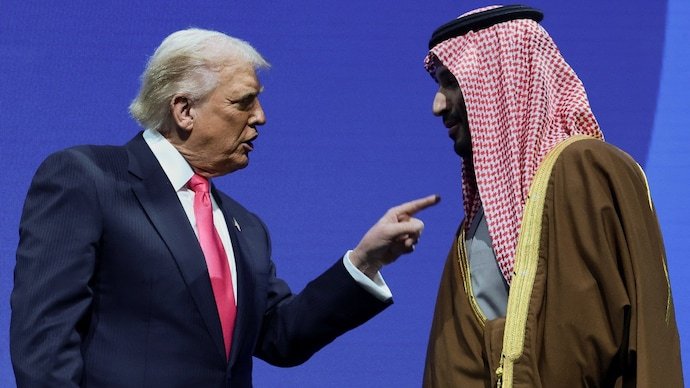
US President Donald Trump has sent a classified civilian nuclear cooperation agreement with Saudi Arabia to Congress for review, moving a closely watched pact into a formal stage while leaving its ultimate future tied to a much larger Middle East diplomatic dispute.
The agreement is designed to strengthen Saudi Arabia’s civilian nuclear programme and could remain in force for 30 years if approved. It was signed in Washington last month by US Energy Secretary Chris Wright and his Saudi counterpart, but Trump’s subsequent demand that Riyadh normalise relations with Israel has complicated the path ahead.
The administration has not publicly established whether the Israel normalisation condition is included in the classified nuclear document itself. Trump, however, has continued to insist that Saudi Arabia must join the Abraham Accords as part of any final agreement.
At the same time, some US lawmakers have raised concerns about the nuclear provisions, particularly the possibility that Saudi Arabia could pursue uranium enrichment. Those concerns have made the agreement more than a commercial and energy deal. It is now also a test of US nonproliferation policy and Washington’s broader strategy toward the Middle East.
What happened to the US-Saudi nuclear agreement?
The classified agreement was submitted to Capitol Hill on Monday under the US Atomic Energy Act, according to a Trump administration official, a congressional aide and two other people familiar with the matter.
The submission begins the congressional review process required for this type of civilian nuclear cooperation agreement. Congress has 90 days while in session to examine the pact. If lawmakers do not pass a joint resolution rejecting the agreement during that period, it can take effect without a separate approval vote in either chamber.
That procedure means the agreement does not necessarily need a conventional vote in both the House of Representatives and Senate to become effective. Congress nevertheless has an opportunity to scrutinise the terms and challenge the arrangement during the review period.
The formal submission is significant because the pact had already become politically uncertain after Trump connected it to Saudi-Israeli normalisation. The nuclear agreement and the diplomatic question are now closely linked even though it is not clear whether the Israel condition appears directly in the classified document.
Why Trump wants Saudi Arabia to recognise Israel
Trump’s demand is rooted in his administration’s broader effort to expand the Abraham Accords, the US-backed framework that established diplomatic relations between Israel and several Arab and Muslim-majority countries during his first presidency.
The accords were approved in 2020 and increased the number of countries in the region maintaining formal diplomatic ties with Israel. Saudi Arabia has remained outside that group, making its potential participation considerably more consequential.
Saudi Arabia is one of the most influential countries in the Arab and Muslim world, and its recognition of Israel would represent a major diplomatic development. For Washington, bringing Riyadh into the Abraham Accords could strengthen the regional network of countries cooperating with Israel and deepen strategic ties between the United States, Saudi Arabia and Israel.
Trump’s decision to attach the nuclear agreement to this objective has, however, created a difficult negotiating position for Riyadh.
The Saudi government has made clear that normalisation with Israel would require a credible and clear path toward Palestinian statehood. That condition is fundamentally at odds with the position of Israeli Prime Minister Benjamin Netanyahu, WHO has rejected Palestinian statehood as a threat to Israel’s security.
As a result, the nuclear agreement is now connected to an issue that neither Washington nor Riyadh can resolve through energy policy alone.
Saudi Arabia’s Palestinian statehood condition
Saudi Arabia’s position means that the kingdom is not simply being asked to sign a nuclear cooperation agreement. It is being asked to make a major foreign-policy decision involving Israel and the Palestinians.
Riyadh has insisted that any normalisation agreement should include a clear path toward Palestinian statehood. This has remained a central obstacle to a Saudi-Israeli diplomatic breakthrough.
Israel’s current government, led by Netanyahu, has rejected the idea of Palestinian statehood as unacceptable for Israel’s security. That leaves the United States attempting to bridge two positions that remain far apart.
The nuclear agreement could therefore become a bargaining instrument in a wider diplomatic negotiation. Saudi Arabia wants access to civilian nuclear Technology and cooperation with the United States, while Washington wants Riyadh to make a historic diplomatic move toward Israel.
Trump’s decision to make the connection publicly also reportedly caught Saudi Arabia by surprise. That suggests the diplomatic condition was not necessarily treated by Riyadh as an established part of the nuclear negotiations before Trump’s announcement.
Why Congress is concerned about nuclear proliferation
Even without the Israel question, the agreement would face significant scrutiny in Washington because of Saudi Arabia’s long-standing interest in developing nuclear capabilities.
Saudi Arabia has expressed interest in developing a civilian nuclear programme, including capabilities connected to the nuclear fuel cycle. The most sensitive issue is uranium enrichment.
Uranium enrichment can have legitimate civilian uses, including producing fuel for nuclear reactors. But enrichment technology is also sensitive from a nonproliferation perspective because the same broader technology can be used to produce material with much higher uranium-235 concentrations.
That is why some US lawmakers are concerned that a civilian nuclear agreement could eventually give Saudi Arabia greater capacity to enrich uranium domestically.
The concern is not equivalent to proof that Saudi Arabia intends to build nuclear weapons. The supplied information does not establish such an intention. The issue is instead whether the agreement’s safeguards and restrictions would be strong enough to prevent civilian nuclear cooperation from contributing to a future regional arms race.
Why Saudi enrichment matters beyond Saudi Arabia
The debate has implications that extend beyond the US-Saudi relationship.
The Middle East already faces major nuclear security concerns because of the long-running international dispute over Iran‘s nuclear programme. If Saudi Arabia were to develop sensitive nuclear fuel-cycle capabilities, other countries could potentially view that development as a reason to seek similar capabilities.
This is the central nonproliferation concern: even a programme that begins with civilian energy objectives can alter the strategic calculations of neighbouring countries if it provides capabilities that could theoretically be converted or expanded for military purposes.
For the United States, the challenge is to support Saudi Arabia’s civilian nuclear ambitions without creating conditions that increase the risk of nuclear competition across the region.
That balance will likely be one of the most closely examined aspects of the congressional review.
What makes this agreement different from other nuclear deals?
The US-Saudi pact is being treated as a civilian nuclear cooperation agreement, commonly referred to as a 123 agreement because of its connection to Section 123 of the US Atomic Energy Act.
Such agreements establish the framework for peaceful nuclear cooperation between the United States and another country. They can cover areas such as nuclear technology, equipment and materials while incorporating safeguards intended to reduce proliferation risks.
What makes the Saudi agreement particularly notable is the level of secrecy surrounding it.
The full contents of the agreement submitted to Congress have been classified. Earlier civilian nuclear agreements with other countries have generally been made public, although some have contained classified annexes that were not released publicly.
The classification means the public cannot easily examine the precise commitments made by Washington and Riyadh. It also leaves unanswered questions about the safeguards, enrichment arrangements and other provisions contained in the agreement.
Another unresolved issue is whether Trump’s demand for Saudi-Israeli normalisation appears inside the nuclear agreement. People familiar with the matter have not said whether the condition is included in the classified document.
That distinction could become important because a political condition announced by the president is not necessarily the same as a legal provision contained in the nuclear cooperation agreement.
Why the deal matters to US nuclear companies
The agreement is also potentially significant for the American nuclear industry.
If implemented, the pact is expected to involve US companies in developing Saudi Arabia’s civilian nuclear programme following a joint US-Saudi study. The 30-year expected duration would provide a long-term framework for commercial cooperation.
For US companies, Saudi Arabia could become an important new market for nuclear technology and related services. For Washington, increased participation by American firms could strengthen US economic influence in a strategically important country.
For Saudi Arabia, cooperation with US companies could provide access to American technology and expertise as the kingdom develops its civilian nuclear ambitions.
This creates a strong commercial incentive for both sides to preserve the agreement, even as political disagreements make the final outcome less certain.
What could happen if Saudi Arabia refuses normalisation?
The biggest uncertainty is what happens if Riyadh refuses to join the Abraham Accords under the conditions demanded by Trump.
The nuclear agreement could continue through its congressional review because the legal review process and the president’s political demand are separate questions. But Trump has said the nuclear deal will not go ahead unless Saudi Arabia normalises relations with Israel.
That creates the possibility that the agreement could clear a procedural hurdle in Washington while remaining politically blocked.
Much would then depend on whether the United States and Saudi Arabia can negotiate a broader package that satisfies both countries’ priorities.
One possible path would involve separating the technical nuclear cooperation framework from the political normalisation question. Another would involve a broader agreement in which Saudi Arabia receives nuclear and other strategic benefits while Washington obtains commitments on Israel. The supplied information does not establish that either outcome is currently being negotiated, so neither should be treated as a confirmed plan.
What Congress will be looking at
Although the full classified agreement is not publicly available, the issues surrounding it point to several areas likely to attract congressional attention.
- Nuclear safeguards: Lawmakers are likely to focus on measures designed to ensure the programme remains civilian.
- Uranium enrichment: Saudi Arabia’s interest in domestic enrichment is one of the most sensitive issues.
- Regional proliferation: Congress may consider whether the agreement could affect nuclear competition elsewhere in the Middle East.
- US commercial interests: The potential role of American companies makes the agreement economically significant.
- Saudi-Israeli normalisation: Trump’s condition adds a major foreign-policy dimension to the review.
Congress therefore faces a complicated balancing act. Lawmakers must consider the benefits of closer US-Saudi cooperation while also assessing whether the nuclear arrangements provide sufficient protection against proliferation risks.
The nuclear deal is now part of a much bigger Middle East calculation
The most important feature of the agreement is that its significance extends well beyond nuclear power.
For Saudi Arabia, the programme is connected to long-term energy and technological ambitions. For the United States, it offers commercial opportunities and a way to deepen ties with Riyadh. For Trump, it has also become a potential bargaining tool for achieving a major diplomatic objective with Israel.
Those interests overlap, but they are not identical.
A nuclear agreement could be attractive to both Washington and Riyadh even if the two governments disagree over Israel. At the same time, Trump’s decision to tie the agreement to normalisation means the nuclear programme cannot be considered entirely separately from the regional political dispute.
The proliferation issue adds another layer. Even if Saudi Arabia’s nuclear programme remains entirely civilian, the capabilities it develops and the restrictions it accepts could influence the strategic choices of other countries in the region.
What happens next?
The immediate next step is the congressional review of the classified agreement. Congress has 90 days while in session to consider the pact under the relevant provisions of US law. Unless lawmakers pass a joint resolution rejecting it during that period, the agreement can take effect without a vote in either chamber.
But congressional review is only one part of the process.
The larger question remains whether Saudi Arabia will accept Trump’s demand for normalisation with Israel. Riyadh’s insistence on a pathway to Palestinian statehood and Netanyahu’s rejection of Palestinian statehood remain major obstacles.
The outcome could therefore depend on whether Washington can find a formula that addresses Saudi Arabia’s demand on the Palestinian issue while satisfying Israel’s security concerns and preserving Trump’s broader diplomatic objective.
For now, the US-Saudi nuclear agreement has moved from negotiation into formal congressional review, but that does not mean its political future is settled. The pact still sits at the intersection of nuclear energy, US commercial interests, regional security and one of the Middle East’s most difficult diplomatic disputes.
If Trump maintains his position that Saudi-Israeli normalisation is a prerequisite, Riyadh’s decision on Israel could ultimately determine whether a nuclear agreement that has already reached Congress becomes a functioning 30-year partnership or remains stalled by the wider Politics of the region.
For breaking news and live news updates, like us on Facebook or follow us on Twitter and Instagram. Read more on Latest World on thefoxdaily.com.



COMMENTS 0