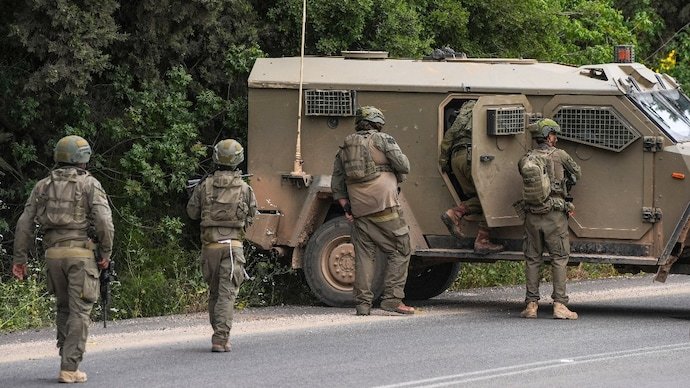
The latest Israeli strike on Beirut has once again pushed the Middle East to a dangerous crossroads. Hours after Israeli forces targeted Hezbollah-linked positions in Beirut’s Dahiyeh district, a senior Iranian lawmaker issued an ominous message directed at Israel: “Look at the sky over the occupied lands tonight.”
The statement immediately attracted global attention because it came at a time when tensions between Israel, Hezbollah, and Iran were already running high despite ongoing diplomatic efforts to prevent a wider regional war. While such warnings are not uncommon in the rhetoric surrounding the conflict, the timing of the statement has intensified concerns among analysts, governments, and civilians across the region.
The key questions are straightforward: Who is involved? What happened? Why does it matter? And how could this affect regional stability in the coming weeks?
The answer lies in understanding the deeper geopolitical dynamics connecting Israel, Lebanon, Iran, Hezbollah, and the broader struggle for influence across the Middle East.
What Happened in Beirut?
Israel carried out strikes in Beirut’s Dahiyeh district, an area widely regarded as a political and operational stronghold of Hezbollah. Israeli officials stated that the operation was a direct response to rockets fired toward northern Israel.
According to Israeli military statements, air defense systems intercepted projectiles crossing from Lebanon into Israeli territory. The government subsequently authorized retaliatory action against what it described as Hezbollah infrastructure.
Lebanese authorities reported casualties and injuries following the strike, while local residents described renewed fears that the capital could once again become a center of military confrontation.
The attack is particularly significant because Dahiyeh has historically been viewed as one of Hezbollah’s most important areas of influence. Any military action there carries symbolic, political, and strategic implications far beyond the immediate battlefield.
Why Iran’s Response Matters
Iran’s reaction is important because Tehran remains Hezbollah’s most influential international supporter. Over decades, Iran has provided political backing, military training, financial assistance, and strategic coordination to Hezbollah.
As a result, attacks targeting Hezbollah are often viewed by Iranian leaders as attacks against a key component of what Tehran calls the “Axis of Resistance,” a regional network of allied groups opposed to Israeli and Western influence.
The warning from Iranian parliamentary national security commission spokesperson Ebrahim Rezaei reflects this broader relationship. While the statement did not specify what actions might follow, it reinforced Tehran’s long-standing position that attacks on Hezbollah risk provoking wider consequences.
The language used was particularly notable because it implied that Israel could face retaliation in ways that extend beyond conventional military exchanges occurring along the Lebanese border.
The Strategic Importance of Hezbollah in the Regional Balance of Power
To understand why a strike in Beirut attracts immediate attention from Tehran, it is necessary to examine Hezbollah’s role in the Middle East. Founded in the early 1980s during Lebanon’s civil war, Hezbollah has evolved into one of the most influential non-state actors in the world.
Unlike many armed groups, Hezbollah operates simultaneously as a political movement, social service provider, and military force. The organization holds seats in Lebanon’s parliament, participates in government processes, and maintains significant influence across key regions of the country.
For Israel, Hezbollah represents the most powerful military threat along its northern border. For Iran, Hezbollah serves as a critical strategic partner and an important element of regional deterrence.
This unique position means that any confrontation involving Hezbollah rarely remains limited to Lebanon. Instead, it often becomes part of a broader geopolitical contest involving multiple regional and international actors.
The Long History Behind the Current Escalation
The latest developments are not isolated incidents. They are part of a decades-long conflict shaped by territorial disputes, security concerns, political rivalries, and competing regional ambitions.
The Israel-Hezbollah conflict has experienced multiple phases, including the 2006 Lebanon War, periodic border clashes, targeted strikes, and recurring ceasefire agreements. Although periods of relative calm have occurred, underlying tensions have never fully disappeared.
Recent years have further complicated the situation. The rise of drone warfare, advanced missile systems, cyber operations, and shifting regional alliances has transformed how military confrontations unfold in the Middle East.
As a result, even a limited exchange of fire today carries greater strategic significance than it might have a decade ago.
| Major Factor | Impact on Regional Stability |
|---|---|
| Cross-border rocket attacks | Increase risk of retaliation and escalation |
| Israeli airstrikes in Lebanon | Heighten tensions with Hezbollah and Iran |
| Iran-Hezbollah alliance | Expands conflict beyond Lebanese borders |
| International diplomatic efforts | Help prevent large-scale regional war |
| Civilian displacement | Creates humanitarian and economic challenges |
Why Ceasefires Continue to Break Down
One of the most important insights often missing from daily news coverage is that ceasefires in the region are frequently designed to stop immediate violence rather than resolve the underlying causes of conflict.
Issues such as border security, military deployments, political influence, and mutual distrust remain unresolved. This creates a situation where ceasefires become temporary pauses rather than permanent solutions.
When a rocket is launched, an airstrike occurs, or a military commander issues a threat, the fragile balance can quickly unravel. This explains why diplomatic agreements often struggle to survive despite strong international support.
The current situation reflects this pattern. While violence may decrease temporarily, the fundamental disputes driving the conflict remain largely unchanged.
The Human Cost Behind the Headlines
Geopolitical analysis often focuses on military strategy and diplomatic maneuvering, but the people living in affected areas experience a very different reality.
Residents of Beirut’s southern suburbs, southern Lebanon, and northern Israel have spent years living under the constant possibility of renewed conflict. Evacuation warnings, air raid sirens, and military operations disrupt everyday life and create long-term psychological stress.
Families face uncertainty about their safety. Businesses struggle to operate under unstable conditions. Schools and public services encounter repeated interruptions.
Even when active fighting subsides, communities often require years to recover economically and socially.
This human dimension remains one of the most significant yet underreported consequences of recurring conflict in the region.
The Economic Impact of Renewed Fighting
The economic consequences of military escalation are often felt long after the headlines fade. Lebanon, in particular, has faced severe economic challenges over recent years, including financial instability, currency depreciation, and reduced foreign investment.
Renewed military activity creates additional obstacles to recovery. Investors become more cautious, tourism declines, insurance costs rise, and infrastructure damage can require substantial reconstruction spending.
For businesses operating in affected areas, uncertainty becomes a major challenge. Companies may delay expansion plans, reduce hiring, or suspend operations altogether during periods of heightened tension.
These economic effects demonstrate that military confrontations can influence livelihoods far beyond the immediate conflict zone.
The Role of the United States and International Powers
The United States, European nations, Gulf countries, and international organizations continue to monitor developments closely because the implications extend beyond Israel and Lebanon.
A broader regional conflict could affect global energy markets, international shipping routes, investment flows, and diplomatic initiatives across the Middle East.
That is why international mediators frequently prioritize efforts to prevent localized clashes from evolving into larger confrontations.
The involvement of multiple external actors also highlights how interconnected Regional Security has become. Decisions made in Beirut, Tehran, Jerusalem, or Washington can influence events far beyond their immediate geographic boundaries.
Trump’s Call for More Surgical Military Action
US President Donald Trump’s comments calling for more targeted operations against Hezbollah introduced another perspective into the debate. His remarks reflected a broader strategic discussion about how military objectives can be pursued while minimizing civilian casualties and reducing the likelihood of escalation.
Supporters of highly targeted operations argue that precision strikes can neutralize threats without triggering widespread warfare. Critics, however, warn that even limited military actions can provoke retaliatory responses that ultimately expand conflicts.
This debate is increasingly relevant in an era where advanced surveillance systems, drones, and precision-guided weapons are reshaping military strategy around the world.
A Comparison With Previous Israel-Hezbollah Crises
Compared with earlier periods of conflict, today’s security environment is significantly more complex. Technological advancements have increased the speed and reach of military operations, while geopolitical alliances have become more interconnected.
Previous confrontations were often confined to specific battlefronts. Today, military, political, economic, and cyber dimensions overlap in ways that make escalation more difficult to predict.
This interconnected reality means that even relatively limited incidents can have far-reaching consequences for regional stability.
The warning issued by Iran following the Beirut strike illustrates how quickly local events can become part of a broader geopolitical narrative.
The Bigger Strategic Question: Is Deterrence Failing?
Perhaps the most important question emerging from the latest crisis is whether traditional deterrence strategies are becoming less effective.
For years, both Israel and Hezbollah relied on the assumption that the threat of severe retaliation would discourage large-scale warfare. While this approach has prevented some confrontations from escalating, repeated exchanges suggest that deterrence alone may no longer guarantee stability.
Each side seeks to project strength without crossing thresholds that could trigger a major war. Yet every military response carries risks of miscalculation.
History shows that many conflicts begin not because leaders seek a broader war, but because small incidents create unintended chains of escalation.
This possibility remains one of the greatest concerns among security analysts observing the current situation.
What Happens Next? Three Possible Scenarios
Scenario One: Diplomatic De-escalation
International mediation succeeds in reducing tensions, ceasefire mechanisms are strengthened, and both sides avoid further major military actions.
Scenario Two: Continued Low-Intensity Conflict
Cross-border exchanges continue sporadically, with periodic strikes and retaliatory actions occurring without escalating into a full-scale war.
Scenario Three: Wider Regional Escalation
The most concerning outcome involves broader military involvement by regional actors, significantly increasing instability across the Middle East.
While most governments seek to avoid this scenario, the possibility cannot be entirely dismissed given the complex network of alliances and rivalries involved.
Conclusion: Why the Beirut Strike Matters Beyond Lebanon
The Israeli strike on Beirut and Iran’s subsequent warning underscore how fragile the Middle East’s security environment remains. What appears on the surface to be another cross-border military exchange is actually part of a much larger struggle involving regional influence, deterrence, Diplomacy, and national security.
Iran’s message to “look at the sky tonight” captured global attention because it symbolized the broader uncertainty surrounding the conflict. The statement was not merely a reaction to a single airstrike; it reflected deeper tensions that have shaped the region for decades.
The coming weeks will be critical. Diplomatic efforts may succeed in containing the crisis, but the underlying drivers of conflict remain unresolved. Unless long-term political and security challenges are addressed, similar confrontations are likely to continue.
The larger lesson is clear: developments in Beirut no longer affect only Lebanon. In today’s interconnected Middle East, a single strike can influence regional security calculations, international diplomacy, economic stability, and the prospects for peace across a much wider landscape.
For breaking news and live news updates, like us on Facebook or follow us on Twitter and Instagram. Read more on Latest World on thefoxdaily.com.






COMMENTS 0