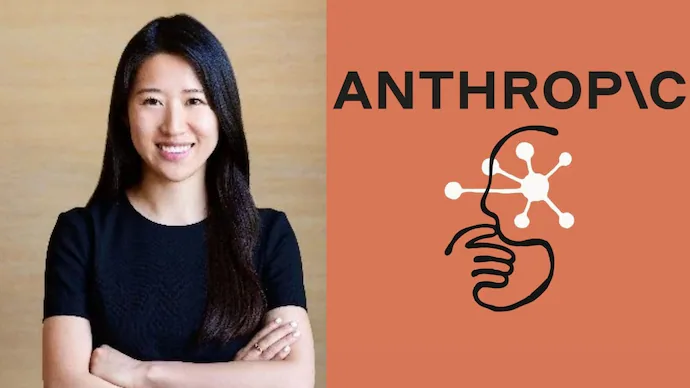
OpenAI has hired Cat Wu, a former product leader at Anthropic who helped shape its AI coding assistant Claude Code, to lead product management for the company’s Core Products team. The move brings an experienced AI product executive from one of OpenAI’s biggest competitors into its organisation as the Artificial Intelligence industry increasingly shifts towards autonomous agents and tools capable of handling complex tasks.
Wu announced her move on November 5, 2026, on X, just days after publicly confirming her departure from Anthropic. In her new role, she will work with OpenAI’s product management team, including Thibault Sottiaux, who leads Core Products, to develop AI agents designed to support individuals and teams while keeping users in control.
Her appointment comes at a time when OpenAI is expanding its products beyond conversational AI and software development. The company is investing in systems that can research information, analyse data, automate workflows and complete extended tasks with less continuous human supervision.
Cat Wu Announces Move From Anthropic to OpenAI
Wu shared the news of her appointment through a post on X on November 5. She expressed enthusiasm about joining OpenAI and highlighted the company’s achievements in scaling artificial intelligence technology and making AI products accessible to a large global audience.
She praised OpenAI for demonstrating the potential of scaling AI systems, bringing its tools to more than one billion people and placing product development at the centre of its mission.
In her announcement, Wu wrote:
“I’m excited to work with @thsottiaux, an incredible PM team, and everyone across OpenAI. Together, we’ll build agents that have your back and your team’s, and keep you in control, so you get more time for the people and work you love. Lots to learn, and lots to build. Please keep your feedback coming!”
Her statement points towards a product strategy focused on AI agents that can assist with individual and collaborative work. Rather than simply responding to instructions, these systems are intended to help users complete tasks while retaining the ability to guide their activities and review their output.
OpenAI President and co-founder Greg Brockman publicly welcomed Wu following her announcement. Thibault Sottiaux also responded, expressing his enthusiasm about working with her.
Sottiaux, known on X as @thsottiaux, leads OpenAI’s Core Products team. His role places him at the centre of the company’s efforts to develop products and agent capabilities for a wider range of users.
Why Cat Wu’s Move Is Significant for OpenAI
Wu’s appointment is notable because she previously played an important role in developing Claude Code, one of Anthropic’s prominent AI products. Her experience includes working on an AI tool that evolved from a small internal project into a widely used coding assistant.
OpenAI and Anthropic are competing across several areas of artificial intelligence, including advanced language models, coding assistants, enterprise tools and AI agents. Both companies are attempting to build products that can handle increasingly complicated tasks rather than limiting AI systems to answering questions or generating text.
Wu’s experience in developing products around AI-assisted work could be relevant as OpenAI expands Codex and other tools into broader productivity and enterprise applications.
The appointment also reflects the importance of product leadership in the AI industry. Building a powerful model is only one part of creating a successful AI product. Companies must also develop interfaces, workflows, permission systems and safeguards that allow people to use these capabilities reliably.
Product managers play a central role in deciding how AI capabilities become practical tools, how users interact with them and how feedback influences future development.
From Claude Code’s Early Development to a Major AI Product
Before joining OpenAI, Wu spent approximately two years working on Claude Code at Anthropic. She joined when the product was still a relatively small internal project and contributed to its development as the tool evolved into a more capable AI coding assistant.
Her departure announcement on November 3 offered a glimpse into how she first became involved with the project. Wu recalled asking the early version of Claude Code to build a reinforcement-learning environment and guiding the system for dozens of hours without manually writing code.
The experience convinced her of the potential of AI-assisted software development and motivated her to join the team working on the product.
Her account also highlighted how much the product changed during her time at Anthropic. In its early stages, users generally approved individual permission requests manually and relied on the assistant for relatively limited tasks, such as answering questions and writing tests.
Over time, Claude Code became capable of handling more substantial software engineering work, including large code migrations and building new products. Wu described the process of helping develop it into an industry-defining product as a significant professional experience.
She also thanked the teams behind Claude Code, Cowork and Tag, along with users whose feedback helped shape the products.
Wu’s Experience With Claude Code and AI-Assisted Development
Claude Code is an AI-powered coding tool designed to help developers work with software projects through natural-language instructions. It can inspect codebases, make changes, run commands and assist with debugging and other development tasks.
Its development reflects a broader shift in software engineering. AI coding tools are moving beyond simple code suggestions towards systems that can understand larger projects and carry out multiple steps towards completing a task.
Wu’s experience with Claude Code is relevant to this transition because she worked on the product during its development from an internal tool into a more capable coding assistant.
Her description of guiding an early AI system to build a reinforcement-learning environment also illustrates the changing relationship between developers and coding agents. Instead of manually writing every line of code, users increasingly provide objectives, review the system’s work and intervene when necessary.
That approach requires more than improvements in model intelligence. It also depends on how effectively a product handles permissions, context, task execution and human supervision.
These are among the challenges that companies such as OpenAI and Anthropic are trying to address as they develop more autonomous AI systems.
OpenAI’s Push Towards Persistent AI Agents
Wu’s stated interest in building agents that support users while keeping them in control aligns with OpenAI’s broader investment in agent-based products.
Traditional AI assistants generally respond to individual prompts. Users ask a question, receive an answer and provide another instruction when they want the system to continue. AI agents are designed to handle more complex workflows involving several connected actions.
For example, an agent could be assigned a research task, collect information from different sources, organise findings, analyse data and prepare a report. A coding agent could inspect a software project, identify a problem, modify files and run tests.
More advanced systems are also being developed to continue working over extended periods rather than depending on a user keeping a particular device or session active.
OpenAI’s strategy includes expanding Codex beyond its original focus on software development. The company has described applications involving research, analysis, building and workflow automation, making the product relevant to a wider range of professional tasks.
Wu’s appointment adds product experience from a competing AI coding platform at a time when OpenAI is working to make agent-based systems more useful for individuals, development teams and businesses.
OpenAI’s Acquisition of Ona Supports Its Long-Running Agent Strategy
One of OpenAI’s important moves towards persistent AI agents has been its acquisition of Ona, a startup specialising in secure cloud execution and orchestration technology.
OpenAI announced the planned acquisition on June 11, 2026. The transaction officially closed on August 10, bringing Ona into the company’s Codex ecosystem.
Ona’s technology is designed to provide secure, customer-controlled cloud environments where AI agents can continue working over extended periods. This allows agents to operate within an organisation’s infrastructure rather than remaining tied to the device or session where a task began.
OpenAI said at the time of the announcement that more than five million people were using Codex each week to research, analyse, build and automate work. The company also reported that weekly usage had increased by 400 per cent compared with earlier in the year.
The acquisition is intended to help Codex support longer-running workflows and enterprise deployments. With secure cloud environments, agents can continue working while users are away from their computers and allow people to reconnect to review progress or provide further instructions.
Ona’s technology also addresses the infrastructure requirements of businesses that want to use AI agents for production work. Organisations need to determine where agents operate, what systems and data they can access, how credentials are managed and how activities are recorded.
These controls become increasingly important when AI agents are given responsibility for tasks involving sensitive information, business applications or software systems.
How Persistent Agents Could Change the Way People Work
Persistent AI agents represent a shift from short interactions towards delegating larger tasks to artificial intelligence systems. Instead of remaining present throughout every stage of a workflow, users could assign a task and return later to inspect the results.
For individuals, this could mean using AI to organise research, analyse information, prepare documents or manage repetitive digital activities. For software developers, agents could handle extended coding tasks, test changes and help investigate technical problems.
Businesses could use similar systems to coordinate work across internal tools and automate processes that currently require employees to move between different applications.
However, greater autonomy also creates new requirements for oversight. A system that can operate for hours without direct supervision must be able to work within clearly defined boundaries.
Companies need controls over data access, system permissions, credentials and the actions an agent is allowed to perform. They also need reliable records of what the system has done so that employees can inspect its work and identify problems.
OpenAI’s acquisition of Ona addresses part of this infrastructure challenge by providing secure cloud environments for persistent agent execution. Wu’s experience in developing AI products could contribute to how these capabilities are translated into practical user experiences.
Keeping Users in Control Remains a Key Product Challenge
One of the most important parts of Wu’s announcement was her emphasis on keeping users in control. The statement suggests that OpenAI’s product direction is not simply about making AI agents more autonomous, but also about ensuring that people can guide and supervise their work.
As AI systems become capable of completing longer tasks, users need ways to understand what an agent is doing, provide additional instructions and intervene when a decision requires human judgement.
For businesses, this requirement is particularly important. An agent working inside a company’s cloud environment may interact with internal documents, software repositories, databases and other operational systems. Organisations need clear rules governing which resources it can access and what actions it can take.
They also need mechanisms to review completed work, track activity and maintain accountability. Without these safeguards, greater automation could introduce operational and security risks.
OpenAI’s focus on secure execution through Ona and its broader Codex development indicates that infrastructure and governance are becoming important parts of the agent product strategy.
Wu’s stated goal of building agents that support individuals and teams while keeping users in control fits into this wider direction. However, the specific products and features she will oversee have not been fully detailed in her announcement.
What Cat Wu’s Appointment Means for the OpenAI-Anthropic Competition
Wu’s move adds another development to the competition between OpenAI and Anthropic. Both companies are working to make AI systems more capable of carrying out complex tasks, particularly in software development and workplace productivity.
Anthropic has developed Claude Code and Cowork, while OpenAI is expanding Codex into coding, research, analysis and automation. Their competition increasingly involves more than the performance of individual AI models.
The companies must also build products that fit into everyday workflows, support collaboration and meet the security requirements of organisations.
Hiring experienced product leaders can help companies translate technical advances into tools that people can use effectively. Wu’s experience with Claude Code gives her direct exposure to the challenges of developing an AI coding product and responding to user feedback as its capabilities expand.
Her appointment does not, by itself, establish how OpenAI’s products will change or which features she will introduce. It does, however, bring experience from a competing organisation into a team responsible for the company’s core products.
The move also highlights how closely talent, product development and competition are connected in the rapidly evolving AI industry.
What Comes Next for Cat Wu at OpenAI?
Wu’s immediate focus will be working with Sottiaux and OpenAI’s product management team on the company’s Core Products. Her public announcement points towards AI agents that can support both individual users and teams while allowing people to retain control over their work.
OpenAI has not publicly outlined a detailed list of products or specific features that Wu will manage. Her appointment should therefore be viewed as a product leadership move rather than confirmation of an immediate launch or major product change.
Nevertheless, the timing is significant. OpenAI is expanding Codex, integrating secure cloud execution capabilities following the Ona acquisition and developing tools that can handle more complex workflows.
Wu’s background in Claude Code gives her experience with the development of AI systems that move beyond answering questions towards completing substantial tasks. That experience could be relevant as OpenAI continues to develop its agent ecosystem.
Conclusion
Cat Wu’s move from Anthropic to OpenAI marks a notable personnel development in the competition between two leading artificial intelligence companies. Having helped shape Claude Code from an early internal project into a widely used AI coding product, she brings practical product development experience to OpenAI’s Core Products team.
Her stated ambition to build agents that support individuals and teams while keeping users in control aligns with OpenAI’s broader efforts to expand Codex and develop persistent AI systems. The acquisition of Ona provides part of the cloud infrastructure needed to support agents working on longer tasks within secure environments.
The immediate impact of Wu’s appointment remains to be seen, as OpenAI has not disclosed the specific products or features she will oversee. However, her arrival comes as the AI industry moves towards systems designed not only to generate answers but also to carry out complex work. How effectively OpenAI combines greater agent autonomy with user control, security and practical product design will be an important part of its next phase of development.
For breaking news and live news updates, like us on Facebook or follow us on Twitter and Instagram. Read more on Latest Technology on thefoxdaily.com.






COMMENTS 0