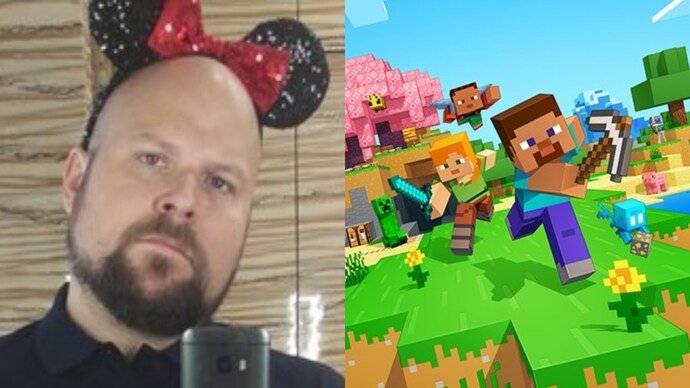
Markus Persson, the creator of the global gaming phenomenon Minecraft, wants more computing power from artificial intelligence company Anthropic. The Swedish developer has publicly asked the company for greater access to its AI tools, including higher or unlimited token usage and faster responses, saying he is willing to pay for better services because he is working on something he has never seen before.
The request offers a glimpse into Persson’s growing use of AI-assisted programming as he explores new possibilities in independent game development. Known online as Notch, he has recently shared experiments involving Anthropic’s Claude AI, including an attempt to rebuild one of his older game engines from scratch.
In a post on X, Persson tagged Anthropic’s official account and directly asked whether the company could provide more generous usage limits and improved speed. He also expressed support for the company’s AI manifesto, although he did not explain which aspects of it influenced his position.
Most importantly, Persson offered no technical details about the project behind his request. His statement that he is building something he has never seen before has attracted attention because of his history of creating one of the most influential sandbox games in modern gaming.
Why Minecraft creator Notch wants unlimited Claude AI tokens
Persson’s request centres on two important aspects of AI-assisted development: token availability and response speed. Both can become significant limitations when developers use AI models repeatedly for programming, debugging, rewriting code and experimenting with complex software systems.
In his X post, Persson wrote:
“Any chance I could get more unlimited token usage and perhaps even more speed? I’ve got the money to burn, and I’d love to exchange it for better goods and services. And I’m building new shit that I’ve never seen before. I agree with your AI manifesto, btw.”
His message makes clear that he is not simply looking for occasional assistance with small programming tasks. He appears to be using AI frequently enough that existing usage limits and response times have become important considerations in his workflow.
AI models such as Claude can help developers generate code, understand existing software, identify bugs and explore alternative implementations. However, complex projects may require repeated interactions, large amounts of context and multiple rounds of revisions. Developers working through these processes can quickly encounter limits imposed by their subscription or usage arrangements.
Tokens are the basic units of text and other information processed by language models. They are used to measure the input provided to an AI system and the output it generates. A developer working with large codebases or lengthy technical instructions may consume substantial numbers of tokens during extended sessions.
Higher usage limits can therefore allow more experimentation without frequent interruptions. Faster responses can also reduce waiting time when a developer is repeatedly testing ideas, reviewing generated code or asking an AI system to make changes.
Persson’s willingness to pay for additional access suggests that he considers these restrictions significant enough to justify a larger investment. However, Anthropic’s public response to his request, if any, would be needed to establish whether the company is prepared to offer him a customised arrangement.
Notch has been using Claude to rebuild an old game engine
The request for greater access comes after Persson shared another AI experiment on November 20. In that project, he asked Claude to rebuild one of his older game engines from scratch.
Rather than simply asking the AI to produce a small piece of code, Persson described what the original engine was capable of doing. He also included features he had wanted to develop previously but had never completed himself.
Claude then helped him create a rewritten version of the engine. Persson shared a demonstration showing a three-dimensional voxel-based environment running through the rebuilt technology.
The experiment is notable because it involves more than generating isolated programming functions. Reconstructing a game engine requires an understanding of how different software components interact, including rendering, world representation, movement, object behaviour and the systems that allow a virtual environment to function.
A voxel-based environment is built from three-dimensional units, often resembling small cubes. Minecraft popularised this visual approach by allowing players to construct and explore worlds made from blocks. Although voxel graphics can look simple, the software required to manage large environments, interactions and rendering can involve substantial technical complexity.
Persson acknowledged that the demonstration still had imperfections. The project included AI-generated artwork and visible seams, showing that the rewritten engine was not yet a polished or finished product.
Nevertheless, the experiment demonstrated how AI could help a developer revisit older software and rapidly explore features that might otherwise require considerable manual programming.
AI-assisted coding is changing how independent developers experiment
Persson’s recent activities reflect a broader shift in software development. AI coding assistants are increasingly being used not only to complete routine programming tasks but also to support experimentation with larger projects.
For independent developers, this can be particularly valuable. A small development team or an individual programmer may have limited time and resources to build an entire game engine, test new mechanics and maintain complex software. AI tools can help reduce some of the repetitive work involved in these processes.
Developers can describe an intended feature, ask an AI assistant to generate an initial implementation and then review or modify the result. They can also use AI to understand unfamiliar code, investigate errors and explore alternative technical approaches.
However, AI-generated code does not automatically produce reliable or production-ready software. Developers still need to test the results, identify incorrect assumptions, address security and performance issues and ensure that different components work together properly.
Persson’s engine experiment illustrates both sides of this development. Claude helped produce a working demonstration from an older engine concept, but the visible imperfections show that substantial refinement can remain necessary after AI generates the initial implementation.
For experienced programmers, the value of these tools may therefore lie less in replacing technical knowledge and more in accelerating the process of turning ideas into prototypes.
Persson says even Claude’s highest settings struggle with his coding demands
Persson has also made other public comments suggesting that he is pushing AI coding tools heavily. In a recent post, he joked that even Claude operating at its highest settings could not comfortably keep up with his programming demands.
Although the remark was made humorously, it points to a practical challenge for developers using advanced AI systems: more capable models do not necessarily remove restrictions on how much they can be used or how quickly they respond.
AI-assisted programming often involves a continuous cycle of instructions, generated code, testing, error reports and revisions. When a developer is exploring several possible solutions, each stage can require additional interactions with the model.
Large projects can also demand more context. An AI assistant may need to understand existing code, project requirements and previous decisions before making useful changes. This can increase the amount of information processed during a session.
Persson’s request for additional tokens and faster access appears connected to this pattern of intensive use. He seems interested in maintaining a development process in which AI can remain available throughout extended periods of experimentation.
His comments also highlight an emerging distinction in AI software services: the capabilities of a model and the amount of access a user receives are separate considerations. Even when a model can perform a task, usage limits, context restrictions and response speed can influence how effectively a developer can use it.
What is Markus Persson building now?
Despite describing his work as something he has never seen before, Persson has not revealed the project’s identity, gameplay mechanics or development timeline.
His X profile indicates that he is currently working on Levers and Chests, described as a dungeon-crawler roguelike. The project provides a possible indication of his current interests, but Persson has not confirmed that it is the same undertaking mentioned in his request to Anthropic.
A roguelike is a game genre generally associated with procedurally generated environments, challenging gameplay and progression systems in which individual runs can differ. Dungeon-crawler games typically involve exploring enclosed environments, encountering enemies, collecting items and overcoming increasingly difficult challenges.
The combination of Persson’s interest in game engines and his work on an independent game makes AI-assisted development a natural area for experimentation. Rebuilding older technology could help him explore new mechanics, create custom systems or test ideas without relying entirely on conventional development workflows.
However, these possibilities remain speculation. There is currently no confirmed information about whether the new project involves a new game engine, an experimental game, a different genre or an entirely separate form of interactive software.
His statement has generated curiosity largely because of the contrast between the scale of his ambition and the limited information he has shared. Until Persson provides further details, the actual nature of the project remains unknown.
From Minecraft’s success to independent game development
Persson’s interest in experimenting with new technology comes after a career-defining achievement that changed the video game industry.
He created Minecraft, the block-based sandbox game that became a global phenomenon after its initial release in 2009. Its open-ended design allowed players to build structures, explore environments, collect resources and create their own experiences rather than follow a single fixed storyline.
The game’s flexible mechanics and creative possibilities helped it attract players across different age groups and gaming platforms. Minecraft eventually became one of the most recognisable and commercially successful video game franchises in the world.
In 2014, Microsoft announced that it would acquire Mojang, the studio behind Minecraft, in a deal valued at $2.5 billion. Persson left the company after the acquisition.
His departure marked a transition from leading one of the industry’s most influential independent game projects to pursuing other interests outside Mojang. He has since continued to experiment with independent development rather than returning to the same kind of large-scale studio operation.
His latest AI-related activities suggest that he is exploring how modern development tools can change the process of building games. The technology offers an opportunity to revisit ideas, reconstruct older systems and test concepts that might previously have required significantly more time.
Why Persson’s AI experiment matters for the gaming industry
Persson’s public request to Anthropic is interesting not simply because it comes from the creator of Minecraft, but because it illustrates how experienced developers are beginning to incorporate AI into creative and technical workflows.
Game development involves several interconnected disciplines, including programming, visual design, animation, physics, sound, level creation and performance optimisation. AI tools can assist with parts of these processes, potentially making early experimentation more accessible to smaller teams and independent creators.
One particularly important possibility is faster prototyping. Developers often have ideas that are technically interesting but too time-consuming to test using traditional workflows. AI-assisted coding could help turn some of those ideas into early demonstrations, allowing creators to evaluate whether they are worth developing further.
Another potential benefit is working with legacy software. Rebuilding an older game engine, as Persson attempted, demonstrates how AI can help developers explore existing technology and adapt it for new experiments. This could be useful when documentation is limited or when a programmer wants to understand how an older system works.
However, AI does not remove the need for creative direction or technical judgment. A game engine must still deliver stable performance, accurate physics, reliable rendering and consistent behaviour. AI-generated artwork and code may also require extensive editing before they are suitable for a finished commercial product.
There are also questions about the cost of intensive AI use. Developers seeking higher usage limits may need to pay more for access, particularly when working with large codebases and complex tasks. The economics of AI-assisted development will depend on whether the time saved and additional capabilities justify the expense.
Persson’s request captures this emerging trade-off. He appears willing to spend more because he believes greater access to AI tools could help him move faster and explore more ambitious ideas.
Will Anthropic give Notch unlimited access to Claude?
Persson’s post is a direct request to Anthropic, but it does not establish that the company has agreed to provide unlimited tokens, customised access or faster service.
AI companies generally manage access through usage limits, subscription arrangements and other service conditions. These restrictions can depend on the model being used, the amount of demand on the system and the type of account or commercial arrangement available to a customer.
A developer with particularly intensive requirements may need a different access arrangement from an ordinary individual user. However, whether Anthropic will offer Persson such an arrangement remains unconfirmed.
His willingness to pay could make a higher-capacity arrangement commercially interesting, but unlimited usage is not necessarily a straightforward service option. AI systems require computing resources, and greater demand can affect infrastructure costs and availability.
For now, the more significant development is Persson’s growing reliance on Claude as a programming partner. His engine-rebuilding experiment and public comments about usage limits indicate that he is testing the technology beyond occasional coding assistance.
A new chapter in Notch’s creative experiments
Markus Persson’s request to Anthropic offers an early look at how an influential game creator is approaching the next generation of software development tools. After creating Minecraft and leaving Mojang following Microsoft’s acquisition, he has continued to explore independent projects and new technical ideas.
His recent work with Claude suggests that AI is becoming an important part of that experimentation. Rebuilding an old game engine, generating a voxel-based environment and seeking higher usage limits all point towards an attempt to push the technology beyond simple programming assistance.
Yet the biggest question remains unanswered: what exactly is he building?
Persson has deliberately offered little information about the project, leaving its scope and purpose unclear. Whether it becomes a new game, an experimental engine or something entirely different is still unknown. What his comments do establish is that he wants more freedom to experiment with AI, and he appears prepared to invest in the tools he believes can help him achieve it.
For breaking news and live news updates, like us on Facebook or follow us on Twitter and Instagram. Read more on Latest Technology on thefoxdaily.com.


COMMENTS 0