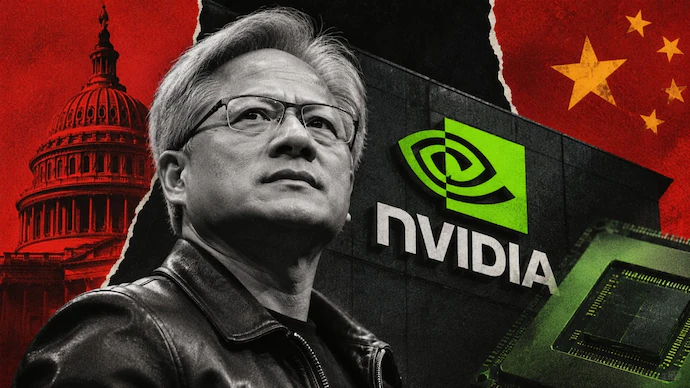
Jensen Huang did resign as Nvidia’s CEO on November 12, but the available evidence does not establish that Secretary of State Marco Rubio or other officials engineered his departure. The confirmed story involves an independent Nvidia board investigation, concerns about a possible foreign intelligence operation, Huang’s admission of infidelity and intense scrutiny of the company’s China-related business. The political theory is worth examining as speculation, not presenting as a proven explanation.
Why Did Jensen Huang Leave Nvidia? Did He Fly Too Close to the Sun With US Government Affairs?
Jensen Huang’s sudden departure as Nvidia CEO has raised questions about the intersection of personal scandal, US national security and Washington’s battle over AI chip exports to China. While reports reveal tensions involving Secretary of State Marco Rubio and Huang’s relationship with a woman suspected of links to Chinese intelligence, there is no established evidence that political rivals engineered his exit.
Jensen Huang spent more than three decades building Nvidia from a graphics-chip company into one of the most strategically important businesses in the world. Its processors became central to the Artificial Intelligence boom, making Huang not just a technology executive but also an influential figure in Washington’s debate over America’s technological competition with China.
That position made his sudden departure as Nvidia’s chief executive particularly striking.
On November 12, 2026, Nvidia announced that Huang had resigned as president and CEO, effective immediately. Chief Financial Officer Colette Kress was appointed interim CEO while the board began searching for a permanent successor.
The announcement followed a turbulent period involving reports of Huang’s extramarital relationships, concerns about a possible Chinese intelligence operation involving businesswoman Alice Huang, and an independent investigation launched by Nvidia’s board.
But the timing has also fuelled a broader political theory: did Huang become too deeply involved in Washington’s internal disagreements over China and advanced AI chips? Did his willingness to defend Nvidia’s access to the Chinese market antagonise powerful officials who wanted a tougher approach?
Secretary of State Marco Rubio has emerged in reporting about the controversy because he reportedly briefed President Donald Trump on intelligence concerning Huang and Alice Huang during the May 2026 China trip.
That connection raises legitimate questions about the relationship between national security policy and corporate leadership. However, it does not establish that Rubio orchestrated Huang’s departure or that the affair allegations were deliberately used to remove him.
How Nvidia Became Too Important to Be Just Another Technology Company
Nvidia’s transformation explains why Huang’s relationship with the US government became increasingly important. Founded in 1993, the company initially built its reputation through graphics processing units, or GPUs, used in computer graphics and gaming.
Over time, those processors became valuable for a much wider range of computing tasks. Their ability to handle large numbers of calculations simultaneously made them particularly useful for artificial intelligence, machine learning and advanced scientific computing.
As AI models became larger and more demanding, Nvidia’s hardware and software ecosystem became a critical part of the infrastructure supporting their development.
Companies building advanced AI systems needed enormous computing capacity. Nvidia’s GPUs, networking equipment and CUDA software platform helped establish the company as a leading supplier of that infrastructure.
The consequences extended beyond the technology industry. AI development increasingly became connected to national competitiveness, military applications, economic productivity and strategic influence.
For the US government, advanced AI chips were no longer simply commercial products. They were technologies with potential implications for national security and the balance of power between Washington and Beijing.
That change placed Nvidia at the centre of a political debate that Huang could not avoid.
Jensen Huang’s China Strategy Put Him at Odds With Export-Control Hawks
One of the most important disagreements in Washington concerns how much access Chinese companies should have to advanced American AI processors.
US export controls have sought to restrict China’s access to certain high-performance chips and related technologies. The stated concern is that advanced computing capabilities could strengthen China’s military and intelligence systems or accelerate its technological development in strategically sensitive areas.
Huang has repeatedly argued that restricting Nvidia’s access to China carries economic and strategic costs. His position has been that American companies should remain competitive in international markets and that allowing Chinese customers to purchase compliant Nvidia products can help preserve the company’s influence.
He has also argued that excessively restrictive policies could encourage Chinese companies to develop domestic alternatives, eventually reducing their dependence on American technology.
That position has placed him on the opposite side of some China-focused policymakers who favour tighter restrictions on advanced semiconductor exports.
The disagreement is not simply about one company’s sales. It reflects two competing approaches to technological competition.
One approach prioritises limiting China’s access to advanced computing hardware, even if American companies lose commercial opportunities. The other argues that maintaining a presence in the Chinese market can preserve US technological influence and give American firms an advantage over foreign competitors.
Huang became one of the most prominent corporate voices in this debate because Nvidia’s products were directly affected by the decisions.
Why Washington’s AI Chip Debate Became a Political Risk for Huang
Nvidia’s commercial interests and US national security priorities do not always point in the same direction. The company wants access to large international markets, while policymakers must consider how advanced processors could be used by foreign governments and organisations.
This tension became particularly visible during the Trump administration’s changing approach to chip exports.
President Trump allowed Nvidia to pursue certain sales of advanced processors to China under specific conditions. The decisions created opportunities for the company but also attracted criticism from lawmakers and national security advocates who wanted stricter controls.
Huang’s lobbying for market access therefore became politically sensitive. His arguments could be interpreted as an effort to protect American commercial competitiveness, while critics could view the same position as insufficiently cautious about China’s technological ambitions.
The disagreement became more complicated because Nvidia was not merely a supplier of ordinary computer components. Its processors were central to the global expansion of AI computing, giving its chief executive unusual access to policymakers and world leaders.
That influence may have made Huang valuable to the administration in some circumstances and controversial in others.
Marco Rubio’s Role in the May 2026 China Trip
Marco Rubio became central to speculation about Huang’s political difficulties after reports emerged about a briefing delivered to Trump during his May 2026 trip to China.
According to reporting based on people familiar with the matter, Rubio informed Trump aboard Air Force One that US intelligence had information suggesting Huang was involved in a relationship with Alice Huang, a businesswoman suspected by American authorities of having connections to Chinese intelligence.
The briefing reportedly took place shortly before Huang joined the presidential delegation during a stop in Anchorage, Alaska.
Huang eventually travelled with Trump to China. The episode attracted attention because it placed a sensitive intelligence concern alongside the president’s engagement with one of America’s most influential technology executives.
It also raised questions about whether officials within the administration disagreed over Huang’s participation in the trip and how much influence he should have in discussions involving AI technology and China.
However, the available reporting does not establish that Rubio personally prevented Huang from joining the delegation or that he later arranged the Nvidia CEO’s departure. The fact that Rubio briefed Trump about intelligence concerns is not proof of a political campaign against Huang.
The Alice Huang Controversy and the National Security Investigation
The relationship between Jensen Huang and Alice Huang added a much more serious dimension to the controversy.
Alice Huang, also known as Huang Le, is a businesswoman associated with Singapore-based cloud computing company Megaspeed International. The company came under scrutiny in connection with suspected attempts to divert advanced Nvidia AI processors to China.
US authorities have examined whether Megaspeed was involved in transactions that could have helped restricted AI hardware reach unauthorised destinations. Alice Huang’s business activities and connections became part of the wider national security investigation.
Reports later alleged that US intelligence agencies suspected her of gathering information for Beijing. These allegations have not been conclusively established in public, and Reuters has reported that it could not independently verify whether she worked for Chinese intelligence.
China has rejected the espionage allegations.
The distinction is important. Being investigated in connection with a company suspected of export-control violations does not automatically establish that an individual was acting as an intelligence operative. Nor does a personal relationship with someone under scrutiny prove that confidential company information was transferred.
Nvidia’s board announced on November 8 that it was launching an independent investigation after reports suggested Huang might have been the target of a foreign intelligence effort.
The board said it had no reason to believe that Nvidia secrets or national security had been compromised, but it would examine all available information with the assistance of outside legal counsel.
Huang Admitted Infidelity as Pressure on Nvidia Intensified
Alongside the national security allegations, Huang faced scrutiny over his personal conduct.
In a message to Nvidia employees on November 8, he admitted that he had been unfaithful to his wife and apologised to his family, colleagues and the company community.
He accepted responsibility for his actions and said he would cooperate fully with the board’s investigation into the national security concerns.
Subsequent reporting described another alleged relationship involving a senior Nvidia employee. The revelations increased pressure on Huang and raised questions about corporate governance, workplace relationships and the responsibilities of a chief executive.
For a company with Nvidia’s global influence, the issue extended beyond personal morality. A CEO’s conduct can become a governance concern when it potentially affects workplace relationships, internal decision-making, access to sensitive information or the company’s reputation.
It is therefore possible to understand why the board would take the allegations seriously without assuming that they were merely a pretext for a political operation.
Why the Speed of Huang’s Departure Raised Questions
One of the most striking aspects of the episode was the short period between Nvidia announcing its investigation and Huang’s resignation.
On November 8, the board said an independent committee would examine the reports and expressed confidence in Huang and his leadership team. The company also said Huang supported the review and would cooperate.
Four days later, Nvidia announced that he had resigned with immediate effect.
The speed of the transition naturally raised questions about what happened behind closed doors. Was the board concerned about the possible impact of the investigation? Did Huang decide that stepping aside was better for the company? Were there governance or legal considerations that made continuing as CEO difficult?
The public announcement did not provide a detailed explanation of the circumstances behind his resignation. Nvidia’s regulatory filing confirmed that the board accepted his resignation, while the company’s announcement said Kress would serve as interim CEO during the search for a permanent replacement.
That distinction matters. Although some political figures described the departure as a firing, the company’s formal announcement described it as a resignation. Without further evidence, it would be inaccurate to state that the board formally dismissed Huang or that a government official ordered his removal.
Did Washington’s China Hawks Want a Different Nvidia Leadership?
There is, however, clear evidence that some influential US lawmakers wanted Nvidia to change its approach to national security and China-related business.
John Moolenaar, chairman of the House Select Committee on China, issued a statement following Huang’s departure describing it as an unfortunate end that could have been avoided.
He argued that American companies should not jeopardise national security by giving Chinese companies access to the most advanced chips. He also called on Nvidia to change its corporate practices and appoint leadership that makes national security a top priority.
His comments demonstrate that Huang’s departure had become part of a larger political debate over the future of US semiconductor export policy.
They also show that some policymakers see Nvidia’s leadership and commercial strategy as directly connected to national security priorities.
But Moolenaar’s statement does not prove that Rubio or another administration official engineered Huang’s resignation. It is evidence of a public policy position, not evidence of a coordinated effort to remove the former CEO.
Trump’s Position Complicates the Political Theory
President Trump has also been an important figure in the controversy because of his relationship with Huang and his administration’s approach to AI chip exports.
Trump had previously supported certain Nvidia chip sales to China and maintained contact with Huang. Following the scandal, he publicly expressed support for the former CEO and indicated that he would not object to seeing him return.
That position complicates the theory that Huang’s departure was simply the result of a unified administration effort to remove him.
The Trump administration has included officials with different views on the balance between commercial access to China and national security restrictions. Huang’s position on chip exports may have aligned more closely with some parts of the administration than others.
It is therefore possible to identify a genuine policy disagreement without concluding that it produced a coordinated political campaign against him.
What Happens to Nvidia After Jensen Huang?
Huang’s departure creates a major leadership transition for a company whose identity has been closely associated with its founder for more than three decades.
Colette Kress, Nvidia’s long-serving chief financial officer, has taken over as interim CEO. The board has begun searching for a permanent successor and indicated that it will consider both internal and external candidates.
The immediate challenge is to maintain confidence among employees, customers, suppliers and investors while the company deals with the investigations and regulatory scrutiny.
Nvidia’s future leadership will also have to navigate the difficult relationship between commercial growth and national security compliance. The company’s global customers and supply chain make export-control decisions particularly consequential.
On November 17, Nvidia announced the creation of a board-level National Security and Export Control Oversight Committee. The committee is intended to supervise national security policies, export-control compliance and global trade risk management.
The move signals that the company is strengthening board-level oversight of issues that have become central to its business and public scrutiny.
So, Did Jensen Huang Fly Too Close to the Sun?
The idea that Huang became too influential in Washington and eventually angered powerful China hawks is a political interpretation of events, not an established explanation for his resignation.
There are facts that make the theory understandable. Nvidia became a strategically important supplier of AI hardware. Huang publicly advocated for continued access to the Chinese market. Washington officials disagreed over how much advanced technology China should be allowed to purchase. Rubio reportedly briefed Trump about intelligence concerning Alice Huang during the May trip, and lawmakers later demanded greater scrutiny of Nvidia’s China-related business.
There are also important facts that limit the theory. Nvidia’s board launched an independent investigation, publicly expressed confidence in Huang at the time, and said it had no reason to believe company secrets or national security had been compromised. Huang admitted infidelity, and the board accepted his resignation. No public evidence establishes that Rubio ordered his removal or that the affair allegations were deliberately weaponised to force him out.
The more defensible explanation is that several serious issues converged around a CEO whose company had become central to US-China technology competition. Personal conduct, corporate governance, national security concerns and disagreements over export controls all became part of the same crisis.
Whether political rivalries influenced the events behind the scenes remains an open question. What is clear is that Nvidia’s leadership transition has exposed how closely the business of advanced AI hardware is now connected to government policy.
Huang built Nvidia into a company that could influence the direction of the global AI industry. But the same strategic importance that gave him extraordinary access to political leaders also placed him under scrutiny from policymakers who view advanced chips as instruments of national power.
His departure is therefore about more than a corporate scandal. It highlights a difficult reality for technology companies: when their products become essential to national security, decisions about where to sell them and how to manage international relationships can become political questions as much as commercial ones.
For breaking news and live news updates, like us on Facebook or follow us on Twitter and Instagram. Read more on Latest Technology on thefoxdaily.com.






COMMENTS 0