Artificial Intelligence is changing the role of software engineers, with coding increasingly becoming a task that AI tools can perform while human professionals focus on reviewing, debugging and certifying the output. Infosys co-founder S Gopalakrishnan has said that software engineers must develop a deeper understanding of programming to assess AI-generated code and ensure it is safe, reliable and compatible with existing systems.
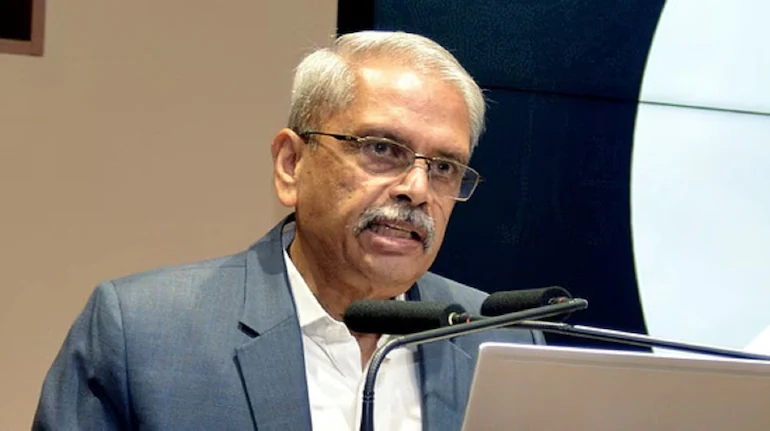
Speaking at the Bengaluru Tech Summit 2026 on Tuesday, Gopalakrishnan said programming was the first area where AI’s impact had become particularly visible. He argued that the traditional role of developers would need to evolve as companies adopt AI-assisted software development.
However, he cautioned against relying completely on AI-generated code, pointing to risks such as incorrect outputs, security vulnerabilities and programming errors. According to him, the future of software engineering will involve less emphasis on writing every line of code manually and more responsibility for checking and approving what AI produces.
AI Is Changing the Role of Software Engineers
Gopalakrishnan said the impact of AI had appeared first in programming, despite earlier expectations that other areas of work might experience disruption sooner. As AI tools become capable of generating code, software engineers will increasingly be expected to evaluate whether that code can be safely implemented.
He explained that developers need to understand the logic and structure of AI-generated programmes rather than simply accept the output produced by a tool. A programmer’s responsibility will increasingly include reviewing code, identifying problems, correcting errors and certifying that the final product meets the required standards.
This change does not mean that software engineering will become less demanding. In fact, reviewing AI-generated code could require a stronger understanding of programming because engineers must identify problems in work they did not necessarily create themselves.
Gopalakrishnan said software professionals would need retraining to prepare for this shift. Instead of focusing only on learning how to write code, they must develop the ability to assess the quality, security and reliability of programmes produced with AI assistance.
Why AI-Generated Code Cannot Be Fully Trusted Yet
One of Gopalakrishnan’s main concerns was the reliability of AI-generated software. He warned that AI systems can produce incorrect information, introduce security weaknesses and leave bugs in the code.
He also raised the possibility of backdoor entries appearing in AI-generated programmes, highlighting the importance of security checks before software is deployed. His comments underline a broader challenge for businesses adopting AI: code that appears functional may still contain vulnerabilities or hidden problems.
AI tools can generate software quickly, but speed alone does not guarantee that the output is suitable for use in critical systems. A programme may work under limited testing conditions while failing when exposed to different inputs, larger workloads or real-world security threats.
For companies handling sensitive information, financial transactions or healthcare data, such mistakes can have serious consequences. Human review therefore remains essential, particularly when software is used in systems where reliability and data protection are important.
Gopalakrishnan’s warning suggests that businesses should treat AI-generated code as work that requires professional verification rather than as a finished product ready for immediate deployment.
How AI Could Change Software Engineering Recruitment
Gopalakrishnan also discussed how companies may need to rethink the way they assess fresh software engineering graduates. Traditional coding tests may not be sufficient to determine whether a candidate can work effectively in an environment where AI tools generate much of the initial code.
He described a possible assessment in which a graduate who uses AI to write a programme would be given a piece of AI-generated code and asked whether they would implement it and take the project forward.
The exercise would test whether the candidate understands the underlying programming concepts and can identify problems in the generated output. It would also reveal whether the person can distinguish between code that appears correct and code that is genuinely ready for deployment.
According to Gopalakrishnan, reviewing code requires a superior understanding of programming. Developers must be able to examine the logic, detect errors and decide whether the programme can be integrated into a larger system.
This could influence recruitment and training practices across the Technology industry. Employers may increasingly look for candidates who can combine programming knowledge with problem-solving, debugging, security awareness and the ability to work with AI tools.
Retraining Tech Employees Will Become a Priority
As AI adoption expands, software companies will need to prepare existing employees for changing responsibilities. Gopalakrishnan said retraining software engineers would be necessary to help them move towards code review, debugging, correction, integration and certification.
These skills are important because software development involves more than producing individual pieces of code. Developers must understand how different components interact, whether a new application works with existing infrastructure and whether the final system meets business requirements.
Gopalakrishnan compared the future importance of code review with doctoral training, where students are expected to examine existing research before making new contributions. In a similar way, software engineers will need to develop the ability to assess existing work before approving or extending it.
He emphasised that peer review and certification could become increasingly important professional skills. This approach would help organisations establish accountability for software produced with AI assistance.
For technology workers, the message is that learning programming fundamentals will remain important even if AI increasingly handles routine coding tasks. A strong foundation will be necessary to understand, evaluate and correct the output generated by automated systems.
Large Companies Will Not Replace Their Systems Overnight
Despite the growing capabilities of AI, Gopalakrishnan does not expect large enterprises to replace their entire technology infrastructure with AI-generated code overnight.
Large organisations often operate complex systems that have been developed and maintained over many years. These systems may support banking operations, insurance services, healthcare processes, supply chains and other critical business functions.
Replacing them requires careful planning because new applications must work with existing software, databases and operational processes. Even if AI can generate code for a new system, companies still need to test it, debug it and ensure that it integrates correctly with their legacy infrastructure.
Gopalakrishnan said the transition would take place in stages. Organisations would need to examine the generated code, correct errors, integrate it with existing systems and train employees to use the updated technology.
Documentation and user manuals would also remain necessary. AI may help produce these materials, but they would still require review and certification to ensure that employees receive accurate instructions.
This gradual approach could allow large companies to benefit from AI without exposing critical operations to unnecessary risks. It also means that software engineers with experience in legacy systems and enterprise integration may continue to play an important role.
Why IT Services and Outsourcing Will Continue
Gopalakrishnan said artificial intelligence would create new opportunities in the technology industry but would not eliminate the need for large IT services and outsourcing companies.
He explained that businesses do not outsource work only because they lack employees who can perform technical tasks. They also rely on external technology firms for specialised industry knowledge, consulting expertise and experience gained from working with different organisations.
Companies such as Tata Consultancy Services, Wipro and Infosys have worked with clients across sectors including banking, healthcare, insurance and pharmaceuticals. This experience gives them exposure to different business models, operational challenges and industry practices.
A company may understand its own operations in considerable detail, but its internal knowledge is often limited to its particular business. External consultants and IT service providers can bring insights from other organisations and industries, helping clients identify practices they may not have considered internally.
Gopalakrishnan said this demand for industry knowledge and best practices would support the continued relevance of consulting and outsourcing. Even as companies develop stronger in-house technology teams and adopt AI tools, they may still require external expertise for complex projects.
AI could change how outsourcing work is delivered, including the speed of development and the composition of project teams. However, the need for specialised knowledge, integration support and business advice is likely to remain important.
AI Could Create a Bigger Opportunity in the Application Economy
Gopalakrishnan also highlighted the opportunities AI could create beyond the development of language models. He estimated that the application economy could be five to eight times larger than the economy of language models.
His argument is that a language model delivers practical value when developers build applications and services on top of it. While the model provides the underlying intelligence, applications turn that capability into tools that businesses and consumers can use.
This creates opportunities for startups and established technology companies to develop products for different industries. Businesses could use AI to redesign existing services, automate workflows and create applications that address specific customer requirements.
For India, this could become an important area of growth. The country already has a large technology services sector, and AI could allow companies to move further into product development and specialised software solutions.
New businesses may emerge by using AI to provide services that were previously expensive or difficult to develop. At the same time, established IT companies could retrain their employees and use their existing client relationships and industry knowledge to build new products.
The opportunity is therefore not limited to companies developing advanced AI models. Businesses that can apply these models to practical problems may also find significant room for growth.
Opportunities Could Expand Across Hardware and Data Centres
Gopalakrishnan said the AI opportunity extends beyond software and applications to include hardware and supporting infrastructure. He specifically pointed to products operating at the edge and the growing business of building data centres.
Edge computing involves processing data closer to where it is generated or used rather than relying entirely on centralised cloud infrastructure. As AI applications expand across devices and industrial environments, demand for hardware capable of supporting local processing could increase.
Data centres are another important part of the AI ecosystem. Advanced AI systems require computing capacity, storage, networking equipment and reliable power infrastructure. Expanding the use of AI can therefore create demand for facilities capable of handling large volumes of computing workloads.
Building and operating data centres also creates opportunities across several connected areas, including equipment, cooling systems, power management, construction and technical services.
India could benefit from this wider infrastructure demand if it develops the capabilities needed to support large-scale computing operations. However, growth in this area will depend on factors such as investment, electricity availability, connectivity and access to advanced hardware.
New AI Companies Will Emerge Alongside Established Technology Giants
Gopalakrishnan compared the current AI transition with previous waves of technological change, which expanded the definition and size of the IT industry. He noted that new companies have repeatedly emerged while established technology businesses have continued to operate and evolve.
He cited Nvidia as an example of a company that rose to prominence in a technology landscape that already included major players. He also referred to newer AI companies such as OpenAI and Anthropic, while pointing out that established businesses including Microsoft, Apple and Google continue to remain relevant.
The comparison suggests that technological disruption does not necessarily mean the disappearance of existing companies. Instead, new business models and market opportunities can emerge alongside established players.
The same pattern could develop in consulting and IT services. Large technology firms may continue to serve enterprise clients, while smaller companies use AI to develop new products and provide specialised services.
This could make the technology sector more competitive by lowering some barriers to software development. Startups may be able to build applications with smaller teams and use AI tools to accelerate parts of the development process.
However, the ability to build a product quickly will not automatically guarantee commercial success. Companies will still need to understand customer requirements, ensure product reliability, protect data and provide effective support.
What AI’s Growing Role Means for India’s Tech Workforce
The changing nature of software development could have significant implications for India’s technology workforce. The country has a large pool of software engineers and graduates who have traditionally entered the industry through programming, testing, maintenance and IT services roles.
As AI tools become more capable, some routine coding tasks may require less direct human effort. This could change the skills employers expect from new graduates and experienced professionals alike.
Developers who understand programming fundamentals, software architecture, debugging, security and system integration may be better positioned to take on responsibilities involving AI-generated code. Professionals who can connect technical solutions with business requirements could also remain valuable to organisations.
For educational institutions, the shift may create pressure to update software engineering courses. Training programmes could place greater emphasis on code evaluation, AI-assisted development, cybersecurity and practical project integration rather than focusing exclusively on manual coding exercises.
For companies, the challenge will be to retrain employees while adopting AI responsibly. Organisations that combine automation with strong human oversight may be better equipped to improve productivity without compromising software quality.
The Future of Software Engineering Will Depend on Human Oversight
Gopalakrishnan’s comments point to a transformation in the way software engineers work rather than the disappearance of programming as a profession. AI may increasingly handle the generation of code, but organisations will continue to need people who understand what that code does and whether it is safe to use.
The ability to review, debug, correct, integrate and certify AI-generated software could become central to the next phase of software engineering. Large enterprises are likely to adopt the technology gradually, while IT services companies continue to offer consulting and industry expertise.
At the same time, the expansion of the application economy, hardware development and data-centre infrastructure could create opportunities for both established companies and new startups.
For India’s technology professionals, the key challenge will be adapting to a workplace where AI becomes a regular part of software development. Coding knowledge will remain essential, but the ability to judge and improve AI-generated work could become an equally important measure of professional skill.
For breaking news and live news updates, like us on Facebook or follow us on Twitter and Instagram. Read more on Latest Business on thefoxdaily.com.






COMMENTS 0