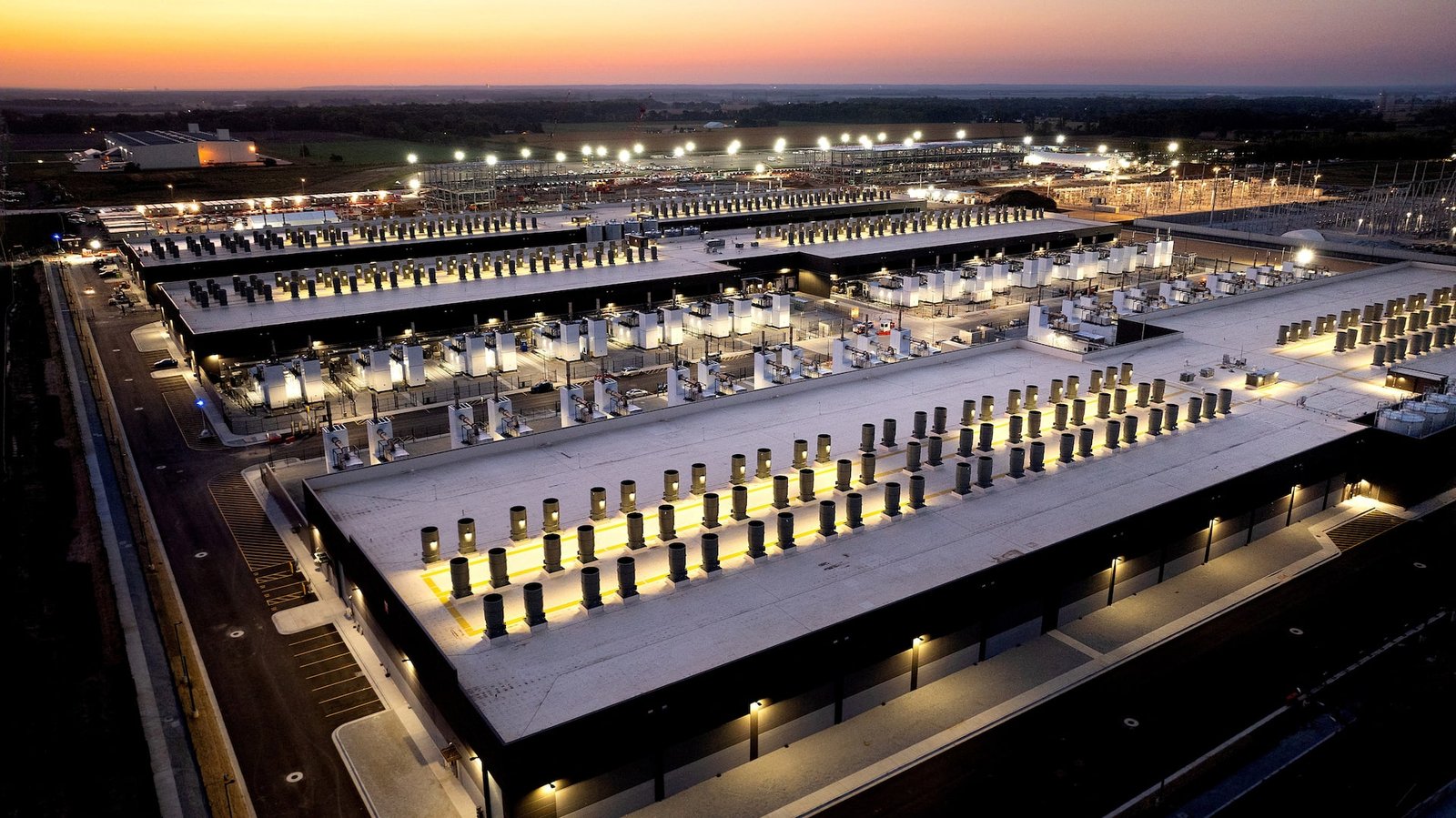
Innovative climate technology companies are developing new ways to reduce the energy and water consumption of data centers as demand for Artificial Intelligence (AI) and cloud computing continues to grow. From offshore wind power and geothermal energy to direct-to-chip cooling and waste heat recovery, these solutions aim to make digital infrastructure more sustainable.
Major technology companies, including Microsoft and Amazon, are also investing in cleaner energy and emerging climate technologies. However, environmental advocates warn that efficiency improvements alone may not be enough to address the growing resource demands of data center expansion.
Climate Tech Startups Target Rising Data Center Energy Demand
Amy Duffuor, co-founder and general partner of Azolla Ventures, an investment firm focused on scaling overlooked and underfunded climate solutions, highlighted several technologies that could help reduce the environmental impact of data centers.
One promising approach involves combining offshore wind power with floating data center infrastructure. Aikido Technologies is developing floating offshore data centers that can use electricity generated directly by offshore wind installations.
The company believes that offshore wind projects facing delays or lacking suitable connections to electricity grids could potentially be repurposed to support large-scale AI and cloud computing operations. Aikido Technologies plans to demonstrate its concept in Norway next year.
Another emerging solution comes from Zanskar, a geothermal energy company that uses artificial intelligence to identify underground geothermal resources and develop power plants capable of producing carbon-free electricity. The company has recently received funding from the US government to expand its geothermal projects.
These technologies could help address one of the central challenges facing the data center industry: securing reliable electricity supplies while limiting dependence on fossil fuels.
Direct-to-Chip Cooling Could Improve Data Center Efficiency
Cooling is another major area of innovation as AI systems and high-performance computing equipment generate increasing amounts of heat. Traditional data centers often rely on cooling systems that regulate temperatures across entire rooms or equipment racks, creating substantial energy and, in some cases, water demands.
Tom Grizzetti, co-founder and chief executive of HT Materials Science (HTMS), an Irish-US company developing heat-transfer fluids for commercial and industrial heating and cooling systems, highlighted the growing role of direct-to-chip liquid cooling.
Unlike conventional approaches that cool a rack or surrounding air, direct-to-chip cooling uses a cold plate placed directly on a computer chip to remove heat more efficiently.
This method is attracting attention as increasingly powerful AI processors require more effective temperature management. Improved heat transfer can help data centers manage thermal loads while potentially reducing the energy required for cooling.
Grizzetti also pointed to Ecolab, a US Sustainability and industrial services company that has expanded its involvement in direct-to-chip liquid cooling for AI and high-performance computing facilities. The company’s activities extend beyond traditional cooling towers and water treatment as operators look for more efficient ways to manage heat.
Waste Heat Recovery Could Benefit Nearby Homes
Data centers produce large quantities of heat that can potentially be captured and reused rather than released into the surrounding environment. Waste heat recovery systems aim to turn this by-product into a useful source of energy for buildings and local heating networks.
Simon Kerr, head of heat networks at UK energy infrastructure and consulting company EnergiRaven, said recovered heat could help reduce pressure on electricity networks by supplying energy to homes.
Instead of requiring additional electricity to run heat pumps or other heating equipment, newly built homes and properties undergoing heating-system upgrades could use existing waste heat where suitable infrastructure is available.
The benefits depend on factors such as the distance between data centers and buildings, the temperature of the recovered heat and the availability of heat networks. Nevertheless, the approach offers a way to turn an operational by-product into a resource for surrounding communities.
Microsoft Expands Clean Energy Investments
Large technology companies are also pursuing cleaner energy supplies to address the environmental impact of their expanding digital infrastructure.
Brian Marrs, Microsoft’s general manager of energy and carbon, said the company has been signing clean-energy power purchase agreements to support its goal of becoming carbon negative, announced in 2020.
Since that announcement, Microsoft has sourced 40 gigawatts (GW) of new carbon-free energy supply across 26 countries. The company has worked with more than 95 utilities and developers through more than 400 contracts.
According to Marrs, 19 GW of the contracted capacity is already online and supplying new clean energy to the electricity grid. The remaining capacity is scheduled to come online over the next five years.
Microsoft said the total contracted volume is equivalent to enough energy to power approximately 10 million US homes. While that comparison illustrates the scale of its energy procurement, the amount of electricity available to data centers depends on how the supply is delivered and allocated.
The company has also supported the development of new climate technologies through a data center-focused incubator launched this year by the University of Washington’s CoMotion Labs and investor network E8.
Amazon is pursuing a similar approach to innovation through its Climate Pledge Fund, which supports companies developing solutions intended to reduce environmental impacts.
Environmental Advocates Warn Against Unchecked Expansion
Despite the investment in cleaner energy and more efficient cooling systems, questions remain about whether technological improvements can keep pace with the rapid growth of data centers.
Data centers currently account for approximately 0.5% of global carbon dioxide emissions, but their electricity demand is expected to increase substantially as technology companies build more infrastructure to support AI applications.
Growing demand also raises concerns about water consumption, pressure on local electricity grids and competition for resources in areas hosting large computing facilities.
Natascha Hospedales, lead lawyer on artificial intelligence and environmental impacts at environmental law organisation ClientEarth, has called for a pause in data center expansion until stronger environmental safeguards can be established.
Hospedales said the position was not a rejection of data centers themselves, but a call to ensure that their development and operation remain within planetary and societal limits.
The debate highlights a central challenge for policymakers and the technology industry: balancing the economic and technological benefits of AI with the environmental costs of the infrastructure required to support it.
Data Center Growth Raises Wider Sustainability Questions
Europe’s expanding digital infrastructure illustrates how local policies can influence where companies build data centers. In northeastern Spain, Aragon has emerged as a fast-growing hub for digital infrastructure, with industry representatives pointing to streamlined permitting and faster decision-making as important factors attracting investment.
However, the concentration of data centers in particular regions can intensify scrutiny of electricity demand, water availability and the benefits local communities receive from hosting these facilities.
Climate technology could help address some of these challenges through cleaner power generation, improved cooling and the reuse of waste heat. Yet the effectiveness of these solutions will depend on how widely they are deployed and whether they can keep pace with growing computing requirements.
Other Sustainability and Social Developments
Beyond data center technology, several other developments highlight the intersection of environmental pressures, public policy and social concerns.
- Human-elephant conflict in Sri Lanka: Sri Lanka continues to face serious conflict between people and elephants as habitat loss pushes animals into villages in search of food. Since 2019, an average of 138 people and 402 elephants have died annually in these encounters, according to the figures cited in the report.
- Student protests in Albania: Tens of thousands of students protested in Tirana over rising education costs and corruption allegations involving officials associated with Prime Minister Edi Rama. Demonstrators also expressed dissatisfaction with opposition political figures.
- Protests and policing in India: Recent demonstrations across India have raised questions about police intervention and allegations of excessive force. A Reuters analysis examined relevant guidelines and protest data.
- School conditions in France: Swedish climate activist Greta Thunberg joined French high-school students protesting teacher shortages, overcrowded classrooms and deteriorating school buildings. French interior ministry figures cited in the report put participation in nationwide demonstrations at more than 161,000 people.
- Cybersecurity risks in household appliances: Attacks targeting refrigeration systems at hundreds of French supermarkets have highlighted the vulnerabilities of connected devices. Cybercriminals can exploit such equipment to disrupt services, steal information or gain access to wider computer networks.
Bolivian Resident Turns Waste Into Fuel
Another example of local innovation comes from Bolivia, where resident Etson Machaca has built a small plant that converts plastic bags, old tyres and used oil into fuel for tractors.
The operation produces approximately 80 to 150 litres of gasoline and diesel per day. Although modest in scale, the project has become particularly valuable to Machaca following the Bolivian government’s decision to end state diesel subsidies last month as part of efforts to strengthen public finances.
Projects such as Machaca’s highlight the potential for local innovation to respond to immediate energy challenges. However, the environmental and health impacts of converting mixed waste materials into fuel depend on the processes used and the controls in place to manage emissions and residues.
From AI-powered geothermal exploration to liquid cooling and waste heat recovery, climate technology offers several potential ways to reduce the environmental footprint of digital infrastructure. The challenge will be ensuring that these innovations deliver measurable savings in energy and water use while broader policies keep data center growth aligned with environmental limits.
For breaking news and live news updates, like us on Facebook or follow us on Twitter and Instagram. Read more on Latest Technology on thefoxdaily.com.






COMMENTS 0