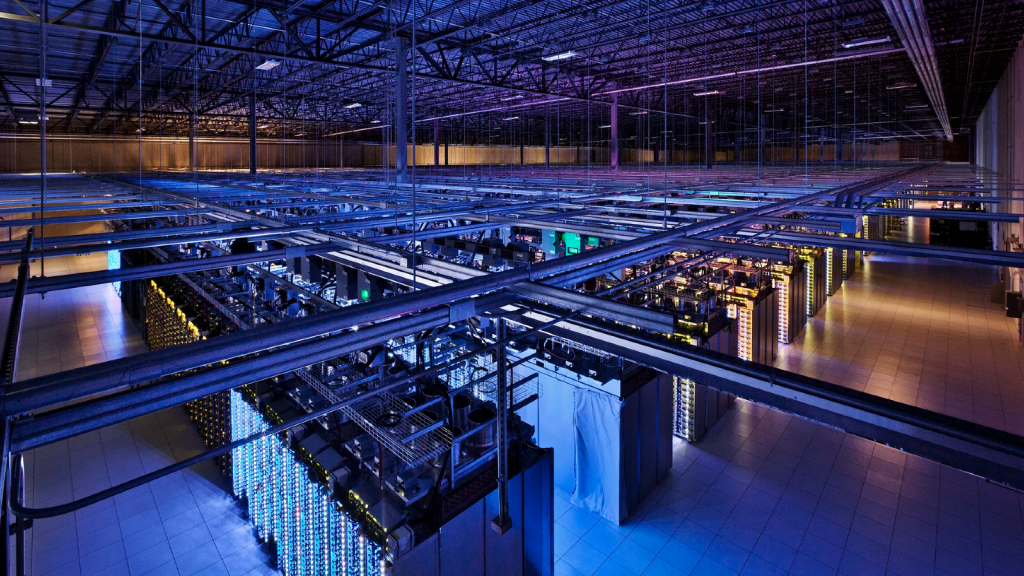
The rapid expansion of Artificial Intelligence is creating a new challenge for the technology industry: securing enough reliable electricity to power increasingly demanding data centres. As US hyperscalers race to build infrastructure for AI computing, grid connection delays are pushing developers to explore on-site power generation, bringing fuel cells into sharper focus.
Fuel cells are attracting interest because they can generate electricity directly from a chemical reaction, potentially allowing data centres to secure power without waiting years for conventional grid connections. Energy research firm Rystad Energy projects that investment in fuel cells for data centres could rise to approximately $30 billion by 2030, up from $2.8 billion in 2025.
The projected increase reflects a growing need for power infrastructure that can be deployed alongside new computing facilities. However, the opportunity will depend on manufacturers expanding production, developers securing permits and fuel supplies, and projects overcoming the practical challenges of building power systems at scale.
What Are Fuel Cells and How Do They Generate Electricity?
A fuel cell generates electricity through a chemical reaction between a fuel, such as natural gas or hydrogen, and oxygen. Unlike conventional power generation that burns fuel to produce heat, a fuel cell converts the fuel’s energy directly into electricity through an electrochemical process.
This distinction is important for data centres, which need dependable electricity to operate computing equipment and cooling systems around the clock. Fuel cells can provide power on-site, reducing a facility’s dependence on securing an immediate connection to the electricity grid.
Fuel-cell technology is not uniform, however. Different manufacturers use different designs, and their systems vary in fuel flexibility and their ability to operate with hydrogen.
Bloom Energy uses solid-oxide fuel-cell technology designed to operate on 100% pure hydrogen. FuelCell Energy uses molten-carbonate technology that supports hydrogen blends of up to 40%, according to the supplied industry report. Both companies offer fuel-flexible systems, but their stated hydrogen capabilities differ.
These differences matter as data-centre operators evaluate the availability, cost and long-term suitability of their energy supplies. A system’s ability to use different fuels can offer flexibility, but the practical benefits depend on the fuel infrastructure available at each project site.
Why AI Data Centres Need Alternative Power Sources
AI infrastructure is increasing demand for electricity because data centres must supply power to large numbers of computing systems while maintaining the cooling conditions needed to operate them. These facilities require electricity continuously, making reliable power access a central consideration when developers select sites and plan construction.
One of the main obstacles is the time required to connect large electricity loads to the US grid. Rystad estimates that connecting such loads can take between three and six years. For companies racing to build AI capacity, waiting several years for a grid connection can become a major constraint.
On-site fuel cells offer a possible alternative by allowing developers to generate electricity at or near their facilities. Rather than relying entirely on a new grid connection, a data centre could use dedicated generation to support its operations while broader electricity infrastructure catches up.
The scale of the potential shift is reflected in Rystad’s forecast that approximately 40% of projected US data-centre capacity in 2030 could pursue dedicated on-site power instead of relying entirely on the grid.
That projection does not mean all such facilities will choose fuel cells. On-site generation can involve multiple technologies, and fuel cells must compete with other options on cost, availability, deployment time and operating requirements.
Bloom Energy’s Oracle and Nebius Projects Highlight the Speed Advantage
Bloom Energy has highlighted deployment speed as one of the reasons fuel cells are attracting interest from major technology companies. Chief executive KR Sridhar said the company had delivered power to Oracle’s Utah site in less than two months after announcing its first project with the cloud computing company.
“We announced our first project with Oracle and delivered power to their Utah site in less than two months,” Sridhar said on a post-earnings call.
Sridhar also cited work with Nebius in New Jersey, saying the company secured planning board approvals for its fuel cells within three months of signing the contract.
These examples illustrate how on-site power projects may progress more quickly than waiting for major grid connections. However, the timelines described by Bloom relate to particular projects and stages of development. They should not be interpreted as a guarantee that every fuel-cell installation can be completed within the same period.
Project schedules can vary depending on site readiness, permitting requirements and the availability of supporting infrastructure. Fuel-cell equipment is only one part of the process: developers also need connections for fuel, electrical equipment and other facilities required to bring a power system into operation.
Which Companies Could Benefit From Rising Fuel-Cell Demand?
Bloom Energy and FuelCell Energy are among the companies targeting the growing demand for on-site electricity at data centres. Both are seeking to benefit from the need for power systems that can be deployed alongside new computing infrastructure, although their technologies and commercial positions differ.
Bloom Energy reports stronger revenue and profitability
Bloom Energy’s third-quarter revenue increased by 138% to $1.24 billion. The company reported net profit of $250.3 million, compared with a loss of $23.1 million in the same period a year earlier.
Following the reported performance, Bloom raised its 2026 revenue forecast to between $4.4 billion and $4.6 billion. The figures point to a stronger financial performance as demand for fuel-cell systems expands, although the supplied information does not establish how much of the reported growth came specifically from data-centre projects.
Oracle is also planning a substantial deployment of Bloom’s technology. The cloud computing company intends to procure up to 2.8 gigawatts (GW) of Bloom fuel-cell systems, of which 1.2 GW has been contracted.
The distinction between planned procurement and contracted capacity is important. Oracle’s stated intention covers a larger amount of potential capacity than the portion already contracted, so the entire 2.8 GW should not be treated as confirmed installed power.
FuelCell Energy expects data centres to become a larger business
FuelCell Energy is also pursuing the data-centre market. Chief executive Jason Few told Reuters that “time to power has really become as important as cost of power,” reflecting the importance of deployment schedules as technology companies seek to bring new facilities online.
The company expects data centres and related business to account for 75% to 85% of its business within two to three years, compared with approximately 25% to 30% currently, according to the supplied report.
This forecast indicates a planned shift in the company’s business focus towards data-centre-related demand. Whether it reaches that target will depend on project execution, customer commitments and the wider pace of investment in new computing infrastructure.
Fuel-Cell Industry Order Book Approaches 9 GW
Rystad Energy estimates that the industry’s order book stands at roughly 9 GW. The reported figure includes framework agreements involving Oracle, AEP, Equinix and Brookfield.
The order-book estimate suggests that interest in fuel cells extends beyond a single technology company or project. Cloud providers, data-centre operators and other organisations are exploring arrangements that could support dedicated power generation as electricity demand increases.
However, framework agreements do not necessarily represent firm orders for the full capacity stated. Such agreements can establish a basis for future procurement without guaranteeing that every proposed system will be purchased, delivered or installed.
That distinction is especially important when evaluating the industry’s growth prospects. Announced capacity and preliminary agreements can indicate commercial interest, but completed projects and firm orders provide a clearer measure of how quickly demand is translating into deployed infrastructure.
The reported 9 GW figure therefore points to a substantial pipeline of potential activity, rather than a guarantee that all the capacity will be delivered. The pace of conversion from agreements to installations will be an important factor in determining the industry’s actual growth.
Can Fuel-Cell Manufacturers Scale Up Fast Enough?
Meeting the expected demand will require a significant expansion in manufacturing capacity. Rystad Energy expects annual fuel-cell manufacturing capacity to increase to 4 GW by 2030, from approximately 1.8 GW currently.
Expanding production is only one part of the challenge. Manufacturers must also deliver equipment on schedule, while developers need to secure suitable sites, obtain approvals and build the infrastructure required to operate the systems.
Bloom Energy chief commercial officer Aman Joshi told Reuters that the largest factors affecting timelines for projects above 100 megawatts are typically site readiness, permitting and supporting infrastructure, rather than the fuel-cell technology itself.
“For 100 MW-plus projects, the biggest determinants of timeline are typically site readiness, permitting, and supporting infrastructure, not the fuel-cell technology itself,” Joshi said.
Large installations may require gas connections, permits, transformers and switchgear. Delays in any of these areas can slow deployment even when fuel-cell equipment is available.
This creates a practical distinction between manufacturing capacity and operational power capacity. A manufacturer may be able to produce more systems, but the electricity they are intended to supply cannot be delivered until the necessary site work, approvals and supporting infrastructure are in place.
As a result, the projected expansion in manufacturing capacity will need to be matched by the ability of developers and suppliers to execute projects under real-world conditions.
Fuel Cells Can Complement the Grid, Not Just Replace It
Fuel cells are attracting attention as a way to reduce the time data-centre developers must wait for reliable power. However, they do not necessarily eliminate the need for grid electricity.
Dedicated on-site generation can complement a grid connection, helping a facility meet some of its electricity requirements while retaining access to the broader power system. The appropriate arrangement will depend on the project’s needs, local infrastructure and the availability of fuel.
Fuel cells also produce lower local emissions than conventional gas-fired generation because they avoid combustion within the fuel-cell stack. That characteristic can be relevant for facilities seeking to manage emissions around their sites. It does not, on its own, establish the total emissions associated with the electricity produced, which also depend on the fuel used and its supply chain.
Hydrogen capability may offer additional flexibility, but the companies’ technologies have different stated limits for hydrogen use. The availability and cost of suitable fuel will therefore remain relevant when developers assess individual systems.
Fuel cells also face competition from other on-site generation technologies. Their future role will depend on whether they can provide dependable electricity at competitive costs and whether developers can bring projects online quickly enough to meet demand.
What the Fuel-Cell Boom Means for the AI Industry
The projected increase in data-centre fuel-cell investment reflects a broader challenge for the AI industry: computing infrastructure can expand only as quickly as the supporting power systems allow.
Rystad Energy’s forecast of approximately $30 billion in fuel-cell investment by 2030, compared with $2.8 billion in 2025, points to the potential scale of the opportunity. The estimate is a projection, not a guarantee that the investment will materialise.
Bloom Energy’s reported financial results, Oracle’s planned procurement and FuelCell Energy’s growing focus on data centres provide examples of how companies are responding to the demand for faster access to electricity. At the same time, the industry’s estimated 9 GW order book includes agreements that may not translate into firm orders for all the stated capacity.
The main question is whether manufacturers can expand supply while developers resolve permitting, fuel access and electrical infrastructure requirements. Even with rapidly improving demand, those practical constraints could determine how much new capacity is delivered by the end of the decade.
Fuel cells are emerging as one potential solution to the power challenge created by AI data centres. Their long-term growth will depend not simply on the need for electricity, but on whether the technology can be deployed reliably, economically and at the scale that hyperscalers require.
For breaking news and live news updates, like us on Facebook or follow us on Twitter and Instagram. Read more on Latest Technology on thefoxdaily.com.






COMMENTS 0