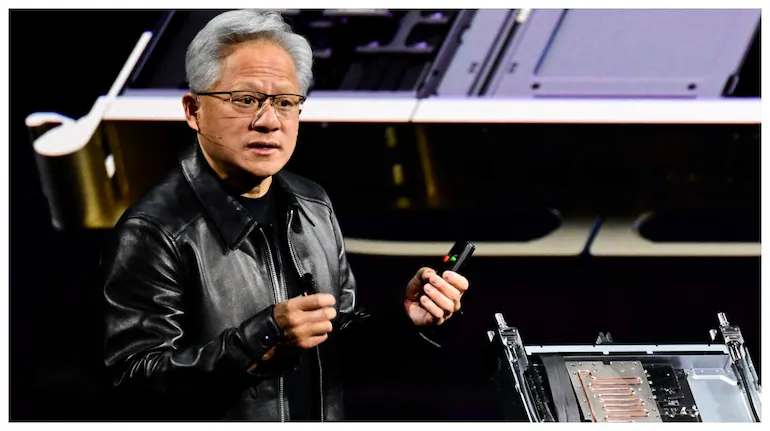
Nvidia CEO Jensen Huang’s admission of an extramarital affair has developed into a controversy with implications far beyond his personal life. Reports linking the relationship to a business executive suspected by US intelligence of gathering information for China have triggered national security concerns, political scrutiny and an independent investigation by Nvidia’s board.
The controversy comes at a sensitive time for the United States, which views advanced Artificial Intelligence (AI) chips as a strategic asset in its competition with China. Nvidia is central to America’s AI ambitions, supplying the processors used to develop and operate advanced AI systems.
With lawmakers seeking answers, the US Department of Justice investigating potential export-control violations involving Singapore-based Megaspeed, and Nvidia reviewing the circumstances surrounding its CEO’s relationship, the episode could complicate Washington’s technology and trade policies.
Key Highlights
- Jensen Huang acknowledged an extramarital affair and apologised to his wife, children and Nvidia employees.
- The woman reportedly involved, Alice Huang, is a former Megaspeed executive suspected by US intelligence of gathering information for Beijing.
- The US Justice Department is investigating whether Megaspeed violated export-control laws involving advanced Nvidia chips.
- Nvidia’s board has launched an independent investigation, while saying it has no reason to believe company secrets or national security were compromised.
- The controversy has intensified scrutiny of Nvidia’s China business and its efforts to secure approval for certain advanced chip exports.
Why Jensen Huang’s Personal Controversy Has Become a National Security Issue
Extramarital affairs are generally considered private matters. However, the situation involving Jensen Huang has attracted attention because of the reported identity and business connections of the woman at the centre of the controversy.
Alice Huang is a former executive at Megaspeed, a Singapore-based cloud computing and data centre company that has purchased Nvidia processors. According to reports citing US intelligence findings, she was suspected of gathering information for Beijing.
The New York Times reported that US intelligence officials had concluded Alice Huang was feeding information to China. These allegations have not been publicly established through a court finding, and they remain subject to investigation.
The concern for Washington is whether a relationship involving the head of one of America’s most strategically important technology companies could have created an opportunity for foreign intelligence to obtain sensitive business or technological information.
The issue is particularly significant because Nvidia’s advanced processors are central to the development of AI systems, data centres and other technologies with potential commercial and military applications.
Who Is Alice Huang and What Is Megaspeed’s Role?
Alice Huang is a Chinese businesswoman and former executive at Megaspeed, a Singapore-based company operating in the cloud computing and data centre sector. She has reportedly been associated with the company’s business activities involving advanced Nvidia processors.
Megaspeed has faced scrutiny from US authorities over allegations that it helped route advanced Nvidia chips to Chinese users in ways that may have circumvented American export restrictions. The company has denied allegations of wrongdoing.
According to reporting by The Associated Press, Megaspeed purchased more than $4.8 billion worth of Nvidia chips over the preceding two years. Its business relationship with Nvidia has therefore become an important part of the broader investigation.
The US Commerce Department had previously examined the company’s activities. The matter was subsequently referred to the Justice Department, whose National Security Division is investigating potential violations of export-control laws.
Authorities are examining whether restricted technology was improperly transferred to Chinese users and whether the company’s activities breached US regulations. The investigation also includes scrutiny of Alice Huang’s alleged role.
Megaspeed’s involvement is important because US export restrictions are designed to limit China’s access to certain advanced computing technologies. Any evidence that restricted processors were diverted could raise questions about the effectiveness of existing controls and the oversight of overseas customers.
Jensen Huang Apologises as Nvidia Launches an Independent Investigation
Jensen Huang acknowledged that he had been unfaithful to his wife and apologised to his family and Nvidia employees. In a message to employees, he accepted responsibility for his actions and said he was deeply sorry for the hurt caused to his wife and children.
His apology addressed the personal consequences of the relationship but did not provide detailed answers to the espionage allegations surrounding Alice Huang.
Nvidia’s board of directors subsequently announced an independent investigation into reports that its CEO may have been the target of a foreign intelligence effort.
The board said it had no reason to believe that Nvidia’s trade secrets or national security had been compromised. It also indicated that Huang would remain in charge of the company while cooperating with the investigation.
The distinction is important: the existence of a personal relationship does not establish that confidential information was transferred or that Nvidia’s systems were compromised. Those questions require evidence and a proper investigation.
Trump’s Relationship With Jensen Huang Adds Political Significance
The controversy has attracted attention in Washington partly because of Jensen Huang’s close engagement with President Donald Trump and his administration’s technology agenda.
Trump has repeatedly presented AI leadership as a major economic and national security priority for the United States. Nvidia’s processors are central to that ambition because they power many of the data centres and computing systems supporting the global AI industry.
Huang has also been a prominent voice in discussions about American manufacturing, technology investment and the country’s position in the global AI race.
Trump said he had spoken with Huang as the controversy developed. The president indicated that Huang had told him he did not know the woman was allegedly involved in espionage. Trump also expressed confidence that Huang would be in a good position despite the growing scrutiny.
The president’s support could become politically relevant as lawmakers examine whether Nvidia’s commercial relationships and export-control positions require greater oversight.
Why the Nvidia Controversy Matters for US-China AI Competition
The United States and China are competing for leadership in artificial intelligence, with access to advanced semiconductors playing a central role in that rivalry.
High-performance AI chips are used to train and operate sophisticated AI models. They also support applications in scientific research, industrial automation, data analysis and defence-related technologies.
Washington has therefore imposed restrictions on exports of certain advanced computing processors to China. These measures are intended to limit access to technologies that could strengthen China’s military and advanced computing capabilities.
Nvidia has argued that it should be allowed to sell some less advanced processors to Chinese customers. Huang has maintained that permitting selected exports could help keep the broader AI ecosystem connected to American technology rather than allowing Chinese competitors to gain more market share.
However, allegations involving Megaspeed have renewed questions about whether existing export controls are sufficient to prevent restricted chips from reaching unauthorised users.
If investigators identify violations or weaknesses in customer oversight, Washington could face pressure to strengthen compliance requirements, tighten licensing conditions or reconsider which processors can be exported.
Elizabeth Warren and Other Lawmakers Seek Answers
The controversy has attracted bipartisan attention on Capitol Hill, although Democratic lawmakers have been particularly vocal about Nvidia’s export policies and the potential national security implications.
Massachusetts Senator Elizabeth Warren had previously sought answers from Huang about the company’s position on selling advanced AI chips to China. She wanted him to appear before the Senate Banking Committee to discuss the issue.
Warren has now raised further questions about whether the reported relationship with Alice Huang had any connection to Nvidia’s business activities involving China.
In a statement, she referred to reports that Nvidia had received approvals to export hundreds of thousands of advanced AI chips to China, including to companies allegedly connected to the country’s military.
She argued that the reported relationship raised questions Nvidia needed to answer about the extent to which the company’s activities were connected to the controversy.
These concerns do not establish that Nvidia violated export rules. Instead, they reflect the political pressure facing the company as lawmakers seek greater clarity about its customer relationships, compliance procedures and engagement with Chinese businesses.
How the Controversy Could Affect Nvidia’s China Business
Nvidia’s position in the global AI market gives the company considerable commercial importance. However, its access to the Chinese market has been complicated by US export restrictions and the broader technology rivalry between Washington and Beijing.
Huang has argued that allowing some Nvidia processors to be sold in China could help preserve the company’s influence over the global AI ecosystem. He has also suggested that keeping customers connected to American technology could limit opportunities for Chinese semiconductor companies to expand.
The latest controversy could make that argument more difficult to advance in Washington.
Lawmakers and national security officials may demand stronger evidence that Nvidia can monitor where its processors are being used and prevent restricted technology from reaching unauthorised customers.
More stringent scrutiny could increase compliance costs and make approvals for certain exports more difficult. It could also affect the company’s commercial relationships with overseas data centre operators and technology customers.
For Nvidia, the challenge will be to maintain its global business while demonstrating that its customer screening and export-control compliance procedures are sufficiently robust.
White House Connections and Nvidia’s Political Influence
Huang’s relationship with Washington has extended beyond discussions about export controls. He has participated in high-level engagements with the Trump administration, including meetings and events focused on technology investment and American industrial development.
Trump has publicly praised Huang’s contribution to the AI industry and described Nvidia as an important part of America’s technological leadership. The president has also highlighted the company’s role in expanding data centre infrastructure and supporting economic growth.
Nvidia’s political connections have attracted additional attention because the company donated $25 million towards the construction of a White House ballroom. The donation has become another point of interest as scrutiny of the company’s relationship with the administration increases.
The controversy could therefore create a difficult situation for policymakers. They must balance the government’s support for American technology companies with the responsibility to enforce national security rules and investigate potential violations without political interference.
Could Nvidia Face Investor and Market Consequences?
Beyond Washington, the controversy has raised questions about Nvidia’s corporate governance and the risks associated with its dependence on its chief executive.
Huang has led Nvidia for decades and remains one of the most recognisable figures in the global technology industry. His leadership has been closely associated with the company’s expansion as demand for AI computing infrastructure has surged.
Any investigation involving the CEO of a company of Nvidia’s importance can create uncertainty for shareholders, customers and business partners.
Nvidia’s shares experienced a significant decline as the allegations and board investigation attracted attention. The company also faced a shareholder lawsuit alleging that investors had been misled about Huang’s relationship and the potential risks surrounding the company’s disclosures.
The lawsuit represents allegations made by a shareholder and does not establish that Nvidia or Huang committed securities fraud. Nevertheless, it adds another layer of legal and governance scrutiny to an already sensitive situation.
Investors will be watching the findings of the board investigation, any developments in the Justice Department’s inquiry and the company’s ability to maintain confidence among customers and regulators.
China Rejects the Espionage Allegations
Beijing has rejected allegations that Alice Huang was involved in an intelligence operation targeting Nvidia’s CEO.
Chinese officials described the claims as unsubstantiated and characterised them as smears against China. The response highlights the diplomatic sensitivity of the case, particularly as Washington and Beijing continue to compete over advanced semiconductors and AI development.
The allegations remain contested, and investigators will need to establish the facts through evidence rather than political statements or media reports.
What Happens Next?
The next phase will depend on the findings of Nvidia’s independent board investigation and the progress of the US Justice Department’s inquiry into Megaspeed.
Investigators will need to determine whether export-control rules were violated, whether restricted Nvidia processors reached unauthorised destinations and whether any confidential company or government information was obtained improperly.
Congressional scrutiny could also intensify. Lawmakers may seek further explanations from Nvidia about its customer relationships, export-control compliance and the safeguards it uses to protect sensitive technology.
The outcome could influence future discussions about semiconductor exports to China. If investigators identify weaknesses in existing controls, policymakers may face pressure to introduce additional restrictions or monitoring requirements.
For Nvidia, the immediate priority will be to cooperate with investigations, protect its business relationships and demonstrate that its technology and internal information remain secure.
Conclusion
Jensen Huang’s admission of an extramarital affair has become a much wider corporate and national security controversy because of the reported connection to Alice Huang, a former Megaspeed executive suspected by US intelligence of gathering information for China.
The investigations have placed Nvidia’s customer relationships, export-control compliance and influence in Washington under greater scrutiny. The case also highlights the strategic importance of advanced AI chips in the competition between the United States and China.
Although Nvidia’s board has said it has no reason to believe company secrets or national security were compromised, important questions remain unanswered. The findings of the investigations could affect the company’s reputation, its business with Chinese customers and the wider debate over America’s AI technology export policy.
For breaking news and live news updates, like us on Facebook or follow us on Twitter and Instagram. Read more on Latest Business on thefoxdaily.com.





COMMENTS 0