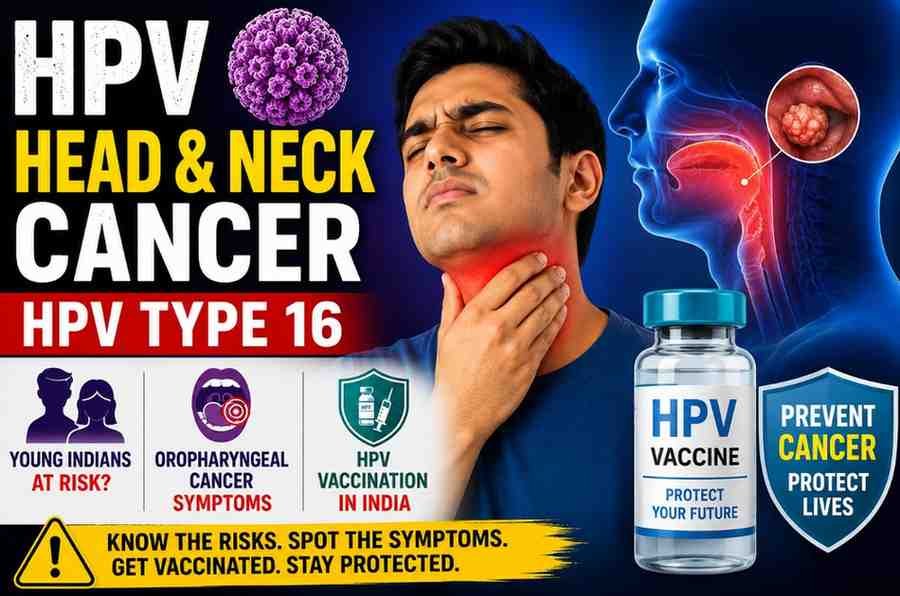
For decades, tobacco and alcohol have been considered the primary culprits behind head and neck cancers in India. However, oncologists and ENT specialists are now observing an important shift: an increasing number of younger patients are being diagnosed with cancers of the oropharynx—the middle part of the throat associated with infection by the human papillomavirus (HPV), especially HPV type 16.
The trend mirrors patterns already seen in several Western countries and highlights the changing epidemiology of head and neck cancers. Significantly, many of these patients do not have traditional risk factors such as smoking or chewing tobacco, making awareness and early diagnosis even more crucial.
What Is HPV and Why Does It Matter?
Human papillomavirus is a common virus with more than 200 known types. While many infections clear on their own, certain high-risk strains, particularly HPV-16, can cause cancer.
HPV is already known to be associated with:
- Cervical cancer.
- Anal cancer.
- Penile cancer.
- Vaginal and vulvar cancers.
- Oropharyngeal cancers.
Medical professionals are now increasingly linking HPV to squamous cell cancers affecting the throat and surrounding structures.
Why Younger Patients Are Raising Concern
Traditionally, head and neck cancers in India were seen predominantly among older individuals with long histories of tobacco use.
However, doctors are now encountering younger patients who:
- Have never smoked.
- Do not chew tobacco.
- Consume little or no alcohol.
- Present with cancers of the tonsils or base of the tongue.
This changing profile has prompted greater attention to HPV-related disease.
Most Cases Affect the Oropharynx
HPV-related head and neck cancers primarily involve the oropharynx, which includes:
- The tonsils.
- The base of the tongue.
- The soft palate.
- The back of the throat.
These cancers are usually squamous cell carcinomas and may initially produce subtle symptoms that are easy to overlook.
| Traditional Risk Factors | Emerging Risk Factor |
|---|---|
| Tobacco smoking | HPV infection (especially HPV-16) |
| Chewing tobacco | HPV-associated oropharyngeal disease |
| Alcohol consumption | Increasing cases in younger adults |
| Older age | Patients without tobacco history |
Symptoms That Should Not Be Ignored
Doctors advise seeking medical attention if symptoms persist for more than two weeks.
Warning signs include:
- A persistent sore throat.
- Difficulty swallowing.
- A lump in the neck.
- Voice changes.
- Ear pain.
- Unexplained weight loss.
- Mouth ulcers that do not heal.
Early diagnosis significantly improves treatment outcomes.
An Overlooked Opportunity: HPV Vaccination May Prevent More Than Cervical Cancer
Public awareness campaigns have traditionally focused on HPV vaccination as a tool to prevent cervical cancer. However, experts increasingly point out that vaccination could also reduce the burden of HPV-related head and neck cancers.
The vaccine targets high-risk HPV strains, including HPV-16, which is responsible for a large proportion of these cancers.
Greater vaccine coverage may therefore provide broader public health benefits than many people realize.
HPV-Positive Cancers Often Respond Better to Treatment
There is some encouraging news.
Research has shown that HPV-positive oropharyngeal cancers generally:
- Respond better to radiation and chemotherapy.
- Have improved survival rates.
- Occur in younger and otherwise healthier individuals.
- Carry a better prognosis than tobacco-related cancers.
Nonetheless, early detection remains essential.
Changing Patterns Demand Greater Awareness
As India’s cancer profile evolves, doctors stress the need to move beyond older assumptions.
Head and neck cancers are no longer exclusively diseases linked to tobacco.
Healthcare systems, awareness campaigns and screening efforts must adapt to this reality and educate people about:
- HPV infection.
- Vaccination.
- Early warning signs.
- Timely diagnosis.
- The importance of regular medical evaluation.
Conclusion
While tobacco remains a major contributor to head and neck cancers in India, HPV—particularly type 16—is emerging as a significant risk factor among younger patients. The shift underscores the importance of awareness, vaccination, and early diagnosis.
As doctors encounter increasing numbers of HPV-related cancers, the message is becoming clear: protecting against these diseases involves not only avoiding tobacco but also recognizing the role of viral infections and the preventive power of vaccination.
For breaking news and live news updates, like us on Facebook or follow us on Twitter and Instagram. Read more on Latest Health on thefoxdaily.com.






COMMENTS 0