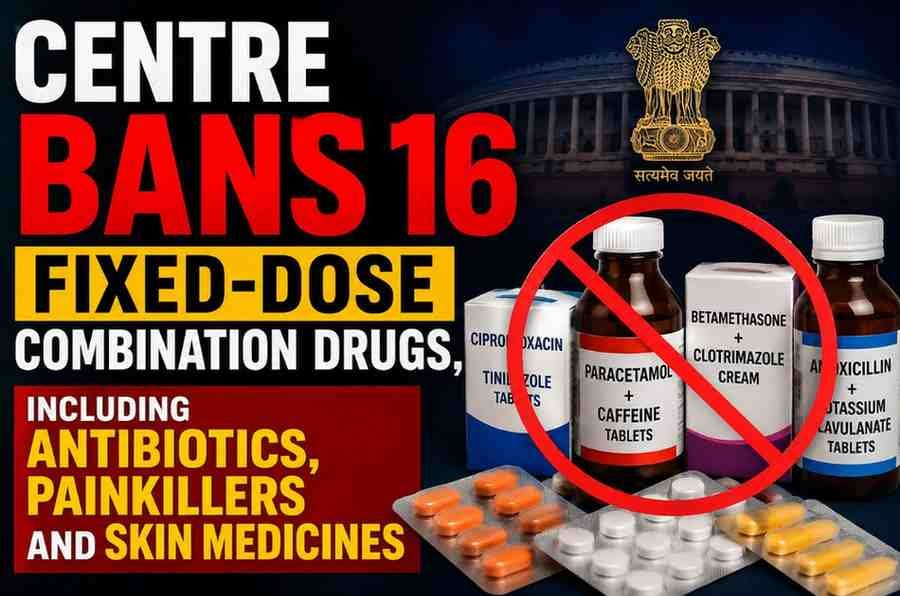
The Centre has banned 16 fixed-dose combination (FDC) drugs, a category of medicines that combine two or more active ingredients in fixed proportions within a single dosage form. The move follows recommendations from expert committees, which found that some of these combinations either carried potential health risks or lacked sufficient scientific evidence to justify their use.
The ban affects a range of medications, including certain antibiotics, painkillers and dermatological products, and is part of the government’s continuing efforts to improve drug safety and rational prescribing practices.
What Are Fixed-Dose Combination Drugs?
Fixed-dose combinations are formulations that contain multiple active ingredients in predetermined ratios.
These medicines are commonly prescribed because they can:
- Improve patient compliance.
- Reduce the number of tablets required.
- Target multiple symptoms simultaneously.
- Simplify treatment regimens.
However, not all combinations are scientifically justified, and some may expose patients to unnecessary risks.
Why Were These Drugs Banned?
According to expert reviews, several of the prohibited formulations raised concerns regarding:
- Questionable therapeutic value.
- Lack of adequate scientific evidence.
- Potential adverse effects.
- Risk of irrational drug use.
- Possibility of contributing to antimicrobial resistance.
The government concluded that the risks associated with these combinations outweighed their benefits.
Antibiotics and Painkillers Under Scrutiny
Antibiotic combinations have long attracted attention from health experts because inappropriate use can accelerate antimicrobial resistance, making infections harder to treat.
Similarly, irrational combinations involving painkillers or skin medications may:
- Increase side effects.
- Mask underlying conditions.
- Complicate treatment.
- Offer no additional therapeutic advantage.
Experts have repeatedly emphasized the need for evidence-based prescribing.
| Reason for Ban | Concerns Identified |
|---|---|
| Unproven efficacy | Lack of sufficient clinical evidence |
| Safety risks | Potential adverse effects |
| Irrational combinations | No clear therapeutic advantage |
| Antibiotic misuse | Growing antimicrobial resistance |
| Public health concerns | Need for safer prescribing practices |
An Overlooked Issue: India Has Faced Similar Concerns Before
The latest action is part of a broader regulatory effort that has seen several irrational fixed-dose combinations banned over the years.
India has historically had a large market for combination drugs, partly because:
- They are convenient for patients.
- Multiple manufacturers market similar products.
- Prescribing habits vary widely.
- Older formulations sometimes remain in circulation despite changing scientific evidence.
Regulators have increasingly sought to ensure that only combinations with demonstrated benefits remain available.
What Patients Should Do
Patients currently using medications affected by the ban should:
- Consult their doctor before stopping treatment.
- Avoid self-medication.
- Seek alternative prescriptions if necessary.
- Purchase medicines only from licensed pharmacies.
Doctors can recommend safer and evidence-based substitutes where required.
Why Rational Drug Use Matters
Healthcare experts stress that medicines should be prescribed based on proven effectiveness and safety.
Irrational combinations can:
- Increase healthcare costs.
- Cause unnecessary side effects.
- Complicate diagnosis and treatment.
- Contribute to drug resistance.
Strengthening regulation is therefore considered essential for protecting public health.
Conclusion
The Centre’s decision to ban 16 fixed-dose combination drugs underscores the importance of evidence-based medicine and drug safety. By removing formulations that may pose risks or offer questionable benefits, regulators aim to encourage more rational prescribing and improve patient outcomes.
For patients, the key message is simple: medications should always be taken under medical supervision, and any concerns regarding affected drugs should be discussed with a healthcare professional rather than addressed through self-medication.
For breaking news and live news updates, like us on Facebook or follow us on Twitter and Instagram. Read more on Latest Health on thefoxdaily.com.






COMMENTS 0