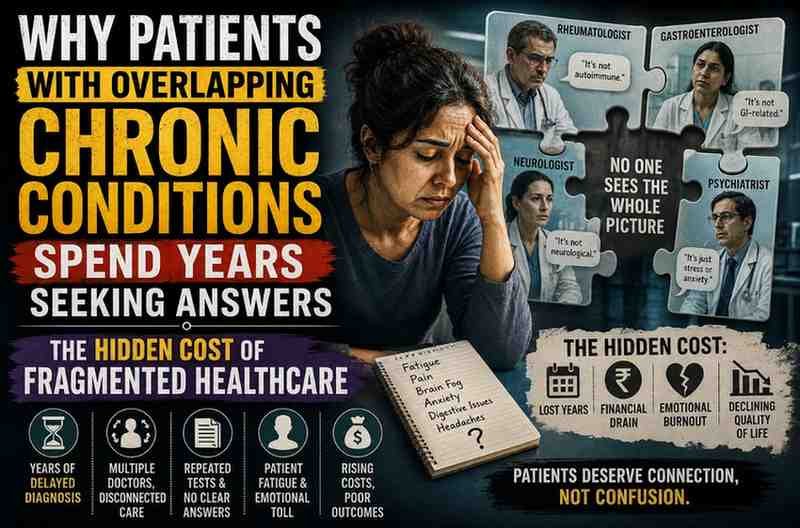
For millions of people living with chronic illness, obtaining a diagnosis is not a single event but a long, exhausting journey. Symptoms may appear unrelated, affect different organs, fluctuate over time, and resist conventional treatments. As a result, patients often spend years moving from one specialist to another, undergoing repeated tests, and struggling to find answers.
Experts say delayed diagnosis, fragmented healthcare systems, and limited awareness continue to place a heavy burden on people with overlapping chronic conditions. Disorders such as PASH syndrome, hidradenitis suppurativa, fibromyalgia, and irritable bowel syndrome (IBS) frequently coexist, yet are often treated as isolated diseases rather than interconnected conditions.
The consequences extend beyond physical symptoms. Diagnostic delays can affect mental health, finances, careers, relationships, and overall quality of life.
What Are Overlapping Chronic Conditions?
Overlapping chronic conditions occur when an individual experiences two or more long-term disorders that share symptoms, inflammatory pathways, or biological mechanisms.
These conditions may involve different body systems but can influence each other, making diagnosis and treatment considerably more complex.
Examples include:
- Hidradenitis suppurativa and inflammatory arthritis.
- Fibromyalgia and irritable bowel syndrome.
- PASH syndrome and skin disorders.
- Autoimmune diseases occurring together.
- Chronic pain syndromes accompanied by gastrointestinal symptoms.
- Inflammatory conditions affecting multiple organs.
Because symptoms overlap, patients frequently receive multiple diagnoses over many years rather than a comprehensive explanation.
Why Diagnosis Often Takes So Long
Unlike infections or injuries that present with clear causes, chronic inflammatory and pain-related conditions can evolve slowly and mimic other diseases.
Patients may experience:
- Fatigue.
- Chronic pain.
- Digestive symptoms.
- Skin lesions.
- Joint problems.
- Sleep disturbances.
- Brain fog.
Since these symptoms span multiple medical specialties, patients often see dermatologists, rheumatologists, gastroenterologists, pain specialists, and primary care physicians separately.
Without coordinated care, important connections may be missed.
Understanding PASH Syndrome and Related Disorders
PASH syndrome is a rare inflammatory condition characterized by the combination of:
- Pyoderma gangrenosum.
- Acne.
- Hidradenitis suppurativa.
Although uncommon, it highlights how immune-mediated diseases can affect different tissues simultaneously.
Similarly, conditions such as hidradenitis suppurativa are increasingly recognized as systemic inflammatory diseases rather than isolated skin problems.
Researchers continue to investigate how inflammation links seemingly unrelated disorders.
Fibromyalgia and Irritable Bowel Syndrome: Frequently Misunderstood Partners
Fibromyalgia and irritable bowel syndrome are among the most common examples of overlapping conditions.
Patients often experience:
- Widespread pain.
- Abdominal discomfort.
- Fatigue.
- Sleep problems.
- Cognitive difficulties.
- Sensitivity to stress.
Because neither condition has a single definitive laboratory test, diagnosis depends largely on clinical evaluation and symptom patterns.
This can contribute to years of uncertainty and frustration.
Comparison: Why Overlapping Conditions Are Difficult to Diagnose
| Challenge | Impact on Patients |
|---|---|
| Shared symptoms | Conditions mistaken for one another |
| Multiple specialists involved | Fragmented treatment plans |
| No single diagnostic test | Delayed diagnosis |
| Symptoms fluctuate over time | Confusing clinical picture |
| Limited awareness | Underrecognition and misdiagnosis |
| Complex inflammatory mechanisms | Difficulty identifying root causes |
The Hidden Cost of Fragmented Care
Modern medicine is highly specialized, which brings many advantages. However, patients with overlapping disorders often encounter a system divided into separate specialties that do not always communicate effectively.
This fragmentation can result in:
- Repeated investigations.
- Conflicting treatment recommendations.
- Multiple medications.
- Long waiting times.
- Higher healthcare expenses.
- Emotional exhaustion.
Patients frequently describe feeling like they must coordinate their own healthcare journey.
An Insight Competitors Often Miss: The Problem Is Not Just Rare Diseases—It’s Medical Silos
Much attention focuses on rare conditions themselves, but the larger issue may be how healthcare systems are organized.
Medicine traditionally divides the body into separate specialties. Yet chronic inflammatory diseases rarely respect those boundaries.
A patient with skin symptoms, joint pain, digestive issues, and fatigue may not fit neatly into one category.
The future of chronic disease management may depend less on discovering entirely new diseases and more on improving communication between specialties.
Integrated care models could prove just as important as new medications.
The Financial Burden of Diagnostic Delays
Years spent seeking answers can become financially overwhelming.
Patients often face:
- Repeated consultations.
- Diagnostic tests.
- Travel expenses.
- Lost income.
- Medication costs.
- Reduced productivity.
Indirect costs may become as significant as the medical expenses themselves.
The Emotional Toll of Not Being Believed
One of the most difficult aspects of living with overlapping chronic conditions is uncertainty.
Many patients report feeling:
- Dismissed.
- Misunderstood.
- Frustrated.
- Isolated.
- Anxious about the future.
When symptoms lack obvious laboratory findings, individuals sometimes encounter skepticism, adding emotional distress to physical suffering.
Receiving a diagnosis can provide not only treatment options but also validation.
Why Researchers Are Looking Beyond Individual Diseases
Scientists increasingly recognize that many chronic disorders share common biological pathways involving inflammation, immune regulation, the nervous system, and the microbiome.
This broader perspective is reshaping medical research.
Emerging areas of interest include:
- Precision medicine.
- Genetic risk factors.
- Microbiome research.
- Inflammatory biomarkers.
- Artificial intelligence-assisted diagnostics.
These approaches may help identify connections between diseases previously viewed as separate entities.
Prediction: Multidisciplinary Care Will Become the Future of Chronic Disease Management
Experts believe the future of medicine lies in integrated care models where specialists collaborate rather than operate independently.
Multidisciplinary clinics involving dermatologists, rheumatologists, gastroenterologists, pain specialists, and mental health professionals may become increasingly common.
Such approaches could shorten diagnostic delays, reduce costs, and improve patient outcomes.
Artificial intelligence and digital health records may also help physicians identify patterns that humans alone might overlook.
What Patients Can Do
Although healthcare systems remain imperfect, experts encourage patients to:
- Maintain detailed symptom records.
- Share information between specialists.
- Seek second opinions when necessary.
- Discuss all symptoms, even seemingly unrelated ones.
- Advocate for coordinated care.
- Address mental health alongside physical health.
Active participation can help bridge gaps within fragmented systems.
Conclusion
For patients living with overlapping chronic conditions such as PASH syndrome, hidradenitis suppurativa, fibromyalgia, and irritable bowel syndrome, the search for answers is often long and exhausting. Shared symptoms, fragmented care, delayed diagnosis, and financial pressures combine to create challenges that extend far beyond physical illness.
Increasingly, researchers and clinicians are recognizing that these disorders should not be viewed in isolation. As medicine evolves toward more integrated and personalized approaches, there is hope that future patients will spend less time searching for answers and more time receiving the coordinated care they need.
Because when diseases overlap, healthcare itself must learn to connect the dots.
For breaking news and live news updates, like us on Facebook or follow us on Twitter and Instagram. Read more on Latest Health on thefoxdaily.com.






COMMENTS 0