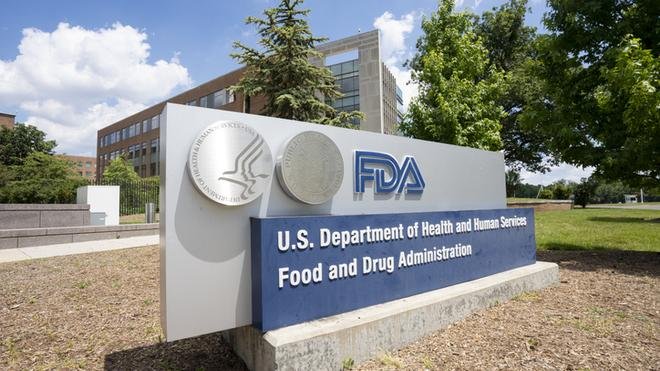
The US FDA warning letter to Eugia Pharma Specialities, a wholly owned subsidiary of Aurobindo Pharma, has put renewed attention on the company’s manufacturing compliance and the regulatory scrutiny surrounding its injectable-drug business. The development concerns Eugia’s Unit-I formulation manufacturing facility in Telangana, where a US Food and Drug Administration inspection earlier in 2026 resulted in four observations and was subsequently classified as Official Action Indicated (OAI).
Aurobindo Pharma disclosed the warning letter on August 14, 2026. The company has said that the regulatory development has no impact on existing supplies to the US market and that the concerned unit contributes about 2% of overall group revenue.
While the financial exposure of the individual facility appears limited relative to Aurobindo Pharma’s overall business, the more important issue is regulatory: a warning letter represents a significant escalation from routine inspection observations and places greater emphasis on how quickly and convincingly the company can demonstrate corrective action.
What is the US FDA warning letter to Eugia Pharma about?
The US FDA inspected Eugia Pharma Specialities’ Unit-I formulation manufacturing facility in Telangana from February 16 to February 27, 2026. The inspection resulted in four observations. In May, the FDA determined that the facility’s inspection classification was Official Action Indicated. A subsequent warning letter has now escalated the regulatory matter.
The facility is a sterile pharmaceutical manufacturing site, making regulatory compliance particularly important because injectable medicines require tightly controlled manufacturing environments and processes.
It is important to distinguish between the various stages of FDA enforcement. An inspection observation is not automatically a final finding of wrongdoing. However, when observations contribute to an OAI classification and are followed by a warning letter, the regulator is signaling that the identified compliance issues require significant corrective attention.
What does “Official Action Indicated” mean?
Official Action Indicated, or OAI, is an FDA inspection classification indicating that the agency believes regulatory action is warranted based on the compliance status identified during the inspection.
It is therefore more serious than simply receiving inspection observations that are subsequently considered adequately addressed.
The distinction is important for investors and patients because OAI can increase the regulatory burden on a manufacturing facility. Depending on the circumstances and the effectiveness of corrective measures, regulatory consequences can affect approvals, inspections and the company’s ability to demonstrate that manufacturing processes comply with applicable requirements.
However, OAI should not automatically be interpreted as meaning that all products manufactured at a facility are unsafe or that existing supplies have been stopped. Those conclusions require specific evidence and regulatory action.
Timeline: How the Eugia Unit-I issue developed
| Date | Development |
|---|---|
| February 16–27, 2026 | US FDA inspected Eugia Pharma Specialities Unit-I in Telangana and recorded four observations. |
| May 23–24, 2026 | Aurobindo disclosed that the FDA had classified the facility as Official Action Indicated. |
| August 14, 2026 | Aurobindo disclosed that Eugia Unit-I had received a US FDA warning letter. |
| Current position | Aurobindo has stated that existing supplies to the US market are not affected and that the unit contributes approximately 2% of group revenue. |
The sequence matters because the warning letter did not arrive immediately after the inspection. The facility first underwent inspection, then received an OAI classification, followed by the warning letter. That progression indicates why the quality-system response will now be closely watched.
Why sterile injectable manufacturing faces intense scrutiny
The regulatory sensitivity surrounding Eugia is partly linked to the nature of its business. Sterile injectable medicines are manufactured under conditions where contamination, process deviations, inadequate investigations or weaknesses in quality controls can have serious consequences.
Unlike many conventional oral medicines, injectable products bypass some of the body’s natural barriers. That makes sterility assurance and process control fundamental components of pharmaceutical manufacturing.
For a manufacturer supplying highly regulated markets such as the United States, compliance therefore extends well beyond producing medicines according to a formula. Companies must maintain robust documentation, validated processes, reliable laboratory controls, effective investigations and appropriate corrective and preventive action systems.
What were the four observations at Unit-I?
The FDA’s inspection document records four observations for the Unit-I facility. One of the publicly available observations concerns the handling of unexplained discrepancies and investigations, including the completeness of investigations associated with Field Alert Reports.
This point is significant because pharmaceutical quality systems depend on more than detecting a problem. Manufacturers must be able to investigate why it happened, assess the potential impact, identify root causes and implement corrective and preventive actions capable of preventing recurrence.
A weak investigation system can create a chain reaction: an initial manufacturing problem may be detected, but if the investigation does not establish the true root cause, the corrective action may address the symptom rather than the underlying failure.
Why investigations and CAPA systems matter
CAPA stands for Corrective and Preventive Action. It is one of the core mechanisms through which pharmaceutical manufacturers respond to quality problems.
A strong CAPA process generally involves identifying the problem, assessing its significance, determining root causes, implementing corrective measures and checking whether those measures actually worked.
This is where regulatory compliance becomes a management issue rather than simply a paperwork issue.
Imagine a recurring manufacturing deviation. If a company repeatedly retrains employees without examining whether equipment design, procedures, environmental controls or process conditions contributed to the deviation, the apparent corrective action may not prevent the problem from returning.
For regulators, therefore, the quality of an investigation can be as important as the original deviation.
How this warning letter differs from a routine FDA inspection
A routine inspection can identify deficiencies that a company may be able to address through corrective measures and follow-up. A warning letter represents a more serious regulatory communication.
The FDA uses warning letters to communicate significant violations and to explain what the agency expects the company to correct. A warning letter does not itself mean that the FDA has permanently banned the facility or withdrawn every product associated with it.
The practical consequence is increased pressure on the manufacturer to demonstrate that remediation is credible, comprehensive and sustainable.
Eugia has faced regulatory scrutiny before
The latest development also needs to be viewed within the broader regulatory history of Eugia’s manufacturing network.
In 2024, the FDA issued a warning letter concerning Eugia Pharma Specialities Unit-III in Telangana after an inspection conducted in January and February of that year. The FDA cited significant violations of current Good Manufacturing Practice requirements for finished pharmaceuticals.
That earlier warning letter involved issues including laboratory records, data integrity and investigations associated with sterile injectable manufacturing. The FDA said that failure to address the violations could affect future approvals and potentially result in refusal of admission of affected articles into the United States.
Unit-III was also inspected again in January-February 2026, with 11 observations, and Aurobindo disclosed in June that the facility had received an OAI classification.
This does not mean the Unit-I and Unit-III cases are identical. They are separate facilities and separate regulatory actions. But the pattern makes the quality-compliance performance of the broader Eugia manufacturing network an important issue for investors and industry observers.
The financial impact appears limited — but the strategic impact may be larger
Aurobindo has stated that Unit-I contributes approximately 2% of overall group revenue and that there is no impact on existing US supplies.
That makes it difficult to characterize the latest warning letter as an immediate company-wide financial crisis.
But revenue contribution alone does not tell the entire story.
The more important questions concern the cost and duration of remediation, the effect on future product approvals, possible additional regulatory inspections and whether similar compliance concerns emerge elsewhere in the manufacturing network.
There is also an opportunity-cost dimension. Management attention, engineering resources, quality personnel and capital expenditure devoted to remediation cannot simultaneously be used for other expansion priorities.
Why investors are watching Eugia closely
Eugia is strategically important to Aurobindo because it operates in the injectable pharmaceutical segment. Injectable manufacturing can be attractive because of the complexity and regulatory barriers associated with the products, but those same barriers make manufacturing quality particularly important.
A recurring regulatory problem can therefore create two opposing effects.
- Short term: the company may face additional remediation, compliance and inspection costs.
- Medium term: unresolved deficiencies could complicate regulatory approvals or manufacturing plans.
- Long term: successful remediation could strengthen the company’s quality systems and reduce the risk of repeat findings.
The last point is often overlooked. Regulatory scrutiny is damaging when problems remain unresolved, but a rigorous remediation programme can ultimately strengthen manufacturing controls.
What the warning letter does not mean
Several conclusions should not be drawn without supporting evidence.
- It does not automatically mean that all Aurobindo Pharma medicines are affected.
- It does not establish that existing US supplies have been halted.
- It does not mean every product manufactured at the facility is defective.
- It does not mean the entire Aurobindo manufacturing network has failed regulatory inspection.
Aurobindo has specifically said there is no impact on existing supplies to the US market from the Unit-I action.
The appropriate interpretation is narrower but still important: the FDA has identified significant compliance concerns at a specific manufacturing facility, and the company now needs to demonstrate effective remediation.
The bigger industry lesson: compliance is becoming a competitive advantage
The pharmaceutical industry often talks about manufacturing capacity in terms of plants, production lines and output. But increasingly, regulatory reliability is itself a competitive asset.
A manufacturer can have sophisticated facilities and large production capacity, but if quality systems are weak, regulatory approvals and market access can become bottlenecks.
This is especially relevant for Indian pharmaceutical companies that supply the US market. The United States remains one of the world’s most important pharmaceutical markets, making FDA compliance essential for companies seeking to maintain and expand their presence there.
The lesson is straightforward: capacity creates opportunity, but compliance determines how consistently that capacity can be used.
What happens next?
The next stage will focus on Eugia’s response to the FDA’s concerns and the regulator’s assessment of those corrective measures.
The company has said it remains committed to working with the FDA and taking steps to enhance compliance.
For observers, the most important indicators will be whether corrective actions address root causes rather than individual symptoms, whether investigations become more robust, whether quality systems demonstrate sustained improvement and whether future inspections confirm that remediation has worked.
Prediction: the next FDA inspection could be more important than the warning letter itself
The warning letter is the headline event, but the longer-term test will be what regulators find after remediation.
If a subsequent inspection confirms that the identified deficiencies have been comprehensively addressed, the current action could eventually become a contained compliance episode. If similar issues persist or new serious deficiencies emerge, the regulatory consequences could become considerably more significant.
This is why investors should avoid judging the situation solely by the day’s share-price movement or the 2% revenue contribution of Unit-I. The more useful metric is whether Aurobindo can demonstrate sustained improvement across the affected quality systems.
Conclusion
The US FDA warning letter to Eugia Pharma Specialities marks a significant regulatory development for Aurobindo Pharma’s injectable manufacturing business. The action follows four observations from a February 2026 inspection of Unit-I and the subsequent OAI classification disclosed in May.
Aurobindo has indicated that existing US supplies are unaffected and that the facility represents a relatively small share of group revenue. Nevertheless, the development deserves attention because FDA enforcement increasingly focuses on the strength of pharmaceutical quality systems, investigations and corrective actions.
The central question now is not simply why the FDA issued a warning letter. It is whether Eugia can demonstrate that the underlying compliance weaknesses have been understood, corrected and prevented from recurring.
For Aurobindo, successful remediation would help contain the issue. Continued regulatory findings, however, could make the Eugia network a larger strategic concern. In pharmaceutical manufacturing, the ability to produce medicines at scale matters—but the ability to consistently prove that they are manufactured under robust quality controls matters just as much.
For breaking news and live news updates, like us on Facebook or follow us on Twitter and Instagram. Read more on Latest Health on thefoxdaily.com.

COMMENTS 0