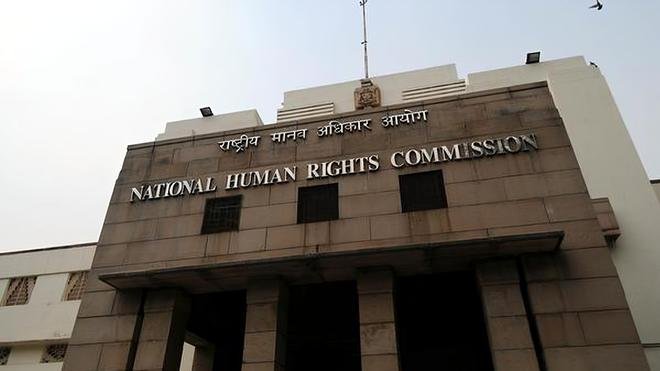
The NHRC notice after three girls died of snakebite at a Gadchiroli residential school has brought national attention to a tragedy that goes far beyond a single encounter with a venomous snake. The incident involved six tribal girls who were reportedly bitten while sleeping on the floor of a residential school hostel in Gadchiroli district, Maharashtra. Three girls died, while the other affected students were taken for medical treatment.
The National Human Rights Commission’s intervention is significant because the central question is not simply how a snake entered a hostel. It is whether children placed in the care of a residential educational institution were provided with reasonably safe living conditions, adequate protection from foreseeable risks and timely access to emergency medical care.
The incident has also exposed a troubling gap that frequently receives less attention than school buildings or examination results: student safety does not end when classes finish. For children living in government-supported residential schools, the hostel is effectively their home. Beds, sanitation, pest control, secure buildings, supervision, emergency transport and access to healthcare are therefore not optional conveniences. They are part of the basic safety infrastructure surrounding education.
What happened at the Gadchiroli residential school?
Reports surrounding the incident indicate that six tribal girls were bitten by a venomous snake while sleeping on the floor of a residential school hostel in Gadchiroli. Three of the girls subsequently died, while the remaining affected students received medical attention.
The tragedy prompted administrative action and an inquiry into the circumstances surrounding the deaths. The NHRC has now taken cognisance of the matter, raising concerns about the alleged violation of students’ human rights and the reported lack of basic facilities at the hostel.
That distinction matters. An NHRC notice is not itself a finding that officials are guilty of negligence. It is a mechanism through which the Commission seeks information and examines whether the reported circumstances indicate a possible violation of human rights.
The authorities therefore face a series of questions: What were the accommodation arrangements? Why were students sleeping on the floor? What preventive measures existed against snakes and other hazards? Was adequate supervision available at night? How quickly were the girls transported for treatment? And were emergency medical resources sufficiently accessible?
Why the NHRC intervention matters
The National Human Rights Commission has repeatedly treated safety failures affecting children in institutional settings as matters that can raise human-rights concerns. In a residential school, the state or institution assumes responsibilities that ordinarily belong to parents or guardians during the child’s stay.
This makes the Gadchiroli case particularly important. The issue is not merely wildlife entering a building. In rural and forested regions, encounters with snakes are a known environmental risk. The stronger policy question is whether institutions located in such environments are designed and managed with that risk in mind.
Human rights in this context include more than protection from deliberate harm. They also involve dignity, safety and the right to conditions that do not expose children to avoidable danger.
The NHRC’s scrutiny can therefore push the investigation beyond identifying the immediate cause of death. It can encourage authorities to examine the chain of conditions that existed before the snakebite occurred.
The overlooked issue: sleeping arrangements
One of the most important details in the Gadchiroli tragedy is the reported fact that the girls were sleeping on the floor.
A sleeping arrangement can appear like a minor infrastructure issue until it becomes connected to a serious environmental hazard. In areas where snakes and other reptiles may enter buildings, the distance between a person and the floor can become a meaningful safety consideration.
This does not mean that simply providing beds can guarantee protection from snakebite. It cannot. Snakes can enter rooms, move onto raised surfaces and remain hidden in bedding or surrounding areas. But appropriate beds, secure sleeping spaces and proper hostel maintenance can form part of a broader risk-reduction system.
Reports indicate that Maharashtra’s Tribal Development Department had issued rules shortly before the deaths requiring students in state-run tribal hostels to be provided with basic sleeping materials, including a cot, mattress, blanket and pillow. The timing has intensified questions about the gap between government policy and implementation.
This creates a wider governance lesson: a safety rule has little value if it reaches the paperwork faster than it reaches the student.
Snakebite is a medical emergency, not simply a wildlife problem
Another dimension of the Gadchiroli incident concerns emergency medical response.
Snakebite can become life-threatening because certain venoms can affect the nervous system, blood clotting, muscles or other vital functions. The outcome can depend heavily on how quickly the victim receives appropriate medical assessment and treatment.
For residential schools located far from major healthcare centres, this creates an additional responsibility. Emergency planning cannot begin after a student has already been bitten.
A functioning hostel safety system should consider questions such as:
- Who is responsible for calling emergency medical services during the night?
- Does hostel staff know the nearest facility capable of treating serious snakebite?
- Is emergency transport available at all hours?
- Can staff quickly identify the location of the hostel for responders?
- Are staff trained to avoid dangerous first-aid practices after snakebite?
- Are parents and guardians informed through a defined emergency communication system?
These questions are particularly important in remote districts where travel times can be longer and monsoon conditions can complicate transportation.
Why Gadchiroli deserves special attention
Gadchiroli is a largely rural district in eastern Maharashtra with substantial forested and tribal areas. Its geography makes access to essential services more complicated in some remote locations than it is in densely populated urban centres.
That does not reduce the state’s responsibility to provide safe residential education. Instead, it makes advance planning more important.
Remote residential schools need to be designed around the realities of their surroundings. Measures such as sealed openings, repaired walls, vegetation control around buildings, adequate lighting, regular inspections, safe storage of materials and properly maintained drainage can help reduce opportunities for reptiles and other pests to enter occupied spaces.
The objective should not be to pretend that a rural or forest-adjacent campus can become completely risk-free. The objective should be to reduce foreseeable risks and make the response to emergencies faster.
From snake control to a broader hostel safety audit
A narrow response would be to search for snakes after a tragedy. A stronger response would examine the entire hostel environment.
Authorities should consider a comprehensive safety audit covering buildings, sleeping arrangements, sanitation, electrical systems, fire safety, water supply, food preparation, night supervision, first aid, emergency transport and communication systems.
This is where the Gadchiroli incident can become a turning point rather than another isolated tragedy.
What a residential school safety audit should examine
| Safety area | What authorities should check | Why it matters |
|---|---|---|
| Sleeping facilities | Beds, mattresses and safe room arrangements | Reduces exposure to floor-level hazards and improves basic living conditions |
| Building integrity | Gaps, cracks, broken doors, windows and drainage openings | Can reduce entry points for snakes and other pests |
| Campus maintenance | Vegetation, debris, waste and dark areas near buildings | Helps reduce places where reptiles may shelter |
| Night supervision | Warden presence, lighting and emergency communication | Improves the speed of response when an incident occurs |
| Medical preparedness | First-aid arrangements, referral pathways and transport | Can reduce delays during life-threatening emergencies |
| Emergency training | Staff knowledge of snakebite response and evacuation procedures | Prevents harmful delays and unsafe first-aid practices |
The deeper problem: policy versus implementation
Perhaps the most important lesson from the case is the difference between announcing a welfare measure and ensuring that it works on the ground.
If students are entitled to basic sleeping equipment but are still sleeping on floors, the question cannot end with the existence of a government order. Authorities must determine whether funds were available, whether procurement occurred, whether supplies reached the school, whether staff reported shortages and whether inspections verified compliance.
This is a classic implementation problem in public welfare. A policy can look complete in a government file while remaining incomplete in the life of a child.
The solution is stronger monitoring. Residential schools should have measurable safety standards, regular inspections and clear responsibility for correcting deficiencies. Inspection reports should not simply record whether a facility exists; they should establish whether it is functional and being used properly.
Why tribal students in residential schools need stronger protection
Residential education can play a crucial role in expanding access to schooling for children from remote and economically disadvantaged communities. But the same arrangement creates a special duty of care.
A child who lives at home can often rely on parents or relatives for immediate assistance. A child living in a hostel depends on wardens, teachers, support workers, local healthcare services and the administrative system.
That makes residential schooling a two-part promise: education and protection.
If the first is delivered while the second is neglected, the educational objective itself is weakened. Parents may become reluctant to send children to residential institutions if they believe accommodation is unsafe.
The consequences can therefore extend beyond the immediate tragedy. A loss of trust in residential schools can affect attendance, enrolment and the willingness of families to use government-supported educational programmes.
A comparison that policymakers should not ignore
The Gadchiroli tragedy also deserves to be viewed alongside other incidents involving children in residential institutions. The recurring pattern is not necessarily the same hazard; it is the vulnerability created when children depend on institutions for food, shelter, healthcare and protection.
Whether the risk is snakebite, food contamination, fire, unsafe buildings or delayed medical treatment, the common question is whether a known risk was identified before it became an emergency.
This is why a residential school safety audit should be treated as preventive public policy rather than a response that begins only after deaths occur.
What should happen next?
The immediate priority is accountability through a transparent investigation. The authorities need to establish the precise circumstances of the incident, the condition of the hostel, the availability of basic facilities, the response after the snakebite and whether established safety procedures were followed.
The next step should be corrective action. If deficiencies are identified, they should be addressed across comparable residential schools rather than only at the institution where the deaths occurred.
A district-wide approach would be more effective than a single-school repair exercise. Residential schools in areas with similar environmental conditions should undergo inspections before another tragedy forces authorities to act.
The government should also ensure that affected families receive whatever assistance or compensation is legally and administratively due, while the surviving students receive appropriate medical and psychological support.
The bigger lesson for India’s residential education system
The Gadchiroli case raises a question that applies far beyond Maharashtra: How safe are India’s residential schools when nobody is watching?
Classroom inspections can reveal whether lessons are being conducted. Hostel inspections must answer a different set of questions: Are children sleeping safely? Is drinking water secure? Is food preparation hygienic? Are emergency exits usable? Is there adequate night supervision? Can a seriously ill student reach a hospital quickly?
These questions may not generate headlines during normal times. But they can determine whether an ordinary night remains ordinary.
The most useful response to the Gadchiroli tragedy would therefore be a shift from reactive inspections to preventive safety management. Every residential school should have a documented risk register, periodic infrastructure checks, emergency drills and clearly assigned responsibility for correcting hazards.
Prediction: the real test will be what happens after the NHRC notice
The significance of the NHRC intervention will ultimately depend on what follows it.
If the response produces only an investigation report, the immediate controversy may fade without addressing structural weaknesses. But if authorities use the episode to inspect residential schools across vulnerable areas, enforce minimum accommodation standards, strengthen emergency medical preparedness and publicly track corrective action, the tragedy could lead to meaningful institutional change.
The timing of the new hostel standards makes implementation especially important. The public will reasonably want to know not only what rules exist, but whether students actually receive the protection those rules are intended to provide.
Conclusion
The NHRC notice after three girls died of snakebite at a Gadchiroli residential school has transformed a devastating local incident into a wider question about the state’s duty of care toward children living in residential educational institutions.
The deaths cannot be understood only as an unfortunate encounter between children and a snake. The circumstances demand scrutiny of accommodation, infrastructure, supervision, environmental management, emergency response and the implementation of welfare standards.
For Gadchiroli and other districts with remote residential schools, the path forward is clear: identify risks before they become emergencies, provide basic facilities before they are demanded, and ensure that every child living away from home has a safe place to sleep.
Education is supposed to open the door to a better future. For children entrusted to residential schools, the first responsibility is making sure they are safe enough to reach it.
For breaking news and live news updates, like us on Facebook or follow us on Twitter and Instagram. Read more on Latest Health on thefoxdaily.com.

COMMENTS 0