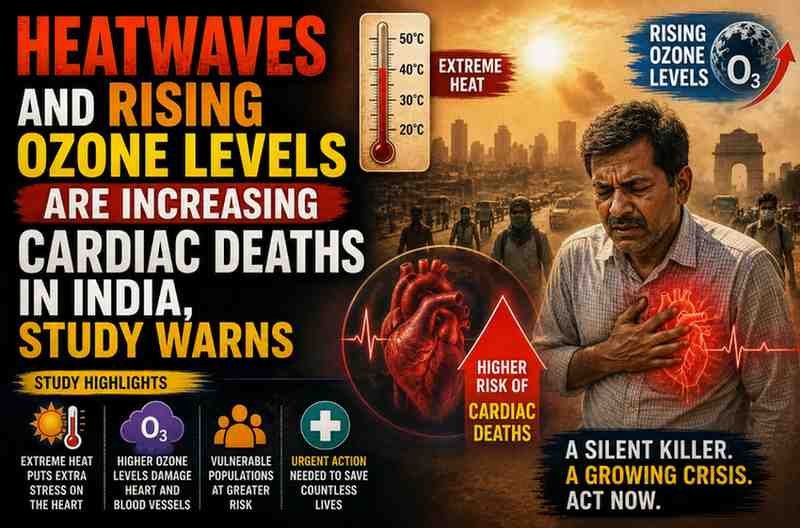
India’s increasingly severe heatwaves are doing more than causing dehydration and heatstroke. According to a new peer-reviewed study, extreme temperatures coupled with elevated surface ozone levels are contributing to a rise in cardiac deaths, revealing a hidden health crisis that extends far beyond discomfort during summer months.
The research found that surface ozone concentrations during heatwaves reached between 85 and 110 μg/m³ in northern India, exceeding the World Health Organization’s guideline value of 70 μg/m³. Importantly, every region of the country recorded ozone levels above the recommended threshold. In 2024, around 830 excess deaths were reported during heatwave periods compared with the days preceding them, pointing to the deadly synergy between heat and pollution.
The findings add urgency to growing concerns that Climate Change and deteriorating air quality are interacting in ways that amplify health risks, particularly among vulnerable populations.
What Is Surface Ozone and Why Is It Dangerous?
Unlike the protective ozone layer high in the atmosphere, surface ozone is a harmful air pollutant formed when sunlight reacts with nitrogen oxides and volatile organic compounds emitted by vehicles, industries, and other sources.
Ground-level ozone can irritate the respiratory system and trigger inflammation throughout the body. Researchers increasingly recognize that its effects extend beyond the lungs and can affect cardiovascular health.
Exposure to elevated ozone levels has been linked to:
- Inflammation of blood vessels.
- Increased oxidative stress.
- Irregular heart rhythms.
- Higher risk of heart attacks.
- Stroke.
- Worsening of pre-existing cardiovascular disease.
Why Heatwaves Make Ozone Pollution Worse
Heat and ozone are closely connected. High temperatures accelerate the chemical reactions that produce ozone, leading to higher concentrations during prolonged heatwaves.
This creates a dangerous cycle:
- Hotter weather increases ozone formation.
- Higher ozone levels place stress on the heart and lungs.
- Extreme heat simultaneously strains the cardiovascular system.
- The combination magnifies the health risks.
Scientists describe this as a compound environmental hazard, where two stressors interact to create effects greater than either factor alone.
What the Study Found
The peer-reviewed research reported several concerning observations:
- Surface ozone concentrations reached 85–110 μg/m³ during heatwaves in northern India.
- WHO’s recommended limit of 70 μg/m³ was exceeded across all regions.
- Heatwave periods in 2024 coincided with approximately 830 excess deaths compared with preceding days.
- The combination of heat stress and ozone exposure appeared particularly harmful for cardiovascular health.
These findings reinforce the idea that air pollution and climate extremes cannot be addressed separately.
Why the Heart Is Especially Vulnerable
Extreme temperatures force the body to work harder to regulate internal temperature. Blood vessels dilate, heart rate increases, and dehydration may thicken the blood, making circulation more difficult.
Meanwhile, ozone exposure can promote inflammation and oxidative stress, further burdening the cardiovascular system.
Together, these mechanisms can increase the likelihood of:
- Heart attacks.
- Cardiac arrhythmias.
- Heart failure exacerbations.
- Stroke.
- Sudden cardiac death.
Older adults and individuals with existing heart disease are particularly vulnerable.
Comparison: Heat Alone vs Heat Plus Elevated Ozone
| Environmental Factor | Primary Health Effects | Risk to Heart Health |
|---|---|---|
| Heatwave alone | Dehydration, heat stress | Moderate to high |
| Elevated ozone alone | Inflammation, respiratory irritation | Moderate |
| Heatwave plus high ozone | Combined cardiovascular stress | Very high |
| Heatwave plus pollution in vulnerable individuals | Compounded physiological strain | Highest risk |
An Insight Competitors Often Miss: Climate Change Is Becoming a Cardiovascular Disease Issue
Climate change is often discussed in terms of melting glaciers, rising sea levels, and extreme weather events. But its impact on human health—particularly cardiovascular health—is receiving less attention.
The latest findings suggest that climate change should also be viewed as a chronic disease challenge. Rising temperatures alter air chemistry, increase pollution exposure, and create environmental conditions that directly affect the heart.
In other words, climate change is no longer only an environmental problem; it is increasingly a cardiology problem.
Who Is Most at Risk?
Certain populations are especially susceptible to the combined effects of heat and ozone:
- Older adults.
- People with heart disease.
- Individuals with diabetes.
- Patients with hypertension.
- People with chronic lung disease.
- Outdoor workers.
- Urban populations exposed to heavy traffic pollution.
Socioeconomic factors can further amplify vulnerability, particularly where access to cooling, healthcare, and clean air is limited.
Why India’s Cities Face Special Challenges
Rapid urbanization, vehicle emissions, industrial growth, and increasingly frequent heatwaves create conditions favorable for ozone formation.
Urban heat islands areas where cities become significantly warmer than surrounding regions can intensify both heat exposure and air pollution.
This means that densely populated cities may experience disproportionately severe health consequences.
What Can Individuals Do During Heatwaves?
Experts recommend several precautions:
- Stay hydrated.
- Avoid strenuous outdoor activity during peak heat.
- Monitor air quality reports when available.
- Use cooling measures and remain indoors during extreme heat.
- Continue prescribed heart medications unless advised otherwise.
- Seek medical attention for chest pain, shortness of breath, or unusual symptoms.
People with cardiovascular conditions should be particularly cautious during prolonged heat events.
Prediction: Heat-Health Warning Systems Will Need to Include Air Pollution
Traditional heat alerts focus primarily on temperature. However, experts increasingly believe that future warning systems should integrate pollution indicators such as ozone levels.
Combined heat-and-air-quality alerts could help:
- Identify high-risk periods.
- Protect vulnerable populations.
- Improve emergency preparedness.
- Reduce preventable deaths.
- Strengthen public health responses.
As climate extremes intensify, integrated forecasting systems may become essential.
Why This Matters Beyond Summer
The implications of the study extend beyond seasonal heatwaves. They highlight the growing interconnectedness between environmental factors and chronic disease.
Addressing cardiovascular mortality in the future may require:
- Cleaner energy sources.
- Reduced emissions.
- Better urban planning.
- Expanded green spaces.
- Improved public health surveillance.
- Climate adaptation strategies.
The fight against heart disease may increasingly involve policies traditionally associated with environmental protection.
Conclusion
The new study reveals that heatwaves and elevated ozone levels are acting together to increase cardiac deaths in India, exposing a dangerous interaction between climate change and air pollution. With ozone concentrations exceeding WHO guidelines nationwide and hundreds of excess deaths reported during heatwave periods in 2024, the findings underscore the need for integrated approaches to public health.
As temperatures continue to rise and heatwaves become more frequent, protecting cardiovascular health will require more than treating disease—it will demand cleaner air, smarter cities, and climate-conscious healthcare policies.
The heat outside and the air we breathe are becoming inseparable factors in heart health, and future strategies must recognize that the environment and the human body are deeply connected.
For breaking news and live news updates, like us on Facebook or follow us on Twitter and Instagram. Read more on Latest Health on thefoxdaily.com.






COMMENTS 0