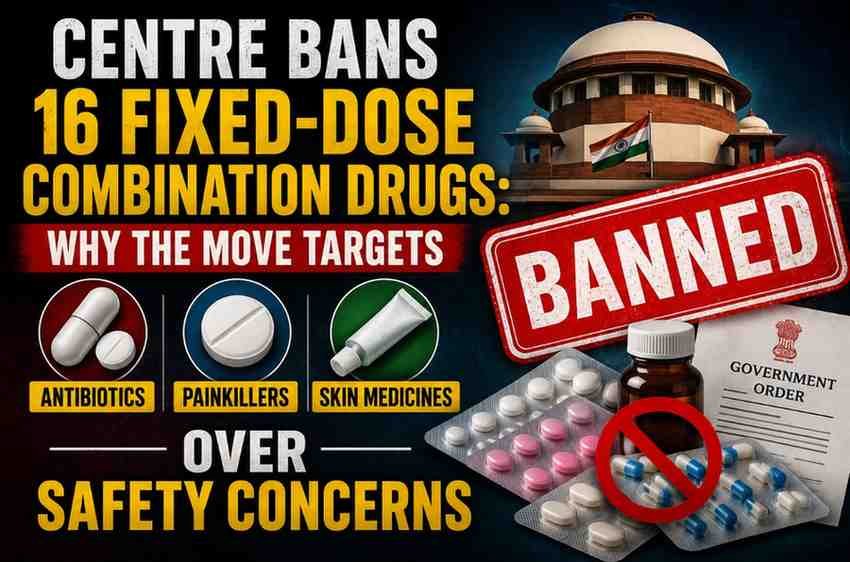
The Centre has banned 16 fixed-dose combination (FDC) drugs commonly used in categories such as antibiotics, painkillers and dermatological medications, citing concerns over safety and questionable therapeutic value. The decision follows recommendations from expert committees that examined whether these combinations offered proven benefits or posed unnecessary health risks to patients.
Fixed-dose combinations are medicines that combine two or more active pharmaceutical ingredients in predetermined proportions within a single tablet, capsule or syrup. While many such combinations are medically useful, health authorities have increasingly scrutinized irrational combinations that may expose patients to avoidable side effects without providing additional clinical benefits.
The latest action highlights India’s broader efforts to strengthen drug regulation and promote evidence-based medicine in one of the world’s largest pharmaceutical markets.
What Are Fixed-Dose Combination Drugs?
Fixed-dose combinations, commonly known as FDCs, are medicines that contain multiple active ingredients in a single formulation. These drugs are designed to simplify treatment, improve patient compliance and, in certain cases, enhance therapeutic effectiveness.
For example, some combinations are widely used in the treatment of tuberculosis, HIV and hypertension because they help patients manage complex treatment regimens more conveniently.
However, not every combination is scientifically justified. Experts warn that combining drugs without clear evidence can increase side effects, create unnecessary exposure to medications and sometimes complicate treatment.
Why Did the Government Ban These 16 Drugs?
The ban stems from concerns raised by expert panels that reviewed the safety and efficacy of certain combinations. According to medical experts, some fixed-dose combinations lack sufficient evidence to demonstrate superior benefits compared with individual medicines administered separately.
In some cases, the combinations may increase the risk of adverse reactions, antibiotic resistance or inappropriate medication use.
The government’s action is aimed at ensuring that medicines available to the public are backed by scientific data and provide a favorable balance between benefits and risks.
Why Irrational Drug Combinations Can Be Harmful
While combining medications can sometimes improve outcomes, irrational combinations can create several problems.
- Higher risk of side effects due to multiple active ingredients
- Difficulty adjusting doses for individual patients
- Potential for drug interactions
- Unnecessary exposure to medications
- Increased risk of antimicrobial resistance in the case of antibiotics
- Confusion regarding the source of adverse reactions
Doctors and pharmacologists have long emphasized that every combination should have a clear therapeutic purpose supported by scientific evidence.
Categories Affected by the Ban
The prohibited medicines reportedly include formulations used in antibiotics, pain management and dermatology. These are among the most commonly prescribed categories in India, making regulatory oversight particularly important.
| Category | Reason for Concern |
|---|---|
| Antibiotics | Risk of inappropriate use and antimicrobial resistance |
| Painkillers | Possibility of increased side effects and dosage complications |
| Skin Medicines | Lack of proven therapeutic advantage in some combinations |
| Combination Formulations | Safety and efficacy concerns identified by experts |
The decision underscores the importance of prescribing medicines based on clinical necessity rather than convenience alone.
Why Antibiotic Combinations Face Special Scrutiny
Antibiotic resistance has emerged as one of the most serious global public health threats. Misuse and overuse of antibiotics contribute significantly to the development of resistant bacteria, making infections harder to treat.
Experts have repeatedly warned that irrational antibiotic combinations can accelerate resistance and reduce the effectiveness of life-saving drugs.
India, with its large population and extensive antibiotic consumption, has been strengthening efforts to encourage responsible antimicrobial use.
The Growing Importance of Evidence-Based Medicine
The ban reflects a broader shift toward evidence-based healthcare, where medicines are evaluated not only for their intended benefits but also for their safety profile and scientific justification.
Modern drug regulation increasingly focuses on ensuring that medications are supported by clinical studies demonstrating effectiveness and acceptable risks.
This approach helps protect patients from treatments that may be unnecessary or potentially harmful.
How India’s Drug Regulation Has Evolved
Over the past decade, India has taken several steps to improve pharmaceutical oversight. Regulatory authorities have periodically reviewed fixed-dose combinations and withdrawn products considered irrational or unsafe.
These measures are part of efforts to align Indian pharmaceutical practices with global standards and strengthen public trust in healthcare systems.
The latest decision continues that process by emphasizing scientific evaluation and patient safety.
What Should Patients Do If They Have Been Using These Medicines?
Patients currently using medications affected by the ban should not stop treatment abruptly without consulting a healthcare professional. Doctors can assess individual medical needs and recommend suitable alternatives when necessary.
Experts advise against self-medication and encourage patients to seek guidance from qualified physicians rather than relying solely on over-the-counter remedies.
Pharmacists also play an important role in helping patients transition to safer and more appropriate medications.
Why Combination Medicines Are Still Important in Some Diseases
The ban on certain FDCs does not mean that all combination medicines are problematic. In fact, fixed-dose combinations have transformed the treatment of several diseases.
| Disease Area | Benefits of Combination Therapy |
|---|---|
| Tuberculosis | Improves adherence and treatment outcomes |
| HIV/AIDS | Reduces pill burden and simplifies therapy |
| Hypertension | Helps control blood pressure more effectively |
| Diabetes | Enhances convenience and compliance |
The key distinction lies in whether the combinations are scientifically validated and provide genuine clinical advantages.
How This Move Could Impact the Pharmaceutical Industry
The pharmaceutical industry may need to adapt by focusing more on evidence-based formulations and investing in clinical research. Companies manufacturing affected drugs could face short-term disruptions, but stronger regulatory standards may ultimately improve quality and international competitiveness.
Greater emphasis on scientific validation can also enhance confidence among doctors and patients.
Industry experts believe that regulatory scrutiny encourages innovation while discouraging irrational formulations.
The Global Context: Drug Safety Is Becoming a Priority
Health regulators worldwide are placing increasing emphasis on medication safety and effectiveness. Governments and international health organizations are focusing on reducing unnecessary drug exposure and promoting rational prescribing practices.
India’s decision reflects this broader trend toward ensuring that patients receive therapies supported by robust evidence.
As healthcare becomes more patient-centric, safety considerations are likely to become even more important in future drug approvals.
Conclusion
The Centre’s decision to ban 16 fixed-dose combination drugs marks another significant step in strengthening Drug Safety and promoting evidence-based medicine. While combination therapies remain essential for many conditions, experts stress that every formulation must demonstrate clear benefits and acceptable risks.
For patients, the move serves as a reminder that medicines should always be used under professional guidance and not assumed to be harmless simply because they are widely available. In the long run, stronger regulation and scientific scrutiny can help ensure safer treatments and improve overall public health outcomes.
For breaking news and live news updates, like us on Facebook or follow us on Twitter and Instagram. Read more on Latest Health on thefoxdaily.com.


COMMENTS 0