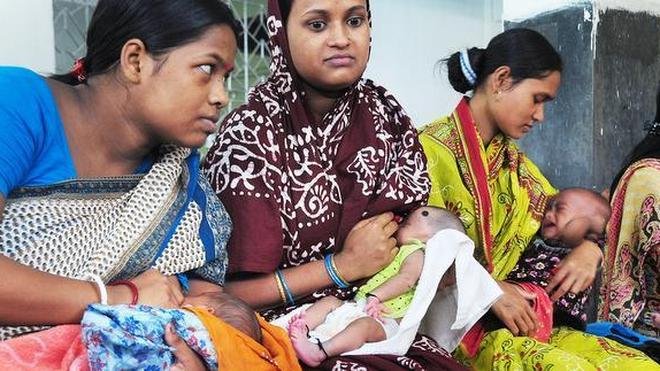
India has made important progress in maternal and newborn healthcare, with more women receiving antenatal care and more babies being born in health facilities. Yet new evidence from the National Family Health Survey-6 (NFHS-6) points to a less visible challenge in infant nutrition: breastfeeding gains are not necessarily being sustained after mothers leave the healthcare system.
The distinction matters. Early initiation of breastfeeding means putting a newborn to the breast within the first hour after birth. It is an important public-health indicator because the first feed provides colostrum, supports early mother-infant contact and helps establish breastfeeding. But a successful first feed does not guarantee that breastfeeding will continue exclusively for the first six months.
NFHS-6 data for 2023-24 show that the proportion of Indian children under six months who were exclusively breastfed fell to 55.8%, from 63.7% in NFHS-5 conducted in 2019-21. That decline has turned attention towards what happens after delivery: whether mothers receive practical help with positioning and attachment, whether concerns about milk supply are addressed, whether family members support breastfeeding and whether mothers can continue feeding when they return home or work.
The emerging lesson is straightforward: breastfeeding should be treated as a continuum of care rather than a one-time hospital intervention.
What NFHS-6 reveals about India’s breastfeeding challenge
The latest survey creates a more complicated picture than simply saying that breastfeeding is improving or worsening.
India has strengthened several components of maternal and child healthcare. Institutional deliveries increased from 88.6% in NFHS-5 to 90.6% in NFHS-6, while antenatal care coverage also improved. These changes mean that an increasing proportion of mothers have contact with formal healthcare services around pregnancy and childbirth.
That creates an important opportunity for breastfeeding support.
Hospitals and maternity facilities are often the first places where mothers receive advice about breastfeeding. Nurses, doctors, lactation counsellors and other health workers can help a mother begin feeding, identify difficulties and reassure her during the uncertain first hours after birth.
But the mother’s healthcare journey does not end at discharge.
In fact, for breastfeeding, discharge may mark the beginning of the more difficult phase. At home, mothers must respond to a hungry newborn, sleepless nights, physical recovery, family expectations and questions about whether the baby is receiving enough milk. Without continued support, a mother who successfully initiated breastfeeding may begin supplementing feeds or stop exclusive breastfeeding earlier than intended.
Why early initiation and continued breastfeeding are different goals
Early initiation and exclusive breastfeeding are related, but they measure different points on the breastfeeding journey.
Early initiation asks whether breastfeeding began within the first hour after birth. Exclusive breastfeeding, meanwhile, concerns whether an infant receives only breast milk during the first six months, apart from medicines, oral rehydration solution or other medically indicated exceptions.
A hospital can therefore perform well on early initiation while families still struggle with breastfeeding continuation once they return home.
This distinction is one of the most important insights from the latest data. Improving the first hour is necessary, but it cannot substitute for support during the first days and weeks.
The first days can be particularly challenging because mothers and babies are still learning how to breastfeed. Difficulties with latch, positioning, painful feeding, perceived low milk supply or a sleepy baby can quickly undermine confidence.
In many cases, the problem is not a lack of willingness. It is a lack of timely, practical assistance.
The first week may matter more than policymakers realise
Breastfeeding policy often focuses heavily on what happens inside the maternity facility. But the period immediately after discharge deserves equal attention.
A mother may leave the hospital with general advice such as breastfeeding on demand or feeding exclusively for six months. That information is valuable, but information alone may not solve a practical feeding problem at 2 a.m.
If a baby repeatedly struggles to latch, a mother may need someone trained to observe a feed and identify what is going wrong. If she worries that her baby is not getting enough milk, she needs an evidence-based assessment rather than reassurance or pressure. If breastfeeding is painful, she needs help identifying the reason instead of being told simply to tolerate it.
This suggests a shift in the way breastfeeding support is designed: the system should move from advice-giving to problem-solving.
Perceived low milk supply can become a turning point
One of the most common concerns reported by new mothers is that they are not producing enough milk. This concern can become particularly influential during the early weeks when feeding patterns are still developing.
Perception and physiology are not always the same thing. A baby feeding frequently does not automatically mean that the mother has insufficient milk. Newborn feeding patterns can vary, and assessment of the baby’s overall condition, feeding effectiveness and growth is more useful than judging milk supply by a single feeding session.
However, dismissing a mother’s concern is not the answer either.
A mother who feels that nobody is listening may seek advice elsewhere. Family members, social media and commercial marketing can then fill the information gap, sometimes with conflicting recommendations.
This is why sustained professional support matters. A trained health worker can help distinguish between a normal breastfeeding challenge and a problem that requires clinical attention.
Family support may determine what happens after discharge
Breastfeeding is often described as something a mother and baby do together. In reality, it is also shaped by the household around them.
Grandparents, partners and other family members can influence decisions about feeding, sleeping, recovery and infant care. Their support can make breastfeeding easier, while conflicting advice can create additional pressure for a new mother.
In some households, traditional beliefs about colostrum, prelacteal feeds or the perceived need to supplement breast milk may influence feeding decisions. In others, family members may encourage formula or other feeds because they believe the baby remains hungry.
The answer is not to blame families. It is to include them in breastfeeding education.
A mother should not be expected to defend every feeding decision alone. When partners and close family members understand why exclusive breastfeeding is recommended and know how they can practically support the mother, the burden becomes more manageable.
Why hospital-based success can hide a community-level problem
India’s expanding institutional delivery network creates a valuable platform for breastfeeding promotion. But it can also create a measurement blind spot.
A facility can record whether breastfeeding was initiated before discharge. That is relatively easy to measure. Sustained breastfeeding is much harder because it depends on what happens in homes and communities after the healthcare encounter ends.
This creates a broader public-health question: Are healthcare systems measuring the intervention, or are they measuring the outcome?
If the goal is healthier infants, the relevant question is not simply whether a mother started breastfeeding in hospital. It is whether she was able to continue breastfeeding successfully and safely after leaving that facility.
From hospital counselling to a continuum of breastfeeding care
A stronger model would connect maternity services with postnatal follow-up, community health workers and primary healthcare facilities.
Instead of treating breastfeeding counselling as a single conversation before discharge, mothers could receive support at multiple points: during pregnancy, immediately after birth, during the first few days at home and throughout the early months.
This does not necessarily mean adding complicated new programmes. Existing maternal and child health contacts could be used more effectively.
Antenatal care
Breastfeeding preparation can begin during pregnancy. Mothers can receive realistic information about the first days, common challenges and where to seek help.
Delivery and immediate postpartum care
Healthcare staff can support early initiation and observe whether the mother and baby are establishing an effective feeding pattern.
Early post-discharge contact
The first days at home should not become a support vacuum. Follow-up can provide an opportunity to identify feeding difficulties before they become reasons to stop exclusive breastfeeding.
Community-level support
Accredited social health activists, auxiliary nurse midwives and other frontline workers can help connect mothers with appropriate services and reinforce accurate information.
Longer-term support
As babies grow, mothers may need guidance on continuing breastfeeding alongside complementary feeding after six months. The support therefore needs to evolve rather than disappear after the newborn period.
The role of Baby-Friendly hospital practices
Hospital practices can strongly influence the start of breastfeeding. The Baby-Friendly Hospital Initiative, based on evidence-informed practices for supporting breastfeeding, provides a framework for maternity facilities.
But hospital accreditation or good performance inside a facility should not be regarded as the endpoint.
A mother can receive excellent care during the first 48 hours and still struggle on day five. The most effective system would connect facility-based breastfeeding support with community-based follow-up so that the quality of care does not suddenly fall when the hospital door closes behind the family.
India also needs to look beyond awareness campaigns
Public-health messaging often assumes that if mothers know breastfeeding is beneficial, they will automatically breastfeed successfully.
The NFHS-6 trend suggests why that assumption is incomplete.
Knowledge matters, but behaviour is also shaped by working conditions, family support, maternity leave, social expectations, healthcare access, maternal recovery and the practical difficulties of caring for a newborn.
A mother can know that exclusive breastfeeding is recommended and still be unable to maintain it without support.
This is particularly important for mothers returning to work. Maintaining breastfeeding can require time, privacy and appropriate facilities for expressing and storing milk. Workplace policies and social environments can therefore become part of the breastfeeding equation.
Comparison: starting breastfeeding versus sustaining it
| Early initiation focus | Sustained breastfeeding focus |
|---|---|
| Breastfeeding begins soon after birth | Mother receives help throughout the early months |
| Hospital staff play the central role | Hospitals, families, communities and primary care work together |
| Immediate feeding practices are assessed | Feeding difficulties are identified over time |
| Information is provided around delivery | Practical problem-solving continues after discharge |
| Success is visible during the facility stay | Success depends heavily on what happens at home and in the community |
The bigger nutrition picture: breastfeeding is only one part of the journey
Breastfeeding cannot be separated completely from the broader infant and young-child feeding system.
NFHS-6 shows that child nutrition indicators have improved in several areas, but adequate diets among young children remain a major concern. Breastfeeding is particularly important during infancy, while complementary foods become increasingly important from around six months of age.
This means India’s nutrition strategy needs continuity at every stage.
The first six months require strong support for exclusive breastfeeding. From six months onward, children need appropriate complementary foods while breastfeeding continues. Weakness at any point can affect the overall nutrition trajectory.
The practical implication is that breastfeeding programmes should not operate as isolated campaigns. They should be integrated with maternal nutrition, child growth monitoring, immunisation, postnatal care and broader nutrition services.
A new way to think about the NFHS-6 warning
The decline in exclusive breastfeeding should not be interpreted simply as evidence that mothers are becoming less committed to breastfeeding.
A more useful interpretation is that India’s healthcare system may be getting better at reaching mothers during pregnancy and childbirth while still struggling to provide adequate support during the period when feeding decisions are repeatedly tested.
That is a very different policy problem.
If the problem were simply awareness, another campaign might be enough. If the problem is continuity of support, the solution requires redesigning the pathway between hospital discharge and everyday life.
This is where India could make its next major improvement: treating breastfeeding support as an ongoing service rather than a message delivered once.
What sustained breastfeeding support should include
- Practical feeding assistance: Mothers should have access to trained professionals who can help with common breastfeeding difficulties.
- Early follow-up: The period immediately after discharge should include opportunities to identify feeding problems.
- Family education: Partners and key family members should receive accurate information so that mothers are supported rather than pressured.
- Clear referral pathways: Mothers with persistent or complicated feeding problems should know where to obtain appropriate clinical help.
- Workplace support: Mothers returning to employment need environments that make continued breastfeeding more feasible.
- Consistent messaging: Advice from hospitals, community workers and primary-care providers should be aligned and evidence-based.
- Better monitoring: Public-health programmes should track sustained breastfeeding and feeding quality, not only whether breastfeeding was initiated after birth.
What the next phase of India’s breastfeeding policy should look like
The next phase should focus less on asking whether mothers received breastfeeding advice and more on asking whether they received the support needed to act on that advice.
That distinction could change how hospitals, frontline workers and public-health programmes measure success.
For example, a maternity facility should not be judged only by how many mothers initiated breastfeeding before discharge. The system should also ask whether mothers were connected to follow-up care, whether common feeding difficulties were addressed and whether families knew where to turn when problems emerged.
Technology could assist with this continuity through scheduled follow-ups and accessible communication channels, but digital tools should complement rather than replace human support. Breastfeeding difficulties are often practical and personal, and many require direct observation and individualised advice.
The road ahead: from the first hour to the first six months
India’s breastfeeding conversation is entering a more complicated phase. The country has built substantial capacity around institutional childbirth and maternal healthcare, creating an important foundation for infant nutrition. The challenge now is to extend that support beyond the hospital.
NFHS-6 offers a warning, but it also offers a direction.
If early initiation is the starting line, sustained breastfeeding is the longer race. The two should not be treated as interchangeable measures of success.
The next opportunity lies in building a seamless chain of support: counselling during pregnancy, skilled assistance after delivery, early follow-up at home or in the community, family support, workplace protection and continued guidance as the child moves towards complementary feeding.
Conclusion: The first feed is a beginning, not the finish line
Early initiation of breastfeeding remains an important goal for newborn health, but India’s latest survey data show why it cannot be the only measure of progress. The fall in exclusive breastfeeding among infants under six months from 63.7% in NFHS-5 to 55.8% in NFHS-6 points to a deeper challenge: helping mothers sustain breastfeeding after the initial contact with the healthcare system.
The solution is unlikely to come from simply telling mothers more about the benefits of breastfeeding. Mothers need practical, respectful and continuous support when feeding becomes difficult, when family advice conflicts, when they worry about milk supply and when they return to everyday responsibilities.
The most important policy shift may therefore be simple: move breastfeeding support from the maternity ward into the community.
For India, the next measure of success should not be only how quickly breastfeeding starts. It should be whether mothers have the support, confidence and conditions needed to continue it.
For breaking news and live news updates, like us on Facebook or follow us on Twitter and Instagram. Read more on Latest Health on thefoxdaily.com.


COMMENTS 0