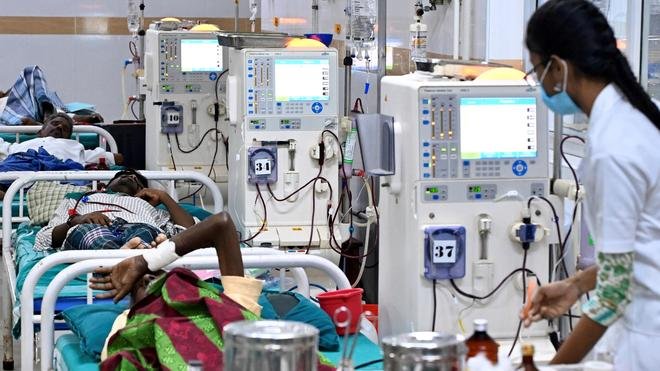
chronic kidney disease screening
Search intent: Informational — readers want to understand why annual CKD screening is being recommended, which tests can identify kidney disease earlier, who may be at higher risk, and why delayed diagnosis can lead to serious complications.
Related keywords: CKD screening in India, chronic kidney disease diagnosis, kidney function test, urine test for kidney disease, kidney disease symptoms, CKD risk factors, agricultural workers kidney disease, early detection of kidney disease, dialysis prevention
A parliamentary committee has recommended stronger measures for chronic kidney disease screening, including annual screening and an additional test to improve the chances of detecting kidney problems before they become advanced. The recommendation comes against the backdrop of a major challenge in Kidney Health: chronic kidney disease can progress quietly, with few or no obvious symptoms during its earlier stages.
By the time noticeable symptoms appear, substantial kidney function may already have been lost. This creates a difficult clinical and public-health problem because untreated or poorly managed CKD can eventually lead to complications, advanced kidney failure and the need for dialysis or kidney transplantation.
The committee has also drawn attention to groups such as agricultural workers and other outdoor labourers, who may face particular environmental and occupational risks. The recommendation therefore shifts the discussion away from waiting for symptoms and towards systematic, risk-based detection.
The most important point is simple: kidney disease screening is not primarily about finding illness after symptoms appear; it is about identifying changes early enough to slow progression and manage the underlying risks.
Why chronic kidney disease is often called a silent condition
The kidneys perform several essential functions, including filtering waste from the blood, helping regulate fluid and electrolyte balance and contributing to blood-pressure regulation and other physiological processes.
One reason CKD can remain undetected is that the body may compensate for declining kidney function for a considerable period. A person may therefore feel well despite measurable damage or reduced kidney function.
This creates a mismatch between how someone feels and what is happening biologically.
That distinction is important for screening. A person who feels healthy may still have risk factors or early laboratory changes that deserve medical evaluation. Conversely, the absence of symptoms should not be interpreted as proof that the kidneys are functioning normally.
What the parliamentary panel’s recommendation means
The recommendation for annual screening represents a preventive approach to kidney health. Instead of relying only on patients visiting a doctor after symptoms develop, routine testing could help identify people who need further evaluation earlier.
The proposal also refers to an additional test for CKD. This is significant because kidney health cannot always be adequately assessed through a single measurement.
Different tests provide different information. Blood testing can help assess kidney filtration, while urine testing can detect abnormalities such as albumin or protein leakage that may indicate kidney damage.
For that reason, a broader screening strategy can be more informative than relying on symptoms alone or on a single laboratory value.
Why annual screening could change the timing of diagnosis
The value of screening is closely connected to timing.
CKD is generally a long-term condition, and progression can vary considerably from one person to another. Identifying kidney abnormalities earlier gives healthcare professionals an opportunity to investigate the cause, control associated risk factors and monitor changes over time.
For people with conditions such as diabetes or high blood pressure, kidney monitoring can be particularly important because these are major contributors to chronic kidney damage.
Earlier identification can also help doctors distinguish potentially reversible or treatable contributors from progressive kidney disease. The appropriate response depends on the individual’s medical history and test results, which is why screening should be followed by clinical evaluation rather than interpreted as a diagnosis by itself.
What tests are commonly used to detect CKD?
There is no single universal “kidney test” that tells the entire story. Kidney assessment generally combines information from blood, urine and clinical history.
| Assessment | What it can indicate | Why it matters |
|---|---|---|
| Blood creatinine measurement | Provides information used to estimate kidney filtration | Can help identify reduced kidney function |
| Estimated glomerular filtration rate (eGFR) | Estimates how effectively the kidneys filter blood | Helps stage and monitor reduced kidney function |
| Urine albumin testing | Detects albumin leakage into urine | Can identify kidney damage even when filtration is not severely reduced |
| Blood pressure assessment | Identifies an important kidney-disease risk factor | High blood pressure can contribute to kidney damage and may also result from kidney disease |
| Medical and occupational history | Identifies relevant risks and exposures | Helps determine who may need closer monitoring or further testing |
The exact tests and frequency of monitoring should be determined according to a person’s risk profile and medical advice. Screening recommendations are designed to identify people who may need evaluation; they do not mean every individual will require the same battery of tests at every visit.
Why urine testing deserves more attention
One of the most important insights in the discussion around CKD screening is that kidney damage and reduced filtration are not always identical.
A person can have evidence of kidney damage even when overall filtration remains relatively preserved. Urine albumin testing can provide information that a blood test alone may miss.
This is why an additional test can potentially strengthen screening programmes. The objective is not simply to label someone with kidney disease but to identify clinically meaningful abnormalities that deserve confirmation and follow-up.
In public-health programmes, this distinction matters. A screening strategy that detects multiple aspects of kidney health can potentially identify at-risk individuals earlier than one based solely on symptoms or a single laboratory marker.
Outdoor and agricultural workers: why the committee’s focus matters
The committee’s reference to agricultural workers and other outdoor labourers introduces an important occupational-health dimension to the kidney disease discussion.
People who work outdoors may experience prolonged heat exposure, strenuous physical activity and conditions that can increase the risk of dehydration. Depending on the work environment, they may also encounter other occupational exposures.
However, it is important not to assume that every case of CKD among an outdoor worker has the same cause. Kidney disease is influenced by multiple factors, including diabetes, hypertension, age, genetics, medications and other medical or environmental circumstances.
The significance of identifying agricultural and outdoor workers as potentially vulnerable groups is therefore that screening and prevention strategies may need to account for occupational conditions as well as conventional medical risk factors.
The heat-health connection deserves closer attention
India’s large outdoor workforce makes heat exposure an increasingly important public-health consideration. Repeated episodes of dehydration and severe heat stress can place substantial strain on the body, including the kidneys.
This does not mean heat exposure is the sole explanation for CKD among outdoor workers. Rather, it highlights why occupational health and kidney health should not be treated as completely separate subjects.
Preventive strategies can include access to drinking water, appropriate rest periods, heat-management practices and health monitoring. Where workers have additional medical risk factors, regular kidney assessment may become even more relevant.
The broader lesson is that screening policy works best when it is connected to the conditions in which people actually live and work.
CKD is not only a kidney problem
The consequences of chronic kidney disease extend beyond the kidneys themselves.
As kidney function declines, the body’s ability to maintain normal fluid, electrolyte and metabolic balance can be affected. Advanced CKD can be associated with complications involving cardiovascular health, blood counts, bones and other systems.
This explains why early detection matters. CKD can become part of a wider cycle in which kidney dysfunction and other chronic conditions influence each other.
For patients, the goal is therefore not simply to “protect the kidneys” in isolation. It is to preserve overall health and slow the progression of a chronic disease before complications become difficult to manage.
The economic case for detecting kidney disease earlier
Advanced kidney disease can require intensive and continuing medical care. Dialysis, in particular, involves recurring treatment and substantial healthcare resources.
From a health-system perspective, preventing or delaying progression where clinically possible can have implications beyond individual wellbeing. It can reduce pressure on specialised services and help patients remain healthier for longer.
This is why annual screening should be viewed as part of a broader prevention strategy rather than simply another test added to an already crowded healthcare system.
However, screening programmes themselves require investment. Testing without reliable follow-up can create a different problem: people may receive abnormal results without timely confirmation, specialist assessment or access to treatment.
The real measure of a screening programme is therefore not how many tests are performed, but how many meaningful abnormalities are detected and appropriately managed.
Screening alone will not solve the CKD problem
This is where the policy discussion needs to go further.
Finding CKD earlier is valuable only if the healthcare system can respond. A patient who tests positive may require repeat testing, assessment of the underlying cause, blood-pressure management, diabetes control, medication review, lifestyle guidance or specialist referral depending on the clinical situation.
Primary-care capacity therefore becomes crucial.
If screening is expanded nationally, frontline health workers need clear protocols for identifying high-risk patients, arranging tests, interpreting results appropriately and ensuring follow-up.
Otherwise, screening could become a numbers exercise rather than a meaningful intervention.
Who should pay particular attention to kidney health?
Risk varies from person to person. People with diabetes or high blood pressure are among those who commonly require kidney monitoring. Other factors, including cardiovascular disease, family history, certain medications and occupational or environmental exposures, may also influence risk.
People should not wait for obvious symptoms to decide whether kidney health matters. The appropriate frequency and type of testing depend on individual circumstances, so screening should be discussed with a qualified healthcare professional, particularly for people with known risk factors.
Symptoms are useful—but they should not be the screening strategy
Symptoms can become more apparent as kidney disease advances, but relying on symptoms alone creates a fundamental problem: the disease may already be substantially established by the time a person feels unwell.
Possible symptoms in more advanced kidney disease can include swelling, changes in urination, tiredness, nausea and other nonspecific problems. These symptoms can have many causes and should not be used to self-diagnose CKD.
The screening principle is different: test based on risk and medical guidance before symptoms become the trigger for investigation.
Annual screening versus symptom-based testing
| Approach | Potential advantage | Major limitation |
|---|---|---|
| Symptom-based testing | Focuses testing on people who seek care because something feels wrong | May miss CKD during its earlier, less symptomatic stages |
| Risk-based screening | Targets people more likely to develop kidney disease | Requires reliable identification and follow-up of high-risk groups |
| Regular screening | Can create opportunities to identify changes over time | Requires sustained access to testing and healthcare services |
This comparison explains why the parliamentary recommendation is significant. It represents a shift from a reactive model—testing after symptoms appear—to a more preventive model in which kidney health is monitored before serious complications develop.
The biggest implementation challenge: reaching the people who need screening most
India’s healthcare system is highly diverse. A screening policy that works in a major urban hospital may be much harder to implement among remote agricultural workers or people with limited access to laboratory services.
For the recommendation to have its intended impact, screening must be accessible beyond major tertiary hospitals.
Primary health centres, community health programmes and workplace health initiatives could potentially play an important role in reaching people earlier, provided they have appropriate testing, referral and follow-up mechanisms.
Digital health systems may also help track patients who need repeat testing, although technology cannot substitute for laboratory capacity and clinical care.
What should happen next?
A stronger national kidney-health strategy would ideally connect four stages: identify risk, screen, confirm and manage.
- Identify: Recognise people with medical, family, occupational or environmental risk factors.
- Screen: Use appropriate blood and urine assessments according to clinical guidance.
- Confirm: Abnormal screening results should be evaluated rather than automatically treated as a diagnosis.
- Manage: People with confirmed disease or significant risk should receive appropriate monitoring and treatment.
This model would make annual screening part of a continuous healthcare pathway rather than an isolated annual event.
What the recommendation could mean for India’s kidney-health strategy
The parliamentary committee’s recommendation arrives at an important moment for public health. India faces a growing burden of chronic diseases, and kidney disease intersects with several of them.
The most valuable shift would be to make kidney health a routine component of chronic-disease prevention rather than something addressed mainly after kidney function has already deteriorated.
The focus on agricultural and outdoor workers also offers an opportunity to connect clinical medicine with occupational health. Heat exposure, working conditions and access to preventive healthcare can all be considered when designing targeted interventions.
The committee’s recommendation should therefore be understood as more than a call for additional tests. It points towards a broader change in how CKD is detected: earlier, more systematically and with greater attention to people whose working or medical circumstances may increase their risk.
Conclusion: The best time to detect kidney disease is before it becomes a crisis
The parliamentary committee’s call for annual chronic kidney disease screening and additional testing highlights one of the biggest challenges in kidney health: CKD can progress quietly until substantial kidney function has already been lost.
For patients, earlier detection can create an opportunity to investigate the cause, manage risk factors and monitor kidney function before complications become advanced. For the health system, better screening could help shift care away from crisis management and towards prevention.
But screening must be backed by something equally important: follow-up. Testing without diagnosis, treatment and long-term monitoring cannot deliver the full benefits of early detection.
The attention given to agricultural workers and other outdoor labourers is also important because kidney health is influenced not only by conventional medical conditions but potentially by the environments in which people work.
The future of CKD prevention in India will therefore depend on a combination of accessible screening, accurate testing, strong primary care, occupational-health measures and timely treatment. The goal should not simply be to find more kidney disease. It should be to find it early enough to change the course of the disease.
Four key takeaways
- The parliamentary committee has recommended annual screening and an additional test to improve early detection of chronic kidney disease.
- CKD can remain asymptomatic until significant kidney function has been lost, making symptom-based detection unreliable for early disease.
- Agricultural workers and other outdoor labourers may require particular attention because occupational conditions can create additional kidney-health risks.
- Screening will have the greatest impact when abnormal results are followed by confirmation, treatment and long-term monitoring.
Frequently Asked Questions
Why is annual chronic kidney disease screening being recommended?
CKD can progress without obvious symptoms. Regular screening can provide an opportunity to identify kidney damage or reduced kidney function earlier, particularly among people with relevant risk factors.
Can chronic kidney disease exist without symptoms?
Yes. Early CKD may produce few or no noticeable symptoms. Symptoms can become more apparent as kidney function declines, which is why screening can be important for people at increased risk.
What tests are used to check kidney health?
Kidney assessment commonly involves blood tests used to evaluate filtration, urine testing for markers such as albumin, blood-pressure measurement and an assessment of medical history and risk factors.
Why is an additional kidney test important?
Different tests provide different information. For example, a blood-based assessment of kidney filtration and a urine test for albumin can identify different aspects of kidney health.
Are agricultural workers at higher risk of kidney problems?
Agricultural and other outdoor workers may face occupational conditions such as prolonged heat exposure and strenuous work. These factors can be relevant to kidney health, although CKD has multiple possible causes and individual risk varies.
Does a normal-feeling person need kidney screening?
Feeling well does not necessarily rule out early CKD. Whether screening is appropriate depends on factors such as age, medical conditions, family history and other individual risks. A healthcare professional can recommend the appropriate testing schedule.
Can early detection prevent dialysis?
Early detection cannot guarantee that dialysis will be avoided. However, identifying kidney disease earlier can allow appropriate treatment and monitoring that may help slow progression in suitable patients.
Is kidney screening enough to control CKD?
No. Screening is only the first step. Effective CKD care also requires confirmation of abnormal findings, identification of underlying causes, management of associated conditions and ongoing medical follow-up.
For breaking news and live news updates, like us on Facebook or follow us on Twitter and Instagram. Read more on Latest Health on thefoxdaily.com.


COMMENTS 0