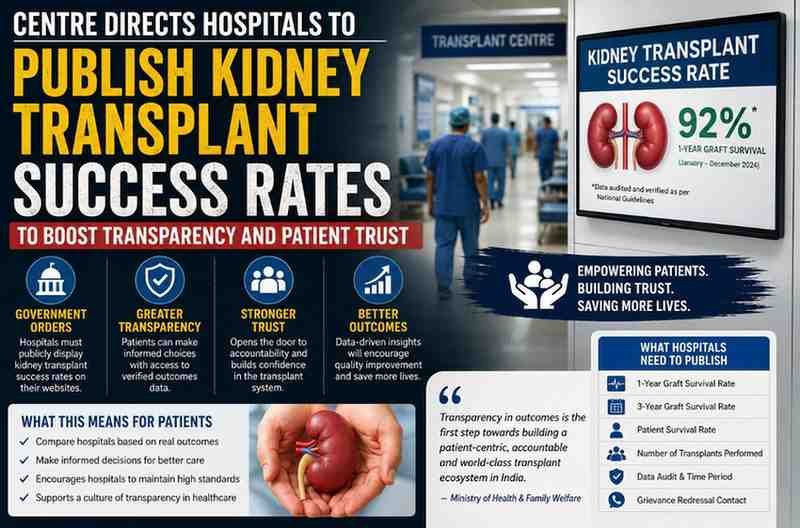
Choosing a hospital for a kidney transplant is one of the most important decisions a patient and their family will ever make. Until now, many people relied on referrals, personal recommendations, or reputation because reliable information about transplant outcomes was often difficult to access. That is beginning to change.
The Centre has directed registered transplant hospitals across India to publicly disclose key outcome data related to kidney transplants, including patient survival and graft survival rates, on their official websites. The initiative is designed to make transplant programmes more transparent while helping patients make informed choices based on measurable performance rather than perception alone.
The decision represents more than an administrative reform. It reflects a broader shift in Indian healthcare toward data-driven quality improvement, patient empowerment, and greater institutional accountability. At a time when demand for organ transplantation continues to grow, transparent reporting may become one of the most powerful tools for improving healthcare quality across the country.
Why the New Kidney Transplant Transparency Policy Matters
Kidney transplantation is widely regarded as the preferred treatment for many patients with end-stage kidney disease because it can improve both survival and quality of life compared with long-term dialysis. However, transplant success depends on numerous factors, including surgical expertise, donor compatibility, post-operative care, infection control, medication adherence, and long-term patient monitoring.
Until recently, patients had limited access to objective information about how different transplant centres performed over time. Public disclosure of transplant outcomes changes that by allowing hospitals to demonstrate their clinical performance through measurable data.
transparency also encourages healthcare institutions to continuously evaluate and improve the quality of care they provide.
What Hospitals Have Been Asked to Publish
Under the new directive, registered transplant hospitals are expected to display important transplant outcome indicators on the home page of their official websites.
The information may include:
- Patient survival rates after kidney transplantation.
- Graft survival rates.
- Number of transplant procedures performed.
- Post-transplant mortality data.
- Long-term clinical outcomes.
- Other relevant performance indicators as prescribed by authorities.
The objective is not to rank hospitals but to provide meaningful information that patients and families can consider while discussing treatment options with their healthcare teams.
What Is Kidney Transplant Survival Rate?
A kidney transplant survival rate refers to the proportion of transplant recipients who remain alive after a specified period following surgery. Closely related is the graft survival rate, which measures how long the transplanted kidney continues to function successfully.
These figures are important quality indicators because they reflect both surgical success and the effectiveness of long-term patient management.
However, experts caution that survival rates should always be interpreted in context. Hospitals treating more medically complex patients may naturally report different outcomes than centres managing lower-risk cases.
| Outcome Measure | Why It Matters |
|---|---|
| Patient survival | Shows long-term survival after transplantation |
| Graft survival | Indicates how well the transplanted kidney functions over time |
| Number of transplants | Reflects programme experience |
| Follow-up care | Demonstrates commitment to long-term patient management |
| Clinical outcomes | Supports quality improvement initiatives |
How Greater Transparency Benefits Patients
For patients awaiting transplantation, access to verified performance data can significantly improve decision-making.
Instead of relying solely on word-of-mouth recommendations, patients can discuss published outcome data with their nephrologists and transplant specialists while considering factors such as hospital expertise, accessibility, waiting times, and available support services.
Greater transparency also builds trust by demonstrating that healthcare institutions are willing to publicly share their performance and remain accountable for patient outcomes.
Why Transparency Alone Does Not Tell the Whole Story
Although survival statistics are valuable, they should never be viewed in isolation.
Several factors influence transplant success, including:
- Recipient age and overall health.
- Donor compatibility.
- Severity of kidney disease.
- Presence of other medical conditions.
- Timely follow-up care.
- Patient adherence to prescribed medications.
Hospitals that perform complex, high-risk transplants may treat patients who naturally face greater medical challenges than average. As a result, comparing hospitals using survival rates alone may not always provide a complete picture of clinical quality.
The Growing Burden of Kidney Disease in India
Chronic kidney disease has become a significant public health challenge, driven by rising rates of diabetes, hypertension, obesity, and an ageing population. As more patients progress to advanced kidney failure, the demand for dialysis and transplantation continues to increase.
Unfortunately, the availability of donor organs remains limited, creating long waiting periods for many patients. This makes every successful transplant even more valuable, both medically and socially.
Improving transparency can help ensure that available transplant services continue evolving toward higher standards of quality and patient safety.
The Role of NOTTO in India’s Transplant System
The National Organ and Tissue Transplant Organisation (NOTTO) plays a central role in coordinating organ donation and transplantation across India.
Its responsibilities include promoting ethical transplantation, maintaining national registries, supporting organ allocation systems, strengthening regulatory oversight, and encouraging public awareness about organ donation.
The latest transparency initiative aligns with these broader efforts to improve confidence in India’s organ transplant ecosystem.
| Benefit of Public Reporting | Impact |
|---|---|
| Patient empowerment | Supports informed decision-making |
| Hospital accountability | Encourages continuous quality improvement |
| Healthcare transparency | Builds public confidence |
| Performance monitoring | Helps identify opportunities for improvement |
| Policy development | Supports evidence-based healthcare planning |
How India Compares with Global Best Practices
Many countries with well-established transplant programmes already publish hospital-level transplant outcome data. These reporting systems allow patients, regulators, researchers, and healthcare professionals to monitor performance while encouraging continuous improvements in patient care.
India’s move toward public disclosure represents an important step in aligning transplant governance with internationally recognised principles of transparency and accountability.
As reporting standards mature, outcome data could also support clinical research, policy planning, and benchmarking across transplant centres.
Beyond Numbers: What Patients Should Also Consider
While published survival rates are valuable, choosing a transplant centre should involve a broader assessment.
Patients should also discuss:
- Experience of the transplant team.
- Availability of multidisciplinary specialists.
- Post-transplant follow-up programmes.
- Emergency care facilities.
- Patient education services.
- Access to long-term monitoring.
A successful transplant depends on comprehensive care that extends well beyond the operating theatre.
A New Era of Data-Driven Healthcare
The requirement to publicly disclose transplant outcomes reflects a wider transformation occurring throughout healthcare. Patients increasingly expect evidence, transparency, and measurable quality indicators when selecting hospitals and treatment providers.
Healthcare institutions that embrace this shift may strengthen patient confidence while fostering a culture of continuous clinical improvement. Rather than viewing transparency as a regulatory obligation, hospitals can use publicly reported data to identify strengths, address weaknesses, and improve long-term outcomes.
Looking Ahead: What This Policy Could Lead To
The current initiative focuses on kidney transplantation, but it may signal a broader movement toward greater transparency across other specialised medical services. Public reporting of quality indicators in cardiac surgery, cancer care, intensive care, and other complex specialties could help patients make more informed healthcare decisions while driving improvements throughout the healthcare system.
As digital health infrastructure expands, future reporting may become more standardised, easier to interpret, and integrated with national quality improvement programmes.
Conclusion
The Centre’s decision to require transplant hospitals to publicly disclose kidney transplant survival outcomes marks an important milestone for patient-centred healthcare in India. By making performance data more accessible, the initiative empowers patients, promotes accountability, and encourages continuous improvements in transplant care.
While survival statistics should always be interpreted alongside individual medical circumstances, greater transparency strengthens trust between patients, hospitals, and healthcare regulators. As India’s transplant ecosystem continues to evolve, data-driven quality reporting has the potential to improve not only clinical outcomes but also public confidence in one of medicine’s most life-changing procedures.
For breaking news and live news updates, like us on Facebook or follow us on Twitter and Instagram. Read more on Latest Health on thefoxdaily.com.






COMMENTS 0