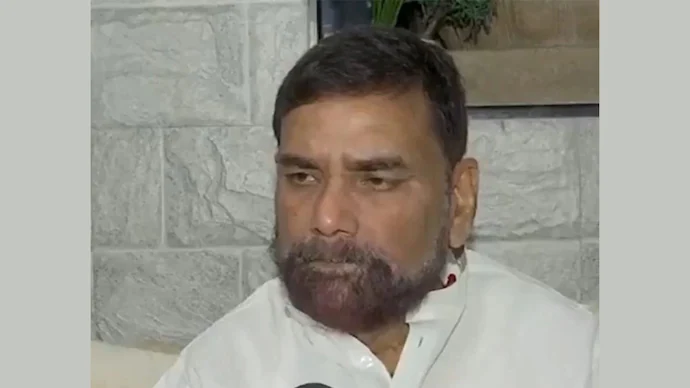
The Janata Dal (United) has backed the Centre’s proposed special sitting of Parliament, describing it as an “honest effort” by Prime Minister Narendra Modi to fulfil his promise of women’s reservation in legislatures. The party has urged Opposition parties to cooperate with the government in passing the Women’s Reservation Bill and the Delimitation Bill, arguing that they should not make excuses if they are genuinely committed to improving women’s political representation.
JD(U) national spokesperson Rajeev Ranjan Prasad made the appeal in a video statement on Friday, according to a Press Trust of India report. His remarks came a day after the government proposed reconvening Parliament for essential business, amid indications that the delimitation-linked women’s reservation legislation could be brought back for consideration.
The proposed sittings are scheduled for November 30 in the Lok Sabha and December 2 in the Rajya Sabha. The government has indicated that, depending on the business before the Houses, the proceedings could conclude on December 3, 2026.
The JD(U)’s position adds to the political debate surrounding the proposed legislation. While the government is seeking support for the parliamentary process, Opposition parties have raised concerns about the relationship between women’s reservation and delimitation, particularly the possible impact of changes in parliamentary representation on different states.
JD(U) Calls Special Parliament Session an Honest Effort by PM Modi
In his video statement, Rajeev Ranjan Prasad described the proposed special sitting as an attempt by the Prime Minister to fulfil a commitment made to women across the country.
“The special session of Parliament is undoubtedly an honest effort by Prime Minister Narendra Modi to fulfil the promise made to half the country’s population,” Prasad said.
He argued that the Opposition should support the government’s efforts if it is serious about increasing women’s representation and strengthening their participation in the political system.
Prasad also urged Opposition parties to cooperate in securing the passage of both the Women’s Reservation Bill and the Delimitation Bill in the two Houses of Parliament.
“The Opposition should also not make excuses. If it is committed to ensuring greater representation for women and is serious about their rights and participation, it should cooperate with the ruling party in getting both the Women’s Reservation Bill and the Delimitation Bill passed in both Houses of Parliament,”
The statement reflects the JD(U)’s support for the government’s proposed parliamentary exercise. It also places the responsibility on Opposition parties to explain whether they will support the legislation and under what conditions.
Why Has the Government Proposed a Special Sitting of Parliament?
The government’s proposal to reconvene Parliament came after Union Parliamentary Affairs Minister Kiren Rijiju announced that the Lok Sabha Speaker and the Rajya Sabha Chairman had been requested to call the two Houses for further proceedings.
In a post on X on Thursday, Rijiju said the Lok Sabha had been requested to meet on November 30, while the Rajya Sabha would reconvene on December 2.
“Subject to exigencies of the business, the sitting of both Houses may conclude on December 3, 2026,” Rijiju wrote on X.
The government has described the proposed sitting as an opportunity to conduct essential parliamentary business. However, the timing has attracted particular attention because of indications that the delimitation-linked women’s reservation legislation could be reintroduced.
The proposed dates are also significant because the sitting is being treated as an extension of the Monsoon Session rather than an entirely new parliamentary session. Parliament was adjourned on August 13 without setting a date for its next sitting, but the session was not formally brought to an end.
This procedural arrangement allows Parliament to reconvene and take up further business without the Monsoon Session having been formally concluded.
Women’s Reservation Bill and Delimitation: Why Are They Linked?
The political debate involves two connected but distinct issues: increasing women’s representation in elected legislatures and determining how parliamentary constituencies are distributed among states.
The Women’s Reservation Bill concerns reserving seats for women in the Lok Sabha and state legislative assemblies. The broader objective is to increase women’s participation in legislative decision-making and address their underrepresentation in elected political institutions.
Delimitation, meanwhile, refers to the process of redrawing electoral constituency boundaries and determining the distribution of seats. It can affect the number of parliamentary constituencies allocated to different states and the relative representation of their populations in the Lok Sabha.
The connection between the two issues has become politically sensitive because the implementation of women’s reservation is linked to the future determination of constituencies. As a result, discussions about the reservation framework have also raised questions about when and how delimitation will take place.
For political parties, supporting greater women’s representation does not necessarily mean agreeing with every aspect of the proposed delimitation framework. Parties may support the objective of reservation while seeking safeguards concerning the distribution of parliamentary seats.
Why Opposition Parties Have Concerns About Delimitation
One of the central concerns in the delimitation debate is the possible impact of population-based redistribution on the relative parliamentary representation of different states.
Southern states, including Tamil Nadu, have argued that states which successfully controlled population growth should not lose their relative political influence as a result of a future delimitation exercise. Their concern is that a redistribution based primarily on newer population figures could increase the representation of states with faster population growth while reducing the relative share of others.
This issue has become particularly prominent in Tamil Nadu, where Chief Minister M.K. Stalin has reiterated that the state’s existing 7.18% share of parliamentary constituencies must not decline. He has also called for the current proportion of representation among states, based on the 1971 Census, to remain protected for another 25 years.
These concerns help explain why the delimitation-linked legislation has become a subject of political disagreement. The debate is not limited to women’s representation; it also involves federal balance, demographic changes and the distribution of political power among states.
For the government and its supporters, the challenge is to advance the women’s reservation objective while addressing questions about the proposed delimitation framework. For Opposition parties, the key issue is whether the legislation provides sufficient clarity and safeguards on the future allocation of seats.
JD(U)’s Appeal Puts Pressure on Opposition Parties
By asking the Opposition to stop making excuses and support the proposed legislation, the JD(U) has added its voice to the government’s effort to build political backing for the special sitting.
Prasad’s statement frames cooperation as a test of the Opposition’s commitment to women’s political participation. His argument is that parties that support greater representation for women should also help move the legislation through Parliament.
However, the wider debate involves more than a simple choice between supporting or opposing women’s reservation. The proposed legislative framework also raises questions about the timing and conditions of implementation, as well as the consequences of delimitation for states.
That distinction is likely to remain important as political parties decide how to approach the proposed parliamentary proceedings. Support for the principle of women’s reservation and agreement on the mechanism for implementing it are separate matters that Parliament may need to address.
What Happens Next in Parliament?
The immediate focus will be on the proposed parliamentary sittings beginning November 30 in the Lok Sabha and December 2 in the Rajya Sabha. The government has indicated that the proceedings may conclude on December 3, depending on the business taken up by the Houses.
If the delimitation-linked women’s reservation legislation is reintroduced, it could trigger fresh discussions over its provisions, implementation framework and political implications. The response of Opposition parties will be important in determining how the proposed legislation progresses.
The JD(U) has already made its position clear by supporting the special sitting and urging parties across the political divide to cooperate. Its appeal reflects the ruling side’s effort to present the proposed legislation as an opportunity to fulfil the commitment to women’s representation.
However, the passage of the Bills cannot be assumed simply because Parliament has been reconvened. Their progress will depend on the final legislative proposals, parliamentary debate and the support they receive in both Houses.
Special Sitting Brings Women’s Reservation and Delimitation Back Into Focus
The JD(U)’s backing of the proposed special Parliament session has added momentum to the political discussion over women’s reservation and delimitation. By describing the government’s move as an honest effort by Prime Minister Narendra Modi, the party has urged Opposition leaders to cooperate rather than obstruct the legislative process.
At the same time, the controversy surrounding delimitation shows why the proposed Bills could face difficult political discussions. While there is broad political attention on improving women’s representation, disagreements remain over how the reservation framework should be implemented and how parliamentary representation among states should be protected.
With the Lok Sabha expected to reconvene on November 30 and the Rajya Sabha on December 2, the coming proceedings could become an important test of whether the government and Opposition can find common ground on the legislation. The central challenge will be to address women’s representation while also responding to concerns about India’s federal balance.
For breaking news and live news updates, like us on Facebook or follow us on Twitter and Instagram. Read more on Latest India on thefoxdaily.com.



COMMENTS 0