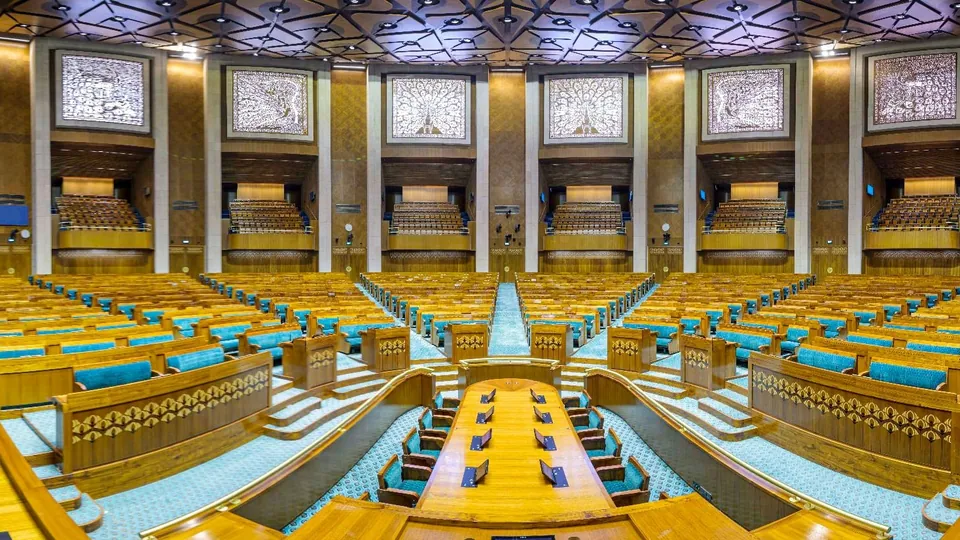
The status of Parliament’s upcoming Winter Session has come under scrutiny after the Monsoon Session, which was adjourned sine die on August 13, has yet to be formally prorogued. Although the decision not to prorogue the House has been defended by the government as constitutionally permissible, the delay has raised questions about the parliamentary calendar and whether a separate Winter Session will take place as expected.
The issue has added to tensions between the government and the Opposition, with speculation growing over the possibility of a special session to consider significant legislative proposals, including the 131st Constitution Amendment Bill and the Delimitation Bill. These measures are linked to the proposed implementation of 33% reservation for women in legislatures.
The government has maintained that there is no constitutional violation or procedural irregularity in keeping the Monsoon Session unprorogued. In a detailed letter to Congress president Mallikarjun Kharge on Monday, Union Parliamentary Affairs Minister Kiren Rijiju argued that the Constitution does not prescribe a specific period within which a House must be prorogued after being adjourned sine die.
However, the continued delay has prompted questions about the government’s intentions, the timing of the next parliamentary sitting and the established practice of holding three sessions every year. While the Constitution lays down rules for convening Parliament, the traditional schedule of Budget, Monsoon and Winter Sessions is a convention rather than a binding constitutional requirement.
Why Has Parliament’s Monsoon Session Not Been Prorogued?
The Monsoon Session was adjourned sine die on August 13, bringing its scheduled proceedings to an end. However, adjournment sine die does not itself formally terminate a parliamentary session. Prorogation is a separate constitutional process through which the President formally ends a session of either House.
The absence of a prorogation order has become the focus of debate because it leaves the status of the next sitting uncertain. According to people familiar with parliamentary procedures, if the government does not recommend prorogation to the President, a subsequent sitting could be treated as a continuation of the existing Monsoon Session rather than a new Winter Session.
In practical terms, this means that the parliamentary calendar may not follow the conventional pattern if the current session remains formally open. Instead of beginning a separate Winter Session, Parliament could reconvene as part of the Monsoon Session, depending on the government’s decision and the formal procedure followed.
The government has defended the delay by pointing to the absence of a constitutional deadline for prorogation. Rijiju, in his letter to Kharge, said there was no impropriety or irregularity in the decision because the Constitution does not require a House to be prorogued within a specified number of days after adjournment sine die.
The government has also cited previous instances in which Parliament remained unprorogued for extended periods, including cases when the interval reportedly lasted as long as 87 days.
Despite this defence, former Lok Sabha secretary general and constitutional expert PDT Achary has argued that the government should explain why it has not recommended prorogation. He said that in earlier instances when a House remained unprorogued, there were reasons for the decision and those reasons were communicated.
Will There Be a Winter Session of Parliament?
Parliament traditionally holds three sessions each year: the Budget Session, the Monsoon Session and the Winter Session. Although this arrangement has become an established feature of parliamentary functioning, the Constitution does not require Parliament to follow these three specific sessions every year.
The Budget Session generally begins towards the end of January and concludes by April. The Monsoon Session usually takes place between July and August, while the Winter Session typically begins in November and continues until December, bringing parliamentary proceedings to a close for the calendar year.
The current uncertainty stems from the fact that the Monsoon Session has not been prorogued. According to people aware of the matter, if the government does not recommend prorogation to the President, the next sitting could legally be treated as a continuation of the Monsoon Session. Under that scenario, there would be no separate Winter Session in the conventional sense.
A person familiar with parliamentary procedures explained that when a House has not been prorogued, a subsequent sitting is considered a continuation of the previous session. This distinction is important because the formal status of a session depends on the constitutional process, rather than simply the month in which Parliament meets.
However, the absence of a separate Winter Session would not automatically mean that Parliament could not meet again. The Constitution requires that the gap between two sessions should not exceed six months. The government therefore has flexibility over the parliamentary calendar, provided the constitutional requirement concerning the interval between sessions is met.
For now, the government’s position has left the timing and formal status of the next parliamentary sitting open to question. The key issue is whether the government will recommend prorogation before the next sitting or allow Parliament to reconvene under the existing session.
What Does Article 85 of the Constitution Say About Parliamentary Sessions?
Article 85 of the Constitution of India deals with the summoning, prorogation and dissolution of Parliament. It establishes the constitutional framework for parliamentary sessions and specifies that the period between two sessions cannot exceed six months.
Importantly, Article 85 does not prescribe a specific deadline for proroguing a House after it has been adjourned sine die. This is the central constitutional argument cited by the government in defending the decision to leave the Monsoon Session unprorogued.
The six-month requirement means that Parliament must meet at least twice a year. It does not, however, mandate that Parliament must hold three sessions annually or that each session must take place during a particular month.
The familiar sequence of Budget, Monsoon and Winter Sessions is therefore based on parliamentary convention and established practice. The government can determine the timing and arrangement of sessions in accordance with constitutional requirements and the needs of parliamentary business.
People familiar with parliamentary procedures have pointed out that there have been occasions when one of the conventional sessions was skipped because of exceptional circumstances. The pandemic in 2020 was cited as a recent example of a year in which the Winter Session was not convened.
This distinction between constitutional requirements and parliamentary convention is central to the current debate. While the government argues that keeping the House unprorogued is not prohibited by the Constitution, the Opposition and constitutional observers have raised questions about transparency and the reasons for the delay.
Why Are the 131st Constitution Amendment Bill and Delimitation Bill Important?
The delay in proroguing Parliament has also fuelled speculation about whether the government may convene a special session to consider major legislative proposals. Among the measures being discussed are the 131st Constitution Amendment Bill and the Delimitation Bill, which are required for the proposed rollout of 33% reservation for women in legislatures.
The proposed reservation is a significant legislative issue because it concerns women’s representation in elected legislative bodies. The constitutional amendment and delimitation-related legislation are linked to the process required to implement the reservation framework.
The possibility of a special session has emerged amid uncertainty over the conventional Winter Session. However, the available information does not establish that the government has decided to convene such a session or confirm a date for introducing or passing the proposed legislation.
The government has not publicly clarified, in the details provided, whether the decision to keep the Monsoon Session unprorogued is connected to plans for these Bills. As a result, speculation about a special session remains separate from the government’s stated constitutional defence of the delay.
The formal status of the Monsoon Session, the decision on prorogation and any subsequent announcement about a special or Winter Session will determine how parliamentary business proceeds in the coming weeks.
How Does the Prorogation Process Work?
Prorogation is a formal constitutional step that ends a parliamentary session. Under Article 85(2)(a), the President has the authority to prorogue either House of Parliament, acting on the recommendation of the Union Cabinet.
The process typically begins after the Presiding Officer adjourns the House sine die. In the Lok Sabha, the Presiding Officer is the Speaker, while in the Rajya Sabha, the role is performed by the Chairman.
Once the House has been adjourned sine die, the Ministry of Parliamentary Affairs sends a proposal to the Cabinet Committee on Parliamentary Affairs (CCPA) for prorogation. The proposal is then placed before the Union Cabinet, which recommends the action to the President.
The session is formally prorogued after the President signs the order. A notification is subsequently issued to communicate the decision.
Key Steps in the Prorogation Process
- Adjournment sine die: The Speaker of the Lok Sabha or the Chairman of the Rajya Sabha adjourns the House without specifying a date for the next sitting.
- Proposal from the Parliamentary Affairs Ministry: The ministry sends a proposal to the Cabinet Committee on Parliamentary Affairs for prorogation.
- Union Cabinet recommendation: The proposal is considered and forwarded to the President through the Cabinet process.
- Presidential order: The President signs the order to prorogue the House.
- Official notification: A notification is issued, formally communicating the prorogation.
The distinction between adjournment and prorogation is important. Adjournment sine die ends the current sitting or scheduled proceedings without setting a date for the next sitting, but it does not by itself formally end the session. Prorogation, on the other hand, brings the session to a formal close through the constitutional procedure.
Because the Monsoon Session has been adjourned but not prorogued, the next parliamentary sitting could be treated as part of the same session if the government does not recommend a prorogation order in the meantime.
What Has the Government Said About the Delay?
The government has defended its decision by arguing that there is no constitutional requirement to prorogue a House within a specific period after it has been adjourned sine die.
In his letter to Congress president Mallikarjun Kharge, Parliamentary Affairs Minister Kiren Rijiju said the absence of a prorogation order did not constitute impropriety or irregularity. His argument rests on the fact that Article 85 does not specify a cut-off date for the process.
The government has also pointed to previous occasions when Parliament remained unprorogued for extended periods. According to the information cited in the debate, there have been instances when the interval reached as many as 87 days.
These examples are being used to support the government’s position that the present delay is not unprecedented and does not, by itself, establish a constitutional violation.
Nevertheless, the government’s defence has not resolved the broader question of why prorogation has not been recommended this time. The lack of a clear explanation has contributed to speculation about the parliamentary schedule and possible legislative plans.
What Has the Opposition and Constitutional Expert Said?
The delay has increased friction between the government and the Opposition, with questions being raised about the reasons for keeping the Monsoon Session formally open.
Former Lok Sabha secretary general and constitutional expert PDT Achary has said that the government should explain the delay to the Opposition to ensure the smooth functioning of Parliament.
Achary argued that, although the government may have the constitutional authority to determine the timing of prorogation, transparency is important when an established parliamentary practice is not followed. He noted that in earlier instances when a House was not prorogued, reasons had been provided.
His comments focus on the need for the government to communicate the rationale behind its decision rather than solely relying on the absence of a constitutional deadline.
The disagreement therefore involves two related but distinct issues: whether the delay is constitutionally permissible and whether the government should explain its reasons for departing from the usual parliamentary schedule.
When Has Parliament Skipped the Winter Session in the Past?
Parliament has not held a Winter Session on four occasions since 1952, according to the information cited in the debate. These instances occurred during periods of political or national uncertainty, or when circumstances affected the normal parliamentary calendar.
- 1975: The Winter Session was skipped during the Emergency.
- 1979: The Lok Sabha had been dissolved.
- 1984: The Winter Session was not held following the assassination of then Prime Minister Indira Gandhi.
- 2020: The session was not convened amid the COVID-19 pandemic.
These historical examples illustrate that the conventional parliamentary calendar has not been followed without exception. Exceptional political and public circumstances have previously led to changes in the usual schedule.
The 2020 example is particularly relevant to the distinction between convention and constitutional requirement. The decision not to convene the Winter Session during the pandemic demonstrated that the three-session pattern can be altered when circumstances demand it.
However, the historical precedents do not establish the reason for the current delay. The circumstances surrounding the present decision would need to be explained by the government if it chooses to clarify its position.
Why the Parliamentary Calendar Matters
The uncertainty surrounding the Winter Session matters because Parliament’s schedule determines when lawmakers can debate legislation, raise public issues and conduct other parliamentary business.
A conventional Winter Session generally provides an opportunity for both Houses to consider legislative proposals and address issues before the end of the calendar year. If the next sitting is treated as a continuation of the Monsoon Session, the formal arrangement of parliamentary proceedings would differ from the usual annual pattern.
The situation has attracted additional attention because of speculation over the 131st Constitution Amendment Bill and the Delimitation Bill. Both are connected to the proposed implementation of 33% reservation for women in legislatures, making the timing of any parliamentary consideration a subject of public interest.
At the same time, the distinction between a separate Winter Session and a continuation of the Monsoon Session should not be confused with the constitutional requirement that Parliament meet within the prescribed interval. Article 85 sets a maximum gap of six months between sessions, but it does not mandate three sessions each year.
The immediate question is therefore not simply whether Parliament will meet again, but how the government will formally organise the next sitting and whether it will recommend prorogation before that sitting takes place.
Conclusion: Winter Session Plans Remain Uncertain
Parliament’s Monsoon Session, adjourned sine die on August 13, remains unprorogued, raising questions about the timing and formal status of the next parliamentary sitting. The government has defended the delay, with Kiren Rijiju arguing that the Constitution does not prescribe a deadline for prorogation after adjournment sine die.
Under Article 85, the President prorogues either House on the recommendation of the Union Cabinet. The Constitution also requires that the gap between two sessions should not exceed six months, but it does not mandate the conventional three-session calendar of Budget, Monsoon and Winter sittings.
The delay has fuelled speculation about a possible special session to consider the 131st Constitution Amendment Bill and the Delimitation Bill, both linked to the proposed 33% reservation for women in legislatures. However, no confirmed decision on a special session is established by the information available.
While the government maintains that the delay is constitutionally permissible, PDT Achary has called for an explanation to ensure transparency and smooth parliamentary functioning. Whether the government recommends prorogation or allows the next sitting to continue under the existing session will determine how the upcoming parliamentary calendar takes shape.
For breaking news and live news updates, like us on Facebook or follow us on Twitter and Instagram. Read more on Latest India on thefoxdaily.com.



COMMENTS 0