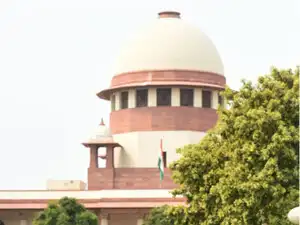
The Supreme Court of India has dismissed a public interest litigation (PIL) seeking guidelines for appointing legislators facing criminal cases as ministers in the Union and state governments. The petition called for greater accountability when the Prime Minister and chief ministers select members of their respective councils of ministers and distribute important Cabinet portfolios.
A bench comprising Chief Justice of India Surya Kant and Justices Joymalya Bagchi and V. Mohana rejected the plea on November 6, 2026. During the hearing, the judges questioned whether courts could establish uniform standards for such appointments without creating opportunities for political interference or misuse of criminal proceedings.
Justice Joymalya Bagchi particularly highlighted the possibility of criminal cases being used as political weapons against individuals participating in the democratic process. He questioned whether a pending criminal case should automatically become a factor that prevents a legislator from entering the Cabinet, especially when criminal proceedings may emerge following a change of government.
The decision brings attention back to a longstanding constitutional question: how should India balance the executive’s authority to select ministers with the public interest in maintaining integrity and accountability in government?
What the Supreme Court Was Asked to Decide
The public interest litigation sought judicially framed guidelines requiring the Prime Minister and chief ministers to consider the criminal backgrounds of legislators before appointing them as ministers or assigning them significant government portfolios.
The petition focused on the discretion exercised by political executives during Cabinet formation. Although the Constitution establishes the framework for appointing Union and state ministers, the petitioner argued that the selection process should also follow reasonable standards of prudence when candidates face serious criminal allegations.
An important distinction in the petition was that it did not seek to introduce an entirely new constitutional disqualification. Instead, the petitioner wanted the Supreme Court to establish parameters that would guide existing appointment powers.
The argument was based on the idea that appointing a legislator as a minister involves responsibilities beyond simply holding an elected position. Ministers exercise executive authority, participate in government decisions and are expected to maintain public confidence in constitutional institutions.
The petitioner argued that the discretion of the Prime Minister and chief ministers should therefore be exercised reasonably, particularly when legislators face serious criminal charges.
Why the Supreme Court Raised Concerns About Political Vendetta
One of the central issues during the hearing was the possibility that criminal proceedings could be influenced by political rivalry.
Justice Joymalya Bagchi questioned the practicality of creating a uniform framework for evaluating criminal cases involving legislators. He observed that criminal law can sometimes be weaponised against individuals involved in democratic politics, including political opponents.
This concern raises a difficult distinction between allegations and established guilt. A criminal case may involve serious accusations, but the existence of proceedings does not, by itself, establish that the accused person has committed an offence.
The circumstances surrounding criminal proceedings can also differ significantly. Cases may involve different allegations, stages of investigation, evidentiary records and judicial developments. Treating every pending case in exactly the same way could therefore create difficulties.
The judge also questioned whether the Chief Minister should retain the responsibility to decide whether a particular criminal case makes an individual unsuitable for Cabinet membership.
The bench indicated that introducing judicially prescribed standards could place the court in a complicated position, particularly when criminal prosecutions may follow changes in political power.
This does not mean that the Supreme Court declared criminal backgrounds irrelevant to ministerial appointments. Rather, the central issue was whether the judiciary should create a compulsory framework governing decisions that currently involve constitutional executive discretion.
Petitioner’s Argument: Ministerial Discretion Should Have Reasonable Limits
The petitioner maintained that the requested guidelines were not intended to take away the constitutional powers of the Prime Minister or chief ministers.
Instead, the argument was that the exercise of those powers should follow certain reasonable parameters. According to the petitioner’s counsel, the objective was to encourage responsible decision-making when legislators facing serious criminal allegations are considered for ministerial positions.
The distinction was significant because the petition did not ask the court to automatically disqualify every legislator against whom a criminal case had been registered.
It sought a more structured approach to appointments, particularly where allegations involved serious offences. The petitioner also argued that voters do not necessarily expect their elected representatives to receive ministerial positions simply because they have won elections.
From this perspective, electoral eligibility and suitability for executive responsibility are related but separate questions. A person may legally contest an election while questions about their suitability for a ministerial position remain relevant to the political executive’s decision.
However, the Supreme Court did not accept the request to establish the proposed guidelines through judicial intervention.
Constitutional Provisions Governing the Appointment of Ministers
The dispute involves two important provisions of the Indian Constitution: Articles 75 and 164. These provisions establish the constitutional framework for appointing ministers at the Union and state levels.
Article 75: Appointment of Union Ministers
Article 75 deals with the appointment of the Prime Minister and other Union ministers. The President appoints the Prime Minister, while other ministers are appointed by the President on the Prime Minister’s advice.
This arrangement gives the Prime Minister a central role in deciding who becomes part of the Union Council of Ministers. The appointment process is therefore closely connected to the parliamentary system of government and the political leadership of the ruling administration.
Article 164: Appointment of State Ministers
Article 164 establishes the corresponding framework for state governments. The Governor appoints the Chief Minister, while other ministers are appointed on the Chief Minister’s advice.
Consequently, chief ministers exercise substantial influence over the composition of their state Cabinets. They also play an important role in deciding which ministers receive particular portfolios.
The petition sought guidelines that would influence how these constitutional powers are exercised when legislators have criminal cases against them. However, the court’s decision leaves the existing constitutional appointment framework without the additional judicially prescribed standards requested by the petitioner.
How the 2014 Manoj Narula Judgment Relates to the Latest Decision
The latest Supreme Court decision is particularly relevant because the issue of appointing ministers with criminal backgrounds has already been considered by the judiciary.
In Manoj Narula v. Union of India, decided on August 27, 2014, a five-judge Constitution Bench examined whether individuals with criminal backgrounds, including those facing serious criminal charges, could be appointed as ministers in the Union and state governments.
The judgment considered the relationship between constitutional morality, good governance and the appointment powers exercised by the Prime Minister and chief ministers.
The court did not create an additional constitutional disqualification that would automatically prevent legislators facing criminal charges from becoming ministers. It recognised that adding such a disqualification would go beyond the restrictions provided by the constitutional framework.
At the same time, the judgment made an important observation about the responsibility of political executives. It expressed the constitutional expectation that the Prime Minister should consider avoiding individuals against whom charges had been framed for serious or heinous criminal offences or corruption-related offences.
The court extended this expectation to chief ministers as well.
The judgment therefore established an important distinction between a legally enforceable disqualification and a constitutional expectation of responsible conduct. It encouraged political executives to exercise their appointment powers carefully without creating a new legal barrier that the Constitution itself did not prescribe.
The November 6, 2026 decision revisits this broader question from another angle. The latest petition sought more structured judicial guidelines, but the bench expressed concerns about whether a uniform framework could operate fairly in India’s politically competitive environment.
Both developments demonstrate the continuing tension between two constitutional considerations: the responsibility of political leaders to select ministers carefully and the limits of judicial intervention in executive appointments.
Criminal Cases Against Legislators and the Scale of the Debate
The petition also brought attention to the wider issue of criminalisation in Indian Politics.
During the hearing, the petitioner’s counsel referred to an analysis by the Association for Democratic Reforms (ADR), which examined the criminal backgrounds declared by sitting legislators across state assemblies and Union Territories.
The analysis covered 4,092 legislators. According to the figures cited during the proceedings, 1,861 legislators, representing approximately 45 per cent of those analysed, had declared criminal cases. Another 1,205, or approximately 29 per cent, had declared serious criminal cases.
These figures were presented as part of the petitioner’s argument about the scale of criminal cases among elected representatives.
However, the figures require careful interpretation. A declared criminal case is not the same as a criminal conviction. The data reflects cases disclosed by legislators and should not be interpreted as establishing that every individual included in the analysis has been found guilty of an offence.
This distinction is central to the legal and constitutional debate. A framework based entirely on the existence of criminal proceedings could treat allegations as established wrongdoing, while ignoring the circumstances and progress of individual cases.
At the same time, the presence of serious criminal allegations among elected representatives raises questions about public confidence, political accountability and the standards expected from individuals exercising executive authority.
Why Pending Criminal Cases and Convictions Must Be Distinguished
One of the most important aspects of the debate is the difference between facing criminal proceedings and being convicted by a court.
A criminal investigation, a registered case, a formal charge and a conviction represent different stages or outcomes within the Criminal Justice process. They should not be treated as interchangeable terms.
A person may face allegations that have not yet been tested through a full judicial process. In other circumstances, a court may have examined the evidence and delivered a conviction. The legal position can therefore differ substantially from one individual to another.
This distinction creates practical difficulties for any proposed ministerial appointment guidelines.
For example, a rule that prevents every individual facing a criminal case from becoming a minister could potentially be applied to cases involving very different allegations and circumstances. It could also create incentives for political opponents to initiate or pursue criminal proceedings against legislators they want excluded from government.
On the other hand, relying exclusively on convictions could leave political executives with substantial discretion when considering candidates facing serious charges that have not yet resulted in a final judicial outcome.
The Supreme Court’s concern about political vendetta reflects this complicated balance. Any proposed framework would need to consider the seriousness of allegations without undermining the principle that criminal guilt must be established through the judicial process.
Why Ministerial Appointments Carry Greater Public Responsibility
Winning an election and becoming a minister are not identical responsibilities.
An elected legislator represents a constituency and participates in the legislative process. A minister, however, also exercises executive authority and may be responsible for implementing government policies, supervising departments, managing public resources and making administrative decisions.
Ministers can influence decisions that directly affect citizens, businesses and public institutions. Their responsibilities therefore extend beyond their individual political positions.
This explains why the question of criminal backgrounds becomes particularly important during Cabinet formation.
Public confidence in government depends not only on whether appointments follow constitutional procedures but also on whether political leaders demonstrate responsibility when selecting individuals for important positions.
There is also a distinction between the legal validity of an appointment and the political consequences of making it. An appointment may satisfy the applicable constitutional requirements while still attracting public criticism or creating questions about the government’s standards of accountability.
The 2014 Manoj Narula judgment addressed this concern by emphasising the constitutional expectations placed on the Prime Minister and chief ministers. The latest proceedings, meanwhile, highlight the difficulty of turning those expectations into uniform judicially enforceable rules.
What the Supreme Court’s Decision Means for Future Cabinet Appointments
The dismissal of the PIL means that the Supreme Court has not introduced the additional appointment guidelines requested by the petitioner. The existing constitutional framework governing the selection of Union and state ministers remains in place.
For the Prime Minister and chief ministers, this means that decisions about ministerial appointments and portfolio allocation continue to involve executive discretion, subject to the Constitution and applicable law.
However, the absence of additional judicial guidelines does not remove the political and constitutional responsibility associated with selecting ministers.
The 2014 judgment remains relevant because it articulated the expectation that political executives should exercise their appointment powers responsibly, particularly when considering individuals facing serious criminal charges or corruption allegations.
The latest proceedings also demonstrate why the judiciary may be reluctant to establish a single standard for every case. A uniform rule could create difficulties when allegations differ in seriousness, evidence and procedural status.
Potential implications for political parties
Political parties will continue to face questions about the individuals they select for ministerial positions. Their decisions can influence public perceptions of government accountability and the credibility of political institutions.
Parties may also need to consider the political consequences of appointing legislators who face serious allegations, even where their appointment is not automatically prohibited by law.
For opposition parties, the issue provides another area of scrutiny when evaluating the composition of governments. For ruling parties, it creates an ongoing responsibility to explain decisions involving candidates with controversial criminal backgrounds.
These considerations are political rather than newly established legal requirements arising from the dismissed petition.
Can Parliament Introduce Stronger Rules on Ministerial Appointments?
The debate also raises a broader question about where potential reforms should originate.
The Supreme Court’s concerns indicate the difficulties involved in creating judicially prescribed guidelines that would apply uniformly to all ministerial appointments. However, the dismissal of the petition does not mean that the subject cannot be examined through legislative or political processes.
Parliament remains an important institution for considering changes to laws governing elections, criminal disqualifications and political accountability.
Any proposal in this area would need to address several important considerations:
- Fair treatment of accused individuals: Rules should distinguish between allegations, pending proceedings and established criminal convictions.
- Seriousness of offences: Any proposed restrictions would need to define which categories of offences are relevant.
- Protection against political misuse: Safeguards would be necessary to prevent criminal proceedings from becoming tools for excluding political opponents.
- Constitutional compatibility: Any changes would need to respect the constitutional framework governing elections and ministerial appointments.
- Public accountability: The appointment process should maintain public confidence in the integrity of government institutions.
These considerations show why reforming the relationship between criminal proceedings and political appointments is not a straightforward exercise. A workable approach would need to balance accountability, individual rights and the practical realities of democratic politics.
What Happens Next?
With the Supreme Court dismissing the PIL, there is no new judicially prescribed framework arising from this case for evaluating criminal backgrounds during ministerial appointments.
The immediate responsibility for selecting ministers therefore remains with the constitutional executive authorities. The Prime Minister and chief ministers will continue to make appointment decisions within the existing legal framework.
The broader debate over criminalisation in politics, however, is unlikely to disappear with the dismissal of one petition. The figures cited during the hearing, the concerns expressed in the 2014 Manoj Narula judgment and the latest observations about political misuse of criminal law all point to an issue that extends beyond individual Cabinet appointments.
Future developments could depend on whether Parliament considers legislative changes, whether political parties adopt stronger internal selection standards and how constitutional authorities exercise their existing responsibilities.
For now, the Supreme Court has declined to convert the petitioner’s proposed standards of prudence into judicially framed guidelines. Its decision leaves the existing appointment structure intact while keeping the broader question of responsible ministerial selection within the political and constitutional debate.
Why This Case Matters for Indian Democracy
The Supreme Court’s decision highlights a difficult balance within India’s parliamentary democracy. On one side is the need for responsible political leadership and public confidence in government. On the other is the principle that criminal allegations should not automatically determine a person’s political or constitutional position.
Creating rules that protect both principles requires careful consideration. An overly broad restriction could potentially be misused against political opponents, while an approach that gives insufficient attention to serious criminal allegations could weaken public confidence in ministerial appointments.
The distinction between constitutional expectations and enforceable legal restrictions is therefore particularly important. The 2014 Manoj Narula judgment recognised the responsibility of the Prime Minister and chief ministers to exercise their appointment powers with constitutional morality in mind. The November 2026 decision demonstrates the judiciary’s reluctance to establish a uniform judicial mechanism for enforcing that expectation.
Ultimately, the responsibility for choosing ministers remains closely connected to the functioning of India’s parliamentary system. The latest ruling does not settle every question surrounding criminalisation in politics. Instead, it clarifies that the requested judicial guidelines will not be introduced through this particular PIL, leaving political accountability and potential institutional reforms at the centre of the continuing debate.
For breaking news and live news updates, like us on Facebook or follow us on Twitter and Instagram. Read more on Latest India on thefoxdaily.com.






COMMENTS 0