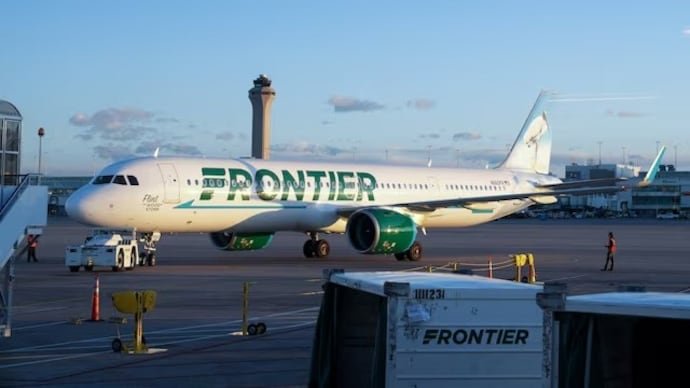
- What Happened at Denver International Airport?
- Why High-Speed Rejected Takeoffs Are Extremely Dangerous
- Passengers Describe Chaos Inside the Cabin
- The Cockpit Audio Shocked the Internet
- How Rare Are Runway Trespassing Incidents?
- Why Airport Security Is Under Fresh Scrutiny
- The Human Factor in Aviation Security
- Why Engine Fires After Bird or Object Strikes Can Become Catastrophic
- Emergency Evacuations Carry Their Own Risks
- How Social Media Changed Public Reaction
- Investigators Will Focus on Multiple Questions
- The Psychological Impact on Passengers and Crew
- Why This Incident Will Likely Influence Future Airport Policy
- Conclusion
What began as a routine late-night departure from Denver International Airport quickly turned into one of the most disturbing aviation incidents in recent memory.
A Frontier Airlines Airbus A321neo preparing to depart for Los Angeles collided with a man who had allegedly breached airport Security and entered an active runway during takeoff. The impact triggered an engine fire, forced pilots to abort takeoff at high speed, and led to a chaotic emergency evacuation as terrified passengers fled the aircraft through inflatable slides.
The chilling cockpit audio that followed has since spread rapidly across Social Media, capturing the stunned reaction of pilots and emergency responders in real time.
“Tower, Frontier 4345, we are stopping on the runway. Uh, we just hit somebody. We have an engine fire.”
Moments later, radio transmissions from airport personnel painted an even more horrifying picture.
“I do have limbs on the runway. I believe the aircraft struck an individual.”
The tragedy has reignited urgent debates around airport perimeter security, Mental health concerns linked to runway intrusions, and the growing challenge of protecting large aviation hubs from unauthorised access.
What Happened at Denver International Airport?
The incident occurred shortly after 11:19 pm local time when Frontier Flight 4345 was accelerating for takeoff from Denver International Airport en route to Los Angeles International Airport.
The aircraft carried 224 passengers and seven crew members.
According to airport officials and federal authorities, a man allegedly climbed over or bypassed perimeter fencing before entering an active runway area. As the Airbus A321neo accelerated down the runway, the pilots reportedly had little or no time to react before impact.
The collision caused severe damage to one of the aircraft’s engines and triggered an immediate fire.
The pilots aborted takeoff while traveling at high speed a maneuver aviation experts consider one of the most dangerous emergency decisions during flight operations.
Why High-Speed Rejected Takeoffs Are Extremely Dangerous
Commercial aircraft are designed to continue takeoff after reaching certain speeds because stopping safely becomes increasingly difficult as momentum builds.
According to reports citing flight tracking data, the aircraft was traveling at approximately 139 mph during the incident.
At such speeds, pilots face multiple simultaneous risks:
- Brake overheating
- Tire blowouts
- Loss of runway control
- Engine fires
- Evacuation complications
- Fuel ignition hazards
In this case, the situation became even more severe because the collision itself damaged the engine, causing flames and smoke to spread quickly.
Passengers described hearing a violent explosion moments after impact.
Passengers Describe Chaos Inside the Cabin
Survivors recounted scenes of confusion, panic and terror as smoke entered the aircraft cabin.
Some passengers initially believed the aircraft itself was crashing.
One traveler described hearing a massive blast followed by screaming throughout the cabin as the aircraft rapidly slowed on the runway.
Children reportedly cried while passengers scrambled to understand what had happened.
Others sitting near the wing area said they saw flames erupt from the engine immediately after the collision.
Emergency evacuation slides were deployed as crew members rushed passengers off the aircraft.
Several travelers later appeared outside wrapped in emergency blankets near the runway while firefighters worked to control the blaze.
Twelve passengers reportedly suffered minor injuries during the evacuation process, with five transported to hospitals for evaluation.
The Cockpit Audio Shocked the Internet
One reason the incident gained enormous attention online was the release of Air Traffic Control communications.
The cockpit transmission was unusually raw and immediate.
Unlike prepared public statements, emergency radio communications often capture the reality of crises as they unfold.
The stunned tone in the pilot’s voice reflected the extraordinary nature of the event.
Even more unsettling were the follow-up transmissions from airport responders describing what they saw on the runway.
Such audio rarely enters public discussion at this scale, but social media platforms rapidly amplified the recordings, turning the tragedy into a global viral story within hours.
How Rare Are Runway Trespassing Incidents?
Runway intrusions involving civilians are extremely rare but highly dangerous.
Major international airports maintain layered security systems designed to prevent unauthorized access to active airfields.
These typically include:
| Airport Security Layer | Purpose |
|---|---|
| Perimeter fencing | Prevent unauthorized entry |
| Motion sensors | Detect intrusion attempts |
| Surveillance cameras | Monitor restricted zones |
| Security patrols | Respond to breaches quickly |
| Air traffic coordination | Protect runway operations |
Despite these systems, large airports remain vulnerable because of their massive physical size.
Denver International Airport, one of America’s busiest aviation hubs, spans thousands of acres, making complete perimeter monitoring extraordinarily difficult.
Why Airport Security Is Under Fresh Scrutiny
The incident has already triggered questions about how a civilian managed to access an active runway.
Authorities stated the individual was a trespasser who deliberately breached airport boundaries before entering the airfield.
However, preliminary inspections reportedly showed no major damage to perimeter fencing.
That detail raises broader concerns:
- Were there surveillance blind spots?
- Did security systems fail to detect movement?
- Was the intrusion response too slow?
- Could staffing shortages have contributed?
- Are current airport security models sufficient?
Federal investigators will likely examine not only how the individual entered the runway area but also how much time elapsed before authorities became aware of the threat.
The Human Factor in Aviation Security
Modern aviation security often focuses heavily on terrorism prevention, Cybersecurity and passenger screening.
However, incidents like this highlight another persistent challenge: unpredictable human behavior.
Runway intrusions are especially difficult to manage because they can happen suddenly and involve individuals experiencing:
- Mental health crises
- Emotional distress
- Disorientation
- Substance abuse issues
- Intentional self-harm behavior
Authorities have not publicly disclosed the identity or motive of the individual involved in the Denver incident.
But aviation experts note that unauthorized runway access often reflects broader security and mental health concerns simultaneously.
Why Engine Fires After Bird or Object Strikes Can Become Catastrophic
Aircraft engines are designed to withstand significant impacts, including bird strikes.
However, collisions involving large objects or human impact at takeoff speed can cause catastrophic engine damage.
Potential consequences include:
- Engine blade fragmentation
- Fuel line damage
- Fire ignition
- Loss of thrust
- Debris entering critical systems
Photos from the Denver runway appeared to show severe damage concentrated around one engine section of the Airbus A321neo.
Rapid response from firefighters likely prevented the situation from becoming significantly worse.
Emergency Evacuations Carry Their Own Risks
Although the evacuation helped passengers escape quickly, emergency exits and inflatable slides can themselves cause injuries.
During high-stress evacuations, passengers often:
- Slip on slides
- Panic while exiting
- Collide with others
- Carry prohibited baggage
- Experience smoke inhalation
The fact that injuries were relatively minor despite the fire suggests the cabin crew followed emergency procedures effectively under extremely stressful conditions.
Airline safety experts consistently emphasize that trained crew response during the first minutes of an aviation emergency often determines casualty outcomes.
How Social Media Changed Public Reaction
Unlike aviation incidents decades ago, modern airport emergencies now unfold in real time online.
Within minutes of the Denver incident:
- Air traffic control audio circulated online
- Passenger videos spread across platforms
- Photos of the damaged aircraft emerged
- Eyewitness accounts went viral
- Flight tracking data was publicly analyzed
This immediate visibility dramatically shapes public reaction.
Graphic descriptions and viral cockpit recordings intensified emotional responses worldwide, making the story feel more immediate and disturbing than traditional news coverage alone.
Investigators Will Focus on Multiple Questions
The National Transportation Safety Board and Federal Aviation Administration have both launched investigations.
Authorities will likely examine:
- The exact timeline of the runway intrusion
- Airport perimeter security effectiveness
- Cockpit decision-making during abort procedures
- Engine damage patterns
- Emergency response timing
- Communication between airport units
Investigators may also analyze whether runway surveillance systems provided sufficient warning before the collision occurred.
The Psychological Impact on Passengers and Crew
While physical injuries appear relatively limited, psychological trauma may persist long after the incident.
Aviation emergencies involving visible fire, explosions and fatalities can trigger:
- Post-traumatic stress
- Fear of flying
- Sleep disturbances
- Anxiety disorders
- Emotional shock
Passengers who witnessed the aftermath directly especially those seated near the engine area may experience particularly severe emotional distress.
Pilots and crew members involved in such incidents also often require counseling and extended evaluation after traumatic operational events.
Why This Incident Will Likely Influence Future Airport Policy
Major aviation incidents frequently reshape security procedures.
The Denver runway tragedy may accelerate discussions around:
- Advanced perimeter detection technology
- Artificial intelligence-based surveillance
- Runway intrusion warning systems
- Faster emergency interception protocols
- Expanded thermal monitoring around airfields
Airports worldwide continuously balance operational efficiency with security expansion.
Incidents involving active runways tend to trigger especially serious regulatory reviews because of the catastrophic risks involved.
Conclusion
The Frontier Airlines runway tragedy at Denver International Airport has exposed the terrifying speed at which routine aviation operations can turn into life-threatening emergencies.
What began as a standard departure became a deadly chain reaction involving a runway intrusion, violent engine damage, fire, emergency evacuation and deeply traumatic scenes witnessed by hundreds of passengers and crew members.
The haunting cockpit audio and disturbing runway communications captured global attention because they revealed the raw reality of aviation emergencies in real time confusion, shock and split-second decision-making under extreme pressure.
As federal investigations continue, the incident is likely to intensify scrutiny around airport perimeter security, emergency preparedness and the growing challenges large airports face in preventing unauthorized runway access.
For the passengers aboard Flight 4345, however, the event will be remembered less as a Policy Debate and more as a night when an ordinary flight suddenly became a nightmare unfolding at 139 miles per hour.
For breaking news and live news updates, like us on Facebook or follow us on Twitter and Instagram. Read more on Latest World on thefoxdaily.com.






COMMENTS 0