A routine private flight from Austin, Texas, to the Bahamas turned into a deadly emergency when a Learjet 60 suddenly began losing altitude over South Florida. Within roughly 90 seconds, reports of ice and turbulence were replaced by desperate emergency calls to air traffic controllers, followed by a final transmission from the pilot: “We’re out of time.”
The aircraft plunged more than 27,000 feet in approximately one minute before crashing nose-first onto Military Trail, a major road in Palm Beach County. All nine people aboard were killed when the jet struck the ground and erupted into flames. The impact left a large crater in the roadway, damaged the surrounding pavement and sent thick black smoke into the sky.
Federal investigators are now working to establish what caused the aircraft to descend so rapidly. Weather conditions, reported ice accumulation, the possibility of a structural breakup before impact and evidence recovered from the wreckage are among the areas being examined.
The victims included a technology entrepreneur, his wife, their two young children, a family caregiver, two other passengers and a young aviation professional identified as Nathalia Gadelha Filgueiras. Families have publicly identified eight of the nine people who died. The other pilot has not been identified.
The crash has also affected residents and businesses near the impact site, with hundreds of people from a nearby mobile home park displaced while emergency crews and investigators work at the scene.
THE FINAL MOMENTS: A SUDDEN MAYDAY CALL
The Learjet 60 was travelling from Austin, Texas, to the Bahamas on Sunday, crossing South Florida as scattered storms moved through the region. The aircraft was flying at approximately 35,000 feet when the crew began reporting deteriorating conditions.
Minutes before the crash, the pilot communicating with the Miami Air Route Traffic Control Center reported ice accumulating on the aircraft, moderate turbulence and an outside air temperature of minus 47 degrees Celsius, or minus 53 degrees Fahrenheit. The turbulence was reportedly strong enough to cause the aircraft to move up and down by as much as 700 feet.
According to radio recordings captured by LiveATC.net, the crew initially described the icing as manageable. The aircraft was experiencing light, clear ice and moderate turbulence, but the situation changed rapidly.
After reporting precipitation and requesting to climb, the crew declared an emergency. The radio transmissions became increasingly urgent as the aircraft continued losing altitude.
“Mayday, mayday!” Filgueiras told air traffic controllers.
She then reported that the aircraft was descending at 10,000 feet per minute. Moments later, the situation appeared to deteriorate further, with the crew reporting an overspeed condition and a descent rate of 20,000 feet per minute.
“We’re going to crash into the ground!” Filgueiras cried out.
The pilot also sent a final transmission before the aircraft struck the ground. “We’re out of time,” the pilot said.
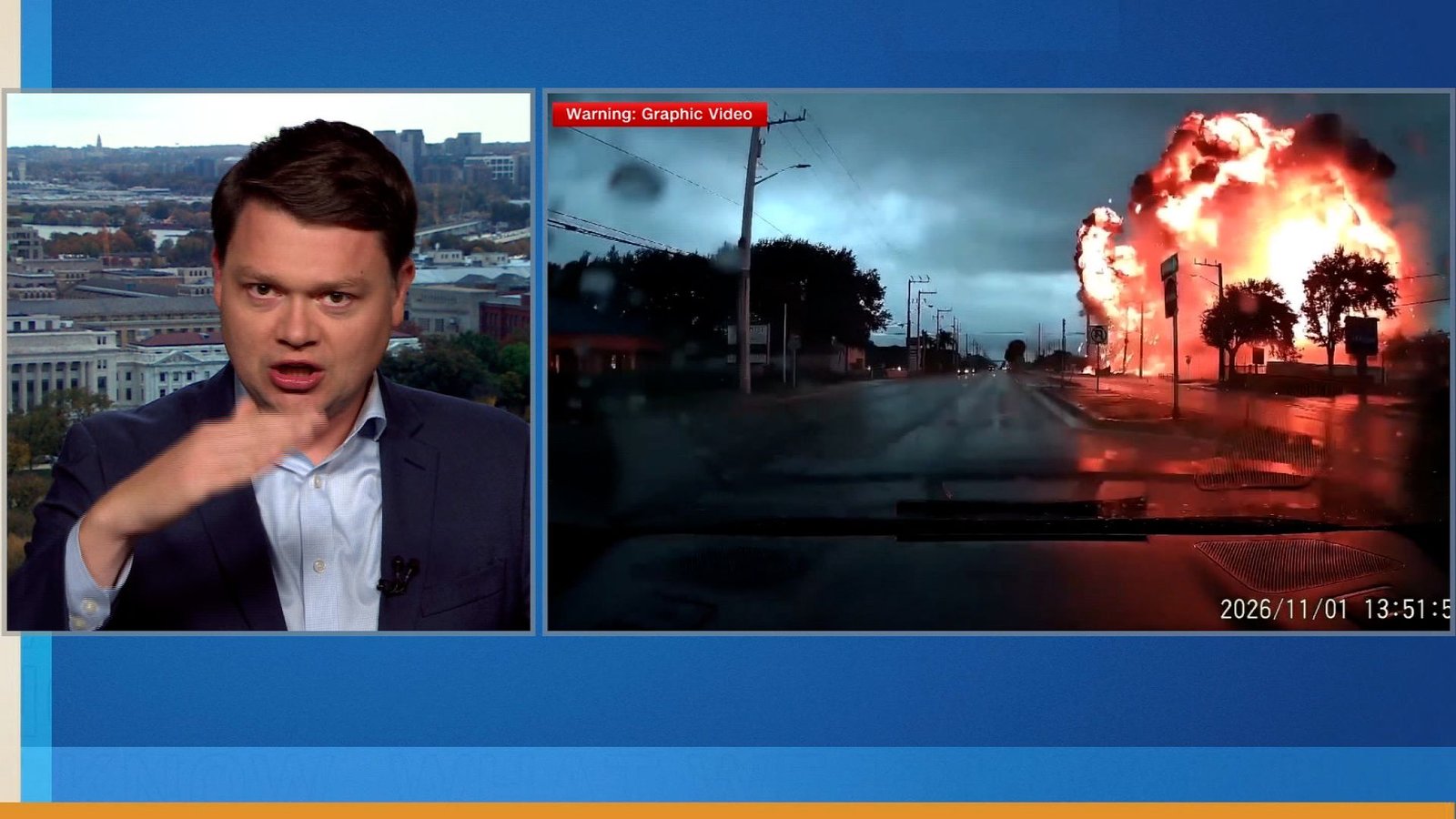
Flight-tracking information from ADS-B Exchange indicated that the jet lost approximately 27,000 feet in about one minute before the tracking data stopped. The aircraft crashed shortly before 1 p.m. on Military Trail, between Cresthaven Boulevard and 10th Avenue North, according to the Palm Beach County Sheriff’s Office.
Dashcam footage showed the aircraft striking the roadway and producing a large fireball. Videos recorded by bystanders showed a crater at the crash site, with broken and buckled pavement surrounding the wreckage.
Residents of a nearby mobile home park said the impact produced a powerful explosion that shook their homes. Andrew Mannino, who lives in Palm Beach County, described hearing and feeling the blast. He said the power went out immediately, followed by the smell of smoke and the sight of a large black cloud rising above the area.
Authorities later confirmed that one person on the ground had suffered a leg injury. Initial reports had indicated that no injuries were reported among people on the ground.
WHO WERE THE NINE PEOPLE ON BOARD?
The crash killed all nine people aboard the Learjet 60. Families have identified eight of the victims, including a couple travelling with their two young children, their caregiver and two other passengers. Filgueiras, the young aviation professional, was also identified as having died in the crash.
The other pilot’s identity has not been publicly released in the information provided by authorities.
TECH ENTREPRENEUR ADAM ROBINSON AND HIS FAMILY
Adam Robinson, his wife Helen Sharp and their two children, Emma and Charlie, were among those killed. Family members confirmed their deaths in a statement that described the couple as devoted parents whose children were central to their lives.
Emma was four years old and Charlie was two. The family statement described the children as the light of their parents’ lives and remembered Robinson and Sharp for their warmth, generosity and ability to make people feel welcome.
The couple divided their time between Aspen, Colorado, and Austin, Texas. Robinson was a technology entrepreneur who co-founded Retention.com, an e-commerce data company.
Sharp had worked in public relations and was also a ceramics artist. Her work included minimalist vases and softly shaped bowls.
The deaths have left their relatives facing the loss of four members of the same family. Helen Sharp’s father, Dudley Sharp, told The Palm Beach Post that his daughter, her husband and his two grandchildren had all been aboard the aircraft.
ANITA MARIA CETINA, THE CHILDREN’S CAREGIVER
Anita Maria Cetina was also travelling with the family. Relatives identified her as the caregiver who looked after Emma and Charlie.
In their statement, the family described Cetina as someone who cared for the children with tenderness and devotion. They said she had become part of the family and remembered her for her unconditional love and commitment.
Her death adds to the devastating impact of the crash on the family and those who knew her.
RACHAEL REED AND CHARMI FEHR
Rachael Reed and Charmi Fehr were the other two passengers identified by the family. They were remembered as people full of joy and a spirit of adventure.
The family statement described their relationship as a close partnership built around the life they were creating together. Their deaths brought the number of publicly identified passengers to seven, alongside Filgueiras.
NATHALIA GADELHA FILGUEIRAS, THE 20-YEAR-OLD AVIATION PROFESSIONAL
Nathalia Gadelha Filgueiras was 20 years old when she died in the crash. Her family told CNN Brasil that she had been passionate about aviation from a young age and had worked hard to pursue a career in flying.
Her mother, Camila Gadelha Corteleti, described her as responsible and hardworking. The family, who are Brazilian, live in Florida, where Filgueiras was raised.
Her interest in aviation developed early. According to her stepfather, Thiago Corteleti, she had obtained a pilot’s licence at the age of 17, before she had even received her driver’s licence.
In a 2023 interview with CNN affiliate WPEC, Filgueiras spoke about the unusual path she had chosen. She said she enjoyed being different and found it interesting that she could fly aircraft even though many people thought it was unusual that she could not yet drive a car.
Her family said she had graduated from American Flyers, an aviation school in the United States, and had accumulated more than 1,300 flight hours.
The other pilot aboard the Learjet has not been publicly identified.
WHAT INVESTIGATORS ARE EXAMINING
The National Transportation Safety Board (NTSB) has begun investigating the crash to determine why the aircraft lost control and descended so rapidly. The investigation involves documenting the wreckage, examining aircraft components, reviewing flight data and communications, and assessing the weather conditions encountered by the jet.
Investigators face significant challenges because the aircraft struck the road with tremendous force, leaving much of the wreckage inside a crater that filled with water.
1. AIRCRAFT WRECKAGE AND POSSIBLE MID-AIR BREAKUP
One of the first priorities is recovering and documenting the aircraft’s major components. NTSB Senior Air Safety Investigator Tim Monville said the wreckage had to be recovered from the impacted crater on the roadway, describing it as one of the biggest obstacles facing the investigation.
The impact site was filled with murky water, while additional rainfall was expected to affect the area. These conditions could make it more difficult to locate, document and recover important aircraft components.
Investigators are also examining whether the aircraft began breaking apart before hitting the ground. NTSB Member Tom Chapman said there was evidence suggesting that some parts may have separated from the aircraft before impact.
If components broke away during the descent, investigators may need to search beyond the main crash site. Pieces of the aircraft could have landed on nearby roads, sports fields, business properties or residential areas.
Locating these components could help investigators determine whether the aircraft experienced a structural failure, whether parts separated during the loss of control or whether the damage occurred mainly during the impact.
At this stage, investigators have not established that a mid-air breakup caused the crash. The possibility remains part of the investigation.
2. THE COCKPIT VOICE RECORDER
Another important question is whether the aircraft’s cockpit voice recorder was still installed and available after the crash.
Aircraft maintenance records indicate that a cockpit voice recorder had been installed on the Learjet 60. However, investigators have not confirmed whether the device was still aboard the aircraft at the time of the crash or whether it can be recovered.
A cockpit voice recorder could provide valuable information about the final moments of the flight. It may help investigators understand conversations between the pilots, their responses to the reported icing and turbulence, and the sequence of events inside the cockpit as the aircraft began descending.
It could also provide context for the emergency communications heard by air traffic controllers. While radio recordings capture what the crew transmitted externally, a cockpit recording could reveal additional details about the situation inside the aircraft.
Chapman said investigators would be better off if the recorder were available, but he also stressed that its absence would not prevent them from conducting a detailed investigation. The NTSB can use physical evidence, aircraft components, maintenance information and other available records to reconstruct what happened.
WEATHER AND AIRCRAFT ICING UNDER INVESTIGATION
Weather conditions are expected to be a major focus of the investigation. The aircraft was flying through an area where scattered storms were passing through South Florida, and it encountered a strong storm cell shortly before the sudden descent.
The crew had reported ice accumulation, precipitation and moderate turbulence before declaring an emergency. Investigators are examining whether these conditions contributed to the aircraft’s loss of control.
However, the fact that the crew reported icing does not by itself establish that ice caused the crash. Investigators will need to examine the aircraft, weather data and other evidence before determining the role of icing or any other factor.
HOW ICE CAN AFFECT AN AIRCRAFT
In-flight icing is a recognised aviation hazard because ice accumulating on an aircraft can change the way it flies. It can increase the aircraft’s weight, reduce lift, increase drag and affect thrust.
These changes can make it harder for an aircraft to maintain its normal flight characteristics. Depending on the amount and location of ice accumulation, the aircraft may lose performance or become more difficult to control.
The Federal Aviation Administration has warned that icing can occur in clouds at altitudes where temperatures are below freezing. The risk is not limited to winter conditions, as the necessary combination of moisture and temperature can occur at different times of the year.
In January 2024, the NTSB published a safety alert highlighting the dangers of in-flight icing and the possibility that such conditions could contribute to a loss of control.
THE ROLE OF SUPERCOOLED WATER IN THUNDERSTORMS
One of the unusual aspects of the reported weather conditions is the temperature communicated by the crew. Filgueiras told air traffic controllers that the outside air temperature was approximately minus 47 degrees Celsius.
Ice generally does not form in the same way at temperatures below minus 40 degrees Celsius because ordinary liquid water at those temperatures typically freezes. However, thunderstorms can contain supercooled water droplets that remain liquid even at extremely low temperatures.
Powerful updrafts inside thunderstorms can carry water droplets to high altitudes, where temperatures fall sharply. These droplets can remain in a liquid state until they come into contact with an aircraft’s surface.
When supercooled droplets strike an aircraft, they can freeze on contact. The process is similar to freezing rain, in which liquid water freezes after hitting a cold surface such as a vehicle or roadway.
This means that very cold outside temperatures do not automatically rule out dangerous icing conditions. The presence of supercooled water in a storm can create a serious hazard for aircraft flying through it.
Investigators will need to determine the exact weather conditions encountered by the Learjet and whether the reported ice accumulation was connected to the aircraft’s sudden descent.
THE CRASH SITE AND ITS IMPACT ON PALM BEACH COUNTY
The crash did not only affect the nine people aboard the aircraft. The impact site is located on Military Trail, a major roadway in Palm Beach County, close to a mobile home park and local businesses.
The aircraft struck the road with such force that it created a crater and left the surrounding pavement buckled and shattered. The resulting fire and thick smoke prompted nearby residents to leave their homes and investigate what had happened.
Emergency services and law enforcement established a perimeter around the crash site to secure the area and allow investigators to work. The closure also prevented residents of a nearby mobile home park from returning to their homes.
HUNDREDS OF RESIDENTS DISPLACED
According to Palm Beach County Commissioner Joel Flores, hundreds of residents were displaced because the crash scene blocked the entrance to the mobile home park.
Some residents had initially left their homes to see what had happened after hearing the explosion. Once authorities secured the area, they were unable to return to collect their belongings or access their vehicles.
Officials advised residents to stay with relatives where possible. Two shelters were also being used to accommodate people who needed temporary housing, while county authorities looked for additional arrangements.
The disruption created practical difficulties for residents who needed access to their vehicles to travel to work or retrieve essential belongings. Local officials acknowledged that the situation was particularly challenging for people who had been unable to return home.
County Administrator Joseph Abruzzo, who was acting as incident commander, said officials were considering the situation a state of emergency. This would allow the county to access emergency funds to support people affected by the crash.
Authorities were also considering how to assist businesses affected by road closures and restrictions around the crash site, including a nearby strip mall.
The NTSB acknowledged the impact of the investigation on residents and said it wanted to complete its work as quickly as possible so access to the neighbourhood could be restored.
WHAT THE AIRCRAFT OPERATOR HAS SAID
Upper Jets, the company that operated the Learjet 60, expressed condolences to everyone affected by the crash. The company said it was committed to supporting the families of those who lost their lives.
In a statement to CNN, Upper Jets also said it was cooperating with authorities to help establish an objective understanding of what happened. The company indicated that information about the crash would be shared by the relevant authorities.
The statement did not establish a cause for the accident. Determining the sequence of events and the factors that contributed to the aircraft’s descent remains the responsibility of investigators.
WHY THIS CRASH IS SIGNIFICANT
The Palm Beach County crash is among the deadliest aviation accidents recorded in the United States during the year described in the investigation. According to NTSB records cited in the report, it is the second-deadliest US crash of the year, following a June skydiving aircraft crash in Butler, Missouri, that killed 12 people.
It is also the deadliest recorded crash involving a Learjet 60, according to data from the Flight Safety Foundation.
The scale of the loss, the aircraft’s rapid descent and the reported icing conditions make the investigation particularly important. The findings could help establish whether weather, aircraft performance, structural problems or a combination of factors contributed to the accident.
For aviation investigators, the priority is to reconstruct what happened during the final minutes of the flight rather than draw conclusions from the emergency transmissions alone. The reported icing and turbulence are important clues, but they must be assessed alongside physical evidence and available recordings.
WHAT HAPPENS NEXT IN THE NTSB INVESTIGATION?
The NTSB investigation will continue with the recovery and examination of aircraft wreckage, the collection of evidence from the surrounding area and an assessment of the weather conditions at the time of the accident.
Investigators will also seek to establish whether the cockpit voice recorder was aboard the aircraft and whether it can provide additional information about the crew’s final actions and communications.
The possibility that parts of the aircraft separated before impact will require careful examination of components found both at the main crash site and in nearby locations. Investigators will need to determine whether any damage occurred before the aircraft struck the ground.
Maintenance records, flight information, air traffic control communications and other available evidence may also help establish the aircraft’s condition and the sequence of events leading to the crash.
For families of the victims, the investigation is an important step towards understanding how a flight that began as a journey from Texas to the Bahamas ended in tragedy. For residents near Military Trail, the immediate concern remains returning to their homes and restoring normal access to the affected neighbourhood.
The final emergency calls reveal how quickly the situation deteriorated, but they do not provide a complete explanation of what happened. Whether severe weather, supercooled water, aircraft icing, a possible structural breakup or another factor played a decisive role remains to be established.
Until the NTSB completes its investigation, the cause of the Learjet 60 crash remains undetermined. The evidence recovered from the roadway, the aircraft’s components and any available cockpit recordings will be central to explaining why the jet plunged from approximately 35,000 feet and why its crew could not prevent the fatal impact.
For breaking news and live news updates, like us on Facebook or follow us on Twitter and Instagram. Read more on Latest World on thefoxdaily.com.





COMMENTS 0