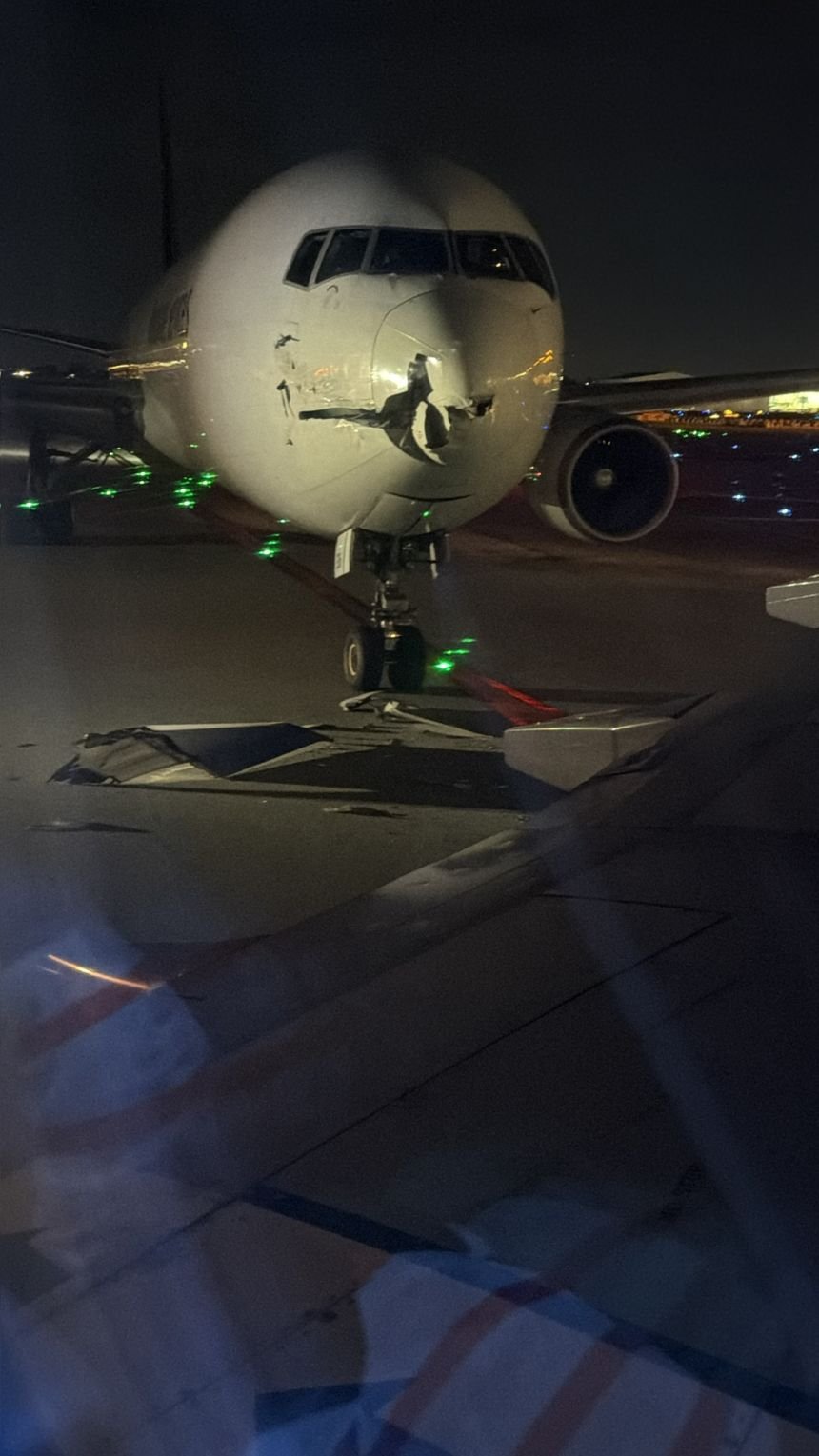
A collision between two commercial aircraft at Miami International Airport has raised fresh questions about airport ground operations after a Copa Airlines passenger jet struck a UPS cargo plane on Saturday night. The incident left two people with minor injuries and damaged both aircraft, adding to an already difficult period for US air travel.
The collision occurred around 9:15 pm local time while the aircraft were taxiing on the airport tarmac. According to the Federal Aviation Administration (FAA), the wingtip of a Copa Airlines Boeing 737 struck the nose of a UPS Boeing 767.
Airport officials said two people were treated at the scene by fire and rescue teams. All passengers and crew members aboard the Copa flight subsequently disembarked, and the aircraft was moved back to the terminal.
The incident happened just one day after a nationwide FAA ground stop caused widespread flight cancellations and delays across the United States. Airports were still working to restore normal operations as passengers dealt with missed connections, rebookings and extended waits.
How the Copa Airlines and UPS planes collided
The two aircraft were involved in the collision while moving on the airport’s taxiway system. The Copa Airlines flight had arrived in Miami from Panama City, Panama, while the UPS cargo aircraft was preparing to depart for Bogotá, Colombia.
The FAA said air traffic controllers had instructed the UPS crew to give way to the arriving Copa flight. Despite that instruction, the aircraft made contact as they moved on the ground.
Miami International Airport communications director Greg Chin told CNN that two people sustained minor injuries. Both were treated at the scene by airport fire and rescue personnel.
Photographs of the damaged UPS aircraft showed a crumpled nose section and a large hole in the exterior panels. The Copa aircraft appeared to have sustained damage to its left wingtip.
The FAA confirmed that it was investigating the collision. The investigation will examine the aircraft movements, instructions issued by air traffic control and the circumstances that led to the contact between the two planes.
Air traffic control audio captures pilots’ reactions
Audio from air traffic control communications offered an immediate account of the confusion following the collision. In the recording reported by CNN, a controller asked the UPS crew whether the aircraft had made contact with another plane.
The Copa pilot responded, “Somebody hit us,” describing the moment of impact from the passenger aircraft’s cockpit.
The UPS pilot then acknowledged that the aircraft had gone too far and clipped the Copa plane with its wing. The Copa pilot later reported that the aircraft appeared to be missing its left wingtip.
The exchange provides an account of what the pilots observed immediately after the incident, but the precise sequence of events remains subject to the FAA investigation.
Investigators will need to establish the aircraft’s positions, movement paths and the instructions given by controllers. They will also examine whether the crews followed the relevant taxiing procedures and whether any communication or situational-awareness issues contributed to the collision.
Copa passenger describes sudden impact inside aircraft
Passengers aboard the Copa Airlines flight experienced the collision while the aircraft was taxiing after landing. Cesar Ferreira, a passenger who spoke to CNN, described hearing increasing noise around the cabin before the impact.
Ferreira said the aircraft jerked abruptly sideways when the other plane struck it. Some passengers became frightened, but the Copa crew instructed everyone to remain seated.
He said the captain later announced that there was no immediate danger and that a tug would be brought in to move the aircraft. According to Ferreira, the announcement came around 10 minutes after the collision.
The crew’s instructions helped keep passengers seated while airport personnel assessed the situation. The aircraft was subsequently moved, allowing passengers to disembark safely.
Copa Airlines said all 166 passengers and six crew members had left the aircraft. The airline said passenger and crew safety remained its priority and that it would cooperate with authorities investigating the incident.
UPS and Copa Airlines respond to the collision
UPS said its crew was safe and that it was committed to working with the relevant authorities to determine what happened. The company did not provide further details about the circumstances of the collision.
Copa Airlines expressed regret over the disruption caused to passengers. In its statement, the airline said it would cooperate with the investigation and emphasised that the safety of passengers and crew members was its top priority.
The collision is likely to require operational checks before the damaged aircraft can return to service. Aircraft involved in ground contact incidents generally need technical inspections to determine the extent of structural damage and whether repairs are necessary.
For passengers, the immediate concern was getting off the aircraft and continuing their journeys. The airline’s statement confirmed that everyone aboard had disembarked, while the two people injured in the incident received treatment at the airport.
Collision follows nationwide FAA ground stop
The Miami incident occurred during a period of disruption for the US aviation network. On Friday, the FAA imposed a nationwide ground stop that caused widespread cancellations and delays, leaving airports struggling to accommodate displaced passengers.
Some travellers were forced to spend extended periods inside airport terminals while waiting for their flights to be rebooked. Reports described passengers sleeping on terminal floors as airlines worked through the disruption.
A nationwide ground stop can affect flights across multiple airports because aircraft and crews are scheduled to operate interconnected routes. When departures are halted or delayed, the disruption can spread beyond the locations directly affected by the original restriction.
Aircraft may arrive late, crews can reach the limits of their permitted working hours, and passengers may miss connecting flights. Airlines then have to reorganise schedules, reposition aircraft and find alternative arrangements for travellers.
The collision at Miami was a separate incident from Friday’s nationwide grounding. There is no indication in the supplied account that the ground stop caused the taxiway collision. However, the timing has drawn attention because the incident occurred while the wider aviation system was still working to recover from major disruption.
Miami airport has faced another serious aviation accident
The latest collision has also brought renewed attention to Miami International Airport’s previous serious aviation accident. On September 6, an Amazon Air cargo plane reportedly ran off the runway, struck multiple vehicles and caught fire.
That incident killed five people and injured five others. The aircraft’s departure from the runway and the resulting fire sent a thick plume of black smoke into the air, prompting a major emergency response.
The two incidents are different in nature and should not be treated as evidence of a common cause or an airport-wide safety failure. The September accident involved a cargo aircraft leaving the runway, while Saturday’s collision involved two planes making contact as they moved on the airport surface.
Nevertheless, both incidents underline the importance of safety procedures during ground operations. Airports handle large numbers of aircraft movements across runways, taxiways, gates and cargo areas, requiring close coordination among pilots, controllers and ground personnel.
Why taxiway collisions are a serious aviation safety concern
Aircraft taxiing on the ground generally move at much lower speeds than they do during take-off or landing. However, collisions can still cause significant damage because commercial aircraft have large wingspans, heavy structures and limited clearance when operating near other planes.
Taxiways are designed to guide aircraft between runways, terminals, parking stands and other airport facilities. Controllers coordinate movements to prevent aircraft from entering occupied paths or crossing one another without permission.
Ground operations can become complicated at busy airports, where arriving aircraft, departing flights, cargo jets, service vehicles and ground crews may all be operating in nearby areas. Pilots must follow taxi instructions while monitoring their surroundings and maintaining communication with air traffic control.
Even a relatively low-speed collision can damage critical aircraft components. Wingtip contact can affect structures and systems, while an impact involving an aircraft’s nose can damage the forward fuselage and other equipment.
Such incidents can also disrupt airport operations. Aircraft may need to be removed from service, taxiways can be temporarily restricted and emergency teams may have to inspect the scene before normal movements resume.
What the FAA investigation will examine
The FAA is investigating the collision, with the central questions involving how the two aircraft reached the same area and why the instructed separation was not maintained.
Investigators are expected to examine air traffic control communications, taxi instructions, aircraft movements and the crews’ accounts. They may also review airport surveillance footage, aircraft data and other available records to reconstruct the incident.
The instruction for the UPS aircraft to give way to the Copa flight will be an important part of the inquiry. Investigators will need to establish precisely what the crews were instructed to do, how those instructions were understood and whether the aircraft followed the assigned routes.
The investigation will also consider the physical layout of the taxiway and the visibility and conditions at the time. Any conclusions about responsibility or procedural failures will depend on the evidence gathered by authorities.
Neither the damage visible in photographs nor the initial radio exchange is sufficient on its own to establish the cause of the collision.
What the incident means for passengers and airport operations
For passengers, the collision highlights how disruptions can occur even after an aircraft has completed its flight and landed safely. Travellers often associate the most significant aviation risks with take-off and landing, but ground movements also require strict safety coordination.
The immediate impact at Miami included injuries, aircraft damage and the need to move the Copa flight back to the terminal. Depending on the inspection and repair requirements, aircraft involved in such incidents may remain out of service until they are cleared by maintenance teams.
Airlines may also need to make alternative arrangements for passengers if an aircraft cannot operate its next scheduled service. Cargo operations can face similar challenges when a freighter is damaged or removed from the flight schedule.
The wider significance of the incident will depend on what the FAA investigation finds. If the inquiry identifies a procedural or communication problem, authorities and airport operators may consider whether additional safeguards or changes to ground movement practices are necessary.
For now, the FAA’s investigation remains central to understanding how the Copa Airlines Boeing 737 and UPS Boeing 767 collided. The two minor injuries and the safe disembarkation of all Copa passengers and crew meant the immediate consequences were limited, but the incident has added another safety concern during an already difficult weekend for US air travel.
For breaking news and live news updates, like us on Facebook or follow us on Twitter and Instagram. Read more on Latest World on thefoxdaily.com.




COMMENTS 0