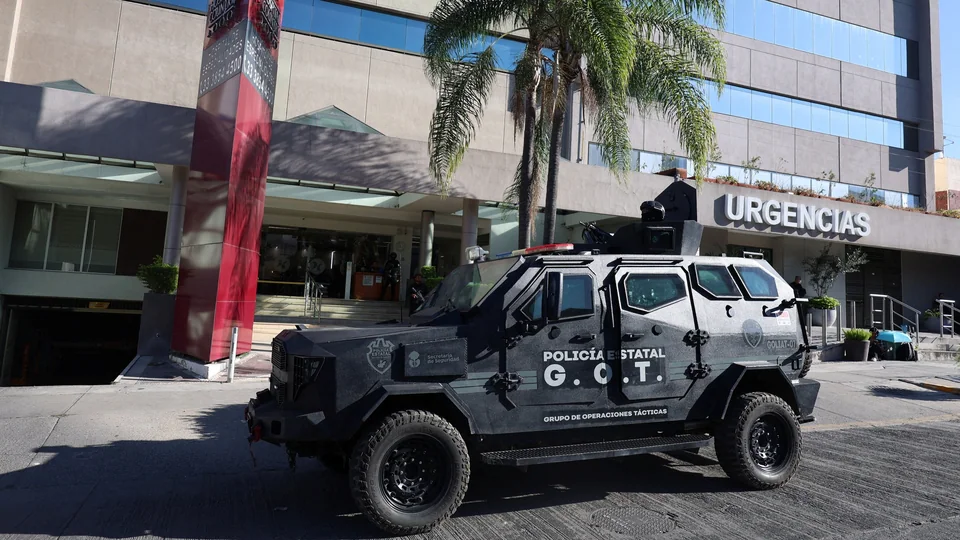
Miguel Ángel Félix Gallardo, the notorious Mexican drug trafficker known as the “Boss of Bosses”, has died at the age of 80. The founder of the Guadalajara Cartel passed away in a hospital in Guadalajara, Jalisco, on November 15, two days after being transferred from prison for emergency medical treatment.
The Jalisco state security ministry confirmed his death, saying he had remained under medical observation with a guarded prognosis before suffering multiple organ failure. His hospitalisation followed a deterioration in his health while he was being held at a high-security prison.
According to reports cited by The Wall Street Journal, a Mexican official also attributed his death to respiratory failure associated with pneumonia. However, the Jalisco authorities identified multiple organ failure as the immediate cause in their announcement.
Félix Gallardo had been in Mexican state custody since his arrest in 1989. His death brings to an end the life of a figure whose criminal organisation helped shape the structure of drug trafficking in Mexico and influenced the development of several powerful cartels.
Felix Gallardo Was Hospitalised After Medical Emergency in Prison
Félix Gallardo was transferred from a high-security prison to a private hospital in Guadalajara on November 13 after developing serious health complications. The move was carried out under prison security arrangements, with police officers and prison guards maintaining a presence around the medical facility.
He remained under observation for two days. The Jalisco security ministry said doctors had described his condition as guarded before confirming that he died on November 15 following multiple organ failure.
His transfer attracted attention because of his status as one of the most prominent figures in Mexico’s history of Organised Crime. Security personnel were stationed outside the hospital while he received treatment, reflecting the precautions authorities maintained during his final days.
Félix Gallardo had spent more than three decades in custody. His imprisonment followed his arrest in 1989, when Mexican authorities detained him in Guadalajara as part of a major operation against drug trafficking.
Who Was Miguel Ángel Félix Gallardo?
Born on January 8, 1946, in the Mexican state of Sinaloa, Félix Gallardo rose from modest beginnings to become one of the country’s most influential drug traffickers. He was also known by the nicknames El Padrino, meaning “The Godfather”, and El Jefe de Jefes, translated as “The Boss of Bosses”.
Before entering the drug trade, he worked as a police officer. Despite having only a second-grade education, he used his position and connections to build relationships with influential people and expand his criminal activities.
During the late 1970s, as the United States increased efforts to combat drug trafficking, Félix Gallardo moved to Guadalajara. The city became the centre of his growing organisation, which developed into a major network involved in the movement of illegal drugs across international borders.
His influence extended beyond Mexico. He played an important role in establishing connections with Colombian drug traffickers, helping create arrangements that allowed large quantities of cocaine to move through Mexican routes towards the United States.
These international connections helped transform the Guadalajara Cartel into a major force in the regional drug trade. Its operations also contributed to the development of trafficking networks that continued to influence Mexico’s criminal landscape long after Félix Gallardo was imprisoned.
How the Guadalajara Cartel Changed Mexico’s Drug Trade
The Guadalajara Cartel emerged during a period when Mexican drug trafficking organisations were becoming more coordinated and increasingly connected to international criminal networks. Under Félix Gallardo’s leadership, the organisation helped bring together traffickers and establish relationships with suppliers and distributors outside Mexico.
Its connections with Colombian groups, including networks associated with the Medellín Cartel, helped expand the movement of cocaine through Mexican territory. The organisation became an important link in the supply chain connecting South American production with the lucrative US market.
Félix Gallardo’s organisation was also associated with the development of a system in which different trafficking groups operated through negotiated arrangements over territories and smuggling routes. This structure helped manage rivalries and gave major traffickers a framework for coordinating their activities.
However, the Guadalajara Cartel’s influence did not survive unchanged after the arrest of its leading figures. The organisation eventually fragmented into regional criminal groups, several of which developed into powerful trafficking organisations.
Connection to the Sinaloa Cartel
The Sinaloa Cartel emerged from the wider network of traffickers and former associates connected to the Guadalajara organisation. It is therefore more accurate to describe the Guadalajara Cartel as a precursor to the Sinaloa Cartel and other major Mexican criminal groups rather than suggesting that the two organisations were identical.
Following the arrests of key Guadalajara Cartel figures, different factions developed their own operations and territorial influence. Former members and associates, including people who later became prominent in the Sinaloa organisation, played roles in the next phase of Mexico’s drug trade.
This fragmentation marked an important change in the country’s organised-crime landscape. Instead of a single dominant network, multiple groups increasingly competed for trafficking routes, territory and influence. The resulting rivalries became a major factor in the violence associated with Mexico’s drug trade in subsequent decades.
Félix Gallardo’s Arrest in 1989 and Long Prison Sentence
Mexican authorities arrested Félix Gallardo in Guadalajara in April 1989. At the time, he was regarded as one of the country’s most powerful drug traffickers and was a major target of anti-narcotics operations.
His arrest marked a significant setback for the Guadalajara Cartel, although it did not dismantle the broader trafficking networks associated with the organisation. Instead, the power structure gradually broke apart as other criminal figures took control of different operations.
Félix Gallardo received a 40-year prison sentence for drug trafficking and weapons-related offences. In 2017, he was also convicted and sentenced to another 37 years for the kidnapping and murder of US Drug Enforcement Administration agent Enrique “Kiki” Camarena and Mexican pilot Alfredo Zavala Avelar.
The two sentences totalled 77 years. Félix Gallardo denied responsibility for Camarena’s murder and maintained his innocence in public comments about the case. His conviction nevertheless remained a defining part of his legal history and the reason he continued serving a lengthy prison term.
The Kiki Camarena Murder Case and Its Impact
The killing of DEA agent Enrique Camarena in 1985 became one of the most consequential cases in the history of US-Mexico anti-drug cooperation. Camarena was abducted in Guadalajara while working on investigations into drug trafficking networks operating in Mexico.
His kidnapping and murder triggered an intense response from US authorities and increased pressure on the Mexican government to pursue those suspected of involvement. The case exposed the scale of the Guadalajara Cartel’s operations and drew international attention to the connections between traffickers, criminal networks and elements of the wider power structure.
Félix Gallardo’s later conviction for the kidnapping and murder placed him at the centre of one of the most significant criminal cases associated with the cartel era. The case continued to influence public discussion about drug trafficking, law enforcement and accountability in Mexico.
His imprisonment did not end the broader criminal networks that had developed under the Guadalajara Cartel. Instead, the organisation’s fragmentation helped shape a new period of competition among trafficking groups.
How Netflix’s Narcos: Mexico Brought His Story to a Global Audience
Félix Gallardo became familiar to a wider international audience through the Netflix series Narcos: Mexico, in which Mexican actor Diego Luna portrayed the cartel leader.
The series dramatised the emergence of the Guadalajara Cartel, its connections with drug traffickers and the growing conflict between organised crime and law enforcement. It also explored the role of Félix Gallardo during a period when Mexico was becoming an increasingly important transit route for cocaine entering the United States.
Although the series introduced his story to viewers unfamiliar with Mexico’s drug-trafficking history, its dramatic presentation should be distinguished from the historical record. The real events involved complex criminal networks, investigations, political relationships and court proceedings extending across several decades.
His portrayal in the series reinforced his reputation as one of the most recognisable figures from the early period of Mexico’s modern cartel history.
What Félix Gallardo’s Death Means for Mexico’s Criminal History
Félix Gallardo’s death is significant because of the role he played in the development of organised drug trafficking in Mexico. The Guadalajara Cartel helped establish international connections and trafficking arrangements that influenced the operations of criminal groups for decades.
His arrest in 1989 weakened the organisation but did not end the business networks it had helped create. The emergence of successor groups demonstrated how criminal organisations could reorganise and adapt even after the detention of prominent leaders.
The Sinaloa Cartel and other major trafficking organisations developed within the wider environment shaped by the Guadalajara network. Their later operations were not simply a continuation of Félix Gallardo’s organisation, but they reflected the fragmented structure that followed its decline.
His death also closes a chapter in the history of a criminal figure whose career connected Mexico’s domestic drug trade with international cocaine trafficking. The legacy of the Guadalajara Cartel remains closely associated with the transformation of the country’s organised-crime landscape.
A Criminal Career Spanning Decades Ends in Hospital
From his early years as a police officer to his rise as the head of a powerful trafficking organisation, Félix Gallardo occupied a central position in one of the most consequential periods in Mexico’s criminal history. His network connected Mexican traffickers with Colombian suppliers, helped expand cocaine routes into the United States and influenced the formation of later criminal groups.
He spent the final decades of his life in state custody after his 1989 arrest and subsequent convictions. His death in Guadalajara on November 15, 2026, at the age of 80, marks the end of the life of a figure whose influence extended far beyond the organisation he once led.
For breaking news and live news updates, like us on Facebook or follow us on Twitter and Instagram. Read more on Latest World on thefoxdaily.com.






COMMENTS 0