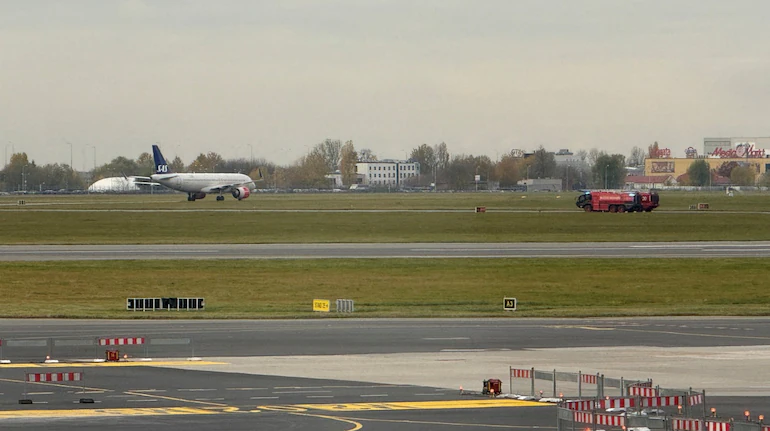
European aviation authorities are investigating another series of bomb threats targeting passenger aircraft, with four new alerts reported over French territory on Friday. The threats triggered security checks and added to a growing number of flight disruptions across the continent, raising concerns about the impact of repeated false alarms on airlines, airports and passengers.
France’s Prime Minister’s office confirmed that four bomb threats targeting aircraft flying over French territory had been received. All the affected planes landed safely, while bomb disposal specialists began inspecting the aircraft to establish whether any explosives or suspicious objects were present.
The latest incidents come after dozens of similar alerts were reported across Europe during the week. At least 34 flights have been disrupted, with some aircraft diverted or required to make emergency landings. Security inspections of affected planes have not uncovered explosives or suspicious objects so far.
Four Aircraft Receive Bomb Threats Over French Territory
The four latest threats were reported on Friday, prompting aviation security authorities to examine the affected aircraft after they reached the ground. Bomb disposal teams were assigned to carry out inspections, while investigators began tracing the origin of the alerts.
Although the threats have not resulted in any reported explosions or injuries, aviation authorities must treat every credible security warning seriously. Even an unverified alert can require an aircraft to change its route, land at an alternative airport or remain on the ground until security checks are completed.
Authorities have not yet established whether the four threats reported over France are connected to the wider series of incidents affecting European aviation.
At Least 34 Flights Disrupted Across Europe
The latest alerts are part of a broader wave of suspected hoax bomb threats that has affected commercial aviation across Europe. At least 34 flights were disrupted during the week as airlines and airport authorities responded to security warnings.
On Thursday alone, at least 25 threats were reported across 16 European countries. The incidents affected flights operated by several major airlines, including Ryanair, Wizz Air, easyJet, Finnair and Aer Lingus.
Seven aircraft were also searched or diverted on Tuesday following similar warnings. The repeated incidents have created additional operational pressure for airlines, airport security teams and air traffic management authorities.
Every threat requires an assessment, even when investigators later determine that it was unfounded. Security procedures can involve coordination between airline staff, airport operators, police, intelligence agencies and specialist bomb disposal teams.
Ryanair, Wizz Air and TAROM Flights Among Those Targeted
Several specific incidents were reported on Friday, involving aircraft travelling between major European cities. The alerts led to emergency procedures, diversions and security assessments at different airports.
TAROM Flight Lands Safely in Bucharest
A TAROM flight travelling from Prague to Bucharest received a security alert while carrying 102 passengers. The aircraft was operating as flight RO226 and transmitted squawk code 7700, which indicates a general emergency.
The aircraft subsequently landed safely in Bucharest. Romanian media, citing airport and intelligence officials, reported that the bomb threat was unsubstantiated.
The safe landing allowed authorities to proceed with the necessary security response on the ground. The incident also illustrated how a security warning can trigger emergency procedures even when no explosive device is ultimately discovered.
Wizz Air Flight Diverted to Venice
A Wizz Air aircraft operating flight W46136 from Prague to Rome was diverted to Venice following a bomb threat.
Instead of continuing to its intended destination, the aircraft was redirected so that authorities could respond to the security alert. Such diversions can affect passengers’ onward travel plans and create additional pressure on airport operations.
Ryanair Flight From Rome to Lisbon Targeted
A Ryanair flight, FR8196, travelling from Rome to Lisbon was also targeted by a security warning on Friday.
Portuguese media reported that authorities were assessing the credibility of the threat. Italian news agency ANSA reported that police received the alert through a phone call from a law enforcement officer.
Copenhagen Airport Also Reports Targeted Aircraft
Two of the five aircraft targeted in the earlier Friday incidents were at Copenhagen Airport, according to the information provided about the alerts.
The incidents across different airports demonstrate the geographical spread of the security warnings and the need for coordination between national aviation authorities.
Why Bomb Threats Can Cause Major Flight Disruptions
Airlines cannot simply ignore a bomb threat because it appears suspicious or arrives without supporting evidence. Aviation security procedures require authorities to assess potential risks and take appropriate precautions before allowing an affected aircraft to continue normal operations.
Depending on the circumstances, this can involve diverting an aircraft, arranging a controlled landing, evacuating passengers where necessary and conducting detailed searches of the plane and its luggage compartments.
These measures can have consequences beyond the aircraft directly involved. A diverted flight may occupy airport resources, disrupt landing schedules and affect the availability of aircraft and crew for subsequent services.
Passengers on other flights can also experience delays when security operations require changes to airport procedures. Airlines may need to reorganise schedules, arrange replacement aircraft or assist travellers whose connecting journeys have been affected.
Repeated false alarms can therefore create significant operational disruption even when no explosives are found.
Investigators Have Not Established Who Is Behind the Threats
European authorities are continuing investigations into the origin of the bomb threats. So far, investigators have not found evidence establishing a connection between the wider wave of alerts and a hostile terrorist organisation or state actor.
Officials are examining the incidents to determine whether the threats were coordinated or originated from unrelated sources. Establishing the source is important because the same type of warning does not necessarily mean every incident has a common organiser.
European Union Transport Commissioner Apostolos Tzitzikostas said it was too early to determine whether the incidents were connected. He also stressed that threats against civilians were unacceptable.
The investigation will need to establish the credibility of individual warnings, identify how they were communicated and determine whether any links exist between the incidents reported in different countries.
What the Latest Threats Mean for European Air Travel
The latest incidents highlight the vulnerability of interconnected aviation operations to repeated security alerts. Europe’s air transport network depends on close coordination between airlines, airports, air traffic controllers and national security agencies. A disruption at one airport can affect aircraft schedules and passenger connections elsewhere.
For travellers, the immediate concern is the possibility of delays, diversions and missed connections. Passengers flying with affected airlines may need to check flight updates regularly and follow instructions issued by airport and airline authorities.
However, a bomb threat does not automatically mean that an aircraft is carrying an explosive device. In the incidents described so far, affected planes have landed safely, and inspections have not identified explosives or suspicious objects.
Europe’s Aviation Security Investigation Continues
Four new threats over French territory have added to a week of security alerts affecting commercial flights across Europe. With at least 34 flights disrupted, the incidents have demonstrated how suspected hoax warnings can generate significant consequences for aviation operations even when no physical danger is discovered.
Authorities are continuing to inspect affected aircraft and investigate the origin of the warnings. Whether the incidents are connected remains unclear, and no confirmed link to a terrorist organisation or state actor has been established.
For now, airlines and airport authorities must continue treating each warning seriously while investigators work to identify those responsible. The priority remains protecting passengers and crew while minimising disruption to Europe’s busy air travel network.
For breaking news and live news updates, like us on Facebook or follow us on Twitter and Instagram. Read more on Latest World on thefoxdaily.com.





COMMENTS 0