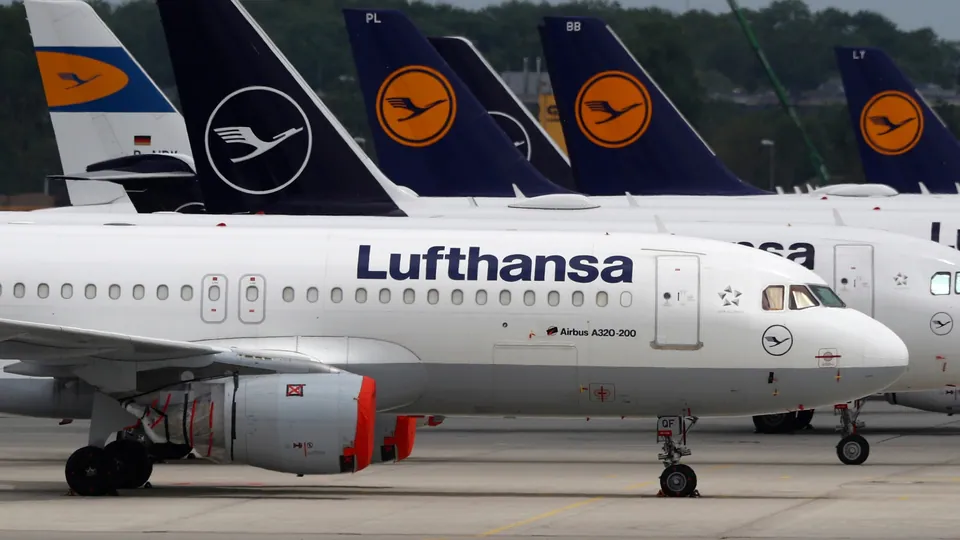
German airline Lufthansa is planning to eliminate 1,000 full-time positions as rising fuel expenses, operational disruptions and slower-than-expected restructuring efforts put additional pressure on its business. The proposed reductions are expected to affect employees at Frankfurt and Munich airports, two of the airline’s most important operational hubs.
The decision comes as the carrier struggles to control costs despite a broader recovery in demand for air travel. An internal letter sent to employees said the turnaround programme launched in 2024 was no longer delivering enough progress to address the company’s financial challenges. The airline also pointed to the economic impact of the war involving Iran, elevated fuel prices and several days of strike action during 2026.
The planned reductions would represent approximately 2.5% of Lufthansa’s workforce of around 40,000 employees. However, the company has not clarified which departments will be affected or whether the latest announcement forms part of its previously disclosed group-wide restructuring programme.
Why Lufthansa is planning to cut 1,000 jobs
Lufthansa’s latest workforce reduction plan reflects mounting pressure to improve profitability while dealing with expenses that have remained difficult to control. The airline began a cost-cutting programme in 2024 to reduce losses and improve its financial performance, but management now believes the measures announced so far are insufficient.
An internal communication to employees described the company’s progress as slower than expected. It highlighted several challenges that have intensified during 2026, including the war in the Middle East, high fuel costs, nine days of strike action and an already expensive operating structure.
The financial pressure has been particularly significant. According to the internal letter, Lufthansa recorded average losses of approximately 20 million euros per month during the first nine months of the year. That figure underlines why management is seeking additional savings rather than relying solely on the existing turnaround strategy.
The planned reduction of 1,000 full-time positions is expected to be concentrated at Frankfurt Airport and Munich Airport. Both locations are central to Lufthansa’s operations, serving as major hubs for domestic, European and international connections.
Iran war and rising fuel prices increase airline costs
Higher aviation fuel prices have emerged as one of the biggest financial challenges for airlines during the Iran war. Fuel is a major operating expense for carriers, and sustained increases can significantly affect profitability, particularly when airlines cannot immediately pass the additional costs on to passengers.
Lufthansa has warned that its annual fuel bill is expected to be around 2 billion euros higher in 2026 than in 2025. The increase illustrates how geopolitical instability can affect an airline’s finances even when passenger demand remains strong.
Conflict involving Iran can disrupt energy markets, increase uncertainty over oil supplies and contribute to higher prices. Airlines are especially exposed because aircraft operations depend heavily on aviation fuel, while international routes can also face additional complications when regional security conditions change.
For Lufthansa, the higher fuel bill comes alongside other cost pressures, including employee expenses, airport charges, maintenance and operational disruptions. The combined effect makes it harder for the company to improve margins through passenger growth alone.
Fuel price movements also create planning challenges. Airlines typically make purchasing and hedging decisions in advance, but prolonged market volatility can still affect future budgets and operating costs. A significant increase in the annual fuel bill can therefore undermine savings achieved through other parts of a restructuring programme.
How many Lufthansa employees could be affected?
The airline intends to cut 1,000 full-time positions at its Frankfurt and Munich airports. Based on a workforce of approximately 40,000 employees, the planned reductions amount to around 2.5% of the company’s staff.
However, important details remain unclear. Lufthansa has not publicly specified which departments or operational functions will be affected, how the reductions will be implemented or whether employees will be offered alternative arrangements.
There is also uncertainty over the relationship between the latest announcement and the company’s earlier restructuring commitments. Lufthansa announced in 2025 that it intended to eliminate 4,000 jobs across the wider group by 2030, with administrative positions expected to account for much of the reduction.
The earlier programme covered the broader Lufthansa Group, which includes several airlines and businesses. The newly disclosed 1,000 positions are specifically associated with Frankfurt and Munich, but it has not been established whether they are included in the previously announced 4,000-job target or represent additional cuts.
A Lufthansa spokesperson declined to provide further details following the latest announcement. Until the company clarifies the relationship between the two programmes, the total number of positions expected to disappear across the group remains uncertain.
Lufthansa’s wider restructuring programme faces fresh pressure
The latest job reduction plan forms part of a broader effort to make Lufthansa more competitive and financially sustainable. The airline has been attempting to simplify its cost structure and improve efficiency after facing years of pressure from operating expenses, labour disputes and changing conditions in the aviation market.
Its 2025 announcement of 4,000 planned job cuts by 2030 focused mainly on administrative functions. The strategy suggested that the company wanted to reduce overheads while improving productivity across its businesses.
The new announcement indicates that the existing savings strategy may not be sufficient to offset the latest increase in expenses. When fuel costs rise sharply, savings from administrative restructuring can become less effective in protecting overall profitability.
Airlines also operate with substantial fixed costs. Aircraft financing, airport infrastructure, maintenance contracts, staffing and network operations require significant spending regardless of short-term changes in passenger demand. This makes cost control particularly important during periods of geopolitical uncertainty.
For Lufthansa, the challenge is to reduce expenses without weakening the services and operational capacity needed to compete in the international aviation market.
Pilot union criticises Lufthansa over job-cut announcement
The proposed reductions have also created tensions between Lufthansa and employee representatives. The Cockpit union, which represents the airline’s pilots, criticised the way the job losses were communicated while negotiations over pay and working conditions were ongoing.
The union accused the company of attempting to create uncertainty among employees and put pressure on the workforce. It also questioned why Lufthansa had announced 1,000 job losses without providing sufficient information about the departments involved or explaining whether the cuts were part of the previously announced restructuring programme.
The lack of clarity is particularly significant because the airline’s workforce is already dealing with cost-cutting measures and labour negotiations. Employees may be concerned about whether further restructuring could affect their positions, responsibilities or working conditions.
For unions, the distinction between previously announced reductions and additional job losses matters. If the latest cuts are part of the existing 4,000-position programme, they would represent progress towards an established target. If they are additional, the overall scale of restructuring could be larger than employees had previously understood.
The disagreement highlights the difficulty of implementing large-scale cost reductions in an industry where labour relations can directly affect operations. Strikes and disputes can disrupt schedules, reduce revenue and create additional expenses, potentially worsening the financial problems that management is attempting to address.
Lufthansa Group profits rise despite problems at flagship airline
Despite the financial difficulties facing its main airline, the wider Lufthansa Group has reported stronger results. The group recorded a 30% increase in profits during the July-September period, outperforming market forecasts.
Higher demand for premium tickets on long-haul routes helped support the improved performance. Premium cabins generally generate more revenue per passenger than economy seating, making demand from business and higher-spending leisure travellers an important factor in airline profitability.
The results show that the financial position of the wider group is more complicated than the losses reported by the flagship airline alone. Lufthansa operates several carriers, including Austrian Airlines, Swiss International Air Lines and Brussels Airlines. These businesses contribute to the group’s overall performance and provide exposure to different markets and passenger segments.
However, stronger group profits do not automatically remove the financial pressure on the main Lufthansa airline. Individual carriers can experience different cost structures, operating conditions and levels of profitability, even when they belong to the same corporate group.
The contrast between the group’s quarterly profit growth and the flagship carrier’s reported monthly losses is therefore important. It suggests that management must address specific weaknesses within the core airline while protecting the performance of other businesses.
Why premium travel demand matters to Lufthansa
Demand for premium tickets has become an important source of revenue for international airlines. Passengers purchasing business-class and other premium products typically pay substantially more than those travelling in economy, allowing airlines to generate higher revenue from available seats.
Long-haul routes are particularly important to Lufthansa’s business model because they connect European hubs with major destinations across North America, Asia and other international markets. Strong demand for premium travel can help support revenue even when other parts of the market face pressure.
However, premium demand cannot completely protect an airline from rising fuel prices. Long-distance flights consume significant quantities of fuel, and higher operating expenses can reduce the financial benefit of stronger ticket sales.
Lufthansa therefore faces two parallel priorities: maintaining demand for its higher-revenue travel products and reducing the costs associated with operating its network.
What Lufthansa’s job cuts mean for the aviation industry
Lufthansa’s announcement reflects the broader vulnerability of the aviation industry to geopolitical developments and energy market volatility. Airlines operate internationally, meaning conflicts and disruptions in one region can influence fuel prices, flight routes, insurance expenses and passenger confidence elsewhere.
When fuel prices increase, carriers must decide how much of the additional expense they can absorb and how much may need to be reflected in ticket prices. Raising fares too aggressively can make travel less attractive, while absorbing the full increase can weaken profit margins.
Cost-cutting programmes are one way airlines attempt to protect their finances, but workforce reductions can create operational and labour challenges. If employees face uncertainty or unions respond with industrial action, the resulting disruption may create further costs.
The situation also demonstrates why strong passenger demand does not necessarily guarantee strong airline profitability. Revenue can rise while expenses increase even faster, leaving carriers under pressure despite full flights and healthy demand for premium travel.
What happens next for Lufthansa employees and passengers?
The immediate uncertainty concerns the implementation of the 1,000 planned job cuts. Employees at Frankfurt and Munich will be watching for details about affected departments, timelines and whether the positions overlap with the wider restructuring programme announced previously.
The response from the Cockpit union could also influence the next phase of labour negotiations. The union’s criticism suggests that employee representatives want greater transparency before accepting the company’s explanation of the planned reductions.
For passengers, the announcement does not by itself indicate that Lufthansa intends to reduce its flight network or cancel services. The company has not disclosed any corresponding changes to routes or schedules in the information available about the job-cut plan.
Nevertheless, the airline’s financial position and fuel expenses will remain important factors in its future decisions on fares, capacity and operating costs. A sustained increase in fuel prices could create pressure for further efficiency measures across the business.
Lufthansa faces a difficult balance between savings and growth
Lufthansa’s planned reduction of 1,000 positions comes at a time when the airline is trying to improve its financial performance while dealing with higher energy costs and operational disruption. The reported monthly losses at its flagship carrier, combined with an expected 2-billion-euro increase in annual fuel expenses, have intensified the need for additional savings.
Yet the wider group’s 30% profit increase during the July-September period shows that the company is not facing the same financial conditions across all its businesses. Strong premium-ticket demand has supported group performance, even as the main airline struggles with its cost base.
The key questions now are whether the latest 1,000 job cuts are included in the previously announced 4,000-position reduction programme and how the airline plans to implement them. Until Lufthansa provides greater clarity, employees and unions will remain uncertain about the full scale of the restructuring.
For the airline, the challenge is to bring costs under control without damaging the workforce, operational reliability and customer experience that underpin its position in the global aviation market.
For breaking news and live news updates, like us on Facebook or follow us on Twitter and Instagram. Read more on Latest India on thefoxdaily.com.






COMMENTS 0