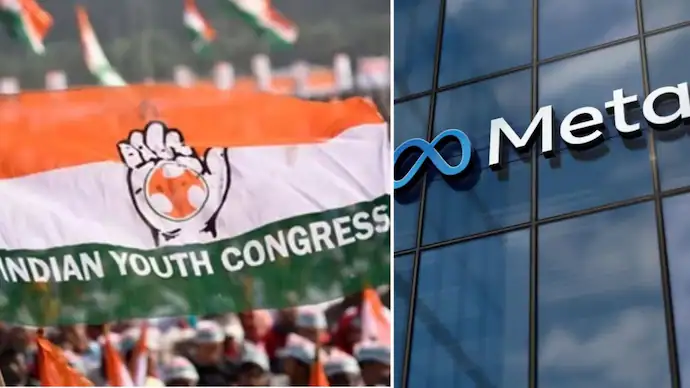
Meta has told a delegation of Congress Social Media leaders that it operates in accordance with Indian laws and follows transparent content moderation policies, as tensions between the technology company and the opposition party continue over alleged restrictions on political posts and social media accounts.
The meeting, held on Tuesday, November 24, 2026, was the first direct engagement between Meta representatives and Congress since the Indian Youth Congress (IYC) launched protests outside the company’s offices in Gurugram, Hyderabad and Mumbai. The demonstrations followed allegations that Instagram accounts linked to Congress functionaries and posts critical of the Narendra Modi government had been restricted.
During the discussion, the Congress delegation presented material that it said demonstrated restrictions on posts mentioning party leader Rahul Gandhi. Meta’s policy team responded that the company follows transparent policies and complies with Indian legal requirements, according to people familiar with the meeting.
The discussions have brought renewed attention to the difficult balance between government-mandated content restrictions, private platform moderation and freedom of political expression. Congress wants greater transparency about how accounts and posts are restricted, while Meta maintains that it must enforce its policies and comply with applicable laws.
What Happened During the Meta-Congress Meeting?
Meta executives Aman Jain and Natasha Jog met Congress representatives on November 24 as the dispute over alleged political content restrictions intensified. The meeting provided an opportunity for the opposition party to present its concerns directly to the company and seek explanations about decisions affecting its leaders and supporters.
The Congress delegation reportedly showed examples of posts mentioning Rahul Gandhi that it believed had been restricted. The party questioned whether the platform’s content moderation systems were applying rules consistently to political content from different parties.
Meta’s policy representatives said the company follows transparent policies and Indian laws. The response reflected the platform’s position that content restrictions can result from legal requirements as well as its own content moderation rules.
The company also raised concerns about protests at its offices and the treatment of employees amid the controversy. The demonstrations had taken place at offices in multiple cities, with some incidents involving confrontations and damage to property.
There was no reported agreement to restore all disputed content or introduce a new political moderation policy following the meeting. The discussions therefore did not immediately resolve the central disagreement between the company and Congress.
Why Is Congress Accusing Meta of Restricting Rahul Gandhi-Related Posts?
The Congress delegation’s main concern is that posts mentioning Rahul Gandhi and content criticising the BJP-led government are allegedly facing restrictions on Meta-owned platforms, particularly Instagram.
The party has questioned whether automated moderation systems are disproportionately affecting opposition-related content. It has also argued that accounts belonging to opposition leaders, journalists and independent content creators should not be restricted without clear explanations or an opportunity to challenge the decisions.
Congress representatives presented material during the meeting that they said showed posts mentioning Rahul Gandhi were being restricted. However, the examples presented by the party do not, by themselves, establish that Meta has adopted a deliberate policy of targeting the opposition leader or Congress supporters.
Meta’s response has centred on its compliance with Indian laws and its content moderation framework. The company has said that content can be restricted when it violates platform policies or when valid legal directions require action.
The disagreement highlights a key problem in digital content moderation: users may see a post disappear or become inaccessible without immediately knowing whether the decision resulted from an automated system, a platform policy violation or a government direction.
Indian Youth Congress Gave Meta a Seven-Day Ultimatum
The confrontation escalated on November 21, when the Indian Youth Congress issued a seven-day ultimatum to Meta, demanding explanations for what it described as arbitrary restrictions on opposition-linked accounts and content.
The ultimatum followed protests outside Meta offices in Gurugram, Hyderabad and Mumbai. The youth organisation accused the platform of suppressing political criticism and favouring the ruling BJP.
The IYC said it would continue its campaign and consider legal action if Meta failed to address its demands. It also called on the company to restore accounts and posts that it described as unlawfully restricted.
The organisation’s demands went beyond the restoration of individual Instagram accounts. It sought information about government-ordered restrictions affecting Indian users and asked Meta to explain how its automated systems handle political content.
Four Major Demands Made by the Youth Congress
The IYC’s November 21 statement outlined four central demands:
- Disclosure of government-directed restrictions: Meta should reveal how many Indian accounts were restricted or withheld under government orders during the previous six months and how many remain inaccessible.
- Explanation of automated blocking: The company should explain allegations that posts mentioning Rahul Gandhi or criticising Prime Minister Narendra Modi and the BJP were being automatically restricted.
- Restoration of disputed accounts: The organisation demanded the removal of restrictions it considers unlawful on accounts and posts belonging to opposition leaders, journalists and content creators.
- Greater accountability: Meta should explain its content moderation decisions and ensure that political expression is not restricted through arbitrary or inconsistent enforcement.
The youth organisation also said it was providing legal assistance to people whose social media accounts had allegedly been restricted. It argued that users should receive clear explanations when their content or accounts become inaccessible.
The seven-day deadline placed pressure on Meta to respond publicly, although the company did not announce that it would accept all the demands during its subsequent meeting with Congress representatives.
Why Did Youth Congress Protest at Meta Offices?
The protests were organised after allegations that Instagram accounts associated with senior Indian Youth Congress functionaries had been restricted. The affected accounts reportedly included those belonging to IYC national president Uday Bhanu Chib and national in-charge Manish Sharma.
The organisation alleged that the restrictions were politically motivated and intended to limit criticism of the central government. It called on Meta to restore the accounts and explain the basis for the action.
Demonstrations took place outside Meta-linked office premises in three cities:
- Hyderabad: Telangana Youth Congress workers protested at the office complex housing Meta’s operations. Videos circulated by the organisation showed protesters raising slogans and moving through parts of the premises. Some property was reportedly damaged, and around 20 protesters were taken into preventive custody before being released.
- Gurugram: Youth Congress members demonstrated outside Meta’s office, carrying banners and demanding the restoration of restricted accounts.
- Mumbai: Protesters held demonstrations against the alleged restrictions and criticised the company’s handling of political content.
The protests attracted attention because they moved the dispute beyond online statements and into direct demonstrations at the offices of a major technology company. They also prompted concerns about workplace security and the safety of employees.
The company raised concerns about the demonstrations during its meeting with Congress representatives. The confrontation therefore involved two separate issues: the opposition party’s allegations of political censorship and Meta’s concerns about protests at its workplaces.
Meta’s Explanation: Following Indian Laws and Content Policies
Meta’s response to Congress has focused on its responsibility to follow the country’s legal framework and enforce its content policies. The company operates platforms including Facebook, Instagram and WhatsApp in India, where it must respond to applicable legal directions and regulatory requirements.
Content moderation can involve several different processes. A post may be removed because it violates the platform’s Community Standards, restricted in a particular country because of a local legal requirement, or made inaccessible following a valid direction from an authorised government agency or court.
These processes are not interchangeable. A platform-policy violation is different from a government-ordered restriction, even though both can result in users being unable to access particular content.
Meta has said that it reviews valid legal orders and takes action where content is found to violate applicable Indian laws or platform rules. It also uses automated detection systems and user reports to identify potentially prohibited material.
The company’s position is that compliance with legal requirements should not automatically be interpreted as political favouritism. However, Congress wants greater disclosure about the number of restrictions imposed, the reasons behind them and whether similar standards are being applied to content associated with different political groups.
Meta’s Content Restrictions in India Have Increased Sharply
The dispute is unfolding against a significant increase in the number of content restrictions reported by Meta in India. According to figures discussed in recent reporting, the company restricted more than 5.4 million posts or accounts under Indian law during the first half of 2026.
That figure compares with approximately 70,000 restrictions reported for the whole of 2025. The sharp difference has intensified questions about the scale of government-directed content restrictions and how social media companies process legal demands.
However, the figures should be understood in context. They concern restrictions attributed to Indian legal requirements and do not establish that all affected posts were political, that every restriction was requested by the same government agency or that every action was controversial.
They also do not independently prove Congress’s allegation that opposition-related content is being selectively targeted. Establishing political bias would require examining the underlying orders, the content affected, the reasons for each restriction and how comparable cases involving different political viewpoints were handled.
Nevertheless, the increase highlights why transparency has become a central issue. When millions of pieces of content are restricted under local laws, users and political organisations may seek clearer information about the legal basis for those decisions and the mechanisms available to challenge them.
How Indian Law Allows Social Media Content to Be Restricted
Social media platforms operating in India are subject to the Information Technology Act, 2000, and the Information Technology (Intermediary Guidelines and Digital Media Ethics Code) Rules, 2021, along with other applicable laws.
One important provision is Section 69A of the Information Technology Act, which empowers the central government or authorised officials to direct the blocking of public access to online information under specified circumstances.
These circumstances include concerns involving India’s sovereignty and integrity, national security, defence, public order and other grounds listed in the law. Blocking directions are subject to prescribed procedures and safeguards.
The IT Rules also establish due diligence obligations for intermediaries, including social media platforms. They require companies to maintain grievance redressal mechanisms and respond to specified legal orders and complaints in accordance with the rules.
For Meta, this means that some restrictions may be required by Indian authorities, while others may result from the company’s own Community Standards. A post that remains visible in one country could become inaccessible in India if a valid local blocking direction applies.
This distinction is particularly important in political disputes. A user may interpret the disappearance of a post as censorship by the platform, while the company may say it acted in response to a legal order. Without clear explanations, it can be difficult for the affected user to understand the reason behind the restriction.
Congress Raises Questions About Political Bias and Unequal Enforcement
Congress has argued that Meta’s content moderation decisions appear inconsistent, particularly when posts critical of the BJP are compared with content supporting the ruling party.
During the meeting, the delegation reportedly raised examples of AI-generated content associated with the BJP that it said remained available, while similar material from other political sources had been removed. The party used these examples to question whether the platform was applying its rules equally.
Meta’s policy team maintained that the company follows transparent policies and Indian laws. The reported discussion did not establish that the platform had accepted Congress’s allegation of unequal enforcement.
Assessing claims of political bias requires more than comparing individual posts. The context of each item, the applicable rules, the reasons for removal and the treatment of comparable content all matter. Without access to those details, it is difficult to determine whether differences in moderation outcomes reflect inconsistent enforcement or distinct policy and legal circumstances.
For social media platforms, the challenge is to apply rules consistently while also responding to local legal requirements. For political parties, the concern is that opaque moderation decisions could affect their ability to communicate with voters and supporters.
‘Meta, BJP Ka Beta’: Youth Congress Targets Zuckerberg in Bengaluru
The confrontation has also extended into a public advertising and poster campaign. The Indian Youth Congress put up hoardings across Bengaluru accusing Meta of favouring the BJP and failing to act effectively against fake news and hate speech.
One prominent hoarding near Sadahalli Gate on the airport road featured Meta founder and CEO Mark Zuckerberg depicted in the attire associated with the Rashtriya Swayamsevak Sangh (RSS). It carried the slogan “Meta, BJP Ka Beta”, which translates to “Meta, BJP’s son”.
The slogan reflects the IYC’s allegation that the company is politically aligned with the ruling party. The organisation has used the campaign to draw attention to what it describes as selective restrictions on opposition voices.
The imagery is a political accusation, not evidence of an established relationship between Meta and the BJP. Meta has denied political favouritism and maintained that its decisions are based on platform policies and legal requirements.
The hoardings nevertheless illustrate how the dispute has moved beyond a technical disagreement about account moderation. It has become part of a wider political argument over the influence of global technology companies on public debate in India.
Why the Meta-Congress Dispute Matters for Journalists and Content Creators
The controversy is not limited to political leaders or party organisations. The IYC has also raised concerns about restrictions affecting journalists, independent creators and other users who publish content critical of the government.
Social media platforms have become important distribution channels for news, political commentary and public discussion. Journalists use them to circulate reports, creators build audiences through regular posts and political organisations rely on them to communicate announcements and campaign messages.
If an account is suspended or a post becomes inaccessible, the consequences can extend beyond a single piece of content. Creators may lose access to their audiences, journalists may face disruption in distributing their work and political groups may struggle to communicate with supporters.
At the same time, platforms have responsibilities to prevent the spread of unlawful content, threats, harassment, misinformation and other material that violates their policies or applicable laws.
The central challenge is ensuring that enforcement is consistent, explainable and open to review. Users need to understand why restrictions are imposed, while platforms must protect the integrity of their moderation systems and comply with legal obligations.
What Happens Next After Meta’s Meeting With Congress?
The November 24 meeting has opened a direct channel between Meta and Congress, but the major disagreements remain unresolved. The opposition party wants detailed information about government-directed restrictions, an explanation for alleged automated blocking and the restoration of accounts and posts it considers unlawfully restricted.
Meta, meanwhile, has reiterated that it follows Indian laws and transparent content policies. It has also raised concerns about the protests and the treatment of its employees.
The IYC had warned that it would continue its demonstrations and pursue legal options if Meta failed to respond to its seven-day ultimatum. The meeting did not produce a reported commitment from the company to meet all four demands.
Further developments may depend on whether Meta provides additional information about its moderation decisions, whether Congress pursues the matter through legal channels and whether the disputed accounts and posts remain accessible.
The broader debate is also likely to continue as India’s digital regulatory framework evolves. The scale of content restrictions, the use of automated moderation and the transparency of government takedown requests are increasingly important questions for technology companies, political parties and ordinary users.
A Larger Test of Digital Freedom and Platform Accountability in India
The dispute between Meta and Congress highlights the growing importance of social media platforms in India’s political and public life. Decisions made by private technology companies can influence how political messages, news reports and public criticism reach millions of users.
Congress has accused Meta of restricting opposition-related content and applying its rules unevenly. Meta has responded that it follows Indian laws and transparent moderation policies. Neither position, by itself, settles whether the specific restrictions challenged by the opposition were justified.
The next stage will depend on the evidence behind the disputed moderation decisions and the explanations Meta is prepared to provide. Greater transparency about government orders, platform-policy violations and appeals could help users understand why content is restricted and whether those decisions can be challenged.
For now, the meeting has not ended the confrontation. It has brought the allegations directly to Meta’s policy team while leaving the central questions about political content moderation, legal compliance and accountability unresolved.
For breaking news and live news updates, like us on Facebook or follow us on Twitter and Instagram. Read more on Latest India on thefoxdaily.com.





COMMENTS 0