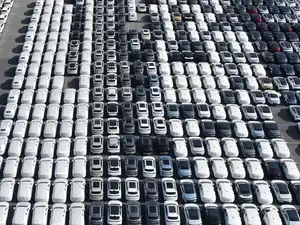
China‘s passenger vehicle exports recorded another sharp increase in October 2026, highlighting the growing importance of overseas markets for the world’s largest Automobile Industry. The country exported approximately 927,000 passenger vehicles during the month, representing a 62.3% increase compared with October 2025. Strong international demand for Electric Vehicles and hybrids helped drive the growth, even as domestic car sales continued to decline.
The contrast between overseas shipments and sales at home is becoming increasingly significant for Chinese automakers. Domestic passenger vehicle sales fell 27.4% year-on-year to approximately 1.7 million units in October, reflecting weaker consumer demand, reduced government incentives, economic uncertainty and intense price competition.
The divergence is putting additional pressure on manufacturers to expand internationally. China’s passenger vehicle exports exceeded 8 million units during the first ten months of 2026, compared with 4.8 million during the same period last year. Analysts expect full-year exports to surpass 10 million vehicles, while domestic retail sales could fall to around 18.5 million.
The figures point to a changing phase for China’s automobile industry. Overseas markets are increasingly supporting manufacturers’ growth as demand at home weakens, but rising trade barriers, export costs and competition could make the international expansion more difficult in the coming months.
China Passenger Car Exports Rise 62.3% in October 2026
China exported approximately 927,000 passenger vehicles in October, marking a 62.3% increase from the same month in 2025, according to figures released by the China Association of Automobile Manufacturers.
Electric vehicles and hybrid models were among the major drivers of the export expansion. Chinese manufacturers have been increasing their presence in overseas markets with a broad range of vehicles, including battery-powered cars, plug-in hybrids and conventional models.
The latest figures show that international demand is providing an important source of growth at a time when domestic sales are under pressure. Automakers that once relied heavily on China’s enormous consumer market are increasingly looking abroad to maintain production volumes and support their businesses.
The export performance also reflects the expanding international reach of China’s automobile industry. Manufacturers have been targeting markets across Europe, Latin America, the Middle East and Southeast Asia, where demand for competitively priced vehicles has created opportunities for Chinese brands.
However, the growth in exports does not mean that all manufacturers are benefiting equally. Competition among Chinese carmakers remains intense, and differences in product positioning, pricing, technology and overseas distribution are creating varying results across the industry.
Domestic Passenger Vehicle Sales Fall 27.4% in October
While exports increased sharply, China’s domestic passenger vehicle market continued to struggle. Sales fell 27.4% year-on-year to approximately 1.7 million units in October, compared with the same period last year.
The decline highlights the pressure facing automakers in China, where consumers have become more cautious about major purchases. Economic uncertainty and reductions in some government subsidies for vehicle buyers have affected demand, while aggressive price competition has made the market increasingly difficult for manufacturers.
China’s automobile industry has experienced a prolonged period of price competition. Automakers have offered discounts and promotional incentives to attract customers, but such measures can reduce profit margins even when they help maintain sales volumes.
Excess production capacity has added to the challenge. When manufacturers produce more vehicles than domestic buyers are willing to purchase, they have stronger reasons to find customers overseas. Export markets can help absorb additional production, although international expansion also involves transportation costs, distribution networks and regulatory requirements.
The October figures underline the difference between China’s export performance and its domestic market conditions. International demand is growing strongly, but the country’s large consumer market is not currently providing the same level of support to manufacturers.
China’s Car Exports Exceed 8 Million in the First Ten Months
The strength of China’s export business becomes clearer when the figures are viewed over a longer period. Between January and October 2026, the country exported more than 8 million passenger vehicles, compared with approximately 4.8 million during the corresponding period in 2025.
This represents a substantial increase in overseas shipments and suggests that the October performance is part of a broader export expansion rather than an isolated monthly development.
Domestic sales moved in the opposite direction. Passenger vehicle sales in China declined to approximately 14.5 million units during the first ten months of 2026, compared with 19.4 million in the same period a year earlier.
The widening gap between exports and domestic sales is changing the priorities of Chinese automakers. Companies are increasingly looking at international markets not simply as additional sources of revenue but as important destinations for vehicles that may be difficult to sell at home.
The trend could also influence where manufacturers invest in production, distribution and research. Companies seeking long-term overseas growth may need to establish local partnerships, develop regional supply chains and adapt vehicles to the requirements of individual markets.
Why Are Chinese Electric Vehicles Driving Export Growth?
Electric vehicles and hybrids are playing a major role in China’s expanding automobile exports. Chinese manufacturers have developed extensive capabilities in battery production, vehicle electronics, electric powertrains and large-scale manufacturing.
These capabilities have helped companies introduce electric and hybrid vehicles across different price categories. Their international expansion has been supported by a combination of product variety, competitive pricing and growing interest in alternatives to conventional petrol and diesel vehicles.
Hybrid vehicles are also important because they can appeal to consumers who want improved fuel efficiency without relying entirely on charging infrastructure. In markets where public charging networks are still developing, hybrid models can offer manufacturers another route to international customers.
China’s electric vehicle industry has also benefited from a large domestic manufacturing ecosystem. Battery suppliers, component producers and vehicle manufacturers operate within a substantial industrial network, allowing companies to develop products and increase production at scale.
However, strong export growth should not be interpreted as proof that Chinese electric vehicles have already captured every major market. Regulations, consumer preferences, local manufacturing requirements and trade policies vary considerably between countries. Manufacturers must adapt their products and business strategies to compete successfully in different regions.
Weak Domestic Demand Pushes Chinese Automakers Towards Overseas Markets
The decline in domestic sales is one of the main reasons Chinese automakers are increasing their focus on exports. When demand at home weakens, manufacturers face pressure to maintain factory utilisation, manage inventories and protect revenue.
International markets offer an opportunity to offset some of that weakness. Chinese brands have been expanding their presence in Europe, Latin America, the Middle East and Southeast Asia, targeting consumers looking for electric vehicles, hybrids and competitively priced passenger cars.
For manufacturers, overseas expansion can reduce dependence on a single market. A company selling vehicles across several regions may be better positioned to manage fluctuations in domestic demand, provided it can control the costs and risks associated with international operations.
However, entering new markets is not straightforward. Automakers must build dealer networks, provide after-sales services, comply with local safety and environmental standards, and establish reliable parts and repair arrangements.
They may also face political scrutiny when their exports grow rapidly. Governments concerned about domestic manufacturing, trade imbalances or competition from subsidised imports can introduce tariffs, quotas and other restrictions.
As a result, Chinese companies are increasingly considering overseas manufacturing as well as direct exports. Establishing factories in foreign markets can help them serve local customers while reducing exposure to some trade barriers.
Analysts Expect China’s Car Exports to Exceed 10 Million in 2026
Industry analysts expect China’s passenger vehicle exports to exceed 10 million units during 2026, reflecting the strong growth recorded in the first ten months of the year.
The forecast highlights how important international demand has become for Chinese automakers. If exports maintain their momentum through the final months of the year, overseas shipments could reach a new annual milestone.
Domestic sales are expected to follow a weaker trajectory. Cui Dongshu of the China Passenger Car Association has indicated that China’s domestic retail passenger vehicle sales could total approximately 18.5 million units in 2026.
That would represent a significant decline from the previous year’s level and underline the pressure on the domestic automobile market. The forecast also suggests that manufacturers may continue to depend heavily on overseas markets to support their overall business performance.
These are industry projections rather than final annual results. Actual exports and domestic sales will depend on demand during the remaining months, manufacturers’ production decisions and changing conditions in international markets.
Europe Becomes an Important Market but Trade Restrictions Are Increasing
Europe is among the important destinations for Chinese passenger vehicle exports. Chinese manufacturers have expanded their presence in the region with electric and hybrid models, attracted by demand for lower-emission vehicles and competition in the wider automobile market.
However, the rapid expansion of Chinese brands has raised concerns among European policymakers and automobile manufacturers. European companies face competition from Chinese vehicles that can be offered at attractive prices, while governments are also concerned about trade imbalances and the future of domestic automotive production.
The European Union has already introduced higher tariffs on Chinese electric vehicles, and trade tensions have encouraged manufacturers to adjust their export strategies. Chinese companies have increasingly looked at hybrid vehicles as another route into overseas markets.
More recently, the EU and Beijing reached an agreement aimed at limiting Chinese hybrid vehicle exports over the coming years. The arrangement reflects growing efforts to manage the impact of Chinese automotive imports while addressing trade concerns between the two sides.
Such restrictions could affect the pace and composition of China’s vehicle exports. Manufacturers may need to reconsider pricing, production locations and the types of vehicles they sell in Europe.
Europe remains an important market, but its regulatory environment shows that strong international demand does not guarantee unrestricted access for Chinese automakers.
Latin America, the Middle East and Southeast Asia Offer New Opportunities
Chinese manufacturers are also expanding in markets beyond Europe. Latin America, the Middle East and Southeast Asia have become important areas of interest as companies seek to diversify their international sales.
These regions offer different opportunities. Some markets have growing demand for affordable passenger vehicles, while others are developing interest in electric mobility and hybrid technology. Chinese manufacturers can use their broad product portfolios to target different consumer groups.
Southeast Asia is particularly relevant because of its proximity to China’s manufacturing base and its growing automobile markets. Chinese companies can compete through vehicle exports while also exploring local partnerships and production investments.
In Latin America, manufacturers are looking to establish a stronger presence through sales networks and overseas production. Brazil is among the countries where Chinese automakers have been expanding manufacturing operations.
The Middle East is another region where manufacturers are seeking growth. Demand for new vehicles and interest in expanding electric mobility infrastructure could create opportunities for Chinese brands, although market conditions differ between countries.
Expanding across several regions could help manufacturers reduce their dependence on European sales. However, each market has its own regulations, consumer expectations and competitive pressures, making international expansion a long-term business challenge.
Chinese Automakers Expand Overseas Factories to Reduce Export Risks
Direct exports are not the only strategy being considered by Chinese automakers. Several companies are investing in overseas manufacturing facilities to produce vehicles closer to the customers they want to serve.
Brazil and Hungary are among the countries where Chinese manufacturers are establishing production operations. Such investments can help companies reduce dependence on shipments from China and respond more effectively to local market conditions.
Local production can also help manufacturers manage certain trade barriers. When vehicles are produced within a target market or an eligible trade region, companies may face a different set of import duties and regulatory requirements than those applied to vehicles shipped directly from China.
However, establishing factories abroad requires substantial investment. Companies must secure land, equipment, suppliers, workers and distribution arrangements. They also need to understand local labour rules and manufacturing standards.
In the longer term, overseas factories could change how Chinese automakers serve international markets. Instead of relying entirely on exports from domestic production facilities, companies may increasingly combine shipments from China with locally manufactured vehicles.
This shift could also affect China’s export statistics. If a growing share of Chinese-brand vehicles is produced overseas, those vehicles will not be counted as direct exports from China, even though the companies remain part of the country’s wider automotive industry.
China’s Planned Export Tax Rebate Reduction Could Increase Costs
Another challenge facing Chinese exporters is the planned reduction in export tax rebates from April 2027. The policy change could increase costs for some manufacturers and put additional pressure on profit margins.
Tax rebates can influence the economics of exporting by affecting the amount of tax manufacturers can recover on eligible goods. A reduction in those benefits may make certain export operations less profitable, particularly for companies already competing through aggressive pricing.
Manufacturers will need to consider how much of the additional cost they can absorb and whether they can pass some of it on to overseas buyers. Their ability to do so will depend on competition, consumer demand and the pricing strategies of rival brands.
The planned change is particularly relevant because many Chinese automakers are already facing intense competition at home. If domestic margins remain under pressure while export costs rise, companies could face a difficult balance between maintaining market share and protecting profitability.
What China’s October Car Export Figures Mean for the Global Auto Industry
China’s export growth has implications beyond its domestic automobile market. As Chinese manufacturers sell more vehicles overseas, established automakers in other countries face stronger competition in segments such as electric cars, hybrids and affordable passenger vehicles.
Consumers may benefit from a wider choice of models and more competitive pricing. Chinese manufacturers have introduced vehicles with different technology features and price points, putting pressure on other companies to improve their products and control costs.
At the same time, governments are increasingly examining the effects of rapid import growth on local factories, employment and supply chains. Trade restrictions and local manufacturing requirements could become more important as Chinese brands gain market share.
The expansion also raises questions about how the global electric vehicle industry will develop. China has a substantial manufacturing base in batteries and electric vehicles, but other countries are working to strengthen their own production capabilities and reduce dependence on imported technology.
The next phase of competition may therefore involve more than vehicle prices. Manufacturing location, battery supply chains, software, after-sales support and compliance with local regulations are likely to influence which companies succeed internationally.
China’s Auto Industry Faces a Growing Gap Between Exports and Domestic Sales
The October 2026 figures reveal a widening divide in China’s automobile industry. Passenger vehicle exports rose 62.3% to approximately 927,000 units, while domestic sales declined 27.4% to around 1.7 million vehicles.
Overseas shipments have become an increasingly important source of growth, with exports exceeding 8 million units during the first ten months of the year. Analysts expect full-year exports to cross 10 million, even as domestic retail sales are forecast to fall to approximately 18.5 million.
For Chinese automakers, the international market offers an opportunity to offset weak demand at home and maintain their global expansion. But rising trade restrictions, planned changes to export tax rebates and the cost of overseas manufacturing could complicate that strategy.
The industry’s future will depend on whether manufacturers can turn strong export volumes into sustainable profits while building lasting positions in international markets. China’s automobile sector is no longer relying only on its enormous domestic consumer base. Increasingly, its next phase of growth is being shaped by how successfully its companies compete around the world.
For breaking news and live news updates, like us on Facebook or follow us on Twitter and Instagram. Read more on Latest World on thefoxdaily.com.






COMMENTS 0