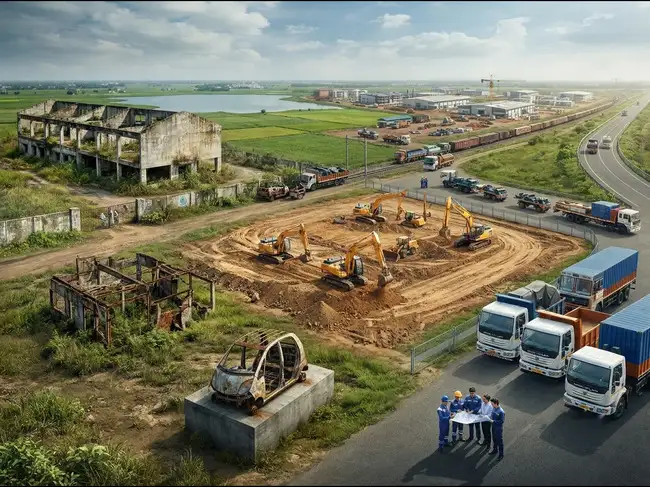
Nearly two decades after Tata Motors‘ controversial exit from Singur, the industrial township in West Bengal is once again drawing attention from the automotive industry. This time, the focus is on Ashok Leyland and the possibility of a fresh manufacturing chapter at a location that became one of India’s most prominent examples of the challenges surrounding land acquisition and industrial development.
The proposed revival carries considerable significance for West Bengal, but turning the announcement into a successful industrial project will not be straightforward. Rising land prices, fragmented ownership, funding uncertainties and the lack of an established supplier ecosystem could all affect the pace and viability of the project. For now, however, the developments offer an early indication that Singur’s industrial story may not be over.
Ghosts of 2008: Singur’s Unfinished Industrial Story
Singur became a national talking point in 2006 when Tata Motors selected the location for its ambitious Nano small-car project. The proposed factory was expected to turn the area into a major automobile manufacturing hub, bringing investment, employment and opportunities for local businesses.
However, the project soon became embroiled in protests over land acquisition. Farmers and political groups opposed the acquisition of agricultural land, triggering a prolonged political and legal dispute. The controversy eventually forced Tata Motors to withdraw from Singur in 2008 and shift the Nano project to Sanand in Gujarat.
The withdrawal was a major setback for West Bengal’s efforts to attract large-scale industrial investment. It also became a defining moment in the state’s industrial and political history, with Singur frequently cited in discussions about land acquisition, farmers’ rights and the challenges of establishing manufacturing projects.
Nearly 20 years later, the prospect of Ashok Leyland establishing an industrial presence in the region brings those memories back. However, the circumstances surrounding a potential new project are different, and its success will depend on whether the company can address the practical challenges that affected Singur’s earlier industrial ambitions.
Bengal’s Land Math: The Biggest Challenge for Singur 2.0
Land availability and ownership could be among the most important factors determining the future of the proposed project. Unlike a completely undeveloped industrial site, land in Singur carries a complicated history. Ownership patterns, land use and the expectations of local stakeholders could make assembling a suitable parcel more difficult than it would be in a conventional industrial park.
Rising land prices add another layer of uncertainty. The cost of acquiring or consolidating land can influence the overall project budget, particularly when a manufacturer requires a sizeable and continuous area for production facilities, logistics and supporting infrastructure.
Fragmented ownership could also complicate negotiations. If the required land is divided among multiple owners, reaching agreements may take considerable time. The process would need to account for ownership rights, compensation and local concerns before any substantial construction activity can begin.
For Ashok Leyland, the availability of suitable land at a commercially viable cost will be crucial. A manufacturing project must make financial sense over the long term, and land-related expenses can influence everything from initial investment requirements to future expansion plans.
What Singur’s Revival Could Mean for Ashok Leyland
A successful project in Singur could offer Ashok Leyland an opportunity to strengthen its manufacturing presence in eastern India. The region has the potential to serve markets across West Bengal and neighbouring states, while also creating opportunities for local businesses and employment.
However, the benefits would depend on the nature and scale of the proposed facility. An automotive manufacturing operation requires more than factory buildings and assembly equipment. It also needs reliable logistics, trained workers, component suppliers, quality-control systems and supporting infrastructure.
Developing these capabilities takes time. If the local supplier ecosystem is not sufficiently established, the company may need to source components from other regions, potentially increasing transportation costs and making production more complicated.
For Ashok Leyland, the decision will therefore involve balancing the advantages of a potential location against the costs of building an effective manufacturing ecosystem. The availability of skilled labour, access to suppliers, connectivity and the possibility of future expansion will all matter.
The project could also have wider implications for the company’s relationship with West Bengal. A successful investment would demonstrate that the state can attract and support large industrial projects, provided the necessary commercial and administrative conditions are in place.
Sweetening the Deal: What Could Make the Project Viable?
Government support could play an important role in making the proposed industrial development commercially attractive. Incentives, infrastructure assistance and a predictable approval process may help reduce the initial burden on the manufacturer.
However, financial incentives alone may not be enough. A company considering a major manufacturing investment will also look for clarity on land availability, infrastructure readiness, regulatory approvals and long-term operating costs.
For Singur, a transparent approach to land-related issues will be particularly important given the history of the Tata Motors project. Any new industrial development would need to address local concerns while ensuring that the land acquisition or allocation process is legally sound and commercially practical.
Infrastructure support could be another important part of the equation. Reliable road connectivity, power supply, water availability and logistics facilities would help reduce operational challenges. The development of supporting industrial services and supplier networks could further improve the project’s long-term prospects.
Employment opportunities will also be an important consideration for the local community. A manufacturing project can generate jobs directly at the facility and indirectly through transport operators, component suppliers, maintenance services and other businesses. The scale of these benefits, however, will depend on the eventual size and nature of the investment.
Road to Singur 2.0: Hype vs Hard Economics
The possibility of a new automotive project in Singur carries considerable symbolic value. After the Tata Nano factory’s exit in 2008, the location became associated with the difficulties of industrialisation in West Bengal. A fresh manufacturing initiative could help change that perception.
But symbolism and commercial viability are two different things. For the project to become a lasting industrial success, several conditions will need to come together. Land must be available at a reasonable cost, ownership-related complications must be resolved, funding must be secured and the necessary infrastructure must be developed.
The supplier ecosystem is another critical factor. Automotive manufacturing depends on a network of component makers, logistics providers and specialised service businesses. Without a strong local ecosystem, the cost and complexity of running a factory could increase, affecting its competitiveness.
There is also the question of timing. Even after land and investment arrangements are finalised, setting up a manufacturing facility involves multiple stages, including approvals, construction, equipment installation and production preparation. The pace of development will depend on how quickly these requirements are addressed.
For Ashok Leyland, the project must ultimately meet its manufacturing and business objectives rather than serve only as a symbolic return of industry to Singur. For West Bengal, the challenge is to create an environment in which investment can move from announcements to actual production.
Can Singur Get a Second Chance?
Singur’s industrial story is entering a potentially important new phase. Nearly two decades after the Tata Nano project was abandoned, the possibility of an Ashok Leyland-led manufacturing initiative has brought fresh attention to the region.
The opportunity is significant, but the challenges should not be underestimated. Land ownership, acquisition costs, funding, infrastructure and supplier availability will determine whether the proposed revival can translate into a functioning industrial operation.
For now, the development represents an early sign of renewed industrial interest in Singur. Whether it becomes a genuine manufacturing success will depend on the details of the project and the ability of the company and state government to turn the opportunity into a sustainable business proposition.
For breaking news and live news updates, like us on Facebook or follow us on Twitter and Instagram. Read more on Latest Automobile on thefoxdaily.com.






COMMENTS 0