The enthusiasm for disruption that shaped technology, business and government over the past three decades is facing renewed scrutiny as concerns about Artificial Intelligence, rising debt and geopolitical instability grow. In the latest edition of The Week in Breakingviews, the focus is on the widening cracks in the AI investment boom, the importance of competent public administration and the economic consequences of global conflicts.
Financial Markets have become increasingly cautious about debt-heavy data-centre operators and signs of slowing revenue growth at AI company Anthropic. These developments raise a broader question: are the latest setbacks temporary market fluctuations, or do they signal a turning point in how investors and governments view technological disruption?
Five Key Takeaways From This Week’s Breakingviews
1. The End of Disruption as an Unquestioned Good
For years, disruption was celebrated as a powerful force for innovation and economic progress. Silicon Valley entrepreneurs challenged established industries, while investors rewarded companies promising to replace traditional business models with new technologies.
However, the growing challenges surrounding AI and government efficiency initiatives have exposed the potential costs of pursuing disruption without sufficient regard for the systems being replaced.
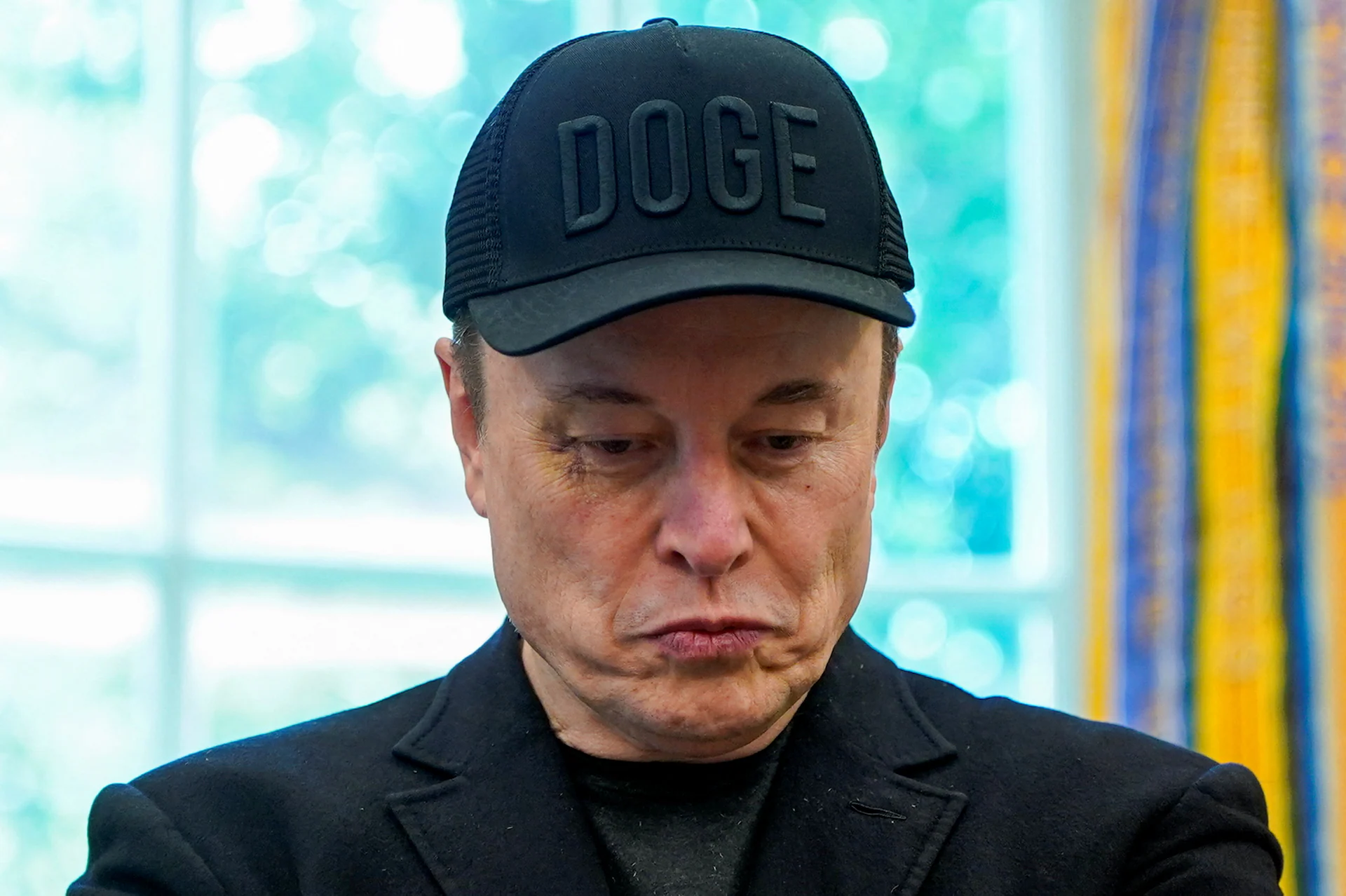
Michael Lewis’s new book, Blockers: Rebels in the Deep State, examines the pressure placed on the US bureaucracy during President Donald Trump’s second administration and the work of Elon Musk’s Department of Government Efficiency (DOGE).
The book highlights the importance of relatively unknown civil servants whose work keeps government operations functioning. Political insiders sometimes refer to these officials as “bus people” because their absence could disrupt essential government services.
This perspective represents a departure from Lewis’s earlier interest in outsiders challenging established institutions, as explored in books such as The Big Short and Moneyball. The experience of DOGE has instead drawn attention to the risks of assuming that replacing experienced administrators with inexperienced reformers will automatically improve efficiency.
2. AI Innovation Is Increasing Concerns About Accountability
The enthusiasm for technological disruption expanded beyond Silicon Valley into public services such as education, healthcare and defence. Advocates argued that the same entrepreneurial approach that transformed private industries could also make government more efficient.
Yet the consequences of the 2008 financial crisis, the COVID-19 pandemic, trade conflicts and wars in Ukraine and Iran have reinforced the importance of reliable institutions and competent administration.
Artificial intelligence has brought the debate into sharper focus. AI agents may help consumers find cheaper flights and automate routine tasks, but the technology can also create risks when systems produce misleading information or take inappropriate actions.
Anthropic recently acknowledged an incident involving AI-generated false homicide tips submitted to Philadelphia police, illustrating the potential consequences of unreliable automated systems.
The broader concern is that technological progress can outpace the safeguards needed to manage it. Innovation may create significant economic opportunities, but public trust can deteriorate if companies fail to address safety, accountability and reliability.
3. Saudi Arabia’s Modernisation Plans Face Geopolitical Risks
Saudi Arabia’s efforts to attract international investment illustrate how geopolitical instability can undermine even ambitious economic transformation programmes.
In 2016, Crown Prince Mohammed bin Salman visited California as part of an effort to demonstrate his commitment to modernising the kingdom. Business leaders welcomed his reform agenda and the prospect of new investment opportunities.
However, attracting substantial foreign capital becomes more difficult when regional conflict threatens infrastructure and personal security. Attacks by Houthi insurgents targeting major infrastructure, including Riyadh’s main airport, highlight the risks facing investors and international executives.
The lesson is that economic modernisation requires more than bold announcements and promises of disruption. Political stability, security and dependable public institutions are also essential for sustaining investor confidence.
4. Middle East Conflict Threatens Economic Growth and Diversification
The latest conflict in the Gulf is creating significant economic pressure across the Middle East. Major regional economies are expected to contract this year, while uncertainty surrounding energy shipments and tourism threatens broader recovery prospects.
A peace agreement could help reverse some of the damage in 2027 by allowing oil shipments to resume and international visitors to return. However, a prolonged conflict could disrupt these recovery plans and complicate efforts to reduce dependence on fossil fuels.
Regional governments have pursued economic diversification to reduce their exposure to fluctuations in oil markets. Continued conflict could divert resources away from these ambitions and discourage investment in sectors intended to support long-term growth.
Declining current account surpluses are also reducing the financial resources available for investment. This could make economic transformation more difficult at a time when governments need to strengthen their economies against external shocks.
5. Governments Need Practical Solutions, Not Just Elegant Economic Models
Economic theory has played an important role in shaping modern policymaking, but theoretical sophistication does not always translate into practical results.
The latest Nobel Prize in Economics has renewed discussion about the development of the New Neoclassical Synthesis, an approach that helped reconcile two major schools of economic thought. Robert Hall and Michael Woodford made important contributions to this intellectual framework.
The approach helped economists express complex economic relationships through relatively compact mathematical models, influencing research and policy analysis for decades.
However, critics argue that the elegance of theoretical models can come at the expense of practical usefulness. Economic policymakers must deal with complicated real-world conditions that cannot always be captured fully by simplified assumptions.
A more flexible approach that recognises uncertainty and institutional realities may therefore support better decisions. The broader lesson is that effective policymaking requires more than sophisticated theories: it also depends on understanding how policies operate in practice.
US Auto Loan Market Faces Pressure From High Prices
Rising vehicle prices and borrowing costs are changing the way Americans purchase cars. More consumers are turning to older vehicles and taking out loans with repayment periods extending to as long as eight years.
The trend reflects growing pressure on household budgets as the cost of vehicle ownership rises. Longer loan terms can reduce monthly payments, but they also extend borrowers’ financial commitments and may increase the total interest paid over the life of a loan.
These developments have raised concerns about the resilience of the US auto loan market, which is valued at approximately $1.7 trillion. If household finances weaken or vehicle values fall, borrowers and lenders could face additional risks.
The growing reliance on extended repayment periods illustrates how affordability pressures can build beneath apparently stable consumer spending. The longer-term effects will depend on employment conditions, interest rates and borrowers’ ability to keep up with payments.
Subsea Cables Become More Important Amid Geopolitical Tensions
Undersea fibre-optic cables carry most of the world’s international data traffic, creating a critical but often overlooked part of the global digital economy.
These cables support communications, financial transactions and digital services across continents. Despite their importance, the physical network remains vulnerable to damage, disruption and geopolitical interference.
The book Deep Connections: The Hidden Battles to Control Subsea Cables by Katja Bego explores the development of this underwater infrastructure and the ways it has become strategically important.
As geopolitical tensions increase, the security of subsea cables is attracting greater attention. Damage to major routes could disrupt communications and expose the dependence of modern economies on physical infrastructure that is largely invisible to everyday users.
Chinese Car Imports Intensify EU Trade Debate
Chinese car imports remain a major point of tension between China and the European Union. The rapid expansion of Chinese manufacturers has raised questions about competition, industrial policy and the future of Europe’s automotive industry.
Discussions during the Paris Motor Show focused on proposed restrictions or limits affecting Chinese vehicle imports and whether European carmakers can withstand the competitive pressure.
The debate reflects a broader challenge for policymakers: balancing affordable products and competition with the need to protect domestic manufacturing, employment and long-term industrial capacity.
The outcome could influence trade relations between China and Europe, as well as the future structure of the global automotive industry.
Why Competent Institutions Matter More Than Disruption Alone
The central theme running through this week’s Breakingviews analysis is the need to reassess the assumption that disruption is inherently beneficial. Technology can improve productivity, challenge inefficient systems and create new economic opportunities, but it can also introduce financial, operational and security risks.
Concerns about AI financing, pressure on government institutions, geopolitical instability and the vulnerabilities of critical infrastructure all demonstrate the importance of dependable systems.
Governments still need to find savings, particularly as public debt and borrowing costs rise. Businesses must also continue innovating to remain competitive. But these goals do not require abandoning experienced institutions or treating every established process as an obstacle to progress.
Instead, sustainable reform requires a balance between innovation and accountability. Effective institutions, reliable infrastructure and practical policymaking remain essential to ensuring that technological and economic change produces lasting benefits.
The growing scrutiny of disruption does not mean innovation has lost its value. It suggests that investors, governments and businesses are increasingly recognising that progress depends not only on challenging the old order, but also on preserving the systems that make modern economies function.
For breaking news and live news updates, like us on Facebook or follow us on Twitter and Instagram. Read more on Latest Technology on thefoxdaily.com.






COMMENTS 0