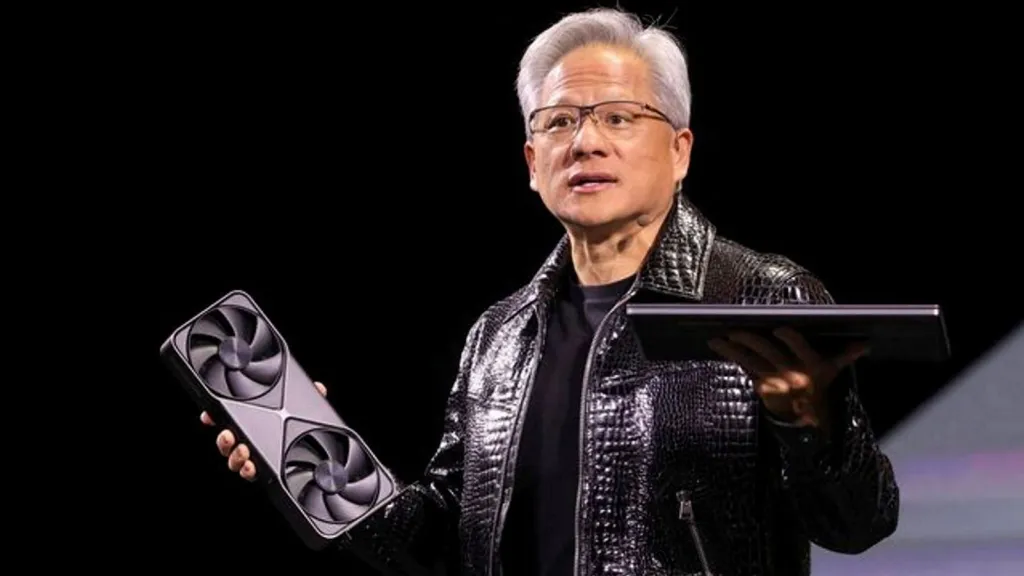
The sudden departure of Jensen Huang from Nvidia has triggered an unusual campaign across Silicon Valley. Technology executives, investors, current and former employees, shareholders and political leaders are calling on the semiconductor giant to reconsider its leadership decision and bring back the co-founder who helped transform it into one of the most influential companies in the Artificial Intelligence industry.
The online campaign, called Stand With Jensen, has attracted more than 190,000 signatures. Among its prominent supporters are Elon Musk, Uber co-founder Travis Kalanick and several influential technology investors. US President Donald Trump has also indicated that he would welcome Huang’s return.
OpenAI chief executive Sam Altman has added to the discussion by describing Huang as a hero and recognising his importance to the AI revolution. However, Altman has not explicitly demanded that Nvidia reinstate him. He said he did not know enough about the circumstances to decide whether Huang should return.
The campaign has turned what began as a corporate leadership crisis into a wider debate about founder influence, corporate governance, national security and America’s position in the global AI race.
Why Did Jensen Huang Leave Nvidia?
Jensen Huang co-founded Nvidia in 1993 and led the company for more than three decades. Under his leadership, Nvidia evolved from a graphics-processing hardware company into a major supplier of the advanced chips and computing infrastructure powering modern artificial intelligence.
His departure followed reports of extramarital relationships, including one involving a businesswoman identified as Alice Huang, who has been suspected by US authorities of having connections to Chinese intelligence. The allegations raised questions about potential national-security risks and the security of sensitive company information.
Huang acknowledged infidelity in an internal message to employees and apologised. Nvidia’s board had also announced an independent investigation into concerns surrounding the situation. The allegations involving possible intelligence links remain under investigation and should not be treated as established proof of espionage.
On November 12, Nvidia announced that Huang had resigned as president, chief executive and a member of the board, effective immediately. The company appointed its chief financial officer, Colette Kress, as interim CEO while beginning the search for a permanent successor.
The leadership change was particularly significant because Huang had become closely associated with Nvidia’s identity, strategy and relationships across the technology industry. His departure raised questions about whether the company could maintain the same direction without the founder who had led its expansion for 33 years.
Stand With Jensen Petition Crosses 190,000 Signatures
The Stand With Jensen campaign has become the most visible expression of support for Huang’s return. Its open letter asks Nvidia’s board to reinstate him while an independent investigation establishes the facts surrounding the controversy.
The petition argues that Huang should receive a fair process and that allegations should not be treated as established findings before the investigation is completed. It also asks the board to explain the reasons behind its decision and provide greater clarity about the inquiry.
The campaign’s supporters include current and former Nvidia employees, shareholders, business partners and technology industry figures. Its organisers say the company should recognise Huang’s contribution while ensuring that any decision about his future is based on evidence.
The petition’s signature count has continued to grow, crossing the 190,000 mark by November 17. However, the number of signatures does not establish that all signatories are verified Nvidia shareholders or employees. The campaign itself describes affiliations as self-reported.
Its growing reach nevertheless demonstrates the level of loyalty Huang has developed among sections of Nvidia’s workforce and the wider AI ecosystem.
Elon Musk Warns Nvidia Could Lose Important Business Deals
One of the most prominent supporters of Huang’s return is Elon Musk, the head of Tesla and SpaceX. Musk has argued that Nvidia’s founder played a crucial role in building the company’s supply chain and maintaining relationships with important business partners.
In a post on X, Musk suggested that some of Nvidia’s important commercial arrangements depended heavily on personal relationships with Huang rather than formal contractual commitments.
He warned that Nvidia could lose some of those relationships without its former chief executive at the helm. His argument highlights a potential weakness for companies whose business networks are closely connected to the influence and reputation of a single founder.
Nvidia operates within a complicated global ecosystem involving chip manufacturers, semiconductor equipment suppliers, cloud computing companies, data-centre operators and AI developers. Maintaining relationships across that network is essential to its ability to meet demand for advanced processors.
Musk’s comments reflect the concern that Huang’s departure could affect more than the company’s internal management. If business partners associate Nvidia’s long-term commitments with its founder, a sudden leadership change could create uncertainty about future investments and agreements.
However, the claim that specific deals will disappear without Huang remains Musk’s assessment, not an established outcome. Nvidia’s board and executive team will be responsible for demonstrating that the company can maintain those relationships under its new leadership.
Donald Trump Says He Would Welcome Huang’s Return
US President Donald Trump has also expressed support for Huang. Trump said he would not mind seeing the former chief executive return to Nvidia and suggested that Huang had learned an important lesson from the controversy.
Trump’s comments are significant because Nvidia occupies an important position in the United States’ technology and economic competition with China. Its processors are central to the development of advanced AI systems, data centres and high-performance computing infrastructure.
Huang has also maintained a prominent public relationship with the Trump administration, particularly over discussions concerning semiconductor manufacturing, US Technology leadership and access to the Chinese market.
His departure therefore has implications beyond Nvidia’s boardroom. It has become part of a wider discussion about how the United States should protect sensitive technology while maintaining its competitiveness in the global AI industry.
Trump’s willingness to see Huang return does not mean the White House can directly determine Nvidia’s leadership. The decision rests with the company’s board, which must consider its legal responsibilities, shareholder interests and the findings of the ongoing investigation.
Sam Altman Calls Jensen Huang a Hero but Avoids Taking Sides
OpenAI chief executive Sam Altman also commented on Huang’s departure during an appearance at the Semafor Silicon Valley & The World event on November 16.
Altman described Huang as a hero and said it was difficult to imagine the AI revolution without the company he had built. He also acknowledged that Huang had played an unusually important role in pushing the industry forward through his ambition and willingness to make large investments.
However, Altman did not explicitly call for Nvidia to reinstate Huang. When asked whether he believed the former chief executive should return, he said he did not know enough about the situation to answer.
Altman also said the wider AI industry would be fine without Huang at Nvidia’s helm. He pointed to strong demand for AI technology, growing revenues and the expanding use of AI products as reasons to believe the industry could continue developing despite the leadership change.
His comments reflected two positions at once: recognition of Huang’s exceptional contribution to the technology sector and caution about intervening in a corporate investigation without knowing all the facts.
Why Sam Altman Compared the Situation With His Own OpenAI Removal
Altman’s comments attracted additional attention because he experienced a dramatic leadership crisis at OpenAI in November 2023.
OpenAI’s board removed Altman as chief executive after raising concerns about his communication with the board. The decision triggered an internal revolt, with employees expressing support for him and threatening to leave the organisation.
Microsoft chief executive Satya Nadella offered Altman a position at the technology company, while negotiations over his future at OpenAI continued. Within days, Altman returned as CEO after a major restructuring of the company’s board.
The episode demonstrated how difficult it can be for a technology company to separate its founder or prominent chief executive from the organisation’s identity and commercial relationships.
Huang’s situation has invited comparisons because of his long leadership tenure and the importance of his personal influence. However, the circumstances are different. Altman was reinstated after an internal governance dispute, whereas Nvidia’s decision involves a resignation, reported personal relationships and an investigation with potential national-security implications.
The comparison also highlights a broader question facing technology companies: how much authority should a founder retain after building a business around a distinctive vision and leadership style?
Travis Kalanick Joins the Campaign to Bring Huang Back
Uber co-founder Travis Kalanick is another prominent supporter of Huang. His name appears among the signatories of the Stand With Jensen campaign, adding another high-profile technology entrepreneur to the effort.
Kalanick’s support is notable because he has experienced a major corporate leadership controversy himself. In 2017, he resigned as Uber’s chief executive following pressure from investors amid a series of controversies involving the company’s workplace culture and management.
His departure became one of Silicon Valley’s most prominent examples of a founder losing control of a company he had helped build. Kalanick’s support for Huang therefore adds another perspective to the debate over founder leadership, board accountability and the influence of investors.
The campaign’s wider argument is that a founder’s contribution should be considered alongside allegations and governance concerns, rather than being dismissed without a transparent process.
Why Nvidia’s Leadership Matters to America’s AI Competition With China
Nvidia’s position in the AI industry explains why Huang’s departure has attracted attention from business leaders and political figures. The company designs advanced graphics processing units and related technologies that power AI training, inference, scientific computing and large-scale data centres.
Its products are used by major cloud providers, technology companies, research institutions and governments. The company’s influence extends throughout the AI supply chain, making its leadership strategically important to the United States.
Washington has increasingly treated advanced semiconductors as a national-security priority. Restrictions on exports of certain high-performance chips to China are intended to limit access to technologies that could support advanced military and strategic capabilities.
Huang has historically argued for maintaining access to international markets, including China, while navigating US export restrictions. His position has sometimes differed from the views of policymakers who favour tighter controls on advanced semiconductor exports.
That debate has become more sensitive following the allegations involving Alice Huang and the investigation into possible national-security concerns. US authorities have not publicly established that Jensen Huang knowingly transferred sensitive information to a foreign government.
For Nvidia, the challenge is to maintain its global business while complying with US export-control rules and protecting confidential technology. The next chief executive will inherit this complex balance at a time when competition over AI infrastructure is intensifying.
Could Jensen Huang Actually Return to Nvidia?
Huang’s supporters have intensified their campaign, but the prospects of an immediate return remain uncertain. According to reports on November 16, Nvidia’s board was not considering reinstating him as chief executive.
The board has a responsibility to protect the company and its shareholders. Bringing Huang back before the investigation is complete could create legal, governance and reputational risks, particularly if questions about sensitive information or export-control compliance remain unresolved.
On November 17, however, Huang indicated that he would be willing to return if the board decided that his reinstatement was in the best interests of Nvidia, its employees, shareholders and the United States.
His statement adds a new dimension to the campaign. Until now, much of the public pressure had come from employees, investors and prominent business figures. Huang’s willingness to consider returning makes the question more direct, although it does not change the board’s authority to decide the company’s leadership.
The board is continuing its search for a permanent chief executive, with Colette Kress serving as interim CEO. Whether it changes course will depend on the investigation, its assessment of the company’s interests and the legal responsibilities of its directors.
What Happens to Nvidia if Huang Does Not Return?
Nvidia’s immediate challenge is to maintain business continuity during a leadership transition. The company has spent years building relationships with technology developers, cloud providers, manufacturers and governments. Those relationships will need to remain stable regardless of who becomes its permanent chief executive.
Colette Kress brings extensive experience as Nvidia’s finance chief, having served in that role since 2013. Her appointment provides continuity while the board evaluates potential candidates from inside and outside the company.
However, replacing Huang’s leadership will not be straightforward. His influence extended beyond financial management and corporate administration. He was closely associated with Nvidia’s product strategy, developer ecosystem, public image and long-term AI ambitions.
The company must now demonstrate that its business model and strategic direction can operate effectively without relying on one individual. At the same time, it will need to reassure employees and partners that its research, investment and product commitments remain intact.
A Founder, a Corporate Board and the Future of the AI Industry
The campaign to bring Jensen Huang back to Nvidia reflects the unusual influence that technology founders can develop over the companies they create. For supporters, his 33-year contribution and role in building Nvidia’s AI business justify giving him an opportunity to return after a fair investigation.
For the board, the decision involves a different set of responsibilities. It must consider corporate governance, national-security concerns, shareholder interests and the potential consequences of reinstating a leader whose departure followed serious allegations.
Elon Musk’s warnings about business relationships, Trump’s public support, Travis Kalanick’s backing and the growing petition demonstrate the strength of the campaign. Sam Altman’s comments, meanwhile, show that admiration for Huang’s contribution does not necessarily translate into an endorsement of his return.
Huang has now made clear that he would consider returning if Nvidia’s board asks him to do so. But the final decision remains with the company, and the board’s reported position suggests that a comeback is far from assured.
Ultimately, the controversy is about more than one executive’s future. It raises questions about how much a technology giant should depend on its founder, how corporate boards should respond to national-security concerns and whether the person who built an AI powerhouse can remain indispensable to its future.
For breaking news and live news updates, like us on Facebook or follow us on Twitter and Instagram. Read more on Latest World on thefoxdaily.com.





COMMENTS 0