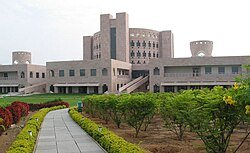
The Indian School of Business (ISB) could have been established in Delhi or Mumbai. In fact, Delhi was the founders’ first preference, while Mumbai emerged as the frontrunner because of the business connections of the industrialists involved in the project. However, an unexpected dispute over land costs and proposed admission and employment reservations in Maharashtra eventually redirected the institution towards Hyderabad.
As ISB marks 25 years since its establishment, its founding dean, Dr Pramath Raj Sinha, and current dean, Professor Madan Pillutla, have reflected on the institution’s beginnings, the challenges of building a world-class business school in India and the changing role of management education.
Their recollections reveal how the founders navigated regulatory restrictions, approached state governments, secured international academic partnerships and introduced a one-year MBA programme at a time when the established model of management education in India was largely different.
They also believe the MBA will remain relevant despite the rapid expansion of Artificial Intelligence (AI), although business schools will have to change what they teach and how they assess students.
Why Delhi Was the First Choice for ISB Founders
The idea of establishing ISB emerged during the late 1990s, when India’s economy was undergoing significant changes following the liberalisation reforms of 1991. Multinational companies were expanding their presence, domestic businesses were growing and the technology sector was beginning to create new opportunities.
At the time, India’s established management institutions, including the older Indian Institutes of Management (IIMs), had relatively small student batches. The founders believed the country’s changing economy would require a much larger pool of professionally trained managers.
The initial idea came from B S Raju, then director of IIT Delhi. He approached Rajat Gupta, the global managing director of McKinsey and an alumnus of the institution, to explore the possibility of establishing a business school within IIT Delhi.
Gupta’s connections with leading international management institutions, including Harvard Business School, Kellogg School of Management and the University of Chicago Booth School of Business, helped bring together business leaders and academics interested in creating a world-class management school in India.
Pramath Raj Sinha, who was then working at McKinsey, became part of the founding group. The ambition was to establish an institution with the freedom to select its students, determine its fees and offer competitive salaries to faculty members.
However, the founders soon encountered regulatory obstacles. Establishing the business school within the IIT system would have required it to follow existing salary structures and admission procedures. Those restrictions conflicted with the founders’ vision of an independent institution with greater academic and administrative flexibility.
Delhi therefore lost its initial advantage, and the group began exploring other possibilities.
Why Mumbai Became the Frontrunner
Mumbai emerged as a natural alternative because several prominent industrialists involved in the project had strong business connections in the city. The founders also believed the surrounding region could provide an appropriate location for the proposed institution.
According to Sinha, Gurugram was still in an early stage of development and had not yet become the corporate hub it is today. Although land was available there, the founders eventually secured a sizeable parcel in the Mumbai region through a state agency.
Initial negotiations appeared promising, but the project encountered an unexpected financial hurdle when the final land agreement was being prepared.
The estimated cost of the land increased sharply after development charges were included. Sinha recalled that an initial estimate of approximately Rs 15-16 crore rose to around Rs 40-42 crore.
The increase surprised members of the board, prompting the delegation to approach then Shiv Sena chief Bal Thackeray in an attempt to resolve the issue.
Bal Thackeray’s Reservation Proposal Changed the Mumbai Plan
The delegation that met Thackeray included prominent industrialists such as Rahul Bajaj, Adi Godrej, Anand Mahindra and Anil Ambani. Sinha was not part of the meeting but recalled the events based on what followed.
Thackeray was reportedly meeting party members when the delegation arrived, with journalists from a newspaper also present. During the meeting, he announced conditions for the proposed institution that included reservations for local residents.
According to Sinha’s recollection, the proposed conditions included:
- 100 per cent of staff positions reserved for Maharashtrians.
- 50 per cent of faculty positions reserved for Maharashtrians.
- Approximately 25 per cent of student admissions reserved for Maharashtrians.
The delegation was reportedly taken aback. Initially, some members believed the announcement was political grandstanding. However, the statement appeared on newspaper front pages the following day, turning the proposal into a public political issue.
Sinha said that once Thackeray had made the announcement publicly, withdrawing it became difficult. For the founders, the proposed conditions were incompatible with their objective of building an institution that would recruit students and faculty members on merit.
Rahul Bajaj reportedly suggested considering a location near Pune, closer to a Bajaj Group factory. However, that would still have meant establishing the institution within Maharashtra, leaving the founders with the same broader uncertainty.
The group subsequently wrote to chief ministers across India to explore alternative locations. The approach also carried the hope that the possibility of moving the project elsewhere might encourage the Maharashtra government to resolve the disagreement. That did not happen.
How Hyderabad Won the Competition Against Bengaluru and Chennai
Several state governments responded to the founders’ approach. After considering the available proposals, the group shortlisted Bengaluru, Hyderabad and Chennai.
The delegation travelled to Hyderabad with senior Indian Administrative Service officers to inspect a proposed site. The visit included an unexpected breakfast meeting with then Andhra Pradesh chief minister N Chandrababu Naidu that left a lasting impression on the visitors.
After the site visit, the delegation was expected to continue to Bengaluru and Chennai. Instead, its bus was diverted to Naidu’s residence, where the chief minister personally welcomed the group.
Naidu, his wife and household staff served breakfast to the visitors. Sinha recalled that Naidu knew the delegation had left Mumbai early in the morning and wanted to ensure they had eaten.
Despite the household being vegetarian, eggs were arranged for visitors who wanted them. After breakfast, the delegation expected to resume its journey, but Naidu took the group into another room for a detailed presentation and discussion covering areas such as education and agriculture.
The hospitality and the seriousness of the state’s presentation made an impression on the founders. Hyderabad was not simply offering land; its leadership was actively trying to persuade the group that the city could support the proposed institution.
Why Bengaluru and Chennai Lost the Final Race
The delegation also travelled to Bengaluru, where it met then Karnataka chief minister S M Krishna. According to Sinha’s recollection, the chief minister was reportedly unhappy about the delay and asked the visitors directly what they wanted.
The group subsequently travelled to Chennai to meet then Tamil Nadu chief minister J Jayalalithaa. The delegation was offered a lakeside location, but the visit took place during the monsoon season, when the proposed site was muddy.
Sinha recalled that the contrast between the Hyderabad and Chennai locations influenced the group’s thinking. Hyderabad appeared greener and offered a more attractive setting for the institution.
The founders eventually favoured Hyderabad, although the decision involved placing considerable confidence in the city’s future development.
At the time, Hyderabad had not yet developed into the major technology and business centre it is today. Cities such as Pune, Ahmedabad, Bengaluru and Chennai featured more prominently in India’s economic landscape.
The founders were effectively making a long-term bet on Hyderabad’s potential. The city’s subsequent growth, particularly its expanding technology and corporate ecosystem, would strengthen the case for the decision.
Building ISB Without an Established Academic Reputation
Selecting Hyderabad solved the location question, but establishing a credible business school presented another major challenge. ISB had no established academic reputation, alumni network or history of successful graduates to attract students.
The founders faced a classic chicken-and-egg problem. Prospective students wanted evidence that the institution could deliver a high-quality education, while established academics were reluctant to leave secure positions at recognised universities to join a school that had yet to prove itself.
Rather than immediately recruiting a large permanent faculty, ISB introduced a visiting faculty model for its first year. The institution invited leading academics from international business schools to teach its initial students.
The strategy helped build academic credibility without requiring the school to convince established professors to relocate permanently at the outset.
The visiting faculty approach continues to be part of ISB’s academic structure. According to the figures shared by the deans, approximately 40 per cent of courses are taught by visiting faculty, while permanent faculty members handle the remaining 60 per cent.
How International Partnerships Helped Establish ISB
International academic partnerships played an important role in the institution’s early development. Kellogg School of Management and the Wharton School were among ISB’s initial academic partners, while London Business School joined later.
Professor Sumantra Ghoshal of London Business School was closely involved in the school’s formative years and was initially expected to become its dean.
His association with the project also helped connect ISB with Madan Pillutla, who was then working at London Business School. Pillutla began teaching at ISB during its first year without leaving his position in London. He eventually moved to Hyderabad in 2021 and became the institution’s dean.
The founders also used the school’s first brochure to communicate its ambitions. Photographs of internationally recognised academics and references to global academic partnerships helped demonstrate that the institution was building relationships with established names in management education.
ISB even conducted its first classes before the campus was completely ready. The priority was to establish the academic programme and attract students rather than wait for every aspect of the physical infrastructure to be completed.
The institution initially hoped to attract students from India and overseas. Its first batch included two or three international students, although international enrolment did not eventually reach the scale the founders had originally envisaged.
ISB’s First MBA Batch Had 128 Students From Diverse Backgrounds
ISB welcomed its first batch of approximately 128 students in 2001. The group was notable for its professional diversity, with students coming from backgrounds that extended well beyond engineering, finance and conventional business roles.
According to Sinha’s recollections, the first batch included a former Kargil serviceman, a doctor, an architect, a former fashion model and a bank manager who had spent 11 years managing a State Bank of Patiala branch in Jalandhar.
It also included a woman who had been the first female shop-floor engineer appointed at Tata Motors.
Women accounted for approximately 16 per cent of the first batch, according to the figures shared during the conversation.
The diversity reflected the institution’s emphasis on professional experience and different perspectives. Rather than primarily admitting students directly after graduation, ISB designed its programme for people who had already spent time working in their respective fields.
This approach was central to its decision to introduce a one-year, post-experience MBA programme.
Why ISB Chose a One-Year MBA Programme
At the time of its launch, ISB’s one-year MBA programme was a significant departure from the conventional management education model in India. Many established institutions offered two-year postgraduate programmes, often admitting students relatively early in their professional careers.
ISB instead targeted working professionals who wanted to strengthen their management capabilities or move into different corporate roles.
The approach attracted criticism, partly because the institution was new, its fees were relatively high and its campus was in Hyderabad rather than an established education or business centre.
Prospective students had to assess whether a one-year programme at an unfamiliar institution could provide an education comparable to that offered by established business schools.
The founders believed, however, that India’s changing economy created an unmet demand for experienced managers. The economic reforms of 1991 had accelerated the entry of multinational companies and encouraged the expansion of Indian businesses, increasing the need for professionals with management and leadership skills.
The capacity of leading business schools had not expanded at the same pace as the demand for management graduates. ISB’s programme was designed to address that gap by providing an intensive management education to professionals who already had workplace experience.
Why ISB’s Dean Calls the MBA a Pivot Degree
Twenty-five years after ISB’s launch, the relevance of an MBA is again being questioned. This time, the debate is being driven by artificial intelligence, specialised professional courses and changes in the skills employers expect from management graduates.
Current dean Madan Pillutla believes the MBA continues to serve an important purpose because it can help professionals change careers and move into management positions.
He describes the qualification as a “pivot degree”, explaining that it can help people move from one profession or specialisation into a different corporate role.
An MBA can provide employers with access to candidates who have analytical, problem-solving and leadership skills, even when their undergraduate education is unrelated to the positions they are seeking.
For example, a professional with a background in engineering, medicine or another specialised field may use management education to transition into business leadership, strategy or other corporate functions.
Pillutla believes general management programmes will remain relevant even as specialised courses in areas such as data analytics, sustainability and AI become more popular.
ISB has also chosen not to introduce undergraduate management programmes similar to those offered by some other institutions. Instead, it intends to concentrate on postgraduate education and doctoral training.
How Artificial Intelligence Is Changing What ISB Teaches
Artificial intelligence is changing both the content of management education and the methods through which students learn. Pillutla identifies two broad areas of impact: teaching students how to understand and use AI, and using AI itself to improve the educational experience.
The first involves integrating AI into existing management disciplines rather than treating it as a completely separate subject. Marketing students, for example, need to understand the tools used in their profession and how AI is changing consumer behaviour, business strategies and industry operations.
The same applies to finance and other management disciplines. Students need to understand how emerging technology affects decision-making and the responsibilities associated with their future roles.
The second area involves using AI to improve teaching and learning. ISB’s Centre for Learning and Teaching Excellence is helping instructors explore ways to incorporate the technology into classroom education, including the possibility of providing more personalised feedback to students.
This approach reflects a shift from simply teaching students about AI tools to examining how the technology can support learning and improve the overall educational experience.
ISB Is Changing Its Assessment Methods as Students Use AI
The growing availability of generative AI has also forced business schools to reconsider conventional assignments and examinations. Students can now use AI tools to prepare written responses, conduct research and complete tasks that were traditionally used to assess individual understanding.
Pillutla said he changed the assessment approach in one of his courses after noticing that students were using AI to complete assignments.
Instead of relying on conventional written submissions, students are now asked to research a company or business problem before attending class. They can use AI and other resources during preparation, but their understanding is tested through live classroom discussions.
During these discussions, students must respond to questions, explain their reasoning and demonstrate that they understand the issues they have researched.
ISB has also experimented with AI in practical management exercises. In a negotiation course, students have been asked to negotiate with an AI bot. Their performance is assessed not only on the final outcome but also on the strategies, preparation and negotiation techniques they use.
The objective is not to prevent students from using AI. Instead, the emphasis is on ensuring they understand how to use the technology effectively, responsibly and ethically.
Will AI Make the One-Year and Two-Year MBA Irrelevant?
Despite the rapid development of AI, Pillutla does not believe the MBA will become irrelevant. He expects management education to undergo significant changes, but argues that both one-year and two-year formats can continue to serve different needs.
The value of an MBA will increasingly depend on the quality of its academic experience, the relevance of its curriculum and its ability to prepare students for changing business environments.
AI may automate certain routine tasks and change the skills required in several professions, but management education also focuses on leadership, analytical thinking, problem-solving, communication and decision-making.
These capabilities remain important when organisations must evaluate complex situations, manage teams and make strategic choices.
For business schools, the challenge is to adapt teaching and assessment methods without losing the broader purpose of management education.
ISB’s 25-Year Journey From an Ambitious Idea to a Major Business School
ISB’s establishment in Hyderabad was the result of several decisions that did not initially appear inevitable. Delhi was the founders’ first preference, Mumbai emerged as the early frontrunner, and Hyderabad eventually won after negotiations in Maharashtra stalled.
The institution’s early success also depended on its willingness to depart from conventional models. The visiting faculty approach helped build academic credibility, international partnerships strengthened its profile, and the one-year MBA programme targeted experienced professionals rather than following the traditional admission model.
Twenty-five years later, the questions facing ISB are different. The challenge is no longer simply establishing a credible business school but ensuring that its programmes remain relevant as technology transforms businesses and professional careers.
The views of its founding and current deans suggest that the institution intends to preserve the core purpose of management education while changing its methods. Just as the founders adapted the traditional MBA model to meet India’s post-liberalisation needs, the next phase of ISB’s development will depend on how effectively it responds to the demands of an AI-driven economy.
For breaking news and live news updates, like us on Facebook or follow us on Twitter and Instagram. Read more on Latest Education on thefoxdaily.com.






COMMENTS 0