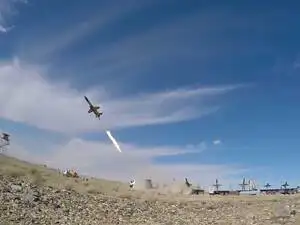
The United States has issued a fresh security warning for Americans living in or travelling across the Middle East, citing an increased risk of armed attacks by Iranian-supported Houthi forces and possible Iranian operations targeting US government personnel and facilities. The advisory, circulated through American diplomatic missions on November 24, 2026, also warns of potential airspace closures, flight cancellations and sudden travel disruptions as hostilities continue across the region.
The warning comes amid a series of attacks involving Iran, its regional allies and countries hosting American military or diplomatic interests. Washington said Iran had previously launched attacks against US assets in Bahrain and Kuwait, while Iranian-supported Houthis had carried out operations against Saudi Arabia, including attacks on civilian airports and critical infrastructure.
One of the latest incidents involved an attack on a tower at the Financial Centre in Riyadh, Saudi Arabia. According to the Saudi Civil Defence authorities, 11 people were injured, including two Indian nationals. The incident has added to concerns about the vulnerability of civilian infrastructure as regional hostilities intensify.
For American citizens, the latest advisory is a warning that the security situation could change quickly, even in places not directly involved in military operations. The State Department has asked travellers to monitor official alerts and remain prepared for changes to flights, airport operations and local security conditions.
What the US State Department’s Latest Middle East Warning Says
In security messages distributed through several US embassies, the State Department urged American citizens to exercise heightened vigilance because of the increased threat of armed attacks by Iranian-supported Houthis and Iranian efforts to target US government officials and facilities in the region.
The department specifically highlighted the possibility of security alerts, flight cancellations, airspace closures and other travel disruptions. It also warned that the hostilities could escalate rapidly, making it important for Americans to remain aware of developments in the countries where they are staying.
The advisory reflects two connected security concerns. The first involves the threat posed by Houthi forces operating in the region, particularly their attacks against Saudi targets. The second concerns Iran’s efforts to target American personnel and facilities, including assets located in countries that maintain close security relationships with Washington.
Rather than limiting its warning to one country, the State Department communicated the alert through multiple diplomatic missions. This reflects the regional nature of the security concerns, as attacks and retaliatory actions can affect neighbouring countries, international transport routes and diplomatic operations.
The warning does not mean that every American citizen or every location in the Middle East faces an immediate attack. However, it indicates that US officials consider the threat environment serious enough to require additional caution and closer monitoring.
Riyadh Financial Centre Attack Injures 11, Including Two Indians
The latest warning follows an attack on a tower at the Financial Centre in Riyadh, the capital of Saudi Arabia. Saudi Arabia’s General Directorate of Civil Defence said the building had been targeted in what it described as a terrorist attack by Yemen’s Houthi militia.
The incident left 11 people injured. The injured included two Saudi citizens, two Indian nationals, three Nepalese nationals and four Egyptian nationals, according to the Saudi authorities.
The involvement of Indian nationals has drawn particular attention in India, which has a large expatriate workforce across Saudi Arabia and other Gulf countries. Many Indian citizens work in construction, healthcare, hospitality, technology, transport and other sectors throughout the region.
Although the reported injuries involved people of several nationalities, the incident demonstrates how attacks on infrastructure can affect foreign workers and residents who may have no direct connection to the military or political disputes taking place around them.
Saudi authorities described the incident as a Houthi attack. The US State Department has separately cited Houthi hostilities against Saudi Arabia, including attacks on civilian airports and other critical infrastructure, as part of the reason for its heightened security warning.
The Riyadh incident also highlights the risks faced by major urban and commercial centres. Financial districts, transport facilities, airports and energy infrastructure are essential to everyday economic activity. When such locations become targets, the consequences can extend beyond immediate physical damage to include business interruptions, emergency restrictions and travel uncertainty.
Why the United States Is Concerned About Iranian-Backed Houthis
The Houthis, formally known as Ansar Allah, are an armed political and military movement that emerged in Yemen. The group controls significant territory in the country, including the capital, Sanaa, and has been involved in a prolonged conflict with Yemen’s internationally recognised government and its regional opponents.
Iran has provided political, military and other forms of support to the Houthi movement. The relationship has made the group an important part of the wider network of armed organisations associated with Tehran across the Middle East.
Houthi forces have used missiles and drones in operations against regional targets. Their activities have included attacks affecting Saudi Arabia and commercial shipping in strategically important waterways. Such operations have raised concerns about the security of civilian infrastructure and international trade routes.
Saudi Arabia has been a major target of Houthi attacks because of its involvement in the Yemen conflict and its position as a key regional rival of the movement. Although the intensity of fighting has changed over time, the threat of renewed attacks remains a security concern for the kingdom.
For Washington, the issue is broader than the security of Saudi Arabia alone. The United States maintains military personnel, diplomatic facilities and strategic interests across the Gulf. Attacks against regional partners or infrastructure can create risks for American citizens, government facilities and military assets.
The latest warning therefore places Houthi activity within a wider regional security picture involving Iran, Saudi Arabia and the United States.
Iranian Attacks on US Assets in Bahrain and Kuwait Add to Security Concerns
The State Department also referred to previous Iranian attacks targeting US assets in Bahrain and Kuwait. These incidents have contributed to concerns about the safety of American personnel and facilities across the Gulf region.
Bahrain occupies an important position in US military operations because it hosts the headquarters of the US Navy’s Fifth Fleet. The fleet is responsible for naval operations across a large area that includes the Persian Gulf, the Red Sea and parts of the Indian Ocean.
Kuwait is also strategically important to the United States, serving as a location for American military facilities and logistical support connected to regional operations.
Attacks involving these countries have implications beyond the immediate locations. The Gulf is home to major energy infrastructure, international shipping routes and military facilities used by several countries. Any escalation that threatens these assets can affect commercial activity, transport and regional security.
The State Department’s warning suggests that Washington is concerned about the possibility of further attacks against American interests, whether directly from Iran or through regional armed groups.
It is important to distinguish between the different threats described in the advisory. The department referred separately to Iranian attacks against US assets and Houthi operations against Saudi targets. Although Iran and the Houthis have a close relationship, the warning does not establish that every attack attributed to the Houthi movement is directly ordered by Tehran.
Why Americans Could Face Flight Cancellations and Airspace Closures
One of the most immediate concerns highlighted by the State Department is the possibility of travel disruption. The advisory specifically mentions flight cancellations, airspace closures and security alerts that could affect Americans moving across the region.
Airspace restrictions are often introduced when military activity, missile threats or other security risks make civilian aviation unsafe. Airlines may cancel services, reroute aircraft or temporarily suspend operations if authorities determine that particular flight paths have become dangerous.
Such decisions can affect passengers even when their departure or destination airport has not been directly attacked. International flights connecting Europe, Asia and Africa frequently pass through or near Middle Eastern airspace, meaning regional restrictions can have wider consequences for global aviation.
For travellers, the impact may include missed connections, longer journeys, unexpected accommodation costs and difficulties arranging alternative flights. People travelling for business or returning home may also face uncertainty if airlines change schedules at short notice.
Airports and airlines generally make operational decisions based on security assessments and instructions from aviation authorities. Consequently, travellers should not assume that a scheduled flight will operate normally during a rapidly changing security situation.
The State Department’s warning is particularly relevant to Americans who are planning journeys through major Gulf aviation hubs or travelling between countries where security alerts have been issued.
What Americans in the Middle East Are Being Advised to Do
The central instruction from the US government is to remain vigilant and monitor official security information. The State Department has urged Americans to pay attention to local developments and prepare for the possibility that conditions could change quickly.
For citizens living in or travelling through the region, several precautions are particularly important:
- Monitor official alerts: Follow security messages issued by the nearest US embassy or consulate and check the State Department’s country-specific travel information.
- Check flight information regularly: Contact airlines and monitor airport announcements for cancellations, schedule changes and possible airspace restrictions.
- Stay aware of local conditions: Pay attention to announcements from local authorities and avoid areas where security incidents or demonstrations are taking place.
- Maintain emergency contacts: Keep important telephone numbers, travel documents and emergency information accessible in case normal communication services are disrupted.
- Prepare alternative travel arrangements: Consider the possibility of delayed departures, cancelled connections or changes to planned routes.
- Follow instructions from authorities: If local officials or diplomatic missions issue specific safety instructions, follow the guidance applicable to the location.
Americans should also understand that security conditions can differ significantly between countries and even between cities within the same country. A regional warning does not replace individual travel advisories, which provide more detailed information about local risks.
The State Department has directed citizens to consult the latest country-specific alerts rather than relying only on general regional updates.
How the Escalating Threat Could Affect Indian Nationals in the Gulf
Although the latest advisory is directed at American citizens, the security situation has implications for people from other countries who live and work across the Middle East. Indian nationals are among the largest expatriate communities in the Gulf, with millions of people employed in countries including Saudi Arabia, the United Arab Emirates, Kuwait, Qatar, Bahrain and Oman.
The injury of two Indian nationals in the Riyadh Financial Centre attack has brought the risks into sharper focus for Indian families and workers. The incident shows that civilian residents and employees can be affected when attacks reach commercial and urban areas.
For India, developments across the Gulf are important for several reasons. The region is a major destination for Indian workers, an important source of remittances and a critical supplier of energy resources. Any prolonged security crisis could affect employment, travel, trade and the movement of people between India and Gulf countries.
Travel disruptions could also affect Indian passengers using regional airports as transit points for journeys to Europe, North America and other destinations. If airspace restrictions expand, airlines may need to change routes or cancel services, potentially affecting passengers who are not travelling to conflict-affected locations.
Indian nationals in the region should therefore monitor announcements from their respective Indian embassies and local authorities. They should also follow airline instructions and avoid spreading unverified information about attacks or security developments.
The reported injuries in Riyadh do not establish that Indian nationals are facing a uniform threat across the Gulf. However, they underline the importance of staying informed and following local safety guidance.
Why the Middle East Security Situation Could Escalate Further
The latest warning comes at a time when regional hostilities involve several overlapping security concerns. Iran’s confrontation with the United States, the activities of armed groups aligned with Tehran and the continuing instability surrounding Yemen have created multiple potential points of escalation.
When attacks affect military facilities, civilian airports or critical infrastructure, governments may respond with additional security measures or military action. Such responses can create further uncertainty, particularly when several countries are involved in the same regional confrontation.
The risks are not limited to direct military exchanges. Diplomatic missions may restrict operations, airlines may alter flight schedules and governments may advise citizens to avoid certain locations. Commercial shipping and energy infrastructure can also face increased security pressure.
The State Department’s warning that hostilities could escalate rapidly reflects the difficulty of predicting how these developments may unfold. An attack in one country can influence security decisions elsewhere, especially when the countries involved have military partnerships or strategic interests across the region.
However, the advisory should not be interpreted as confirmation that a wider conflict or a new wave of attacks is inevitable. It is a precautionary warning based on the threats and incidents identified by US officials.
What the Warning Means for US Diplomatic and Military Presence
American diplomatic missions across the Middle East play an important role in assisting US citizens, maintaining relations with regional governments and coordinating official activities. When threats increase, embassies may introduce additional security restrictions or change the way they operate.
Such measures can include limiting public access, reducing non-essential activities, changing staff arrangements or issuing more frequent security messages. These steps are intended to reduce exposure to potential attacks while allowing essential diplomatic functions to continue.
The United States also maintains a significant military presence in the region through bases, naval deployments and partnerships with local governments. These facilities support operations related to maritime security, regional stability and the protection of American interests.
Threats against US assets in Bahrain and Kuwait therefore carry implications for Washington’s wider regional posture. Any change in the security environment could influence how American officials manage personnel, facilities and military operations.
For ordinary American citizens, the most visible effects may be embassy alerts and travel restrictions. For US officials, however, the challenge involves protecting diplomatic and military infrastructure while responding to a security environment that can change quickly.
What Happens Next?
The immediate focus will be on monitoring the security situation across the Gulf and determining whether additional attacks occur against American interests or regional infrastructure. US diplomatic missions are expected to continue issuing country-specific updates as officials assess potential threats.
Saudi Arabia will also face pressure to protect civilian and commercial facilities following the Riyadh incident. The injuries reported at the Financial Centre have highlighted the potential consequences of attacks reaching populated urban areas.
For travellers, the coming days could bring further changes to airline schedules and security arrangements if regional tensions intensify. Americans and other foreign nationals should rely on official government announcements, airline notifications and local emergency instructions when making travel decisions.
The latest US warning is a reminder that the security consequences of the Iran-related confrontation extend beyond military installations and political leadership. Civilian infrastructure, international aviation, foreign workers and ordinary residents can all be affected by the wider regional crisis.
With two Indian nationals among the injured in Riyadh and Washington warning of possible attacks against its personnel and facilities, the situation remains a concern for governments and expatriate communities across the Middle East. Whether the threat increases further will depend on developments involving Iran, the Houthis, Saudi Arabia and the United States in the days ahead.
For breaking news and live news updates, like us on Facebook or follow us on Twitter and Instagram. Read more on Latest World on thefoxdaily.com.





COMMENTS 0