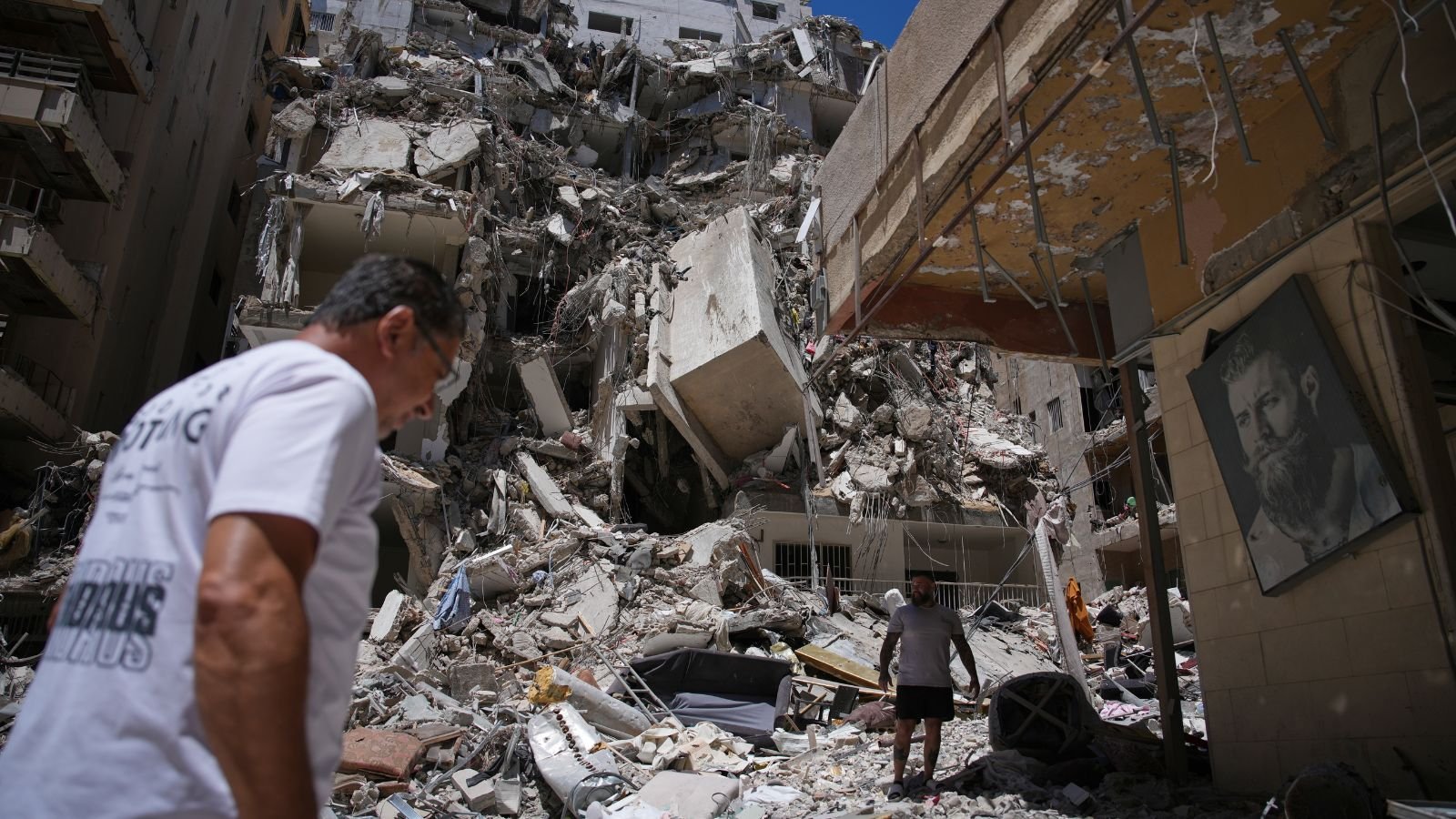
The Middle East‘s path toward stability has encountered another serious obstacle after Israeli strikes targeted multiple locations in southern Lebanon despite reports suggesting a ceasefire was being negotiated. The attacks, which reportedly killed at least seven people and left others trapped under rubble, have intensified concerns that local conflicts could derail broader diplomatic efforts unfolding across the region.
The violence comes at a particularly sensitive moment. A recently signed US-Iran memorandum created cautious optimism about de-escalation in West Asia, reopened critical energy routes, and established a framework for future negotiations. However, the continuing confrontation between Israel and Hezbollah demonstrates how difficult it remains to translate diplomatic agreements into lasting peace on the ground.
As international mediators scramble to prevent further escalation, the latest developments underscore a central reality of Middle Eastern Geopolitics: resolving one conflict rarely guarantees stability across the broader region.
What Happened in Southern Lebanon?
According to reports from Lebanon, Israeli strikes hit multiple locations in the Nabatiyeh region and surrounding villages in southern Lebanon.
The attacks occurred shortly after reports circulated that mediators were making progress toward restoring a ceasefire between Israel and Hezbollah.
Among the reported casualties were:
- Two children.
- Members of the same family.
- A Lebanese soldier.
- Several civilians in affected villages.
Local authorities also indicated that additional victims remained trapped beneath collapsed structures following the strikes.
The renewed violence followed a deadly exchange of attacks that had already caused significant casualties on both sides during the previous day.
Why the Fighting Continues Despite Ceasefire Reports
One of the most important details emerging from the situation is that reports of a ceasefire and the existence of an actual ceasefire are not necessarily the same thing.
While diplomatic channels have reportedly been working toward an agreement, neither side appears fully convinced that the conditions for a lasting truce have been met.
Israel maintains that military operations remain necessary in response to attacks originating from southern Lebanon.
Meanwhile, Hezbollah insists that its military actions are tied to Israel’s continued military presence in parts of Lebanon.
This creates a familiar dilemma:
- Israel wants Security guarantees before withdrawing.
- Hezbollah wants withdrawal commitments before ending attacks.
- Mediators struggle to bridge the gap.
Such conditions often make ceasefires extremely difficult to implement even when political leaders express support for de-escalation.
The Bigger Story: Why Lebanon Matters to US-Iran Diplomacy
Many observers initially viewed the recent US-Iran memorandum as primarily focused on nuclear negotiations and regional security.
However, Lebanon has emerged as one of the most significant testing grounds for whether the broader diplomatic process can succeed.
The agreement was designed to create conditions for reducing tensions throughout the region, not merely between Washington and Tehran.
As a result, continuing violence in Lebanon threatens to undermine confidence in the entire diplomatic framework.
Diplomatic breakthroughs are often judged not by what is written on paper but by what happens on the battlefield afterward.
If hostilities continue despite commitments to de-escalation, skepticism about the agreement’s effectiveness naturally increases.
The Israel-Hezbollah Conflict: A Brief Background
The confrontation between Israel and Hezbollah has been one of the most persistent security challenges in the Middle East.
Hezbollah, a powerful political and military organization based in Lebanon, has maintained a long-standing conflict with Israel.
The current escalation intensified following broader regional tensions involving Iran and Israel.
Over the months, both sides have exchanged:
- Rocket attacks.
- Drone strikes.
- Air raids.
- Cross-border military operations.
- Targeted strikes on strategic positions.
The result has been growing instability across the Israel-Lebanon border region and mounting concerns about a wider regional war.
Why Southern Lebanon Remains Strategically Important
Southern Lebanon occupies a unique place in regional security calculations.
For Israel, the area represents a frontline security zone where threats can emerge close to civilian communities.
For Hezbollah, the region serves as a critical operational and political stronghold.
The area’s significance stems from:
- Its proximity to northern Israel.
- Its strategic military geography.
- Its role in regional deterrence calculations.
- Its importance to Lebanese sovereignty debates.
- Its symbolic value within broader regional conflicts.
These factors make any military escalation there particularly difficult to contain.
How the Violence Impacts Global Energy Markets
One often overlooked aspect of the renewed fighting is its potential impact on global energy markets.
Recent diplomatic progress had already helped stabilize market sentiment following disruptions involving the Strait of Hormuz.
Energy traders generally prefer predictability, and renewed military conflict introduces uncertainty.
Potential consequences include:
- Higher oil price volatility.
- Increased shipping insurance costs.
- Rising transportation expenses.
- Inflationary pressures.
- Market uncertainty for import-dependent nations.
Even when actual oil supplies remain uninterrupted, geopolitical instability often affects market behavior and investor expectations.
Challenges Facing International Mediators
Diplomats attempting to restore calm face an increasingly complex environment.
Several parties are involved directly or indirectly in the crisis:
- Israel.
- Hezbollah.
- Lebanon.
- Iran.
- The United States.
- Regional mediators.
Each actor has distinct security concerns, political objectives, and domestic pressures.
As a result, achieving a sustainable ceasefire requires more than simply ending immediate hostilities.
It also requires creating mechanisms that address the underlying causes of conflict.
Comparison: Temporary Ceasefire vs Sustainable Peace
| Temporary Ceasefire | Sustainable Peace Framework |
|---|---|
| Stops immediate fighting | Addresses root causes |
| Short-term stability | Long-term security arrangements |
| Relies on mutual restraint | Includes verification mechanisms |
| Can collapse quickly | More durable and institutionalized |
| Focuses on violence reduction | Focuses on conflict resolution |
An Important Insight Many Analysts Miss
Most discussions focus on military developments and diplomatic statements. However, the deeper challenge lies in synchronization.
The US-Iran diplomatic process, Israel’s security objectives, Hezbollah’s strategic calculations, and Lebanon’s domestic realities all operate on different timelines.
Diplomacy often moves slowly, requiring negotiations, technical discussions, and political approvals.
Military realities, by contrast, can change within hours.
This mismatch frequently creates situations where peace initiatives struggle to keep pace with developments on the ground.
The latest strikes illustrate exactly this problem. Diplomatic frameworks may exist, but local military dynamics continue to shape realities faster than negotiators can respond.
What This Means for Upcoming US-Iran Talks
The continuing violence has already affected diplomatic schedules.
Planned discussions involving American and Iranian representatives have reportedly experienced delays as both sides reassess conditions.
Key topics expected to dominate future negotiations include:
- Nuclear oversight.
- Regional security commitments.
- Sanctions-related issues.
- Economic normalization.
- Conflict de-escalation mechanisms.
Whether these talks proceed smoothly may depend significantly on developments in Lebanon over the coming days.
Regional Implications Beyond Lebanon
The consequences of continued fighting extend beyond the immediate conflict zone.
Neighboring countries are closely monitoring the situation because prolonged instability can affect:
- Trade routes.
- Energy supplies.
- Investment flows.
- Tourism activity.
- Regional security cooperation.
Many governments in the region have invested political capital in supporting diplomatic solutions and are eager to avoid another prolonged period of conflict.
Future Outlook
The coming days will likely prove critical for determining whether the current violence represents a temporary setback or a more serious threat to regional diplomacy. Mediators continue working to restore a ceasefire, while broader US-Iran negotiations remain on hold pending improvements in security conditions.
Although diplomatic channels remain open, recent events demonstrate that military realities continue to exert significant influence over political outcomes. Success will depend on whether negotiators can convert fragile understandings into enforceable commitments accepted by all parties involved.
Without progress in Lebanon, broader regional peace initiatives could face increasing pressure despite recent diplomatic achievements.
Conclusion
The latest Israeli strikes in southern Lebanon highlight the fragile nature of peace efforts in the Middle East. While diplomatic breakthroughs between the United States and Iran have generated optimism and reopened critical channels for dialogue, continued fighting between Israel and Hezbollah threatens to undermine that momentum.
The violence serves as a reminder that lasting peace requires more than agreements between major powers. It demands alignment among regional actors, credible security guarantees, and effective implementation mechanisms on the ground.
For now, Lebanon remains both a battleground and a barometer of whether the broader diplomatic push toward regional stability can ultimately succeed.
For breaking news and live news updates, like us on Facebook or follow us on Twitter and Instagram. Read more on Latest World on thefoxdaily.com.






COMMENTS 0