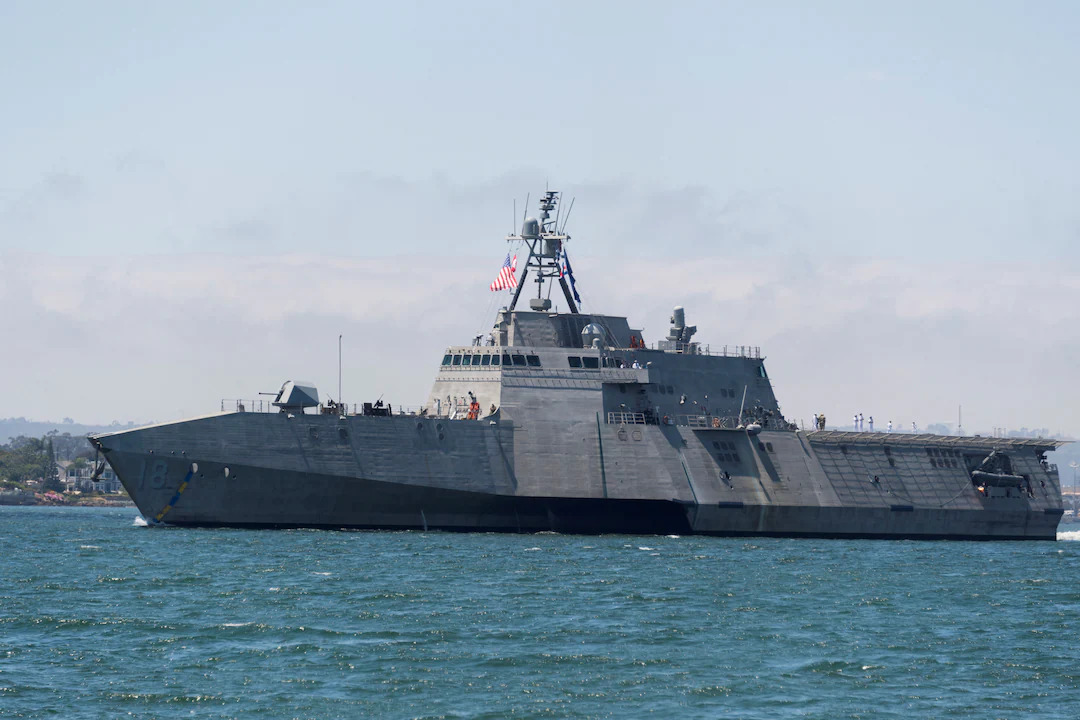
China has deployed naval forces to monitor a United States warship near the disputed Sabina Shoal in the South China Sea, escalating tensions over maritime claims and military activity in the strategically important waterway. The Chinese military accused the USS Charleston of entering waters near the shoal without Beijing’s approval, describing the move as an infringement of China’s claimed sovereignty.
The development, reported on October 20, 2026, comes amid continuing friction between China and the Philippines over competing territorial claims in the South China Sea. It also coincides with a separate maritime confrontation involving Chinese and Taiwanese coast guard vessels near the Taiwan-controlled Pratas Islands, highlighting multiple points of tension across the region.
China’s Southern Theatre Command said it had dispatched forces to track and monitor the American warship after its alleged entry into waters surrounding Sabina Shoal in the Spratly Islands. The US Navy had not immediately responded to a request for comment, leaving Washington’s position on the specific incident unclear.
The latest confrontation raises questions about freedom of navigation, competing maritime claims and the risk of encounters between military and coast guard vessels. However, the incident’s immediate consequences remain uncertain, and neither the reported deployment nor the separate standoff near the Pratas Islands establishes that a wider military confrontation is imminent.
Why China Sent Naval Forces to Monitor the USS Charleston
China’s military said the USS Charleston had “illegally intruded” into waters adjacent to Sabina Shoal without approval from the Chinese government during the early hours of Tuesday.
In a statement, the People’s Liberation Army’s Southern Theatre Command criticised the American ship’s reported activity and said it threatened China’s claimed maritime interests.
“The US action infringes upon China’s sovereign rights and interests, jeopardises maritime security, and is detrimental to regional peace and stability,” the command said.
It also called on Washington to stop such activities immediately. According to the statement, Chinese naval forces were dispatched to follow and monitor the warship.
The announcement reflects Beijing’s longstanding opposition to US military operations in waters that China considers part of its claimed maritime domain. Washington, by contrast, generally describes such missions as freedom of navigation operations intended to challenge excessive maritime claims and preserve navigation rights under international law.
The central disagreement is not simply about the presence of an individual warship. It concerns whether China can impose restrictions on foreign military vessels in disputed waters and how other countries respond to those claims.
China’s statement represents Beijing’s account of the incident. The US Navy had not immediately commented, so its assessment of the ship’s mission and the circumstances surrounding the reported encounter was not available in the supplied report.
South China Sea Dispute: Why Sabina Shoal Matters
Sabina Shoal, also known as Escoda Shoal in the Philippines, is located in the Spratly Islands, an archipelago at the centre of overlapping territorial and maritime claims in the South China Sea. China and the Philippines both contest sovereignty over the shoal and the wider island group, making the surrounding waters a recurring source of tension.
The South China Sea is strategically important because it carries substantial international shipping traffic and supports fishing and other economic activities. Its waters are also linked to broader regional security concerns, with several governments seeking to protect their maritime interests.
China claims extensive areas of the South China Sea, while Brunei, Malaysia, the Philippines, Taiwan and Vietnam also have overlapping claims to parts of the waterway. Disagreements over maritime boundaries, access to resources and the presence of government vessels have repeatedly brought these countries into conflict.
For Beijing, the presence of foreign military vessels near disputed features is a challenge to its territorial claims. The United States, meanwhile, has regularly challenged maritime restrictions it considers inconsistent with international law, including through freedom of navigation operations.
This disagreement makes encounters between American and Chinese vessels particularly sensitive. Even when neither side intends to escalate a confrontation, competing interpretations of maritime rights can increase the possibility of miscalculation.
The latest incident involving the USS Charleston therefore carries significance beyond the movement of a single warship. It illustrates the continuing disagreement over who can operate in disputed waters and under what conditions.
Recent China-Philippines Tensions Add to Regional Concerns
The latest encounter comes against a backdrop of strained relations between China and the Philippines over competing maritime claims. According to the Philippine Coast Guard, a Chinese Coast Guard vessel rammed a Philippine boat carrying out a refuelling mission near Sabina Shoal last month. China blamed the collision on the Philippine side.
The conflicting accounts illustrate the difficulties of establishing responsibility during maritime confrontations, particularly when vessels from different countries operate in areas claimed by both sides.
Such incidents can become diplomatic flashpoints because each government views its actions through the lens of its own maritime rights and security interests. The presence of coast guard vessels, fishing boats and military ships can further complicate encounters in areas where territorial claims remain contested.
The Philippines also has a mutual defence treaty with the United States. That agreement adds another dimension to the dispute because developments involving Philippine vessels can raise questions about the broader security relationship between Manila and Washington.
However, a maritime collision or the deployment of naval forces does not automatically trigger a military response from an ally. The circumstances of an incident and the applicable commitments would be important in determining any subsequent action.
For now, the reported deployment near Sabina Shoal is primarily a confrontation over maritime activity and competing claims. The available information does not establish that either China or the United States intends to use force.
US Freedom of Navigation Operations Explained
The United States generally describes certain naval missions in contested waters as freedom of navigation operations. These missions are intended to challenge maritime claims or restrictions that Washington considers inconsistent with international law.
The principle of freedom of navigation is particularly important in heavily travelled waterways such as the South China Sea, where commercial shipping and military vessels from multiple countries operate.
China’s government takes a different position on the American military presence near features it claims. In its statement concerning the USS Charleston, the Chinese military argued that the ship’s reported entry infringed upon China’s sovereign rights and threatened regional stability.
The US Navy did not immediately respond to a request for comment on Tuesday’s incident. Although the American military generally characterises such missions as freedom of navigation operations, the supplied report noted that its last known operation of this kind in the South China Sea had taken place more than a year earlier.
That distinction is important because the purpose of the USS Charleston’s reported mission had not been independently confirmed by an immediate US statement. China’s description of the vessel’s movements reflects Beijing’s position, while Washington’s specific explanation for the encounter remained unavailable.
More broadly, the disagreement demonstrates how the same naval movement can be interpreted differently by the countries involved. One government may describe a ship’s presence as a legitimate exercise of navigation rights, while another views it as an infringement of its territorial claims.
Separate China-Taiwan Coast Guard Standoff Near Pratas Islands
While Chinese naval forces were monitoring the American warship near Sabina Shoal, another maritime confrontation unfolded farther north in the South China Sea. Taiwan’s Coast Guard reported that a Chinese Coast Guard vessel had entered restricted waters near the Taiwan-controlled Pratas Islands on Tuesday.
The Taiwan Coast Guard dispatched its vessel, the Taichung, to warn the Chinese ship away. According to the Taiwanese authorities, the two vessels exchanged radio broadcasts asserting their respective political and territorial positions as the standoff continued.
The Chinese vessel reportedly broadcast the message that “the so-called Republic of China does not exist”, referring to Taiwan’s official name. Taiwan’s Coast Guard said its own ship responded by declaring that “the Republic of China, Taiwan, is a sovereign and independent country”.
The exchange highlights the fundamental disagreement between Beijing and Taipei over Taiwan’s political status. China considers Taiwan part of its territory, while Taiwan has its own elected government, military and coast guard, and operates separately from the mainland.
The Chinese government’s Taiwan Affairs Office had not immediately responded to a request for comment on the reported confrontation.
Although the Pratas incident was separate from the encounter involving the USS Charleston, both developments highlight the competing maritime and political claims that shape security conditions across the region.
Why the Pratas Islands Are Strategically Sensitive
The Pratas Islands lie roughly between southern Taiwan and Hong Kong. They are controlled by Taiwan, and responsibility for their security rests with Taiwan’s Coast Guard. The islands are lightly defended, making coast guard operations particularly relevant to monitoring activity around them.
The reported entry of a Chinese Coast Guard ship into restricted waters has raised concerns in Taiwan about the enforcement of its maritime restrictions and Beijing’s continued challenges to its authority.
The latest standoff follows an earlier dispute involving a Chinese fishing boat near the islands. China’s Taiwan Affairs Office said last week that Taiwan must “bear the consequences” of its Coast Guard using a water cannon against the Chinese fishing vessel.
The competing accounts point to a wider pattern of maritime friction in which coast guard vessels and fishing boats can become involved in disputes carrying broader political significance.
Such encounters are distinct from direct military engagements, but they can still create pressure on governments to demonstrate control over the waters they administer or claim. Radio warnings, vessel manoeuvres and enforcement actions can also increase the risk of an incident if the parties misjudge one another’s intentions.
The Pratas confrontation therefore adds another layer to the regional security picture. While the Sabina Shoal incident involves a US warship and China’s objections to American military activity, the Pratas standoff centres on China’s claims regarding Taiwan and Taiwan’s efforts to enforce its maritime restrictions.
Could the Maritime Confrontations Lead to Wider Escalation?
The simultaneous incidents near Sabina Shoal and the Pratas Islands underscore the number of overlapping disputes affecting the South China Sea. However, they involve different vessels, locations and immediate issues, and should not be treated as a single coordinated confrontation without evidence.
The encounter near Sabina Shoal centres on China’s objections to the presence of an American warship in waters Beijing claims. The Pratas incident involves Chinese and Taiwanese coast guard vessels exchanging warnings over restricted waters and political status.
In both cases, the immediate challenge is to prevent encounters at sea from developing into more serious confrontations. Communication between vessels, clear procedures for handling close encounters and diplomatic engagement can help reduce the risk of miscalculation.
The situation is also complicated by the involvement of multiple governments with different interests. China seeks to defend its maritime claims, while the Philippines and Taiwan maintain their own positions on contested waters. The United States, meanwhile, has a security relationship with the Philippines and regularly challenges maritime restrictions it considers excessive.
These overlapping interests mean that even a localised incident can attract wider attention. Nevertheless, the available reports do not establish that the latest encounters will lead to a military escalation.
The immediate focus remains on the movement of vessels, the competing claims made by the governments involved and the possibility of further confrontations in the disputed areas.
What Happens Next?
China has said it dispatched naval forces to track and monitor the USS Charleston and demanded that the United States stop activities it considers unlawful. The US Navy had not immediately commented on the specific incident, leaving Washington’s response unclear.
In the Philippines, the latest development comes amid continuing tensions over Sabina Shoal and the reported collision between a Chinese Coast Guard vessel and a Philippine boat last month. The two countries continue to dispute sovereignty over the shoal and the wider Spratly Islands.
Meanwhile, Taiwan’s Coast Guard reported that its confrontation with the Chinese Coast Guard near the Pratas Islands was continuing after the two sides exchanged warnings and competing statements about Taiwan’s political status.
Further official statements could clarify the circumstances of the encounters, including the purpose of the American warship’s presence and the actions taken by Chinese and Taiwanese vessels.
For now, the incidents demonstrate how competing maritime claims continue to produce confrontations involving military and coast guard forces in the South China Sea. Whether the latest encounters remain limited or lead to further diplomatic tensions will depend on subsequent actions and the responses of the governments involved.
The broader challenge remains the same: managing overlapping claims and military activity in a strategically important waterway without allowing individual encounters to undermine regional stability.
For breaking news and live news updates, like us on Facebook or follow us on Twitter and Instagram. Read more on Latest World on thefoxdaily.com.




COMMENTS 0