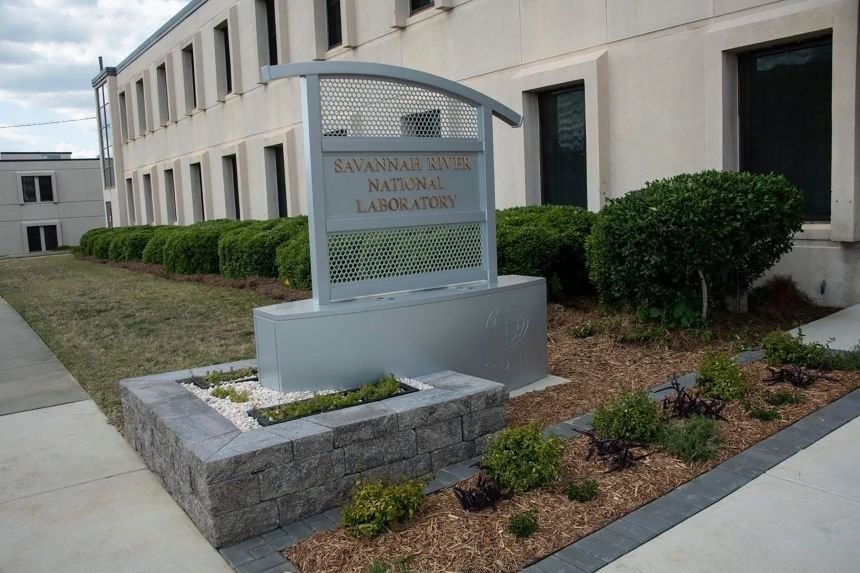
A fire at a laboratory inside the Savannah River Site in South Carolina triggered an Emergency Response on Wednesday, prompting temporary restrictions on traffic and precautionary safety measures across the facility. Officials later confirmed that the fire had been extinguished and no contamination had been reported outside the affected facility.
The incident occurred at the Savannah River National Laboratory near Aiken, a research facility located within a major US Department of Energy complex that supports the country’s nuclear weapons programme and manages radioactive materials. The emergency was declared at 5:39 p.m. local time, according to the site’s emergency response organisation.
Authorities temporarily restricted access to the facility, including road, rail, river and air traffic in the surrounding area. Employees working in affected sections were instructed to shelter as a precaution if they were not directly involved in emergency response or shutdown operations.
Later updates indicated that normal access arrangements had resumed. Officials reported no operational emergencies or scheduled delays by 9:18 p.m., and the site emergency was formally terminated at 9:45 p.m. Workers arriving for the next shift were permitted to report as usual.
What Happened at Savannah River National Laboratory?
The fire broke out at the Savannah River National Laboratory, which operates within the Savannah River Site, a large government-owned nuclear complex in South Carolina. The incident prompted facility officials to activate emergency procedures and coordinate a response involving relevant site personnel and public authorities.
The site’s emergency response organisation declared the emergency at 5:39 p.m. The response included temporary restrictions at entrance barriers and precautionary controls on transportation routes in the area. These measures were intended to support emergency operations and limit unnecessary movement while officials assessed the situation.
Authorities also notified state and local government agencies about the incident. Employees working in the affected areas were directed to shelter if they were not involved in handling the emergency or carrying out shutdown activities.
Earlier in the response, officials advised nearby residents to follow local news reports for information about any protective actions that might become necessary. This was precautionary guidance while the situation was being assessed. Officials subsequently reported that there was no contamination outside the facility.
Emergency Declared at 5:39 p.m., Later Terminated
The emergency response unfolded over several hours, with officials issuing updates as conditions changed. The initial declaration at 5:39 p.m. led to temporary restrictions on access and transportation around the site.
By 9:18 p.m., a later update stated that there were no operational emergencies or scheduled delays at the facility. Traffic at all entrance barriers had resumed, allowing normal access arrangements to return.
The site emergency was terminated at 9:45 p.m. Officials also confirmed that employees scheduled to begin their shifts could report to work as usual.
The termination of the emergency indicated that the site no longer required the activated emergency status. However, the information released by officials did not provide detailed technical findings about what caused the fire, the specific equipment or materials involved, or the extent of damage inside the laboratory.
No Contamination Reported Outside the Facility
One of the most important details in the official updates was that no contamination had been reported outside the facility. The fire occurred within a laboratory located inside a complex that conducts nuclear research and handles radioactive materials, making the possibility of contamination an important concern during the response.
The absence of reported off-site contamination indicates that officials had not identified contamination beyond the affected facility at the time of their updates. It does not, by itself, provide a complete account of conditions inside the laboratory or establish whether any internal contamination occurred.
The distinction is important because the Savannah River Site contains multiple operations involving nuclear materials, research activities and waste management. An incident at one facility does not automatically mean that radioactive substances have been released into the surrounding environment.
Officials did not report any need for a wider public evacuation in the information provided. Residents had initially been advised to monitor local news, but the later updates focused on the restoration of normal site access and the termination of the emergency.
What Is the Savannah River Site?
The Savannah River Site is a major US Department of Energy facility located near Aiken, South Carolina. Established during the 1950s, it was originally developed to produce materials required for the country’s nuclear weapons programme, particularly tritium and plutonium.
The complex continues to play a role in national nuclear security, while its responsibilities have expanded to include nuclear research, spent nuclear fuel management, environmental restoration and the storage and handling of uranium and plutonium.
The Savannah River Site is also home to the Savannah River National Laboratory, which focuses primarily on scientific research and technological development. Although the laboratory is located within the wider nuclear complex, its work differs from the large-scale production and storage activities carried out at other parts of the site.
This distinction is relevant to understanding Wednesday’s incident. The fire occurred in the laboratory area, not necessarily in one of the facilities responsible for large-scale nuclear material production. Officials’ confirmation that no contamination was reported outside the facility provided an important update about the incident’s reported impact beyond the laboratory.
Who Manages the Laboratory and Nuclear Complex?
The Savannah River Site operates through a management structure involving the US Department of Energy, its National Nuclear Security Administration and private contractors responsible for different parts of the complex.
The Savannah River National Laboratory is managed by Battelle Savannah River Alliance. The defence-related portion of the site is managed by Savannah River Nuclear Solutions, LLC. The National Nuclear Security Administration oversees important nuclear security activities associated with the complex.
More than 13,000 contractors and federal employees work at the Savannah River Site, making it a major employment centre as well as an important part of US nuclear infrastructure.
Because the site includes multiple facilities with different responsibilities, emergency procedures are designed to coordinate activities across operational areas. The response to Wednesday’s fire involved facility officials and notifications to state and local government agencies.
Savannah River Site’s Role in US Nuclear Weapons Production
The fire occurred at a facility within a complex that remains strategically important to the United States’ nuclear weapons infrastructure. The Savannah River Site continues to produce tritium, a radioactive isotope used in maintaining the country’s nuclear weapons stockpile.
The site also handles spent nuclear fuel and stores uranium and plutonium. These responsibilities make it an important part of the government’s broader nuclear security and materials-management system.
Another major development is the planned expansion of plutonium pit production at the site. Plutonium pits are the central fissile components of modern nuclear warheads and are often described as their explosive cores. The US government has been working to rebuild domestic production capacity as part of a wider effort to maintain and modernise its nuclear arsenal.
The National Nuclear Security Administration recently authorised the start of full-scale construction on a major facility intended to produce plutonium pits at the Savannah River Site. The project is expected to cost approximately $23.5 billion, according to the trade publication Exchange Monitor.
The planned facility is part of a broader national effort to establish additional production capacity for nuclear weapons components. Its development has attracted attention because of the scale of the investment, the technical complexity of plutonium operations and the long-term importance of maintaining specialised nuclear manufacturing capabilities.
Why the Fire Drew Attention Beyond the Laboratory
Fires at ordinary industrial facilities can create serious risks, but an incident at a site involved in nuclear research and materials management attracts additional scrutiny. Emergency authorities must assess not only the immediate fire and potential injuries but also whether heat, smoke or damage could affect equipment, radioactive materials or safety systems.
The Savannah River Site’s history and present-day responsibilities make emergency preparedness particularly important. Its facilities carry out activities connected to nuclear research, national defence and the management of sensitive materials. Even when an incident is limited to one building, officials must establish whether it could affect nearby operations.
Temporary restrictions on road, rail, river and air traffic were among the precautionary measures announced during the response. Such controls can help prevent interference with emergency operations and provide responders with access to affected areas.
The decision to shelter employees in impacted areas also reflected the need to protect workers while the incident was being assessed. Those not involved in emergency response or shutdown activities were instructed to remain sheltered as a precaution.
What Officials Have Not Yet Disclosed
Although the emergency was terminated and no contamination was reported outside the facility, several details about the fire remained unclear in the information released by site officials.
The updates did not identify the exact cause of the fire, the equipment involved or whether any radioactive or hazardous materials were affected inside the laboratory. They also did not provide a detailed account of property damage or confirm whether anyone was injured.
These details would be important for understanding the full impact of the incident. An assessment of the cause could help establish whether the fire resulted from an equipment failure, an electrical problem or another factor. Information about the affected area would also help clarify whether laboratory operations were disrupted.
The available updates established that the fire had been extinguished, normal access at the entrance barriers had resumed and the emergency had been terminated. Further technical findings would be needed to provide a complete explanation of what happened inside the laboratory.
What Happens Next at Savannah River National Laboratory?
With the site emergency terminated, attention is likely to turn towards assessing the affected laboratory area and determining the cause of the fire. Facility officials may need to inspect equipment, verify safety conditions and establish whether any research activities can resume without additional restrictions.
The restoration of normal traffic and permission for incoming shift workers to report suggest that the wider site was able to return to its regular access arrangements after the emergency response. However, this does not necessarily mean that every activity in the affected laboratory resumed immediately.
The incident also highlights the importance of emergency planning at nuclear research and defence facilities. The Savannah River Site performs activities that are central to US nuclear security, and its operations require procedures capable of responding to fires, equipment failures and other unexpected events.
For residents near the complex, the key information in the official updates was that the fire had been extinguished and no contamination had been reported outside the facility. While the incident prompted temporary restrictions and precautionary sheltering, officials ultimately terminated the emergency later that evening.
Correction: An earlier version of the report displayed an image of a Savannah River National Laboratory facility that was not involved in the fire.
For breaking news and live news updates, like us on Facebook or follow us on Twitter and Instagram. Read more on Latest World on thefoxdaily.com.





COMMENTS 0