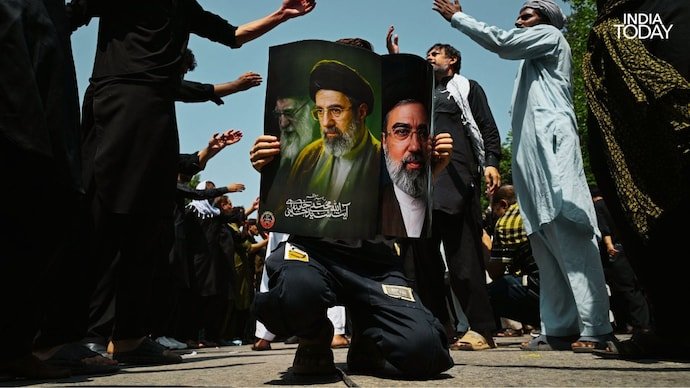
Iran is preparing one of the most significant state ceremonies in its modern history as millions are expected to gather to bid farewell to Ayatollah Ali Khamenei, the country’s long-serving Supreme Leader. While the funeral itself will symbolize the end of an era, much of the world’s attention is focused on a different question: will Mojtaba Khamenei, the newly appointed Supreme Leader and son of Ali Khamenei, make his first public appearance?
For months, Mojtaba Khamenei has remained absent from public view following the attack that killed his father. His speeches have been delivered through written statements read by state television presenters, while Iranian officials have repeatedly insisted he remains actively involved in governing the country despite recovering from injuries.
The upcoming funeral therefore represents more than a national mourning ceremony. It could become a crucial test of political legitimacy, leadership continuity and public confidence at a time when Iran faces heightened regional tensions, economic challenges and an evolving security landscape.
Why the Funeral Matters Beyond National Mourning
State funerals for supreme leaders carry enormous political significance in Iran. They are carefully organized to demonstrate institutional stability, reinforce national unity and reassure supporters that leadership remains firmly in control during periods of transition.
In Iran’s political system, symbolism often carries as much importance as formal political announcements. Every public appearance—or absence—by senior leaders is closely analyzed by domestic audiences, foreign governments and international observers.
If Mojtaba Khamenei appears alongside senior military commanders, clerics and political leaders, it would provide a highly visible image of continuity following one of the country’s most consequential leadership transitions.
Who Is Mojtaba Khamenei?
Mojtaba Khamenei has long been regarded as one of the most influential yet least publicly visible figures within Iran’s political establishment.
Although he rarely occupied a prominent public role during his father’s leadership, analysts have frequently described him as an influential figure with close connections to sections of Iran’s religious and security institutions.
His appointment as Supreme Leader has placed him at the center of both domestic Politics and international Diplomacy, despite his continued absence from public events.
Why Has Mojtaba Khamenei Not Appeared Publicly?
Iranian authorities have stated that Mojtaba Khamenei suffered injuries during the attack that killed his father and several senior officials.
According to official accounts, his recovery has required him to avoid public appearances while continuing to oversee state affairs through secure communications.
Government representatives maintain that:
- He continues participating in key national decisions.
- His health is steadily improving.
- Security concerns also influence his limited public profile.
- Official statements issued in his name reflect ongoing leadership responsibilities.
Despite these assurances, his prolonged absence has naturally generated widespread speculation both inside and outside Iran.
Timeline of Iran’s Leadership Transition
| Event | Development |
|---|---|
| February 28 | Attack kills Ayatollah Ali Khamenei. |
| Following Days | Mojtaba Khamenei selected as Supreme Leader. |
| March–June | Public statements released without personal appearances. |
| July 4 | State funeral ceremonies begin in Tehran. |
| July 9 | Planned burial in Mashhad following nationwide commemorations. |
Leadership Through Written Statements
Since assuming office, Mojtaba Khamenei has communicated exclusively through written statements distributed by state media.
These messages have consistently emphasized several themes:
- National unity.
- Resistance against external pressure.
- Support for Iran’s strategic interests.
- Regional security.
- Continuation of existing state policies.
The communication strategy appears designed to project institutional continuity while avoiding unnecessary public exposure during a sensitive transition period.
Why a Public Appearance Could Be Politically Important
Public visibility plays a significant role in establishing leadership legitimacy, particularly following a major political transition.
An appearance at the funeral could:
- Demonstrate physical recovery.
- Reassure supporters about leadership stability.
- Project confidence to regional rivals.
- Strengthen perceptions of institutional continuity.
- Reduce speculation surrounding his health.
State ceremonies often serve precisely this purpose by presenting images of unified political leadership during periods of uncertainty.
Why Continued Absence Could Raise More Questions
If Mojtaba Khamenei does not appear publicly during the funeral ceremonies, observers may continue debating the reasons behind his absence.
Possible explanations discussed by analysts include:
- Ongoing medical recovery.
- Enhanced security precautions.
- Political messaging decisions.
- Personal preference for maintaining a lower public profile.
Without official clarification, interpretations are likely to vary considerably.
The Role of Iran’s Supreme Leader
The Supreme Leader occupies the highest political and religious office within Iran’s constitutional system.
The position includes influence over:
- National security policy.
- Foreign affairs.
- Defence strategy.
- Judicial appointments.
- Major state institutions.
Because of these extensive responsibilities, transitions in the office attract close attention from governments, financial markets and regional security analysts.
How Leadership Symbolism Shapes Iranian Politics
Political symbolism has long been an important feature of Iranian Governance.
Major ceremonies, religious commemorations and official appearances often communicate broader political messages extending beyond their immediate purpose.
A funeral attended by millions therefore becomes both a national event and a demonstration of state continuity.
Regional Implications of the Leadership Transition
Iran’s Leadership transition comes during a period of heightened geopolitical uncertainty across the Middle East.
Regional governments will closely monitor whether the new leadership signals continuity or adjustment in policies affecting:
- Regional diplomacy.
- Maritime security.
- Energy markets.
- Strategic alliances.
- Military posture.
Although no major policy changes have been formally announced, the symbolism surrounding the funeral may offer clues regarding future political direction.
Comparison: Public Leadership During Political Transitions
| Leadership Approach | Potential Impact |
|---|---|
| Immediate Public Appearance | Projects confidence and continuity. |
| Limited Public Visibility | May prioritize security or recovery. |
| Written Communications Only | Maintains governance while limiting exposure. |
| Gradual Public Return | Allows controlled transition into leadership. |
International Attention on the Funeral
Governments, diplomats and intelligence agencies around the world are expected to closely monitor the funeral ceremonies.
Beyond honoring the late Supreme Leader, the event may provide important signals regarding Iran’s political stability, institutional cohesion and leadership confidence.
International media coverage is also likely to focus on attendance by senior officials, military commanders and foreign delegations alongside any appearance by Mojtaba Khamenei.
Why Public Perception Matters
Leadership transitions depend not only on constitutional procedures but also on public perception.
Visible leadership during periods of national mourning can strengthen confidence among supporters while reassuring government institutions that decision-making remains uninterrupted.
Conversely, prolonged uncertainty may encourage speculation that distracts attention from broader national priorities.
Possible Scenarios at the Funeral
Several outcomes remain possible:
- Mojtaba Khamenei appears publicly and addresses mourners.
- He attends without making a speech.
- He participates privately while others lead ceremonies.
- Official representatives continue speaking on his behalf.
Until Iranian authorities confirm the ceremony’s arrangements, each possibility remains speculative.
What the Funeral Could Reveal
Regardless of whether Mojtaba Khamenei appears, the funeral is likely to offer valuable insight into how Iran intends to present its leadership following one of the country’s most consequential political transitions.
Images from the ceremony, official speeches and institutional participation may collectively provide a clearer picture of how the new administration seeks to balance continuity, stability and security in the months ahead.
Future Outlook
Following the funeral, attention is expected to shift toward how Mojtaba Khamenei exercises his leadership in practice. Observers will closely monitor future public appearances, policy decisions and diplomatic engagement for indications of his governing style and strategic priorities.
Whether he adopts a more visible public role or continues governing primarily through institutional channels, his leadership will significantly influence Iran’s domestic politics, regional Relationships and international standing during an increasingly complex geopolitical period.
Conclusion
The funeral of Ayatollah Ali Khamenei represents far more than a farewell to one of Iran’s longest-serving leaders. It also marks the first major public test for Mojtaba Khamenei as Supreme Leader. His decision to appear—or remain absent—will be interpreted not simply as a personal choice but as a broader signal about the stability, confidence and future direction of Iran’s leadership.
As millions gather in Tehran, Qom and Mashhad to honor the late leader, the world’s attention will remain fixed on whether Iran’s new Supreme Leader steps into public view for the first time. Whatever unfolds, the ceremony is likely to become a defining moment in the country’s evolving political landscape.
For breaking news and live news updates, like us on Facebook or follow us on Twitter and Instagram. Read more on Latest World on thefoxdaily.com.


COMMENTS 0