
Uncertainty is becoming an increasingly powerful instrument in international politics and global business. Governments, companies and investors are struggling to make long-term decisions as major powers change trade rules, threaten economic penalties, restrict critical technologies and create unpredictable security conditions. What was once considered a weakness in international relations is increasingly being used as a deliberate source of leverage.
The United States and China are at the centre of this shift. Both countries have increasingly used tariffs, export controls and regulatory restrictions to influence the decisions of foreign governments and multinational companies. Russia and Iran, meanwhile, are accused of exploiting uncertainty through hybrid warfare, cyber operations and actions designed to make adversaries question the source and purpose of potential threats.
At the heart of this changing environment is a difficult reality: countries and businesses can no longer assume that agreements, supply chains or political partnerships will remain stable. The ability to keep others uncertain about future decisions has itself become a form of geopolitical power.
Why Uncertainty Is Becoming a Tool of Global Power
For decades, much of the international economic system relied on relatively predictable trade rules, diplomatic arrangements and security partnerships. Governments could plan investments, companies could establish supply chains, and countries could build long-term relationships around expectations that agreements would generally remain in place.
That predictability has weakened. Economic competition, technological disruption, demographic changes and ideological divisions are reshaping international relations. At the same time, powerful governments are increasingly willing to use uncertainty to influence the behaviour of other countries.
When a government cannot predict whether tariffs will rise, export licences will be withdrawn or security commitments will remain valid, it may become more cautious. Businesses may delay investments, governments may make concessions, and trading partners may become more dependent on the decisions of a dominant power.
This creates an important distinction between uncertainty caused by external events and uncertainty deliberately created by political actors. The first can be an unavoidable feature of a changing world. The second can be used strategically to weaken another country’s ability to plan and negotiate.
In this environment, uncertainty is no longer simply a problem to manage. It can become a bargaining instrument.
Donald Trump Has Made Unpredictability a Feature of US Foreign Policy
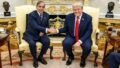
US President Donald Trump has taken an unusually flexible and unpredictable approach to foreign policy and International Trade. His administration’s decisions and public statements have frequently created uncertainty about the future direction of American policy, including its approach to military threats, tariffs and export restrictions.
In foreign affairs, Trump has demonstrated a willingness to combine threats with diplomatic overtures. A country may face warnings of military action before being offered the possibility of cooperation. This approach makes it difficult for other governments to determine whether Washington is preparing to escalate a confrontation or seeking a negotiated outcome.
Trade policy has become another major source of uncertainty. Changes in tariff rates and export controls can affect the commercial calculations of governments and multinational companies. Businesses considering investments worth billions of dollars may find it difficult to assess the long-term value of an agreement if its conditions could change later.
Supporters of this negotiating approach argue that uncertainty can strengthen America’s bargaining position. If foreign companies and governments cannot take access to the US market for granted, they may have stronger incentives to negotiate favourable terms with Washington or move more manufacturing operations to the United States.
The underlying message is that access to the American market should be treated as a privilege rather than an automatic right. Trump’s repeated argument that foreign companies can avoid tariffs by manufacturing in the United States reflects this approach.
Why Foreign Governments Are Struggling to Trust Long-Term US Commitments
Unpredictable policy decisions create particular difficulties for governments and businesses that depend on long-term relationships with the United States. International investments, defence procurement and technology partnerships often require years of planning. Their success depends on confidence that the rules and commitments agreed today will remain sufficiently stable in the future.
When tariff rates, export restrictions or diplomatic positions change unexpectedly, companies may struggle to calculate future costs and risks. Governments may also hesitate before making strategic commitments that depend heavily on American support.
Security relationships provide another example. European countries supporting Ukraine have relied on access to American military equipment and technology, while the Starlink satellite-internet system owned by Elon Musk has played an important role in Ukraine’s communications environment.
Uncertainty surrounding access to these capabilities can increase pressure on European governments to maintain favourable relationships with Washington. The concern extends beyond immediate military requirements. Future access to advanced artificial intelligence models and other strategic technologies could also become a source of leverage.
For countries dependent on American technology or defence systems, the possibility that access could be restricted creates an incentive to seek alternative suppliers and develop domestic capabilities. However, replacing established systems can be expensive and time-consuming.
China Is Using Its Industrial Dominance to Challenge American Pressure
China has long criticised what it describes as America’s inconsistent approach to international trade. Chinese officials have previously accused Washington of demanding greater market access from other countries while restricting exports and introducing controls when foreign competitors become more competitive.
Beijing has also objected to the United States applying its laws and sanctions beyond its own borders. Chinese legal experts have criticised the use of American long-arm jurisdiction, arguing that it can place foreign companies in difficult positions when their commercial activities involve China.
However, China’s position has changed as its own industrial capabilities have expanded. The country has become dominant in the production and processing of several critical industrial materials and technologies, including rare-earth elements and batteries.
This industrial position gives Beijing significant influence over international supply chains. Companies in sectors such as electric vehicles, electronics and advanced manufacturing may depend on Chinese materials, components or processing facilities.
As a result, China has developed its own export controls and legal mechanisms that can affect foreign companies. These measures can create a difficult situation for multinational businesses operating in both the American and Chinese markets.
A company listed in the United States but sourcing important components from China may have to consider conflicting legal and regulatory demands. Complying with one country’s restrictions could expose it to commercial or legal consequences in the other.
This uncertainty is not merely a theoretical concern. It can influence sourcing decisions, investment plans, production locations and the structure of international supply chains.
Rare Earths and Batteries Have Become Strategic Instruments
China’s position in critical minerals has made supply-chain dependence an important part of geopolitical competition. Rare-earth elements are used in several advanced industrial applications, while batteries are essential to electric vehicles and energy-storage systems.
Countries seeking to reduce their dependence on China have increasingly explored alternative sources of critical minerals, recycling capabilities and domestic processing facilities. However, building these alternatives requires substantial investment, technical expertise and time.
China can use its position in these supply chains to influence the decisions of foreign businesses. Export licensing rules for critical materials can affect the ability of manufacturers outside China to secure essential inputs.
The argument presented by Beijing is that companies can reduce exposure to certain restrictions by manufacturing more products inside China. Instead of importing individual materials or components, foreign companies may choose to produce finished batteries or electric vehicles within the country.
Such an arrangement can offer access to established industrial infrastructure and supply networks. However, it may also increase long-term dependence on Chinese manufacturing facilities.
This creates a difficult choice for multinational businesses. They can invest in alternative supply chains, which may be expensive and take years to develop, or maintain production links with China and accept the risks associated with changing regulations and geopolitical tensions.
China’s Export Controls Complicate Global De-Risking Efforts
Many governments and multinational companies have adopted de-risking strategies to reduce excessive dependence on a single country. These strategies can include diversifying suppliers, building alternative processing facilities and maintaining larger inventories of essential materials.
However, China’s approach to critical minerals has created additional complications for these efforts. Export restrictions and rules governing the movement of certain materials and processing technologies can make it harder for foreign businesses to establish independent supply chains.
Some Chinese controls have been suspended while trade negotiations with the United States and European countries continue. Even when restrictions are temporarily paused, their potential reintroduction can remain a source of concern for businesses and negotiators.
Restrictions affecting the export of processing and recycling equipment can also complicate efforts to develop alternative sources of critical materials. This means that reducing dependence on an existing supplier may require access to technologies and machinery that are themselves connected to that supplier.
The result is a supply-chain dilemma. Companies want to diversify, but the process of diversification can be affected by the same geopolitical pressures that made it necessary in the first place.
Russia Uses Uncertainty to Challenge European Security
Russia’s approach to international competition extends beyond conventional military and economic pressure. European governments have increasingly faced concerns about hybrid threats, including cyber operations, disinformation and activities intended to disrupt critical infrastructure.
One of the central difficulties in responding to such threats is determining who is responsible. European authorities may struggle to establish whether a suspicious incident is an isolated criminal act, a deliberate operation by a foreign state or part of a broader campaign.
Reports of bomb threats that have disrupted flights in Europe illustrate the problem. Governments cannot always immediately determine whether such threats are hoaxes connected to a wider hybrid campaign or indications of a more serious security risk.
When responsibility is difficult to establish, authorities face a complicated response. Ignoring a genuine threat could put public safety at risk, while responding aggressively to an unverified incident could escalate tensions.
This uncertainty can itself produce disruption. Airports may face operational difficulties, security agencies must devote additional resources to investigations, and public confidence can be affected.
European governments have raised concerns about Russia’s alleged use of hybrid tactics against Western countries and NATO members. Moscow’s responsibility for individual incidents, however, must be assessed through evidence rather than assumed simply because an event creates difficulties for European governments.
Iran’s Cyber Operations Add Another Layer of Uncertainty
Iran is also accused of exploiting the uncertain international security environment through cyber operations and activities that can be difficult to attribute. Such actions can create disruption without the immediate visibility associated with conventional military attacks.
On November 9, France blamed Iran’s Islamic Revolutionary Guard Corps for cyber-attacks that reportedly affected supermarkets in Europe. According to the allegations, attackers remotely manipulated freezer systems, causing equipment to heat up and triggering several fires.
Traces of Persian-language elements in the attackers’ computer code were cited as one clue in the investigation. However, attribution in cyber incidents can be complicated, and technical indicators alone do not necessarily establish responsibility conclusively.
The alleged attacks demonstrate how digital systems connected to everyday commercial operations can become potential targets. Supermarket refrigeration systems, logistics networks and other infrastructure increasingly depend on connected technology. Disrupting these systems can create financial losses and operational problems even without a direct attack on a military or government facility.
For Western governments, the challenge is not only to identify the source of an incident but also to understand its strategic purpose. Cyber operations can be designed to create confusion, weaken confidence and force authorities to spend resources responding to uncertain threats.
In such circumstances, the uncertainty surrounding an attack can become almost as disruptive as the immediate damage.
Why Multinational Companies Are Caught Between Competing Powers
The growing use of economic pressure by major powers has created a complicated environment for multinational businesses. Companies with operations across the United States, China and Europe must increasingly consider how different national rules interact.
A manufacturer may rely on American technology, Chinese components and European customers. A change in export restrictions or sanctions could affect several parts of its business simultaneously.
For example, a company could face pressure to comply with American restrictions that limit certain commercial activities involving China. At the same time, Chinese rules may impose penalties on businesses that follow foreign measures considered harmful to Chinese interests.
This can create legal uncertainty and increase the cost of doing business. Companies may need additional compliance systems, alternative suppliers and contingency plans to protect their operations.
Investment decisions also become more difficult. A manufacturing facility built around a particular supply chain may lose its commercial advantage if export rules change. Similarly, a company that relocates production to reduce geopolitical risk may discover that the alternative location lacks the necessary infrastructure or skilled workforce.
As a result, businesses are increasingly required to treat geopolitical risk as a central part of corporate planning rather than a distant concern managed only by government relations teams.
De-Risking Is Becoming More Difficult in an Unpredictable World
De-risking refers to reducing excessive dependence on suppliers, markets or technologies that could become vulnerable during political or economic disruptions. It does not necessarily mean ending trade with a particular country. Instead, it involves building alternatives and improving resilience.
For governments and businesses, this can mean sourcing critical minerals from multiple countries, investing in domestic production, developing recycling facilities and maintaining access to alternative technologies.
However, de-risking becomes more complicated when several major powers use uncertainty as a negotiating instrument. A company that shifts away from one supplier may become dependent on another country whose policies could also change.
Building independent supply chains is not an immediate solution. Critical mineral processing, battery manufacturing and advanced technology production require investment, infrastructure and technical capabilities. Establishing these systems can take years.
There is also a financial cost. Maintaining multiple suppliers or production locations may increase expenses compared with relying on a single established industrial hub. Businesses must therefore balance efficiency against resilience.
The challenge for governments is to reduce strategic vulnerabilities without creating unnecessary trade barriers or weakening the international economic relationships on which their industries depend.
What the Growing Use of Uncertainty Means for Global Trade
The increasing use of unpredictable policies by powerful countries could have long-term consequences for international trade. When businesses cannot rely on stable rules, they may become less willing to make large investments or enter long-term commercial agreements.
Countries may also accelerate efforts to build domestic production capacity, even when doing so is more expensive than importing goods from established suppliers. This could reshape supply chains across sectors such as energy, defence, semiconductors, electric vehicles and advanced manufacturing.
Smaller countries may face particular difficulties. They often depend on larger economies for access to markets, technology, investment and security partnerships. If powerful governments use these relationships as leverage, smaller states may have limited room to resist pressure.
At the same time, uncertainty can encourage governments to develop stronger domestic capabilities and diversify their international partnerships. Countries that invest in alternative suppliers and strategic infrastructure may become less exposed to sudden policy changes.
However, a world in which every major power prioritises leverage over predictability could make international cooperation more difficult. Trade agreements, technology partnerships and security arrangements all depend to some extent on confidence that commitments will be respected.
Global Leadership Faces a New Test
The growing use of uncertainty by the United States, China, Russia and Iran reflects different strategic interests and methods. Washington’s changing trade and diplomatic positions, Beijing’s control over critical industrial supply chains, Moscow’s alleged hybrid operations and Tehran’s alleged cyber activities are not identical policies. Yet they can all contribute to an international environment in which governments and businesses struggle to anticipate what comes next.
For leaders, the challenge is to distinguish between unavoidable global changes and deliberate attempts to exploit instability. Governments must protect their economic and security interests while avoiding unnecessary escalation. Businesses, meanwhile, must build supply chains that can withstand political pressure without sacrificing competitiveness.
The central lesson is that predictability has become a strategic asset. Countries that depend too heavily on another power may find themselves vulnerable when access to markets, technology or essential materials becomes conditional.
As geopolitical competition intensifies, the ability to manage uncertainty will matter increasingly. But there is a difference between using unpredictability to gain short-term negotiating advantages and building a stable international system. If powerful countries continue treating uncertainty as a weapon, the costs may eventually extend far beyond their immediate rivals, affecting global investment, trade, security and economic confidence.
For breaking news and live news updates, like us on Facebook or follow us on Twitter and Instagram. Read more on Latest World on thefoxdaily.com.





COMMENTS 0