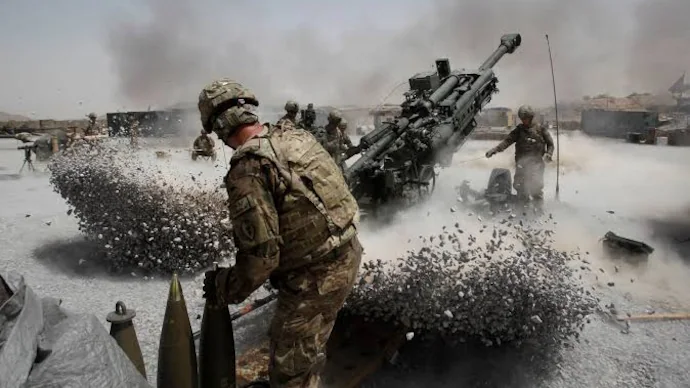
The United States is preparing for a scenario in which its military bases could continue operating for 90 days without external support if power grids fail or critical supply chains are disrupted. The initiative, known as FORTRESS, has attracted attention amid heightened concerns about a possible wider conflict between the US and Iran.
The timing has also fuelled speculation because the plan emerged shortly after the United Kingdom and Japan urged households to prepare for emergencies by stocking up on essential supplies. The developments have prompted questions about whether governments are anticipating a major international conflict.
However, neither development, as described in the available information, establishes that a war or a third World War is imminent. The overlap has nevertheless encouraged social media speculation about a potential doomsday scenario.
A closer examination of the FORTRESS initiative, alongside the views of geopolitical experts and former military officials, points to a different explanation: the US Military wants to reduce its dependence on civilian infrastructure and prepare for disruptions that could affect its ability to operate during a crisis.
Experts cited in discussions about the plan have highlighted two major concerns: the growing threat of cyberattacks and the rapid development of artificial intelligence (AI). Both could create new challenges for critical infrastructure and military operations, making contingency planning an important part of national defence.
What Is the US FORTRESS Plan?
The FORTRESS initiative aims to ensure that US military bases can continue operating for at least 90 days if civilian power grids fail, supply chains collapse or essential services are disrupted.
At present, civilian infrastructure supports many military functions, including communications, logistics and weapons manufacturing. A major disruption to electricity supplies or the movement of essential goods could therefore affect military readiness and the ability of bases to sustain operations.
FORTRESS seeks to reduce this dependence by enabling military installations to operate more independently during emergencies. The initiative envisages a combination of alternative energy systems, emergency supplies and measures to maintain essential manufacturing capacity.
According to the details reported by Fox News, the plan includes several key components:
- Portable nuclear reactors: These could provide an alternative source of electricity for military installations during prolonged disruptions.
- Large battery storage systems: These could help maintain electricity supplies when conventional power sources become unavailable.
- Microgrids: Independent local electricity networks could allow military bases to maintain essential operations even if the wider power grid fails.
- Strategic reserves: Supplies of munitions, critical minerals, electronics, spare parts and medical equipment would help military installations withstand interruptions to deliveries.
- Defence manufacturing capacity: The Pentagon is also planning to prepare civilian factories to manufacture defence equipment during a crisis.
The initiative therefore extends beyond electricity and fuel. It is designed to address a wider range of vulnerabilities that could prevent military bases from operating effectively during a prolonged emergency.
The 90-day objective is central to the plan. By preparing to function without external support for an extended period, the military would aim to maintain essential capabilities while wider infrastructure and supply networks were disrupted.
Why Does the US Military Want Greater Energy Independence?
A central concern behind FORTRESS is the military’s reliance on civilian electricity networks. Modern military installations depend on electricity for communications, logistics, command systems and industrial operations. A prolonged power outage could therefore have consequences far beyond the loss of lighting or routine services.
Pentagon spokesperson Sean Parnell underscored the importance of electricity in modern warfare.
“Power is combat now. Without electricity, you lose communications, water, logistics, assembly lines and just basic military command structures,” Parnell said.
His remarks reflect the growing importance of reliable energy supplies to military readiness. If a base loses access to electricity, its ability to coordinate personnel, maintain communications, manage supplies and support equipment could be compromised.
The vulnerability becomes more significant if a disruption affects several interconnected services simultaneously. Electricity networks support telecommunications, water systems and other essential infrastructure. An outage could therefore trigger additional problems, particularly if repairs are delayed or spare parts are difficult to obtain.
FORTRESS aims to limit these risks by giving military installations access to alternative power sources and essential reserves. Microgrids and battery storage could help maintain critical services, while strategic stockpiles could reduce the immediate impact of interrupted deliveries.
Such measures would not necessarily prevent an attack or eliminate every vulnerability. Their purpose would be to help military bases remain operational when conventional infrastructure is unavailable.
Could Cyberattacks Disrupt Critical Infrastructure?
Geopolitical expert Matt Bracken, a former US Navy SEAL, has argued that modern conflict does not always require a conventional military strike. In a podcast, he discussed how disrupting a country’s electricity infrastructure could create serious consequences without a missile attack.
“The power grids are just low-hanging fruit. You don’t need to drop a nuke on Chicago. If you cut off Chicago’s power, Chicago will nuke itself in essence, because the people will absolutely go out of their minds within days,” Bracken said.
Bracken’s comments highlight the potential consequences of widespread power disruptions. Electricity is essential to daily life, and prolonged outages can affect communications, transportation, businesses and public services.
He also argued that an attack on infrastructure could create difficulties in identifying the responsible party, particularly if the incident involved deception or misleading evidence.
“If North Korea shot a missile at San Francisco, we’d know exactly where it came from and whom to hit. But if San Francisco’s power goes down, a false trail could be laid… So I think that the military might be preparing for that,” he further said.
These remarks represent Bracken’s assessment of the risks associated with infrastructure attacks. They do not establish that a particular country is responsible for a planned attack or that the FORTRESS initiative is directed against a specific adversary.
The 2013 Silicon Valley Power Substation Attack
To support his argument about the vulnerability of electricity infrastructure, Bracken referred to a 2013 attack on a power substation in Silicon Valley.
According to the account cited in the source material, unknown gunmen attacked the substation, disrupting electricity supplies to approximately 13,000 customers. Communications lines were also cut, and the damage was estimated at $15.4 million.
The substation reportedly took nearly a month to return to service. The incident illustrates how damage to a relatively limited part of an electricity network can create disruption and require substantial repair work.
However, the incident alone does not establish that the attack was connected to a foreign government or that it formed part of a broader military operation. Its relevance to the FORTRESS discussion lies in the potential vulnerability of critical infrastructure and the consequences of prolonged outages.
For military planners, the broader concern is that an adversary could attempt to disrupt essential services before or during a conflict. Reducing dependence on external infrastructure could help limit the impact of such disruptions.
AI and Emerging Technologies Add to Security Concerns
Cybersecurity is not the only issue being raised in discussions about the FORTRESS initiative. The rapid development of artificial intelligence has also prompted concerns about how emerging technologies could affect National Security and critical infrastructure.
US journalist Bruce Snyder described the initiative as a necessary step in national defence rather than evidence of an impending doomsday scenario.
“Think about the world we are living in today. Cyberattacks are a very real threat, hostile actors have the ability to target our infrastructure, and with the rapid advancement of AI, we also have to consider the potential dangers of these powerful systems being weaponised or going rogue,” he tweeted.
Snyder’s comments point to the need for military organisations to consider how technological changes could create new security challenges. AI systems are increasingly relevant to discussions about cybersecurity, automated processes and the protection of complex infrastructure.
However, the comments do not establish that an AI system has caused a specific threat to the US military or that the FORTRESS initiative was introduced in response to a confirmed AI-related incident.
Instead, the argument is that defence planning must account for emerging risks alongside established threats. Preparing alternative energy supplies, maintaining essential reserves and strengthening infrastructure resilience are potential ways to reduce the consequences of disruptions, regardless of their precise cause.
Why Has the FORTRESS Plan Triggered Speculation?
The lack of publicly available details about the initiative has contributed to speculation. The Pentagon has not publicly explained, in the information provided, why the plan has been introduced at this particular time. It has also not identified a specific country against which the preparations are directed or released a timeline and cost estimate.
Without those details, observers have attempted to interpret the plan alongside other developments, including tensions involving Iran and emergency-preparedness guidance issued by governments elsewhere.
However, the absence of a publicly identified adversary does not prove that officials are preparing for a specific war. Similarly, the decision to strengthen military resilience does not, by itself, establish that a major conflict is imminent.
Military contingency planning often involves preparing for scenarios that may never occur. The purpose is to reduce the consequences of a crisis if it does happen, rather than to predict that the worst-case scenario will necessarily become reality.
The FORTRESS initiative’s focus on power supplies, manufacturing capacity and strategic reserves is consistent with the broader objective of keeping military operations running during severe disruptions. The available information does not establish that the initiative is a countdown to a major war.
What Was the Volt Typhoon Cybersecurity Concern?
Some experts have pointed to the activities of a Chinese state-sponsored hacking group known as Volt Typhoon as part of the wider debate about infrastructure security.
In 2024, the group allegedly compromised information technology networks belonging to US organisations in several critical sectors, including communications, energy, transportation and water.
The FBI said at the time that the hackers could have been positioning themselves to disrupt essential services during a future conflict. The concern was therefore not limited to the immediate effects of a cyber intrusion but also to the possibility that access to critical networks could be exploited during a crisis.
Such allegations have contributed to concerns about the vulnerability of civilian infrastructure and the potential consequences of cyber operations targeting essential services.
Nevertheless, the available information does not confirm that Volt Typhoon is responsible for the FORTRESS initiative’s introduction or that the plan is specifically designed to counter this group. The incident provides context for the wider cybersecurity concerns discussed by experts, rather than proof of a direct connection.
UK’s ‘Be Ready’ Campaign Also Raised Questions
The FORTRESS plan attracted additional attention because it emerged days after the United Kingdom launched its ‘Be Ready’ campaign on October 22.
The campaign encouraged households to maintain essential supplies that could last for 72 hours during emergencies. The guidance was intended to help people prepare for situations such as severe weather and other disruptions.
The timing prompted speculation that the UK was preparing its population for an approaching war. However, Britain had published household emergency-preparedness guidance since May 2024, meaning the campaign was not an entirely new development.
Emergency-preparedness advice can help households manage temporary interruptions to electricity, water, transport and other services. Keeping essential supplies available may reduce pressure on emergency services and allow people to manage the initial stages of a disruption.
Such guidance does not necessarily indicate that officials expect a military conflict. Governments can encourage preparedness for a range of emergencies, including natural disasters, infrastructure failures and other unexpected events.
The UK’s 72-hour household guidance and the US military’s 90-day operational objective also serve different purposes. The former concerns civilian preparedness for emergencies, while FORTRESS focuses on maintaining military operations during prolonged disruptions.
Does FORTRESS Mean a Wider US-Iran War Is Imminent?
The possibility of a wider US-Iran conflict has contributed to public concern about the FORTRESS initiative. However, the information available does not establish that the plan was introduced specifically because of Iran or that it signals an imminent military confrontation.
The initiative focuses on the ability of US military bases to function when external support is unavailable. Its stated components include independent energy systems, microgrids, batteries, reserves of critical supplies and preparations to maintain defence manufacturing during a crisis.
These measures address vulnerabilities that could matter in different kinds of emergencies or conflicts. A power-grid disruption, cyberattack or interruption to supply chains could affect military readiness regardless of which country or group was responsible.
Experts cited in discussions about the plan have therefore argued that military preparedness should not automatically be interpreted as a reason for public alarm. The distinction is between preparing for a possible worst-case scenario and confirming that such a scenario is about to occur.
Because the Pentagon has not publicly provided a full explanation of the plan’s timing, target scenarios, costs or implementation schedule in the supplied information, stronger conclusions about its immediate geopolitical purpose would be premature.
What the FORTRESS Plan Could Mean for US Military Readiness
If implemented as described, FORTRESS would seek to make US military installations less dependent on civilian infrastructure during prolonged disruptions. Alternative electricity supplies could help preserve essential operations, while strategic reserves could reduce the immediate impact of shortages.
Preparing civilian factories to manufacture defence equipment during a crisis could also help maintain production if conventional supply networks were disrupted. The effectiveness of such preparations would depend on factors including the availability of materials, the capacity of facilities and the time required to restore normal supply chains.
The plan’s 90-day objective indicates the scale of the disruption the military wants to be prepared to withstand. However, the available information does not provide a detailed implementation schedule, budget or assessment of how many installations would be covered.
These details will be important in assessing the initiative’s practical scope. Until more information is available, the reported measures offer an outline of the Pentagon’s approach to resilience rather than a complete picture of the programme.
Conclusion: Preparedness Is Not Proof of an Imminent War
The US FORTRESS initiative is intended to help military bases continue operating for at least 90 days without external support during severe disruptions to power grids, supply chains and essential services. Its reported measures include portable nuclear reactors, battery storage, microgrids, strategic reserves and plans to sustain defence manufacturing during a crisis.
Cyberattacks, vulnerabilities in critical infrastructure and emerging technological risks have featured prominently in the debate surrounding the initiative. The 2013 Silicon Valley power substation attack and the allegations involving Volt Typhoon illustrate why infrastructure resilience has become an important security concern, although neither establishes a direct link to FORTRESS.
The timing of the initiative, alongside the UK’s household preparedness campaign and concerns about a possible wider US-Iran conflict, has fuelled speculation. Yet the available information does not establish that a major war is imminent or that the plan targets a particular country.
For now, the clearest explanation is that the US military is preparing for the possibility that critical infrastructure and supply networks could fail during a crisis. Such contingency planning is a measure of preparedness, not conclusive evidence that a doomsday scenario is approaching.
For breaking news and live news updates, like us on Facebook or follow us on Twitter and Instagram. Read more on Latest World on thefoxdaily.com.





COMMENTS 0