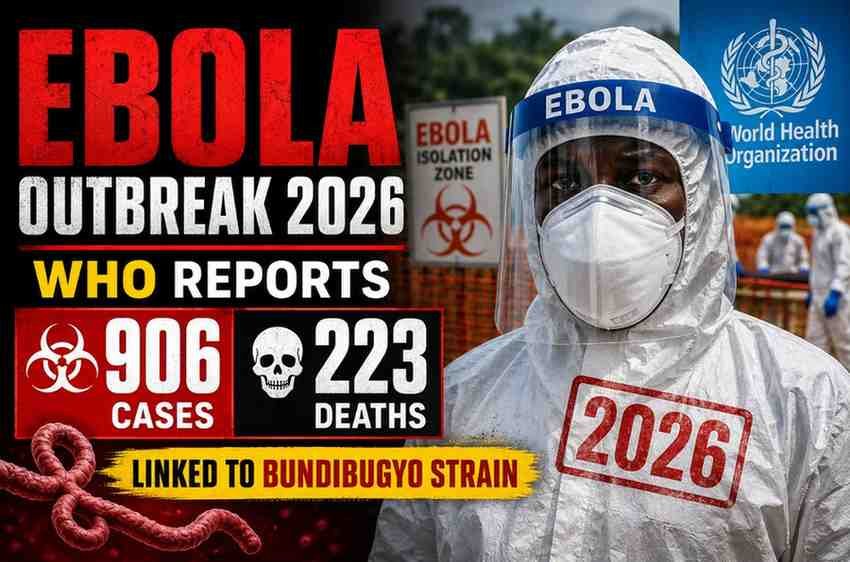
The latest Ebola outbreak has once again drawn global attention, as the World Health Organization (WHO) reports 906 suspected cases and 223 deaths linked to the Bundibugyo strain of Ebola virus. While Ebola is not new to the world, each outbreak brings its own challenges and this one is no exception.
Who: World Health Organization (WHO), affected communities, healthcare workers
What: 906 suspected Ebola cases and 223 deaths
When: Recent outbreak escalation
Where: Affected regions in Africa (primarily outbreak zones)
Why: Spread of the Bundibugyo strain of Ebola virus
How: Human to-human transmission through bodily fluids and delayed detection
This outbreak is not just a regional health crisis it’s a global warning signal.
Understanding Ebola and the Bundibugyo Strain
Ebola virus disease (EVD) is a severe and often fatal illness in humans. It spreads through direct contact with infected bodily fluids and contaminated surfaces. While several strains of Ebola exist, the Bundibugyo strain is less well known compared to the Zaire strain, which has caused some of the deadliest outbreaks in history.
However, “less known” does not mean less dangerous.
What Makes the Bundibugyo Strain Different?
- Lower historical fatality rate compared to Zaire strain—but still deadly
- Less research and fewer targeted treatments available
- Symptoms often resemble other diseases early on, making detection harder
Key insight: The biggest risk is not just the virus itself, but delayed recognition and response.
Breaking Down the Numbers: What 906 Cases Really Mean
At first glance, 906 suspected cases may seem contained compared to past epidemics. But in epidemiology, suspected cases signal something deeper:
- Potential underreporting due to limited testing
- Hidden transmission chains in communities
- Risk of exponential spread if containment fails
The 223 deaths reported highlight a critical concern: a high fatality ratio in affected regions, especially where healthcare access is limited.
Symptoms: Why Ebola Is So Difficult to Catch Early
One of the most dangerous aspects of Ebola is how it begins. Early symptoms often mimic common illnesses:
- Fever
- Fatigue
- Muscle pain
- Headache
- Sore throat
As the disease progresses, more severe symptoms may develop:
- Vomiting and diarrhea
- Rash
- Impaired kidney and liver function
- Internal and external bleeding
Critical challenge: By the time severe symptoms appear, transmission may have already occurred.
Comparison: Bundibugyo vs Zaire Ebola Strain
| Feature | Bundibugyo Strain | Zaire Strain |
|---|---|---|
| Fatality Rate | Moderate (approx. 25–50%) | High (up to 90%) |
| Research Availability | Limited | Extensive |
| Vaccine Availability | Limited or under study | Approved vaccines exist |
| Detection Difficulty | Higher (less recognized) | Better understood |
Why This Outbreak Matters More Than It Seems
At first glance, this outbreak may appear geographically contained. But several factors make it globally significant:
1. Global Mobility
With international travel, viruses can cross borders quickly if not contained.
2. Healthcare Gaps
Regions with limited infrastructure struggle to isolate cases effectively.
3. Surveillance Challenges
Early detection systems may miss initial cases, allowing silent spread.
The real threat is not just the virus but how fast it moves before we notice.
The Human Impact: Beyond the Numbers
Statistics like “906 cases” and “223 deaths” only tell part of the story. The real impact includes:
- Families losing loved ones suddenly
- Healthcare workers facing high infection risk
- Communities dealing with fear, stigma, and economic disruption
Outbreaks often affect the most vulnerable populations the hardest.
Response Efforts: What WHO and Health Agencies Are Doing
Global and local health authorities are working to contain the outbreak through:
- Rapid case identification and isolation
- Contact tracing
- Community awareness campaigns
- Deployment of medical teams and supplies
However, response speed is critical. Delays can significantly worsen outcomes.
A Unique Insight: The “Detection Gap” Problem
One of the biggest challenges in this outbreak is what experts call the detection gap the time between the first infection and official identification.
This gap allows:
- Undetected community spread
- Increased transmission chains
- Higher eventual case counts
Closing this gap is the key to controlling future outbreaks.
Lessons from Past Ebola Outbreaks
History provides important lessons:
- Early intervention dramatically reduces spread
- Community trust is essential for containment
- Misinformation can worsen outbreaks
Applying these lessons quickly can change the course of this outbreak.
Future Outlook: What Happens Next?
The trajectory of this outbreak depends on several factors:
- Speed of containment efforts
- Availability of medical resources
- Public cooperation with health guidelines
Prediction: If early containment measures are strengthened, the outbreak can be controlled. If not, cases may rise significantly in the coming weeks.
Conclusion
The WHO’s report of 906 suspected Ebola cases and 223 deaths is a serious reminder that infectious diseases remain a constant global threat. The Bundibugyo strain, while less known, presents unique challenges that demand urgent attention.
This outbreak highlights a critical truth: awareness, speed, and preparedness are the strongest defenses against Ebola.
Final thought: In a connected world, no outbreak is truly local. What happens in one region can impact the entire globe making vigilance everyone’s responsibility.
For breaking news and live news updates, like us on Facebook or follow us on Twitter and Instagram. Read more on Latest Health on thefoxdaily.com.



COMMENTS 0