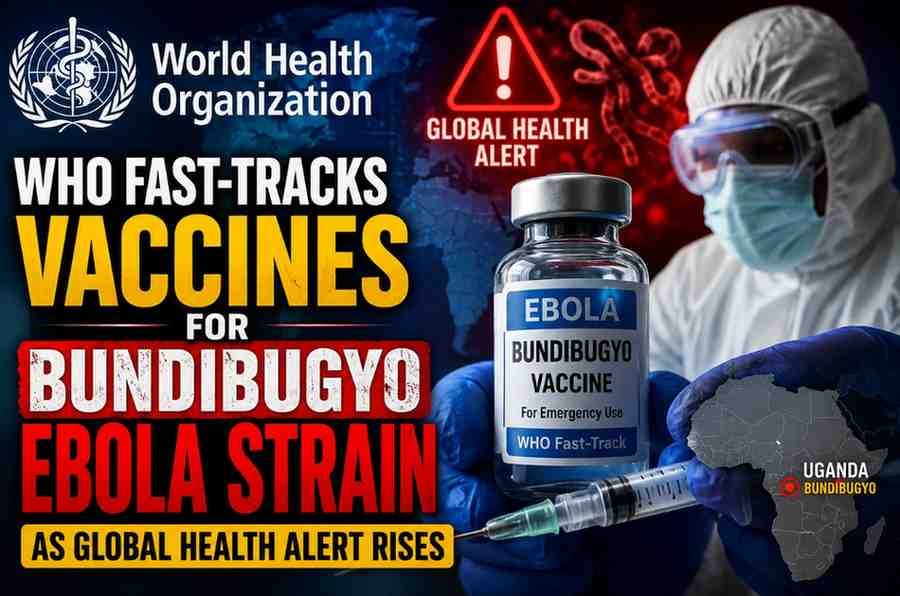
Introduction: The global health community is once again on high alert. The World Health Organization (WHO) has moved swiftly to fast track vaccines and treatments targeting the deadly Bundibugyo strain of Ebola. But what exactly is happening, and why does it matter now? The outbreak, driven by a less common yet dangerous variant of the Ebola virus, has prompted urgent action from scientists, governments, and pharmaceutical developers. The goal is clear: contain the spread, reduce mortality, and prevent another large-scale health crisis. But the strategy behind this rapid response reveals a deeper shift in how the world tackles emerging infectious diseases.
Understanding the Bundibugyo Ebola Strain
The Bundibugyo strain, first identified in Uganda in 2007, is one of several known variants of the Ebola virus. While historically less widespread than the Zaire strain, it still carries a high fatality rate and presents unique challenges in diagnosis and treatment.
- Moderate to high fatality rate, though slightly lower than Zaire Ebola
- Symptoms: fever, fatigue, bleeding, organ failure
- Transmission: human-to-human via bodily fluids
- Limited existing vaccine coverage
This last point is crucial. Most currently approved Ebola vaccines were designed specifically for the Zaire strain, meaning their effectiveness against Bundibugyo is limited or uncertain. This gap has triggered the current urgency.
Why WHO’s Fast-Tracking Matters
The WHO’s decision to fast-track vaccines and treatments is not just a medical move it’s a strategic one. Fast tracking allows promising therapies to move quickly through clinical trials and regulatory processes without compromising safety standards.
Key reasons behind the urgency:
- Rising number of suspected and confirmed cases
- Lack of targeted vaccines for this strain
- Risk of cross border spread
- Lessons learned from past Ebola and COVID-19 outbreaks
This approach reflects a new global mindset: speed is now as important as accuracy in outbreak response.
Timeline: How the Response Escalated
| Phase | Development |
|---|---|
| Initial Detection | Clusters of unusual hemorrhagic fever cases reported |
| Confirmation | Lab testing identifies Bundibugyo strain |
| WHO Alert | Global health emergency protocols activated |
| Fast Tracking Begins | Vaccines and therapeutics moved into accelerated trials |
| Global Coordination | Governments and NGOs align containment strategies |
The Science Behind New Vaccines and Treatments
Developing vaccines for Ebola is complex due to the virus’s ability to evade the immune system. For the Bundibugyo strain, scientists are focusing on adaptable platforms that can be quickly modified.
Key Innovations:
- Multi-strain vaccine platforms that target multiple Ebola variants
- Monoclonal antibody therapies designed to neutralize the virus
- mRNA based research, inspired by COVID-19 vaccine success
This marks a significant evolution. Instead of reacting to each outbreak separately, researchers are now building flexible systems capable of responding to future mutations.
Comparison: Bundibugyo vs Zaire Ebola Strain
| Factor | Bundibugyo Strain | Zaire Strain |
|---|---|---|
| Fatality Rate | Moderate to high | Very high |
| Vaccine Availability | Limited | Well-developed |
| Research Focus | Emerging priority | Extensively studied |
| Outbreak Frequency | Less frequent | More common |
This comparison highlights a critical issue: global preparedness often focuses on the most common threats, leaving gaps when less common variants emerge.
Why This Outbreak Is Different
Unlike earlier Ebola outbreaks, the current response is shaped by lessons from recent global health crises. There is better surveillance, faster data sharing, and stronger international coordination.
What sets this apart:
- Rapid genomic sequencing to identify the strain
- Real-time global collaboration among scientists
- Pre existing vaccine platforms ready for adaptation
In simple terms, the world is no longer starting from scratch.
The Real-World Impact
For communities affected by Ebola, the consequences go far beyond health. Outbreaks disrupt economies, education, and social structures.
- Healthcare systems become overwhelmed
- Local economies slow due to restrictions
- Fear and misinformation spread rapidly
Fast-tracked vaccines and treatments can significantly reduce these impacts by shortening outbreak duration and lowering death rates.
The Hidden Challenge: Trust and Vaccine Acceptance
One often overlooked factor is public trust. Even the most effective vaccine is useless if people refuse to take it. Past Ebola outbreaks have shown that misinformation and cultural barriers can slow response efforts.
Key issues:
- Vaccine hesitancy due to fear or misinformation
- Lack of access in remote regions
- Distrust of authorities
Addressing these challenges requires not just science, but strong community engagement and transparent communication.
Unique Insight: The Shift Toward “Prototype Pandemic Preparedness”
Here’s where things get interesting. The current response signals a shift toward what experts call prototype pandemic preparedness.
Instead of developing solutions after an outbreak begins, scientists are creating pre built vaccine templates for entire virus families. This means future outbreaks could be contained faster than ever before.
Think of it like having a blueprint ready before building a house saving both time and lives.
What This Means for the Future
The fast-tracking of Ebola vaccines and drugs is not just about this outbreak. It’s a preview of how global health systems may respond to future threats.
Predictions:
- Faster vaccine development timelines will become the norm
- More investment in multi strain and universal vaccines
- Stronger global coordination during health emergencies
However, challenges remain. Funding gaps, political differences, and healthcare inequalities could still slow progress.
Why It Matters Beyond Africa
Ebola outbreaks may begin in specific regions, but their implications are global. In a connected world, diseases can spread faster than ever.
This is not just a regional issue it’s a global security concern. The faster outbreaks are contained at the source, the safer the world becomes.
Conclusion: A Defining Moment in Global Health Response
The WHO’s decision to fast-track vaccines and treatments for the Bundibugyo Ebola strain represents a turning point. It shows how far the world has come in responding to deadly outbreaks and how much further it needs to go.
In summary:
- The Bundibugyo strain exposes gaps in current vaccine coverage
- Fast tracking reflects a new, urgency driven approach to global health
- Innovation in vaccine technology is reshaping outbreak response
- Public trust and access remain critical challenges
Looking ahead, the real success of this effort will not just be measured in vaccines developed, but in lives saved and outbreaks prevented.
If there is one clear takeaway, it is this: the future of global health depends not just on reacting to crises, but on anticipating them.
For breaking news and live news updates, like us on Facebook or follow us on Twitter and Instagram. Read more on Latest Health on thefoxdaily.com.



COMMENTS 0