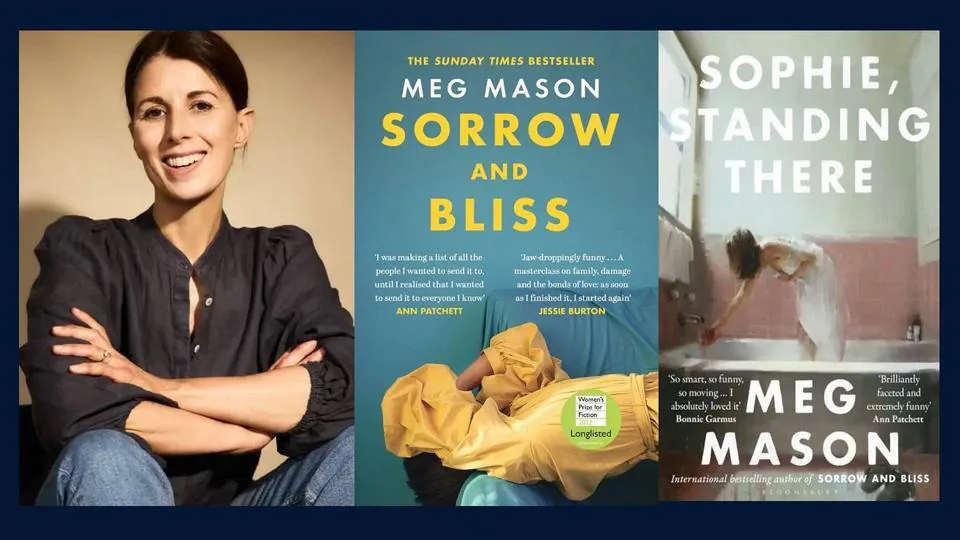
Author Meg Mason did not leave Instagram because she disliked Social Media trends or wanted to make a statement about digital culture. She walked away because the platform was taking something she needed for her writing: her emotional energy. The decision, made around 2018, helped her regain focus during a difficult period in her creative life and eventually return to the novel that became one of her best-known works, Sorrow and Bliss.
In a conversation about her writing, motherhood, childhood and latest novel, Sophie, Standing There, Mason explained why she has stayed away from Instagram and other social media platforms. She described her departure as a form of emotional preservation, saying that the feelings she was spending on strangers online could be better used to write fiction.
Her experience offers a different perspective on social media withdrawal. For Mason, the issue was not simply screen time or productivity. It was the emotional investment involved in constantly watching other people’s lives, comparing experiences and trying to create a public version of herself while struggling to finish a novel.
The Instagram Habit That Started Affecting Her Writing
Mason was still using Instagram in 2018, when she was working on a novel that was due to her publisher in December. She had begun writing it in January but realised by February that the manuscript was not working.
The experience left her feeling deeply disappointed and unsure how to begin again. At the same time, she became increasingly aware of how much emotional attention she was giving to Instagram.
One example made the problem particularly clear. Mason realised she had developed what is commonly described as a parasocial relationship with a woman who sold skincare products online. She would open the woman’s account several times a day, follow updates about her holidays and children, and experience genuine emotional reactions to what she saw.
The relationship existed entirely on one side. The woman did not know Mason, yet her online updates could influence Mason’s mood. After browsing Instagram, Mason often found herself feeling worse rather than refreshed.
She began questioning why she was allowing the lives of people she had never met to affect her emotions while her own novel was struggling. The time spent online was only part of the problem. The emotional energy invested in those updates was what troubled her most.
Why She Decided to Leave Social Media Completely
Mason’s decision was also connected to the pressure of producing content for Instagram. As a novelist, she was accustomed to thinking carefully about sentences, but she found the process of writing captions unnatural and distracting.
She felt that the effort she was spending constructing sentences for social media could instead be directed towards the manuscript. In her view, writing captions was competing with the work she actually wanted to do.
Rather than reducing her usage or setting limits, she decided to remove herself from the platform altogether. She also left other social media spaces and stopped participating in the cycle of following updates and creating posts.
The adjustment was initially uncomfortable. For about three days, she found herself reaching for her phone almost automatically. The habit had become so familiar that her hand moved towards the device before she had consciously decided to check anything.
But after those first few days, the urge began to disappear. The online personalities, constant updates and voices that had occupied her attention were no longer part of her daily routine.
Mason said she suddenly had more time and, more importantly, more emotional space. She returned to writing Sorrow and Bliss, the novel she had been struggling to complete.
What Is a Parasocial Relationship, and Why Did It Matter to Mason?
A parasocial relationship is a one-sided emotional connection that a person develops with someone they do not personally know. It can involve celebrities, influencers, online creators or other public figures whose lives are regularly shared through digital platforms.
Social media can make these connections feel unusually personal. Frequent updates about family life, relationships, holidays, routines and everyday experiences create a sense of familiarity, even when the person following the account has never met its owner.
Mason’s experience illustrates how such connections can affect someone’s mood. She was emotionally responding to the experiences of a skincare influencer whose life appeared attractive and engaging through Instagram posts. Yet there was no personal relationship between them.
Her decision to leave the platform was therefore not simply about avoiding distraction. It was about recognising that she was giving emotional attention to a relationship that could never be mutual.
That distinction is central to her explanation. She did not suggest that everyone should abandon social media. Instead, she described a personal realisation: the emotional energy she was investing online was something she needed for her own creative work.
Why Phones Are Not Welcome at the Mason Family Dinner Table
Mason’s approach to social media also influences how her family handles phones. She lives with her husband and two daughters, and the household has a firm rule about using mobile devices during meals.
She compares using a phone at the dinner table to smoking. If someone needs to check their device, they must leave the room rather than use it while everyone else is eating.
Her reasoning is that phone use can quickly spread around a table. When one person starts looking at a screen, others may follow, turning a shared meal into a collection of separate digital experiences.
Mason believes that phones should not interrupt the opportunity for family members to spend time together. Her comparison is deliberately strong: she would not leave a cigarette burning in an ashtray in the middle of the table while eating with her children, and she sees no reason to treat phone use as an acceptable interruption.
The rule reflects a broader principle in her relationship with technology. She wants to protect the attention and emotional presence that everyday relationships require.
Meg Mason Started Reading for Pleasure Much Later Than Expected
Although Mason is now an established novelist, she did not grow up as an enthusiastic reader. She said she was nearly old enough for college before she began reading books for pleasure.
As a child, she was surrounded by people who treated reading as an important marker of intelligence and good behaviour. Her classmates read, teachers praised children who read, and parents spoke proudly about their children’s reading habits.
Mason, however, had other interests. She preferred spending time outdoors, drawing and visiting The Body Shop to try different lip balms. Reading did not appeal to her, even though she felt embarrassed about not sharing an activity that seemed so important to the people around her.
She described the shame as something that stayed with her long after childhood. In her view, shame can become a personal narrative: once someone develops a negative story about themselves, they may continue collecting experiences that appear to confirm it.
Even now, she sometimes feels uncomfortable in rooms full of authors discussing books she has not read. Yet discovering literature later in life also gave her a particular kind of pleasure. She could explore writers without treating reading as a school assignment.
Her reading journey eventually took her from Jane Austen to other writers, including Nancy Mitford. Instead of feeling obliged to complete a list of classics, she experienced the excitement of discovering books and authors at her own pace.
Why Mason Does Not Pressure Her Dyslexic Daughter to Read
Mason’s experience of becoming a late reader has also influenced how she approaches her children’s relationship with books.
Her first daughter began reading at a young age, something Mason initially connected to the books she had read to her. Her second daughter, however, is dyslexic and took longer to learn to read.
Some people questioned whether Mason was worried that her younger daughter might not develop a love of books. Her response was that there was no reason to rush the process.
She believes that a child can discover reading at a much later age without losing the opportunity to enjoy stories. Human beings are naturally drawn to storytelling, she suggested, and there is no single timetable for developing a relationship with books.
Her position is consistent with her own childhood experience. Reading late did not prevent her from becoming a novelist, and she does not believe that a child’s reading ability should become a measure of their intelligence or potential.
Growing Up in a Religious Sect Influenced Her New Novel
Mason’s latest novel, Sophie, Standing There, explores the life of Sophie, a woman who has recently separated and is working behind the scenes at a literary festival. The story also examines the influence of childhood experiences, including growing up in a religious sect.
The subject has a personal connection for Mason, who grew up in a sect in New Zealand. She has rarely spoken about that part of her childhood and said that even writing about it for the novel made her uncomfortable.
She was careful to distinguish the group from more extreme organisations, explaining that she did not consider it a cult. Nevertheless, the experience shaped her upbringing and continued to influence her behaviour long after she left.
One misconception she wanted to challenge is the assumption that people who leave strict religious communities immediately reject the rules they grew up with. Mason explained that beliefs and habits can remain deeply ingrained. Even after leaving, some people continue avoiding activities they were taught to consider wrong.
In the novel, Sophie’s background helps explain why she does not drink, swear or share some of the cultural experiences familiar to her colleagues and friends. Mason initially introduced these characteristics to distinguish Sophie from the people around her. She later realised that explaining them required addressing the childhood environment that had shaped the character.
Although the subject is personal, Mason said she was not planning to make it a recurring focus of her writing. She remains reluctant to discuss the experience in detail because she finds it difficult to explain and knows how quickly people can judge unfamiliar backgrounds.
How Meg Mason Approaches Her Writing Routine
Mason describes herself as highly conscientious about writing. She does not like taking days off, but that does not mean she expects to produce a fixed amount of text every day.
She has moved away from the idea that a successful writing session must be measured by a word count. Sometimes, she explained, the most valuable work involves deleting hundreds of words rather than adding new ones. On other days, a small amount of writing may contain an idea that shapes the rest of the novel.
For Mason, the creative process begins with observing the world. She collects small details, conversations and passing thoughts, often recording them as voice notes or writing them down when they occur.
Her method involves starting with broad observations and gradually narrowing them until they become specific enough to belong in a story. The details that seem insignificant in everyday life can become the foundation of believable characters and situations.
This approach also helps explain why she is protective of her attention. Writing requires her to notice people and experiences, process emotions and turn observations into language. Constantly consuming other people’s online updates can interfere with that process.
Which Books Does Meg Mason Recommend?
During the conversation, Mason recommended two books that she particularly enjoyed or found influential.
The first was The Palm House by Gwendoline Riley. Mason praised its detailed portrayal of friendship and its decision to tell the story over the course of a single day. She also appreciated its relatively short length and carefully constructed narrative.
Her second recommendation was Unless by Carol Shields, a novel that she said informed aspects of Sophie, Standing There. She joked that readers would recognise the influence when they read it.
For those discovering Mason’s work, Sorrow and Bliss is a natural starting point. The novel is known for its irreverent narrator and its exploration of mental illness and the effects it can have on family relationships.
Her other books include You Be Mother, which explores family relationships and motherhood, and Sophie, Standing There, which examines modern loneliness, personal history and the social world surrounding literary culture.
Why Meg Mason’s Decision to Quit Instagram Still Matters
Mason’s departure from Instagram offers a useful reminder that the cost of social media is not always measured in hours spent scrolling. Sometimes, the more significant cost is the attention and emotion people give to lives they experience only through a screen.
For Mason, leaving the platform created room to return to a novel she had nearly lost confidence in. It also helped establish boundaries that extended beyond her writing desk, influencing how she manages technology during family time.
Her experience does not mean social media is necessarily harmful for every writer or reader. But it highlights the importance of recognising when digital habits begin to affect concentration, mood and personal priorities.
In Mason’s case, the choice was straightforward: she wanted to spend less time emotionally responding to strangers online and more time creating stories of her own. That decision helped her return to Sorrow and Bliss and remains part of how she protects her creative life today.
For breaking news and live news updates, like us on Facebook or follow us on Twitter and Instagram. Read more on Latest India on thefoxdaily.com.






COMMENTS 0