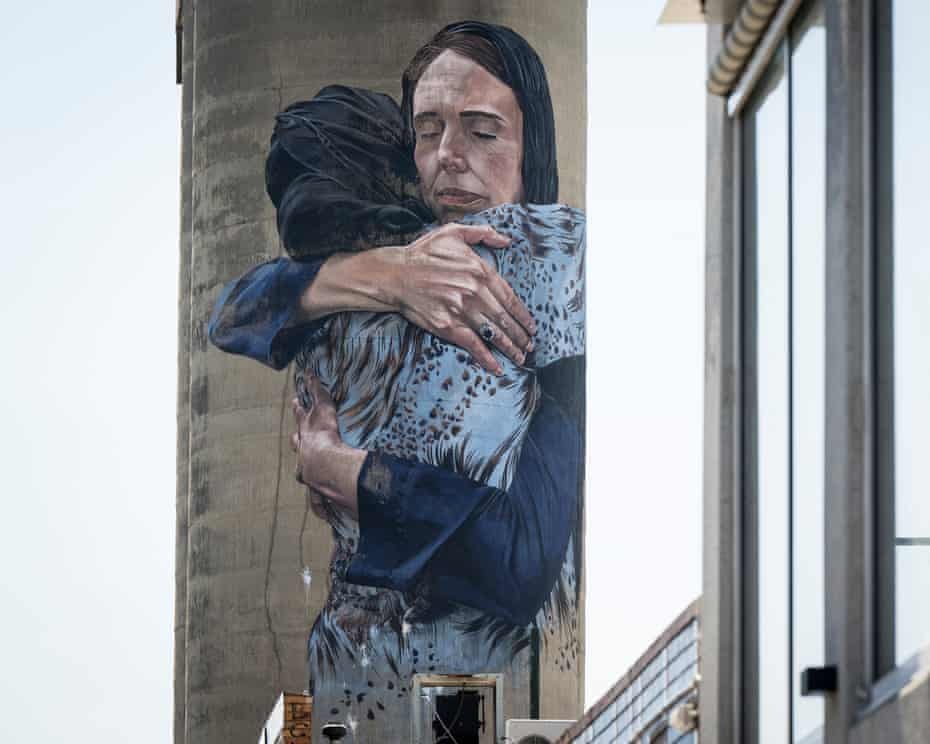
Former New Zealand prime minister Jacinda Ardern has urged Australian politicians to address growing social polarisation by rebuilding public trust, improving financial security and changing the tone of political debate. Speaking at the Sydney Opera House, Ardern said political leaders had a responsibility to avoid divisive language and focus on the insecurity and grievances affecting communities.
Ardern delivered the message during a public discussion with Australian author Anna Funder on Sunday. The conversation explored whether people with opposing views could disagree without becoming divided and examined the role of political leadership, Social Media and public institutions in shaping democratic debate.
“We have a responsibility not to engage in binary thinking, not to engage in the language of violence, [but] to rebuild trust by building financial security in a time of deep insecurity,” Ardern said.
She also criticised the way political leaders had responded to growing public anxiety, arguing that some political responses were intensifying divisions instead of addressing their underlying causes.
“There are things we could be doing but, right now, we’re making it worse, not better,” she said.
Ardern Says Financial Insecurity Has Contributed to Political Polarisation
During the discussion, Ardern linked the growth of political polarisation to a longer period of economic and social uncertainty. She said people across the world had experienced increasing insecurity over recent decades as globalisation reshaped economies and societies.
According to Ardern, uncertainty about employment, financial stability and the future contributed to growing frustration with established institutions, including international organisations such as the World Trade Organization.
She argued that political movements and leaders had often responded to these concerns by directing public anger towards particular institutions, groups or external forces rather than addressing the underlying problems.
Ardern cited proposals such as Brexit as examples of political responses that offered people a target for their frustrations. She said this approach helped create an environment in which leaders such as US President Donald Trump could gain support by presenting simplified explanations for complex problems.
Her central argument was that restoring confidence in democratic institutions requires more than political messaging. Leaders must address the financial and social pressures that contribute to public dissatisfaction.
By connecting economic security with public trust, Ardern suggested that governments need to demonstrate that political institutions can respond to people’s everyday concerns.
Former New Zealand Prime Minister Now Living in Sydney
The Sydney Opera House appearance comes as Ardern begins a new chapter in Australia following her departure from frontline politics in New Zealand.
The 46-year-old former prime minister moved to Australia earlier in 2026 and has increasingly taken on academic and public-speaking commitments. She purchased a house on Sydney’s northern beaches in September and recently announced that she would lecture and mentor at the University of Sydney.
Her new academic role will allow her to contribute to discussions about leadership, politics and public life while remaining involved in international conversations about democratic institutions and social change.
Ardern served as New Zealand’s prime minister from 2017 to 2023. During her time in office, she became internationally recognised for her public communication and leadership during major events, including the Christchurch mosque shootings in 2019.
Her appearance with Funder brought together two public figures whose work has explored political and social questions. The event was promoted around the theme of whether people can disagree without allowing differences of opinion to develop into deeper divisions.
Why Political Disagreements Are Becoming More Difficult
Ardern said political polarisation was not simply about people holding different opinions. She expressed concern that disagreements were increasingly becoming tied to a sense of absolute moral certainty, making it harder for individuals to consider alternative perspectives.
She described a situation in which people become so convinced that their own position is morally correct that they no longer believe meaningful engagement with those who disagree is possible.
“It’s not just that you hold a different opinion, it’s that you hold it so deeply that you have this view you’ve got moral clarity that is not being held by the other person,” she said.
Ardern warned that this attitude weakens the kind of public discussion needed to solve complex problems. When opposing groups stop listening to one another, democratic debate can become more about defending positions than examining evidence or finding common ground.
She said the growing difficulty of changing minds was also affecting the ability of political systems to respond to new information.
Her comments came amid wider concerns about political hostility and the tone of public debate in Australia. Ardern and Funder were speaking a fortnight after an alleged attack on independent MP Helen Haines. Although Ardern did not directly discuss the incident, she emphasised that politicians and other leaders needed to consider the impact of the language and behaviour they encouraged.
Ardern Warns Social Media Can Make It Harder to Change Opinions
Social media was another major subject during the discussion. Ardern said online platforms had changed political communication by making it easier for people to express opinions directly, but they had also created challenges for democratic debate.
She argued that publicly expressed views can remain recorded online, making it more difficult for individuals to reconsider their positions without facing criticism for changing their minds.
“Your opinions are recorded and held in time,” she said, explaining that healthy democracy depends partly on people’s ability to reconsider their views when they encounter new evidence or information.
According to Ardern, the permanence of online statements can discourage that process. People may become reluctant to acknowledge mistakes or change their positions because their earlier comments remain available for others to revisit.
She said this environment makes it more difficult to create the open discussion required to resolve disagreements and respond to changing circumstances.
Ardern also reflected on her own early experience with social media. When she entered New Zealand politics in 2008, she was the youngest sitting member of parliament and the first to enter with an existing social media account.
At the time, she and many other politicians viewed online platforms as an opportunity to communicate directly with voters. However, she said she had not fully considered how the same platforms could be used to manipulate information.
“I was so naive not to think about the fact that that meant the manipulation of information,” she said.
Christchurch Mosque Shootings Changed Ardern’s View of Online Platforms
Ardern identified the Christchurch mosque shootings on March 15, 2019, as a turning point in her understanding of how online platforms could be weaponised to spread extremist content and encourage violence.
The attacks targeted two mosques in Christchurch, New Zealand, killing 51 people and injuring dozens of others. The perpetrator had been influenced by far-right extremist ideology and livestreamed the attack on Facebook.
During Sunday’s discussion, Ardern referred to the role of online platforms in the radicalisation and broadcasting of extremist violence.
“A domestic terror attack came to our shores by someone who was radicalised on YouTube and who broadcast that mania in order to incite violence amongst other white supremacists using Facebook,” she said.
She added that the experience made her understand the potential for online platforms to be used to spread harmful material and intensify extremist activity.
Her comments reflected a broader concern about the relationship between digital platforms, political communication and public safety. Social media can provide access to information and opportunities for participation, but the rapid circulation of manipulated or extremist content can also create challenges for democratic institutions.
‘We Have a Crisis of Leadership’, Ardern Says
Ardern argued that mistrust in institutions had been building for years and was increasingly visible in voters’ sense of grievance and social isolation. She said political leaders had not adequately addressed the causes of that mistrust.
Instead, she suggested, political responses had sometimes intensified public frustration by encouraging blame and suspicion towards other groups.
“We’ve not fixed the core of the problem; in fact, we’ve then weaponised it with blame and distrust of others. We have not just a crisis of trust; we have a crisis of leadership,” she said.
Her criticism focused on the gap between the problems people experience and the responses they receive from political institutions. When governments fail to address concerns about financial security and social stability, public confidence can weaken further.
Ardern’s argument was that rebuilding trust requires leaders to recognise the pressures affecting communities rather than treating political divisions as isolated disagreements.
Ardern Identifies Empathy as Part of the Solution
As part of her discussion about rebuilding public confidence, Ardern highlighted empathy as an important quality in political leadership.
She said empathy could encourage politicians to approach disagreements with greater humility and curiosity instead of assuming that people with different views were acting in bad faith.
“What empathy brings to politics is a thing that we’re missing now. It brings humility, it brings curiosity,” she said.
Ardern added that greater humility in politics could make a difference to how leaders communicate and respond to public concerns.
Her comments suggested that empathy should not be limited to personal interactions but should also influence how political leaders understand the experiences of people facing economic and social uncertainty.
Financial Security and Trust at the Centre of Ardern’s Message
Ardern’s appearance at the Sydney Opera House brought together several connected concerns: economic insecurity, declining institutional trust, online misinformation and increasingly hostile political debate.
Her central message was that political leaders cannot rebuild confidence simply by asking people to trust institutions. They must demonstrate that governments can improve the conditions affecting people’s lives, including their financial security.
She also stressed the importance of responsible political communication, arguing that leaders should avoid language that deepens divisions and instead create space for disagreement, discussion and changing opinions.
As Ardern takes on her academic role at the University of Sydney, her comments show that leadership and democratic trust remain central themes in her public work. Her message to Australian politicians was that addressing polarisation requires both practical action on insecurity and a more empathetic approach to political debate.
For breaking news and live news updates, like us on Facebook or follow us on Twitter and Instagram. Read more on Latest World on thefoxdaily.com.






COMMENTS 0