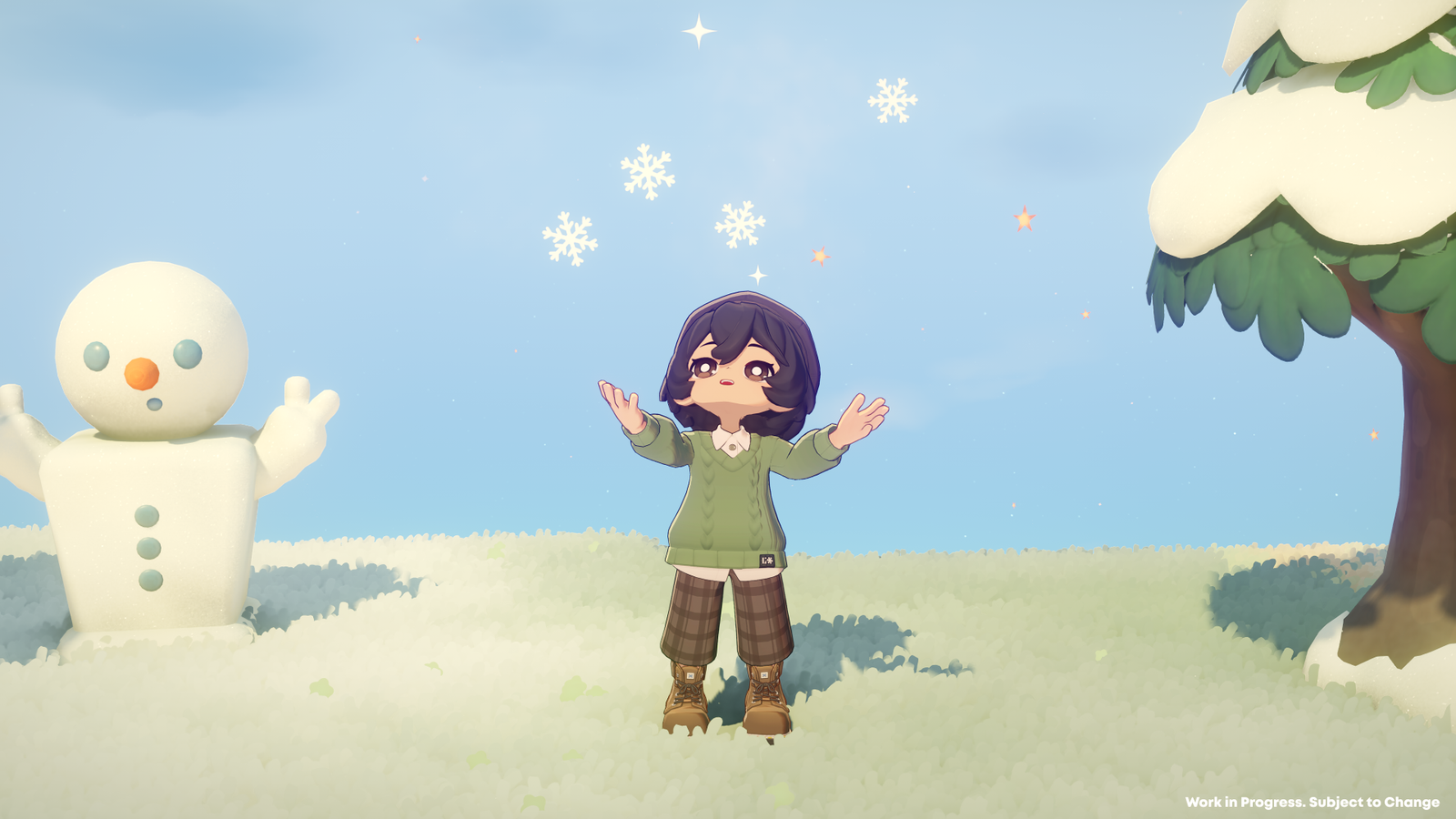
HoYoverse, the studio behind Genshin Impact, Honkai: Star Rail and Zenless Zone Zero, is moving into a different kind of gaming experience with its upcoming life simulation game, Petit Planet. Instead of focusing on combat, competitive progression or character-collecting mechanics, the developer wants players to enjoy a slower virtual world built around everyday activities, meaningful relationships and personal creativity.
Inspired by the gentle atmosphere of The Little Prince, Petit Planet lets players take ownership of a tiny planet and gradually turn it into a home. Players can grow plants, catch fish, collect resources, decorate their surroundings and invite animal characters to become neighbours. The experience also introduces a shared intergalactic setting called the Starsea, where players can encounter other planets and people.
At first glance, the game has obvious similarities to Animal Crossing, particularly in its relaxed activities, seasonal changes and island-like environment. However, HoYoverse says its approach is different. The studio wants to create a high-quality life simulation for people who do not want to grind, compete or constantly optimise their progress.
That philosophy could make Petit Planet an interesting departure for a company whose previous major releases have relied heavily on action gameplay, progression systems and gacha-based character collection. The game is scheduled to launch on PC, iOS and Android on December 4, 2026, with a Nintendo Switch 2 version planned for early 2027.
What Is Petit Planet? HoYoverse’s New Cozy Life Simulation Game
Petit Planet is a cozy life simulation game in which players develop and personalise a small planet. Rather than sending players into a large world filled with enemies and combat challenges, the game focuses on creating a peaceful environment where everyday activities become the main attraction.
Players begin their journey through the services of an intergalactic company called Loomix Co. Their new home is a tiny planet that can gradually expand as they spend time cultivating it. The setting takes inspiration from the imaginative, small-world atmosphere associated with The Little Prince, giving the game a distinctive cosmic identity.
The journey to the player’s planet is also part of that presentation. Players arrive in a taxi travelling through the Starsea, a wider intergalactic space populated by other planets and players. This creates a setting that goes beyond the traditional idea of building a farm, village or island community.
Despite the cosmic presentation, the actual gameplay remains grounded in familiar life simulation activities. Players can:
- Grow plants and collect resources around their planet.
- Shake trees to gather fruit.
- Fish in the surrounding water.
- Explore different areas and discover creatures.
- Decorate and expand their homes.
- Meet animal characters and develop relationships with them.
- Interact with other players through optional social features.
The central idea is to make the planet feel like a personal space that changes naturally over time. Instead of constantly pushing players towards difficult challenges, Petit Planet encourages them to enjoy small discoveries and gradually shape their surroundings.
Why Petit Planet Looks Similar to Animal Crossing
One of the first comparisons players are likely to make is with Nintendo’s Animal Crossing series, particularly Animal Crossing: New Horizons. Both games revolve around developing a personal environment, collecting resources, fishing, interacting with animal characters and enjoying a world that changes with real-world time.
Petit Planet also uses a curved visual presentation to make its small world feel like a planet. However, the developers considered placing players directly on a spherical surface before deciding against it.
Lead artist Yinli Huang explained that walking around a literal sphere could make players feel dizzy and create an uncomfortable experience. The team instead used rendering techniques to create the visual impression of living on a planet without requiring players to navigate an actual spherical surface.
In practice, this means the playable area behaves more like a curved island surrounded by water. As the planet develops, its available space gradually expands, but players do not simply walk around a spherical world and return to the same location from the opposite direction.
This design decision makes the environment more comfortable to explore while preserving the game’s central planetary concept. It also explains why the gameplay can feel familiar to Animal Crossing players despite the different setting.
A Familiar Life Sim Structure With a Cosmic Identity
Animal Crossing builds its identity around a community of villagers living alongside the player. Petit Planet follows a similar structure but gives the concept a different presentation through its intergalactic setting, planet ownership and central role for Loomix Co.
There are also familiar character archetypes. Gentle sheepdog Mobai serves as the chief steward, while pink rabbit Elsasani is another member of the company’s staff. Players can also meet characters such as the red panda Yunguo and eventually invite them to become neighbours.
Even the conversation about mortgages receives a playful response. Mobai is reportedly bemused when the player raises the idea of paying for a home through a mortgage, suggesting that Petit Planet is not interested in reproducing every familiar feature of traditional property and life simulation games.
Petit Planet’s Neighbours Could Be More Detailed Than Animal Crossing Villagers
Character relationships appear to be one of the areas where HoYoverse wants to distinguish Petit Planet from other cozy life simulation games.
In many games of this genre, animal villagers are memorable because of their appearance, dialogue and occasional interactions. Petit Planet aims to give its neighbours more detailed personalities, individual histories and character development.
Unlike the simple, largely text-based conversations familiar from some life simulation games, Petit Planet’s neighbours are fully voiced. Each character is designed with their own personality, habits, expressions and visual identity.
Yinli Huang explained that the development team works on each neighbour’s background story and distinctive characteristics. This includes designing unique actions, language, facial expressions and colour systems to make individual characters more recognisable.
The intention is to create characters that players can remember and gradually understand through repeated interactions. Although Petit Planet is not being presented as a story-driven RPG with a traditional central plot, each neighbour is expected to have a more comprehensive personal narrative arc.
That approach reflects HoYoverse’s experience creating memorable characters across its previous games. The studio has built a reputation for detailed character designs and personalities, and Petit Planet could use that expertise in a genre where relationships are an important part of the experience.
No Gacha Character Pulls: Neighbours Will Join Naturally
One of the most notable differences between Petit Planet and HoYoverse’s earlier releases is its approach to character acquisition.
Games such as Genshin Impact, Honkai: Star Rail and Zenless Zone Zero use gacha systems as a major way of unlocking characters. Players typically spend in-game resources or premium currency to obtain new characters through randomised systems.
Petit Planet is taking a different direction. Lead game designer Murphy explained that the studio does not want players to purchase characters simply to unlock them as neighbours.
Her reasoning is straightforward: paying to acquire someone who is supposed to live alongside the player would feel unnatural. Instead, relationships with neighbours are intended to develop gradually as players invest time and effort in the game.
This is an important design choice because it changes the way character progression fits into the experience. Rather than treating neighbours as collectible units, Petit Planet wants them to feel like members of a community that grows naturally.
It also creates a clear distinction from HoYoverse’s established free-to-play model. Players who enjoy the studio’s character designs but are less interested in gacha mechanics may find this approach particularly appealing.
How Petit Planet Will Make Money Without Gacha Characters
Although Petit Planet will be free to play, its developers have indicated that monetisation will focus on cosmetic content rather than restricting the central experience behind purchases.
Murphy said that the core gameplay and narrative content will remain accessible to all players. Future monetisation is expected to involve cosmetic options, such as the appearance of furniture.
This suggests that the game could generate revenue through personalisation rather than selling access to neighbours or essential story content. Players may eventually be able to purchase decorative items to change the appearance of their homes and surroundings.
However, the full monetisation structure was not immediately clear during the early hands-on experience. The developers have outlined their intended direction, but the complete range of cosmetic purchases and any other optional spending systems will need to be evaluated once more details become available.
The distinction is important for a free-to-play life simulation game. Players may welcome a model that avoids character gacha, but cosmetic purchases can still become expensive depending on pricing, availability and the number of items offered.
For now, HoYoverse’s stated goal is to keep the main activities and narrative available without requiring players to spend money to experience the central game.
Why Petit Planet Deliberately Makes Everyday Activities Slower
Petit Planet’s design philosophy becomes especially clear in its basic interactions. Activities such as collecting fruit, fishing and picking up resources are deliberately designed to take a little time rather than happening instantly.
For example, players can shake trees to make fruit fall and then collect the items from the ground. Fishing also follows a familiar life simulation routine: cast the line, wait for the bait to move and reel it in when a fish bites.
These activities will feel familiar to players who have spent time in Animal Crossing, but HoYoverse says the slower interaction is intentional.
Yinli Huang explained that the development team considered allowing players to tap an item and automatically add it to their inventory. Instead, it chose to preserve a more manual collection process.
The developers believe that a little inconvenience can make players slow down and pay attention to their surroundings. The idea is that life simulation should feel different from a conventional game where every interaction is designed to maximise efficiency.
The same philosophy influenced the design of movement and exploration. The team discussed how many layers players should be able to climb and whether they should be able to jump between different levels immediately. However, allowing players to move too quickly between every area could reduce the sense of discovery when encountering creatures and objects in the environment.
Petit Planet therefore treats small interactions as part of the experience rather than obstacles that need to be removed. The goal is to encourage players to enjoy the process of collecting, exploring and discovering instead of rushing towards the next reward.
No Grinding or Competitive Progression Is the Main Promise
Perhaps the most interesting part of Petit Planet is how explicitly its developers describe the audience they want to reach.
Murphy said the game is designed for people who want a high-quality experience without feeling that they must grind, compete or constantly perform. Instead of turning everyday activities into numbers that players need to optimise, the studio wants those activities to reflect the small pleasures of ordinary life.
That philosophy also affects how fishing works. In many progression-focused games, players improve their skills over time, unlock better equipment and gain access to more valuable rewards. Petit Planet takes a less competitive approach.
Murphy explained that fish are randomised regardless of whether someone is a new player or has developed their planet extensively. There is no traditional growing curve that makes a more experienced player automatically better at catching fish.
The purpose is to provide a small surprise whenever someone returns to the game. A player can log in, enjoy an activity and discover something without having to spend hours improving a statistic or completing a demanding progression chain.
This could make Petit Planet attractive to people who enjoy the atmosphere of life simulation games but feel overwhelmed by daily tasks, competitive systems and long-term grinding.
However, the design philosophy also raises an interesting question: how will a live-service game encourage regular engagement without relying heavily on the progression systems that keep players returning to other free-to-play titles?
Daily Notifications and Home Upgrades Still Play a Role
Although Petit Planet’s developers emphasise a relaxed experience, the game is still a live-service title. That means regular player engagement is likely to remain important to its long-term success.
During the hands-on session, the player was given access to an account that had already progressed beyond the opening tutorial. The avatar’s smartphone displayed notifications about activities and rewards, creating a familiar live-service structure.
The player’s home had also grown from a small, one-room space into a larger house with multiple rooms. This suggests that home expansion and personalisation will remain meaningful parts of long-term progression.
Even without a traditional mortgage system, developing a larger home is likely to require players to invest time in gathering resources and completing activities.
This creates a balance the developers will need to maintain. Optional activities and rewards can help players discover new content, but too many reminders or time-sensitive tasks could undermine the promise of a game that does not demand constant attention.
The real test will be whether Petit Planet can encourage people to return because they genuinely enjoy spending time in their virtual world, rather than because they feel pressured to complete another list of daily objectives.
The Epistolarian’s Desk Adds a More Personal Social Experience
One of Petit Planet’s more unusual features is the Epistolarian’s Desk, a place where players can read letters that arrive randomly from other players or write messages to send into the wider game world.
The feature creates a quieter form of multiplayer interaction. Instead of relying entirely on competitive activities, group challenges or constant communication, it gives players an opportunity to connect through written messages.
The concept may remind some players of the indie game Kind Words, which also focuses on the emotional connection created by anonymous letters and supportive messages.
Murphy explained that the developers want writing a letter to feel like a small ritual. The setting is designed to give the activity a sense of importance, encouraging players to take the process more seriously.
There is also a limit intended to prevent social pressure. Players can reply to a letter only once, meaning they do not have to maintain an ongoing conversation or feel responsible for continuing correspondence.
This fits the wider philosophy behind Petit Planet’s social systems. Interacting with other players is optional, and everyone can decide how much time they want to spend engaging with the community.
The Epistolarian’s Desk could become one of the game’s most distinctive features if it successfully creates a sense of connection without introducing the demands often associated with online multiplayer experiences.
Petit Planet Is Coming to Nintendo Switch 2 in 2027
HoYoverse has confirmed that Petit Planet is also coming to Nintendo Switch 2 in early 2027, expanding the game beyond PC and mobile devices.
The Nintendo version was available during the hands-on preview, allowing the game to be tested in both handheld and tabletop modes. The portable format appears particularly suitable for a life simulation game built around short, relaxed activities.
The Switch 2 version also includes standard controller inputs that are not currently available in the same way on the PC build. Some menu icons support touchscreen interaction, although mouse support was not available during the preview.
Performance was noticeably rougher on the Nintendo hardware during the hands-on session, so optimisation will be an important area to watch before launch.
Lead artist Yinli Huang also suggested that the development team could explore additional platform-specific features as it becomes more familiar with the Switch 2. These could include camera-related functions designed to create a more distinctive experience for Nintendo players.
The platform choice makes sense for a game of this type. A portable device allows players to check on their planet, complete a small activity or spend a few minutes with neighbours without needing to sit through a lengthy gaming session.
Petit Planet Release Date and Platforms
Petit Planet is scheduled to launch on December 4, 2026, for PC, iOS and Android. The Nintendo Switch 2 version is planned for early 2027.
| Platform | Release Window |
|---|---|
| PC | December 4, 2026 |
| iOS | December 4, 2026 |
| Android | December 4, 2026 |
| Nintendo Switch 2 | Early 2027 |
The game will use a free-to-play model, with the developers stating that core gameplay and narrative content will be accessible to everyone. Cosmetic items, including furniture appearances, are expected to form the basis of future monetisation.
Can Petit Planet Become a Serious Animal Crossing Alternative?
Petit Planet has several ingredients that could appeal to fans of Animal Crossing and other cozy life simulation games. It offers a personal environment to develop, animal neighbours with individual personalities, familiar activities such as fishing and gardening, and a real-time world that changes with the seasons.
Its biggest opportunity may be the way it combines those familiar ideas with HoYoverse’s experience in character development and live-service game design. Fully voiced neighbours with individual narrative arcs could give the relationships more depth than players might expect from a traditional island life sim.
The decision to avoid gacha character recruitment is another important difference. If the developers deliver on their promise, players will be able to build relationships naturally rather than treating neighbours as collectibles obtained through randomised purchases.
However, the game still needs to demonstrate that its daily notifications, home upgrades and live-service structure can coexist with its relaxed design philosophy. A game that promises freedom from grinding must be careful not to replace traditional progression pressure with an endless list of daily activities.
Its long-term success will also depend on how meaningful its world remains after players have completed the initial discovery phase. Randomised fishing, seasonal changes, new neighbours, cosmetic customisation and social features could help keep the experience fresh, but their implementation will matter more than the promises alone.
Final Thoughts: A Cozy Game Built Around Enjoying the Moment
Petit Planet represents a noticeable change of direction for the studio behind Genshin Impact. Instead of asking players to defeat enemies, collect powerful characters or optimise their progression, HoYoverse is building a world where fishing, gardening, decorating and getting to know neighbours are the main attractions.
The game’s similarities to Animal Crossing are clear, but its cosmic setting, fully voiced characters, natural relationship-building and letter-writing feature give it a distinct identity. Its commitment to keeping core content accessible and avoiding gacha-based neighbour recruitment could also help it stand out in the free-to-play market.
There are still questions about monetisation, daily engagement and long-term progression. Nevertheless, Petit Planet’s central idea is appealing: a game for people who want something polished and enjoyable without turning every activity into another task to complete.
With its PC and mobile launch scheduled for December 4, 2026, followed by a Nintendo Switch 2 release in early 2027, Petit Planet could become one of HoYoverse’s most unusual projects yet. Its biggest success may be proving that a live-service game can keep players interested by offering small pleasures rather than demanding constant grinding.
For breaking news and live news updates, like us on Facebook or follow us on Twitter and Instagram. Read more on Latest Technology on thefoxdaily.com.






COMMENTS 0